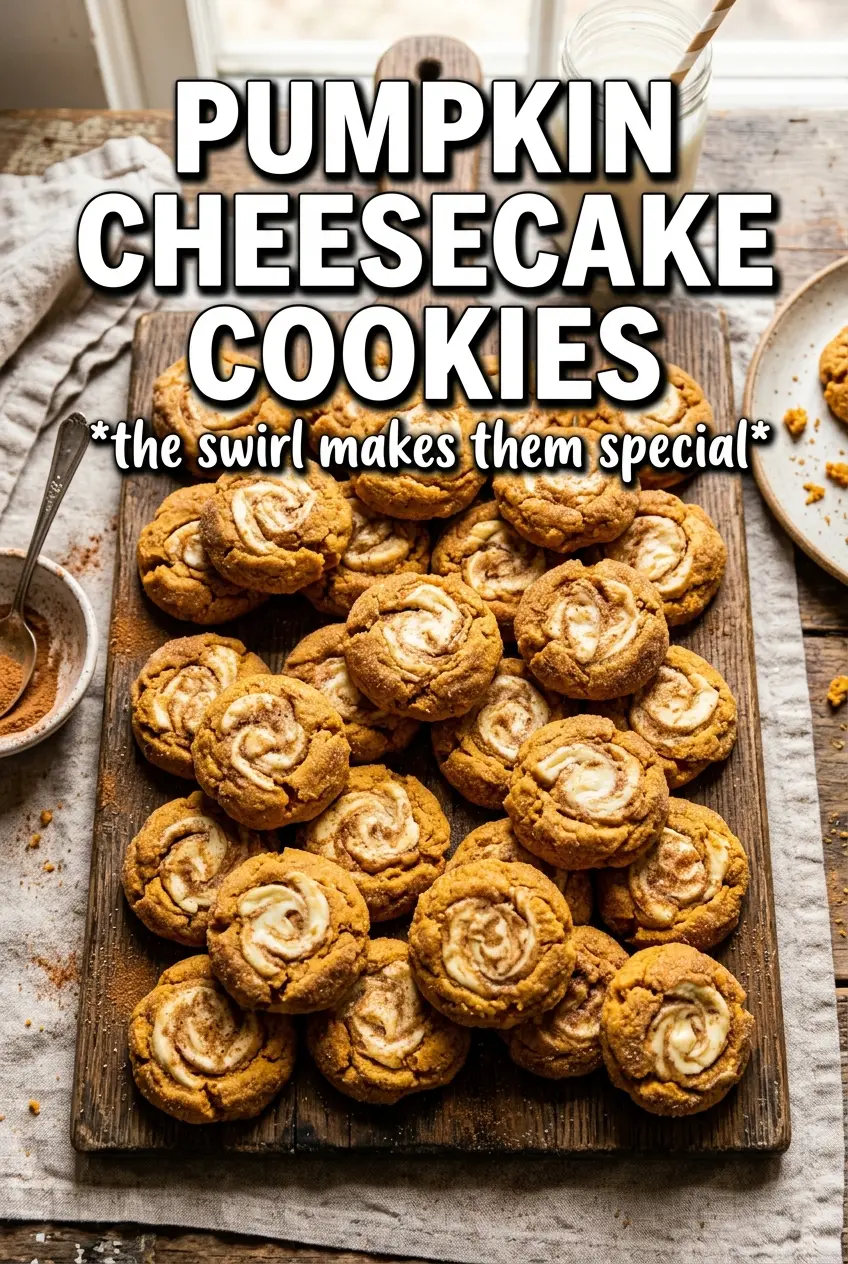
Soft pumpkin cookies with a creamy cheesecake center hit that sweet spot between cozy and bakery-worthy. The edges bake up lightly set, the middle stays tender, and that chilled cream cheese filling gives each bite a little surprise without turning the cookie heavy. A cinnamon sugar roll adds just enough crunch to keep the texture interesting all the way through.
The part that makes these work is simple but important: the pumpkin puree gets blotted dry before it goes into the dough, and the cheesecake filling gets frozen before stuffing. Those two steps keep the cookies from spreading too much and help the center stay neat instead of melting out on the pan. The result is a cookie that tastes rich and spiced without getting cakey or wet.
Below, I’ve included the small details that matter most, like how to seal the dough cleanly around the filling and what to expect while they cool. That last part matters more than people think, because the cream cheese center sets up as the cookies come to room temperature.
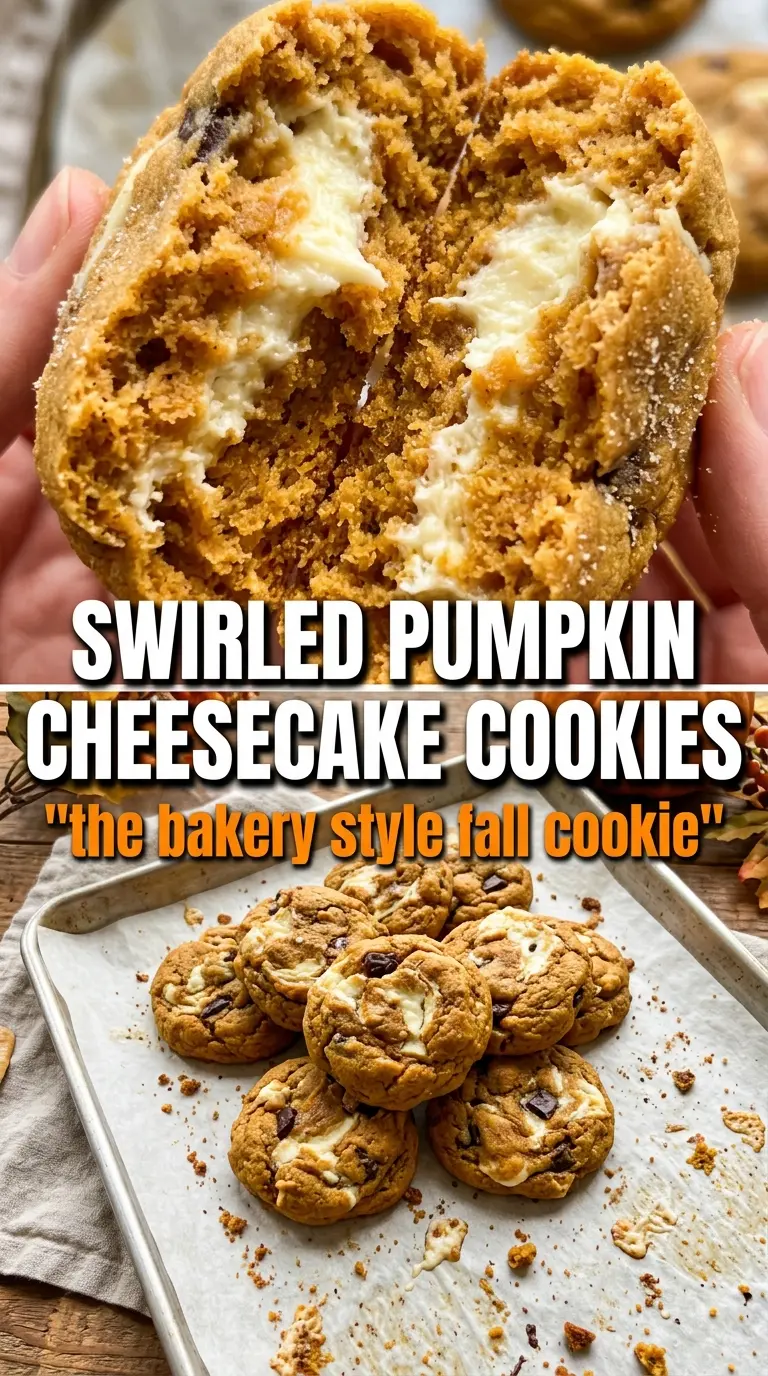
The frozen cheesecake centers held their shape, and the cookies baked up soft with those cinnamon sugar edges just like a bakery cookie. I waited for them to cool and the filling set perfectly.
Save these Pumpkin Cheesecake Cookies for the day you want soft pumpkin spice cookies with a chilled cream cheese center and cinnamon sugar edges.
The Two Chilled Centers That Keep These Cookies from Collapsing
Most stuffed cookies fail for one of two reasons: the filling is too soft, or the dough is too wet to wrap cleanly around it. These cookies avoid both problems by freezing the cream cheese mixture into firm little balls and using pumpkin puree that has been blotted dry before it ever hits the bowl. That combination keeps the centers defined and gives the dough enough structure to hold shape in the oven.
The other detail that matters is how you seal the dough. If the cream cheese peeks through, it can leak or brown too fast before the cookie is set. Press the dough together firmly and roll the surface smooth before coating it in cinnamon sugar. That outer sugar layer doesn’t just add texture; it also helps hide any rough seams.
- Butter — Softened butter creams with the brown sugar and gives these cookies their tender, chewy base. Cold butter won’t trap air well, and melted butter makes the dough spread.
- Pumpkin puree — Blotting it dry is not optional here. Too much moisture makes the cookies puff oddly and turn bready instead of soft.
- Cream cheese — Full-fat cream cheese gives the filling enough body to stay creamy after baking. Low-fat versions soften more and can turn loose in the oven.
- Pumpkin pie spice and cinnamon — The blend gives the dough that warm, rounded pumpkin flavor, while the extra cinnamon keeps the spice from tasting flat. Fresh spice makes a noticeable difference here.
- Cinnamon sugar — This is the finishing touch that adds a little crunch and keeps the exterior from tasting plain. It also helps the cookies bake into that bakery-style look.
What Each Ingredient Is Actually Doing in This Recipe
- Primary ingredient (the star) — Quality matters most. Choose the best you can find.
- Cooking medium (oil, butter, or broth) — This carries flavors and prevents dryness.
- Seasonings (salt, pepper, spices, herbs) — Layer flavors so nothing overpowers. Build depth gradually.
- Aromatics (garlic, onion, herbs) — Cook with fat to bloom flavors. Become the foundation.
- Supporting ingredients — Complement the main ingredient without overpowering it.
- Sauce or liquid (if applicable) — Brings flavors together. Balance richness with acid.
- Acid (lemon, vinegar, wine, or other) — Brightens and prevents flat-tasting results.
- Final finish (garnish, glaze, or sauce) — Prevents one-dimensional taste and adds visual appeal.
Building the Dough Around a Frozen Filling
Mixing the Cream Cheese Filling
Beat the cream cheese, powdered sugar, and vanilla until the mixture is smooth and fluffy, with no grainy bits left behind. Scoop it into teaspoon-sized portions and freeze them until firm enough to handle without smearing. If the filling is soft when you wrap it, it will leak into the dough and disappear instead of staying as a distinct center.
Making the Pumpkin Dough
Cream the butter and brown sugar until the mixture looks lighter in color and slightly fluffy, then add the blotted pumpkin, egg, and vanilla. The batter may look a little curdled at this stage, and that’s normal. Fold in the dry ingredients just until the flour disappears; overmixing after the flour goes in makes these cookies tough and dry at the edges.
Stuffing, Rolling, and Baking
Scoop the dough into 2-tablespoon portions, flatten each one in your palm, and place a frozen cream cheese ball in the middle. Bring the dough up and around the filling, then pinch and roll the seam until it’s sealed. Roll each cookie in cinnamon sugar and bake just until the edges are set and lightly golden. If they look fully done in the oven, they’ll usually be overbaked by the time they cool.
Let the cookies cool completely on the pan or a rack before moving them around. The cheesecake center firms as the temperature drops, and picking them up too early can make the middle slouch or ooze.
How to Adapt These Stuffed Pumpkin Cookies Without Losing the Texture
Gluten-Free Pumpkin Cheesecake Cookies
Use a 1:1 gluten-free baking flour that already contains xanthan gum. The dough should still feel soft but shapeable; if it seems sticky, chill it for 20 minutes before stuffing. The flavor stays the same, but the cookies may bake up a little more delicate.
Dairy-Free Version
Swap in plant-based butter and a dairy-free cream cheese that bakes well. The filling will be a little softer after cooling, so freeze the centers a bit longer before wrapping. The cookies still taste warmly spiced, but the cheesecake note will be milder.
Extra-Spiced Cookies
Add another 1/4 teaspoon of cinnamon or a pinch of cloves if you want a stronger spice edge. Keep the pumpkin pie spice balanced so the cookies don’t turn sharp or bitter. This change deepens the flavor without affecting the structure.
Storage and Reheating
- Refrigerator: Store in an airtight container for up to 5 days. The filling stays creamy, but the cookies soften a little as they sit.
- Freezer: Freeze baked cookies for up to 2 months, or freeze the stuffed unbaked dough balls and bake from frozen with 1 to 2 extra minutes.
- Reheating: Warm a baked cookie for 8 to 10 seconds in the microwave if you want the center softer. Don’t heat them long enough to melt the filling again or the middle can turn loose.
Questions I Get Asked About This Recipe
Pumpkin Cheesecake Cookies
Ingredients
Equipment
Method
- Beat cream cheese, powdered sugar, and vanilla until smooth, then scoop into 24 teaspoon-sized balls on parchment and freeze for 30 minutes until firm and scoopable.
- Preheat the oven to 375F and line baking sheets with parchment so the dough bakes evenly and doesn’t stick.
- Beat butter and brown sugar until creamy, then add the blotted pumpkin, egg, and vanilla and mix until smooth.
- Whisk all-purpose flour, baking soda, pumpkin pie spice, cinnamon, and salt, then fold into the wet ingredients until no dry streaks remain.
- Scoop 2-tablespoon portions of cookie dough, flatten in your palm, place a frozen cream cheese ball in the center, then wrap dough around it and seal the edges.
- Roll each stuffed cookie in cinnamon sugar so the surface is evenly coated.
- Bake at 375F for 12-14 minutes until the cookies are golden around the edges and set in the center.
- Cool the cookies completely, about until the filling firms as it cools, so the center stays cheesecake-like rather than soft or runny.