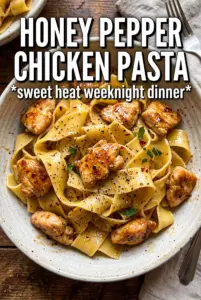
Honey Pepper Chicken Pasta lands in that sweet-savory spot that keeps people going back for another forkful. The sauce clings to every ridge of the pasta, the chicken stays juicy, and the cracked pepper keeps the honey from tasting flat or sticky. When it’s done right, you get glossy penne, tender sliced chicken, and just enough heat to make the parmesan taste even richer.
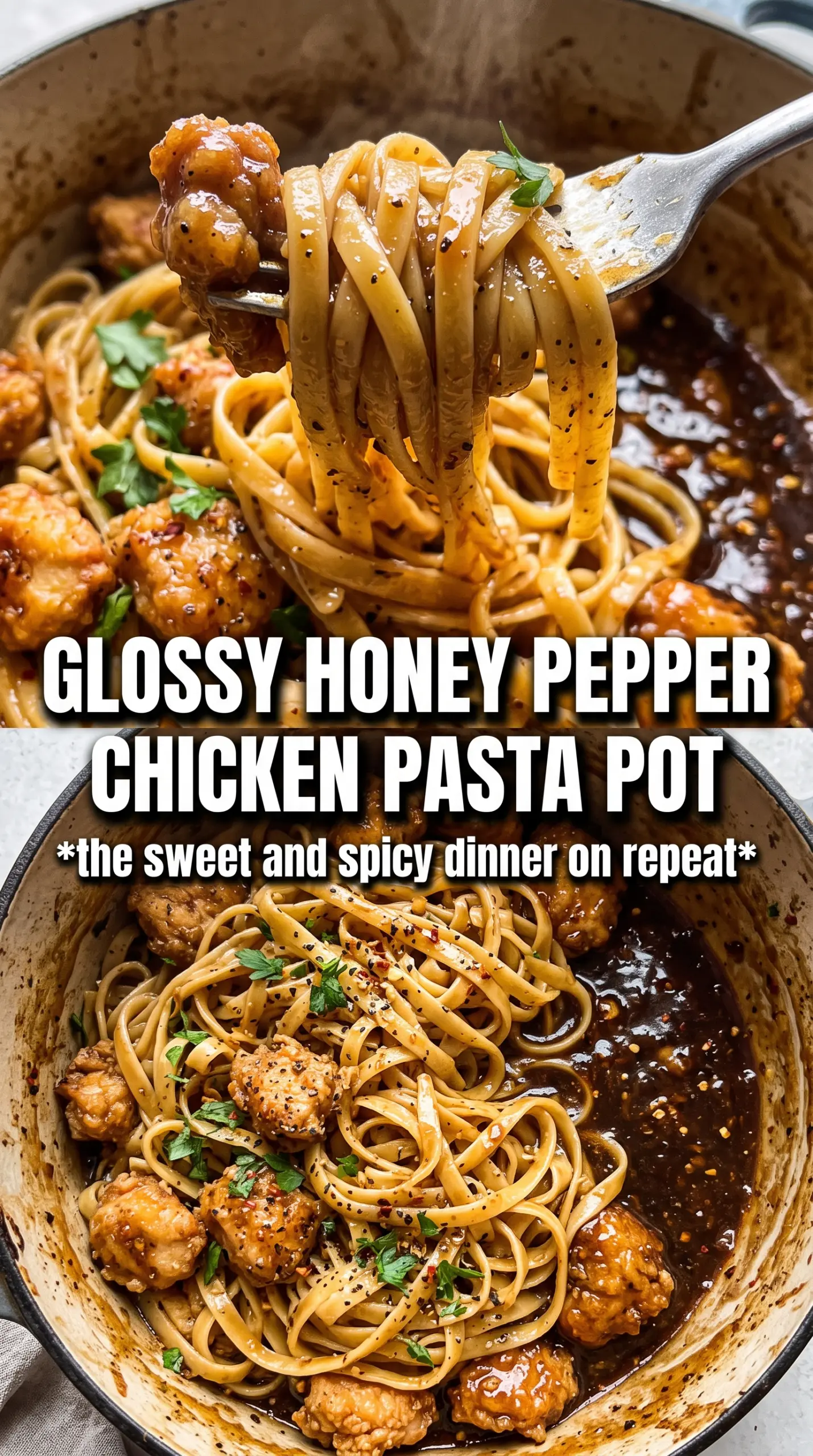
The trick is balance. Honey gives the sauce body and shine, but it needs black pepper, garlic, soy sauce, and a little red pepper flakes to keep the flavor grounded. A quick cornstarch slurry tightens the sauce without making it heavy, and a splash of pasta water helps it coat the pasta instead of sitting in the bottom of the bowl. Sear the chicken first so you get color before the sauce goes in, then use the same pan for the sauce so you keep all that flavor where it belongs.
Below, I’ve added the details that matter most: how to keep the sauce from turning watery, which substitutions work without ruining the texture, and what to do if you want this a little milder or a little spicier.
The sauce thickened up beautifully and coated the pasta instead of pooling at the bottom. I loved the peppery finish with the honey, and my husband asked if we could put this in the regular dinner rotation.
Love the glossy honey pepper sauce and tender chicken? Save this Honey Pepper Chicken Pasta for the nights when you want something fast, bold, and coated in sauce.
The Secret to Keeping the Honey Sauce Glossy Instead of Gluey
The biggest risk in a dish like this is letting the sauce cook down too far before the pasta goes in. Honey thickens fast, and once it crosses from glossy to sticky, it stops coating the noodles evenly. You want the sauce to simmer just until it lightly nappes the back of a spoon, then toss in the pasta while it still moves easily in the pan.
Black pepper matters more than it looks on paper. Without enough pepper, the honey comes across as one-note sweetness. With a generous amount, the sauce tastes deeper and more balanced, and the parmesan at the end has something sharp to lean against. If the sauce gets too tight, loosen it with reserved pasta water a tablespoon at a time instead of adding broth again, which can dilute the flavor.
What Each Ingredient Is Actually Doing in This Dish
- Chicken breast — Sliced thin, it cooks quickly and gives you more browned surface area. Thighs work too if you want a richer result, but they’ll need a little more time in the pan.
- Honey — This is the body of the sauce, so use a real liquid honey, not a heavily crystallized one. It gives the dish shine and that sweet finish that balances the pepper.
- Black pepper — Don’t treat this like background seasoning. It’s part of the identity of the dish, and a generous hand keeps the sauce from tasting flat.
- Soy sauce — A small amount brings salt and depth without turning the sauce into a soy-based glaze. If you need a gluten-free version, use tamari in the same amount.
- Cornstarch slurry — This thickens the sauce quickly without needing a long simmer. Whisk it smooth before it goes in, or you’ll get little starchy bits instead of a silky finish.
- Parmesan — Grated fine, it melts into the sauce and adds savory saltiness. Pre-grated can work in a pinch, but freshly grated gives you a cleaner melt and better texture.
Building the Sauce So It Clings to the Pasta
Getting Color on the Chicken First
Season the chicken with salt and black pepper before it hits the pan, then sear it in butter over medium-high heat until the edges are golden and the center is just cooked through. If the pan is crowded, the chicken will steam instead of brown, and that means less flavor in the finished sauce. Pull it out as soon as it’s done, because it will finish gently when it goes back into the pasta later.
Cooking the Garlic Without Burning It
Add the garlic to the pan for about a minute, just until it smells sweet and fragrant. If it starts to brown, the sauce will pick up a bitter edge that the honey can’t hide. The broth goes in right after, which stops the garlic from overcooking and lifts the browned bits from the pan bottom.
Thickening the Honey Pepper Sauce
Stir in the honey, soy sauce, black pepper, and red pepper flakes, then whisk in the cornstarch slurry and let the sauce simmer until it turns glossy and lightly thickened. This is the moment to watch closely: too little heat and the slurry stays chalky, too much and the sauce can tighten into a sticky glaze before the pasta is ready. When it looks silky and coats a spoon, it’s done.
Finishing with Pasta Water and Parmesan
Add the cooked pasta to the sauce and use a splash of reserved pasta water if the pan looks dry. The starch in that water helps the sauce cling instead of sliding off. Stir in the parmesan off the heat or over low heat so it melts smoothly, then return the chicken and top with parsley. If the cheese goes in over high heat, it can turn grainy instead of creamy.
How to Adapt This Honey Pepper Chicken Pasta for Different Nights
Gluten-Free Version
Use gluten-free pasta and swap the soy sauce for tamari. The sauce still thickens the same way, and the texture stays glossy as long as you don’t overcook the pasta.
Less Heat, Same Balance
Cut the red pepper flakes in half if you want a milder finish, but keep the black pepper generous. The black pepper carries the name of the dish; the red pepper just adds a little back-end warmth.
Creamier Finish
Stir in a splash of heavy cream with the broth if you want a softer, rounder sauce. You’ll lose a little of the sharp honey-pepper edge, but you’ll gain a silkier coating on the pasta.
Storage and Reheating
- Refrigerator: Store leftovers in an airtight container for up to 3 days. The sauce thickens as it sits, so expect the pasta to absorb some of the gloss.
- Freezer: Freezing isn’t ideal because the pasta softens and the sauce can turn a little grainy after thawing. If you want to freeze it, cool it completely and use within 1 month.
- Reheating: Reheat gently on the stove over low heat with a splash of broth or water. High heat dries out the chicken and makes the sauce seize, so warm it slowly and stir until it loosens again.
Answers to the Questions Worth Asking
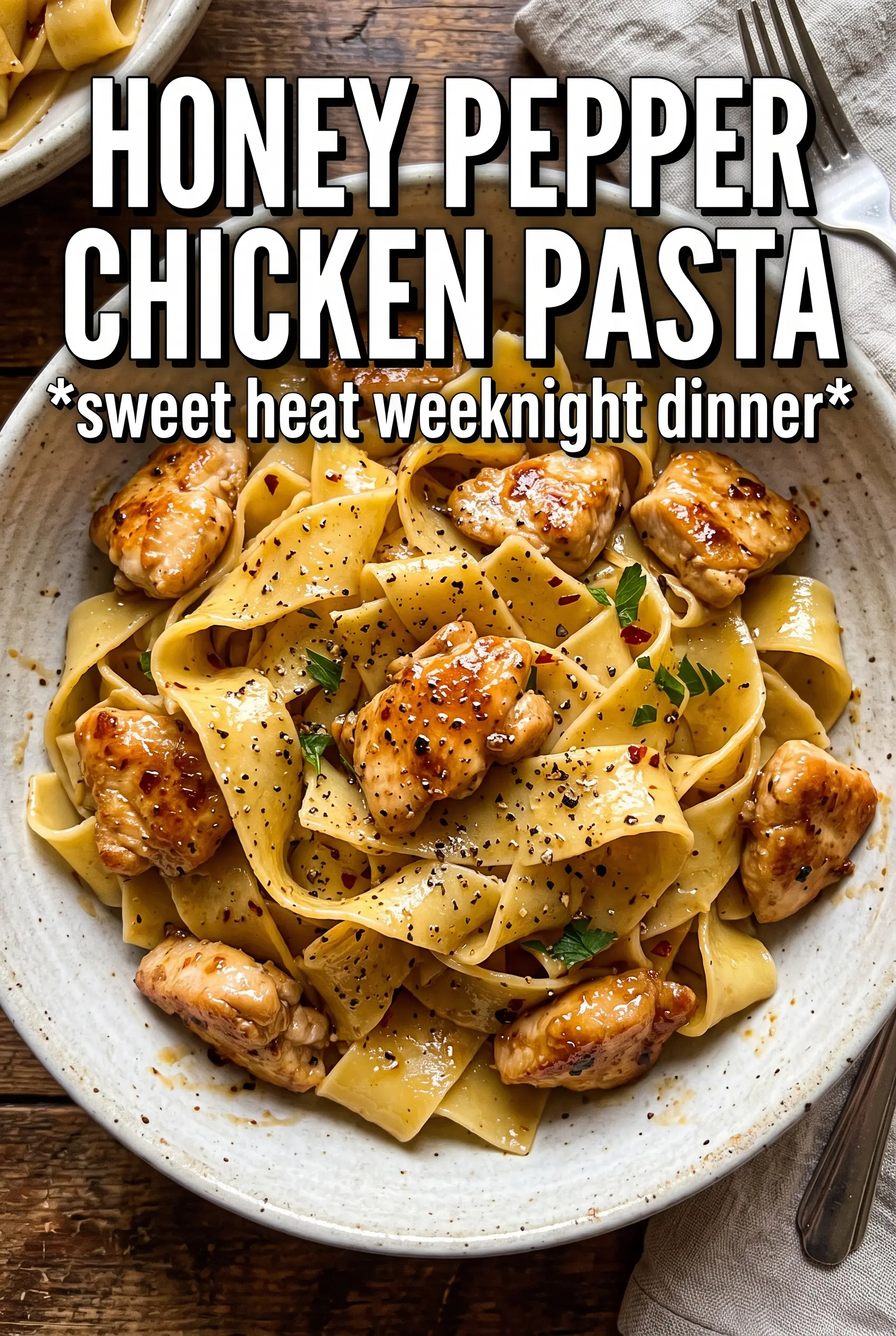
Honey Pepper Chicken Pasta
Ingredients
Equipment
Method
- Cook penne or rigatoni in boiling water until al dente, then reserve 1/2 cup of the pasta water and drain the rest.
- Set the drained pasta aside while you cook the chicken and sauce so it’s ready to toss.
- Season sliced chicken breast with salt and a generous amount of black pepper.
- Heat 2 tablespoons butter in a skillet over medium-high heat and sear the chicken for 4-5 minutes per side until golden, then remove to a plate.
- Slice the seared chicken into bite-size pieces before returning it to the pasta later.
- In the same skillet, sauté minced garlic for 1 minute until fragrant.
- Add chicken broth, honey, soy sauce, black pepper, and red pepper flakes, then stir to combine.
- Whisk the cornstarch slurry into the sauce and simmer until thickened, stirring so it turns glossy.
- Toss the cooked pasta with the sauce and add reserved pasta water as needed to loosen and coat the noodles.
- Return the sliced chicken to the skillet and toss until evenly heated through.
- Finish off the pasta with grated parmesan and top with fresh parsley and extra cracked black pepper if desired.