Butternut squash, caramelized onion, and goat cheese make a quiche that lands somewhere between elegant and deeply comforting. The custard stays tender, the squash turns soft and sweet, and the goat cheese melts into little tangy pockets that keep every bite interesting. It slices cleanly after a short rest, which matters more than most people think when you want neat wedges instead of a loose filling sliding across the plate.
The key here is balance. Roasting the squash first keeps it from watering down the custard, and blind baking the crust gives you a base that stays crisp under the filling. The onions need the full slow cook in butter so they turn sweet and jammy instead of sharp; rushed onions make the whole quiche taste flatter. A little nutmeg and thyme pull the savory-sweet pieces together without making the filling taste heavy.
Below, I’ll walk through the parts that matter most: how to keep the crust from going soggy, how to tell when the custard is just set, and a few simple swaps if you want to adjust the dairy or make this fit what you already have on hand.
The onions turned out soft and sweet, and the goat cheese stayed in little creamy pockets instead of disappearing. I baked it just until the center had a tiny wobble, and the slices held together perfectly after the 10-minute rest.
Save this butternut squash goat cheese and caramelized onion quiche for the kind of dinner that needs a crisp crust, silky custard, and a clean slice every time.
The Trick to Keeping the Crust Crisp Under a Custard Filling
Quiche fails most often at the bottom. The custard bakes before the crust has a chance to stay dry, so you end up with a soft or soggy base that never quite firms up. Blind baking fixes that, but only if you actually give the crust a head start and don’t rush it back into the oven with cold filling sitting on top of it.
This version has a second layer of protection: the squash gets roasted first, so it brings concentrated flavor instead of extra moisture. The onions are cooked down until sweet and nearly jammy, which means they blend into the custard instead of leaching liquid into it. Those two details are what let the quiche set cleanly without turning watery.
What Each Ingredient Is Doing in This Quiche
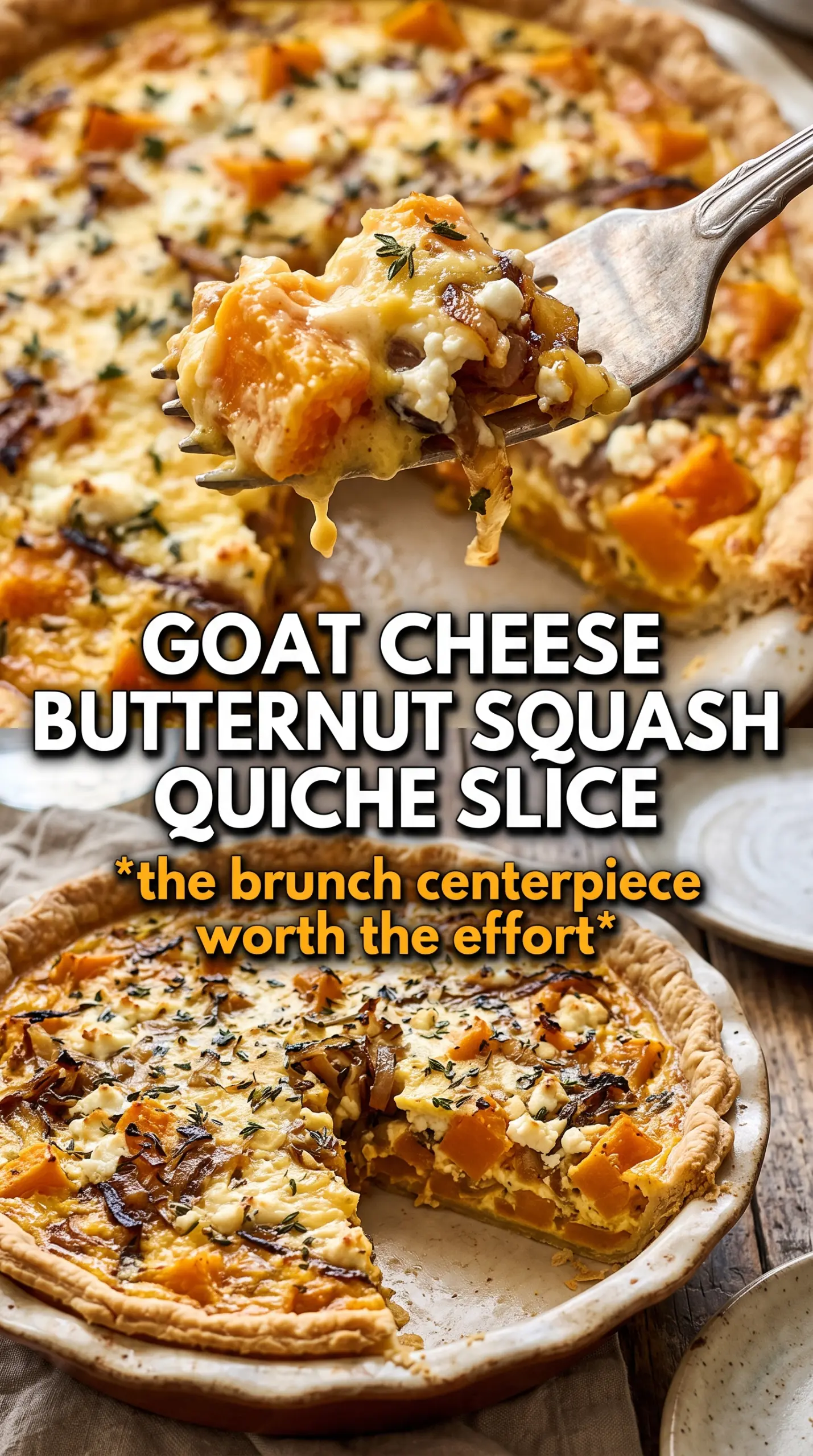
- Butternut squash — Roast it until the edges soften and pick up a little color. That caramelized sweetness is part of the final flavor, and raw or undercooked squash won’t soften enough in the oven before the custard sets.
- Caramelized onion — This is the backbone of the filling. The long, slow cook in butter turns the onion sweet and mellow; a quick sauté leaves it sharp and thin in the finished quiche.
- Goat cheese — Use a tangy, crumbly goat cheese rather than a spreadable log if you want defined pockets of flavor. It softens into the custard but doesn’t vanish.
- Heavy cream and whole milk — The combination gives the filling richness without making it overly dense. You can swap in half-and-half, but the quiche will be a little less silky.
- Fresh thyme and nutmeg — Thyme keeps the filling savory and fresh, while nutmeg quietly ties the squash and custard together. Dried thyme works in a pinch, but use less because it reads stronger and less bright.
Building the Filling So the Custard Sets Cleanly
Blind Bake the Shell First
Press the crust into the pan and blind bake it until it looks dry on the bottom and just barely set around the edges. You’re not trying to brown it deeply here, just give it enough structure that the custard can’t soak straight through. If you skip this, the bottom tends to stay pale and soft even when the top looks done.
Cook the Onions Until Sweet, Not Just Soft
Put the onions into butter over medium-low heat and let them cook patiently until they collapse, darken slightly, and smell sweet. If the heat is too high, they brown on the outside before the moisture cooks out, and that sharp flavor carries through the whole quiche. They should look silky and deeply golden, not crispy.
Pour the Custard and Stop at the Wobble
Whisk the eggs, cream, milk, thyme, nutmeg, salt, and pepper until smooth, then pour it over the squash, onions, and goat cheese. Bake until the edges are set and the center still has a slight wobble when you nudge the pan. If the middle is fully firm in the oven, it usually means the quiche is overbaked and will taste dry after resting.
Give It the Rest It Needs
Let the quiche stand for 10 minutes before slicing. That short rest lets the custard finish setting so the slices hold together instead of slumping on the plate. Cut too early and the filling will look loose, even if the bake itself was right.
How to Adapt This Quiche Without Losing the Texture
Make It Dairy-Free
Use a full-fat unsweetened oat or cashew cream in place of the heavy cream and milk, and swap the goat cheese for a dairy-free soft cheese that melts a little but still holds shape. The filling won’t be quite as rich, but it will still set well if you keep the egg ratio the same.
Use Sweet Potato Instead of Butternut Squash
Sweet potato works well if that’s what you have, but roast it until it’s tender and lightly caramelized so it doesn’t taste starchy in the finished quiche. The flavor leans a little earthier and less nutty than squash, but it still pairs nicely with the goat cheese and thyme.
Make It Gluten-Free
Use a certified gluten-free pie crust or a homemade gluten-free shortcrust that can hold a custard filling. The filling itself is naturally gluten-free, so the crust is the only place you need to watch labels and structure.
Storage and Reheating
- Refrigerator: Store covered for up to 4 days. The crust softens a little by day two, but the flavor stays excellent.
- Freezer: It freezes reasonably well in slices. Wrap tightly, then thaw overnight in the refrigerator so the custard doesn’t weep.
- Reheating: Warm slices in a 325F oven until heated through. The biggest mistake is using the microwave too long, which makes the eggs rubbery and the crust leathery.
Questions I Get Asked About This Quiche
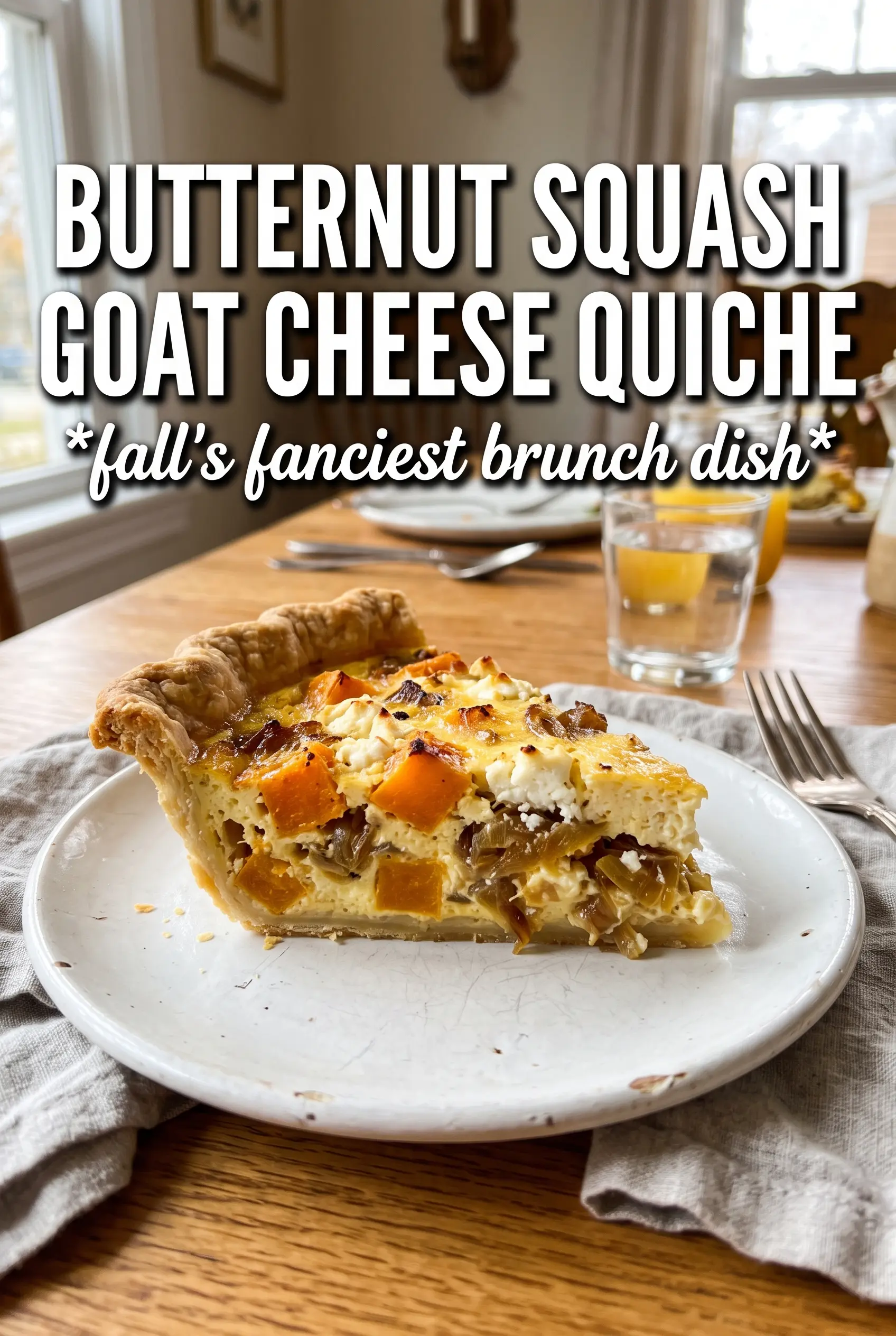
Butternut Squash Goat Cheese And Caramelized Onion Quiche
Ingredients
Equipment
Method
- Preheat the oven to 375F, then fit the pie crust into a 9-inch tart or pie pan and press it into the corners. Blind bake for 12 minutes until the surface looks lightly set and dry.
- Heat the unsalted butter over medium-low heat and cook the sliced onion for 30 minutes. Stir periodically until the onions are golden and sweet.
- Whisk the eggs, heavy cream, whole milk, fresh thyme, nutmeg, salt, and black pepper until smooth and uniform in color. You should see no streaks of egg.
- Scatter the caramelized onions and roasted butternut squash over the blind-baked crust in an even layer. Distribute the cubes so they’re visible across the surface.
- Crumble the goat cheese evenly over the filling so it forms small pockets. The top should look speckled with white cheese.
- Pour the custard over everything and fill the crust to the rim. Tap the pan gently so the custard settles around the squash and onions.
- Bake at 375F for 40-45 minutes until the quiche is just set with a slight wobble in the center. The edges should look firm while the middle jiggles like custard.
- Rest the quiche for 10 minutes before slicing. The filling should thicken slightly so the slices hold together.