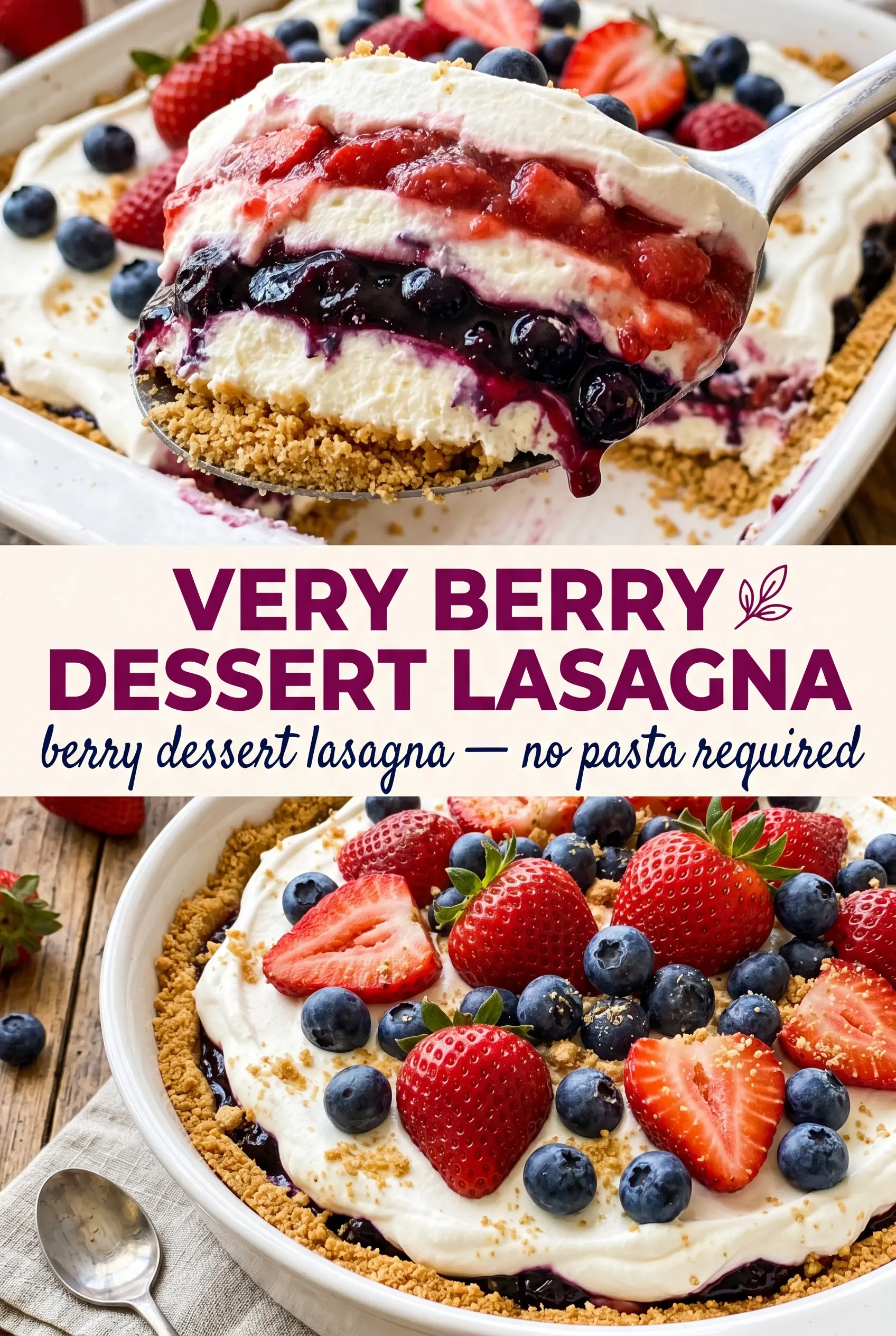
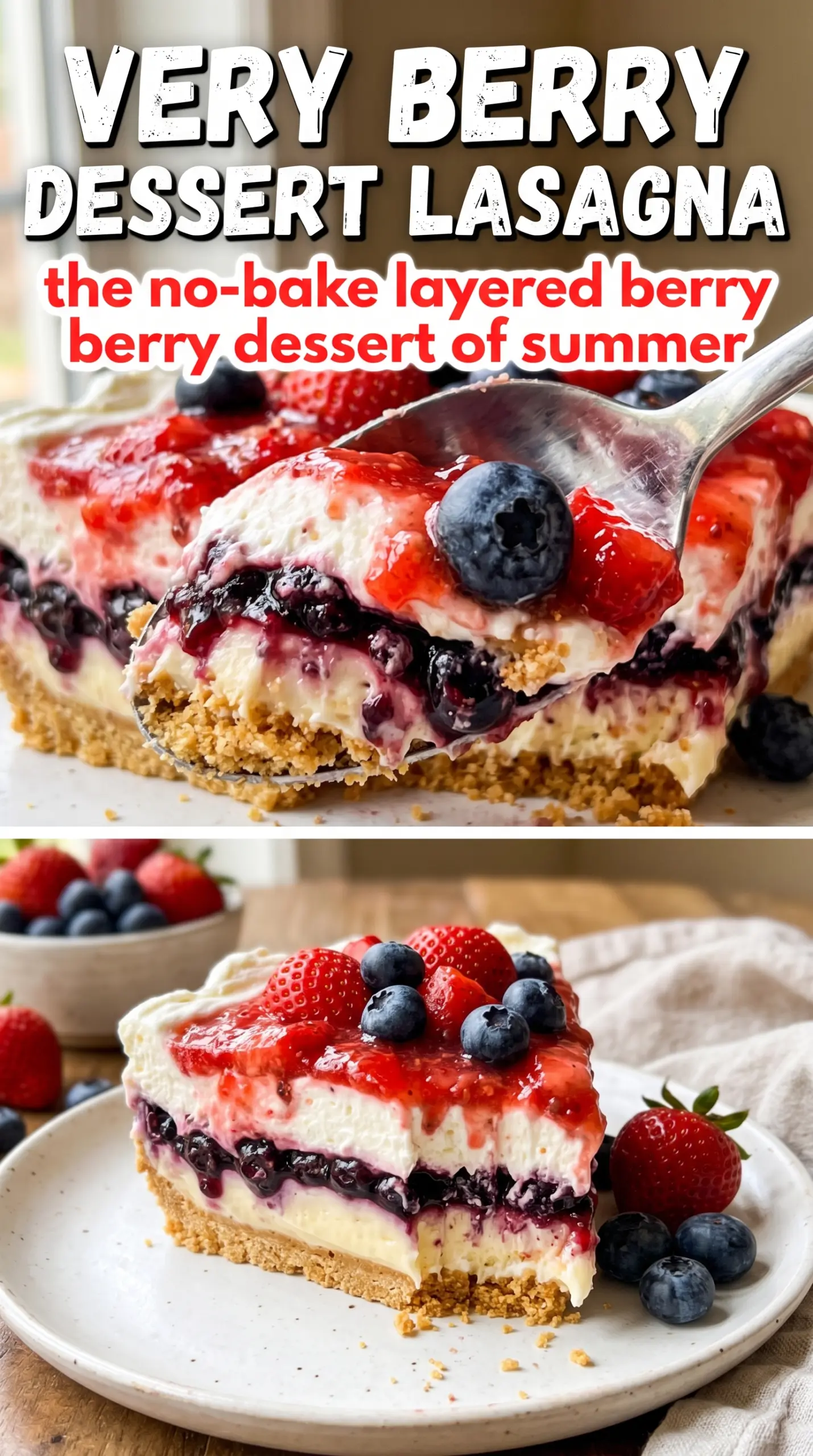
Very Berry Dessert Lasagna lands on the table looking like a celebration and eats like one too: crisp Golden Oreo crust, tangy cream cheese, silky pudding, and a cold berry topping that keeps every bite bright instead of heavy. The layers stay distinct when it’s chilled long enough, which is what makes each slice look bakery-clean instead of slumped and soft.
The trick is building each layer with a little restraint. The crust needs just enough butter to hold together without turning greasy, and the cream cheese layer has to be beaten smooth before the whipped topping goes in so you don’t end up with little cold lumps. The pudding layer also needs to be thickened before it goes on; if it’s still loose, the whole dessert starts sliding around when you slice it.
Below you’ll find the one chilling window that matters, how to keep the layers tidy, and the easiest swaps if you need to use a different cookie or berry mix.
The pudding set up perfectly over the cream cheese layer and the berries stayed neat even after sitting in the fridge overnight. I used lemon pudding, and that little bit of tang made the whole dessert taste lighter.
Save this Very Berry Dessert Lasagna for the next time you want a chilled layered dessert with a golden cookie crust and fresh berry topping.
The Reason the Layers Stay Clean Instead of Sliding
The biggest mistake with dessert lasagna is rushing the chill time and expecting neat slices. This dessert needs each layer to firm up before the next one goes on, especially the crust and pudding. If the crust is warm or the pudding is thin, the knife drags everything into a soft mound instead of cutting through cleanly.
Cold ingredients matter here too. Cream cheese beats smoother when it’s softened, but the milk for the pudding should stay cold so the mix thickens quickly. Once the pudding is spread on, the clock matters more than anything else. Four hours is the minimum I’d trust, and overnight gives you the cleanest rectangles.
- Golden Oreos — These bring a vanilla-cookie flavor that plays nicely with berries and lemon pudding. They crush into a sweeter, less bitter crust than chocolate sandwich cookies, and that matters because the filling is already rich.
- Cream cheese — Full-fat cream cheese gives the middle layer the tang and body that keep the dessert from tasting flat. Lower-fat versions soften faster and can turn loose, so use the real block-style cream cheese if you want tidy slices.
- Instant pudding — This is doing the stabilizing work in the center. Cook-and-serve pudding won’t set the same way without heat, so stick with instant here or the middle will stay too soft to hold the layers.
- Whipped topping — It lightens both the cream cheese layer and the top, which keeps the dessert from eating like frosting on frosting. Whipped cream can work, but it softens faster, so the finished dish won’t hold quite as long in the fridge.
What Each Ingredient Is Actually Doing in This Dessert
- Sugar (the sweetness and structure) — Sugar tenderizes baked goods and creams into butter to create air. Don’t skip it or reduce it too much.
- Fat (butter, oil, or cream cheese) — This carries flavors and creates tender crumb. Proper creaming with sugar adds volume to cakes.
- Eggs (the binder and lift) — Eggs create structure and help baked goods rise. Room temperature eggs incorporate better than cold ones.
- Flour (the structure) — This is what makes baked goods hold together. Don’t overmix or the texture becomes tough and dense.
- Flavoring (vanilla, chocolate, fruit, spices) — These define the personality of the dessert. Use good quality flavorings so they shine.
- Leavening (baking powder, baking soda, whipped eggs) — This creates rise and light crumb. Too much makes the dessert taste bitter.
- Liquid (milk, water, or fruit juice) — This hydrates flour and carries flavors. Too much makes the dessert dense; too little makes it dry.
- Final finish (frosting, glaze, fruit, whipped cream) — The topping adds moisture, flavor, and visual appeal. Don’t skip it or the dessert feels incomplete.
Building the Creamy Middle and Keeping the Top Bright
Pressing the Crust
Mix the crushed Golden Oreos with melted butter until every crumb looks evenly moistened, then press them firmly into the bottom of a 9×13 dish. The crust should feel compact, not sandy, or it will crumble when you cut the first slice. A short chill in the fridge gives it enough structure to support the filling layers.
Smoothing the Cream Cheese Layer
Beat the cream cheese, powdered sugar, and vanilla until the mixture is completely smooth before folding in the whipped topping. If the cream cheese still has little lumps at this stage, they won’t disappear later. Spread this layer gently over the crust so you don’t pull up crumbs into the filling.
Thickening the Pudding
Whisk the instant pudding with cold milk for the full 2 minutes until it starts to look thick and glossy. Don’t spread it on while it still looks thin and pourable; it needs to hold a soft mound on the spoon. This layer is what gives the dessert its sliceable center, so give it a minute to set before you layer the topping.
Finishing With Berries
Spread the final whipped topping layer evenly, then arrange the strawberries, blueberries, and raspberries on top. A neat row pattern gives you the prettiest slices, but a scattered look works if you want a more relaxed finish. Keep the berries dry before they go on, because extra moisture can bleed into the whipped topping and dull the clean look.
How to Adapt This Dessert Lasagna Without Losing the Structure
Make It Gluten-Free
Swap the Golden Oreos for a gluten-free vanilla sandwich cookie with a similar filling-to-cookie ratio. The crust will still press and chill the same way, but check the texture after mixing with butter; some gluten-free cookies need a touch less butter to avoid turning greasy.
Use Different Berries Without Changing the Method
Blackberries, sliced cherries, or diced peaches all work if you want a different look or sweeter finish. Keep the fruit layer dry and cut larger fruit into bite-size pieces so the top stays easy to slice and doesn’t drag through the whipped topping.
Lean Into Lemon or Go More Neutral
Lemon pudding gives the dessert a sharper edge that cuts through the creaminess, while vanilla pudding makes the whole pan taste softer and more classic. Both set the same, so this is a flavor choice rather than a texture choice.
Storage and Reheating
- Refrigerator: Cover and keep chilled for up to 3 days. The berries stay best on day one and two; after that, they start to soften and release juice.
- Freezer: I don’t recommend freezing this dessert. The whipped layers and fruit change texture after thawing, and the crust can turn soggy.
- Reheating: No reheating needed. Serve it straight from the fridge, and use a sharp knife wiped clean between cuts for the neatest slices.