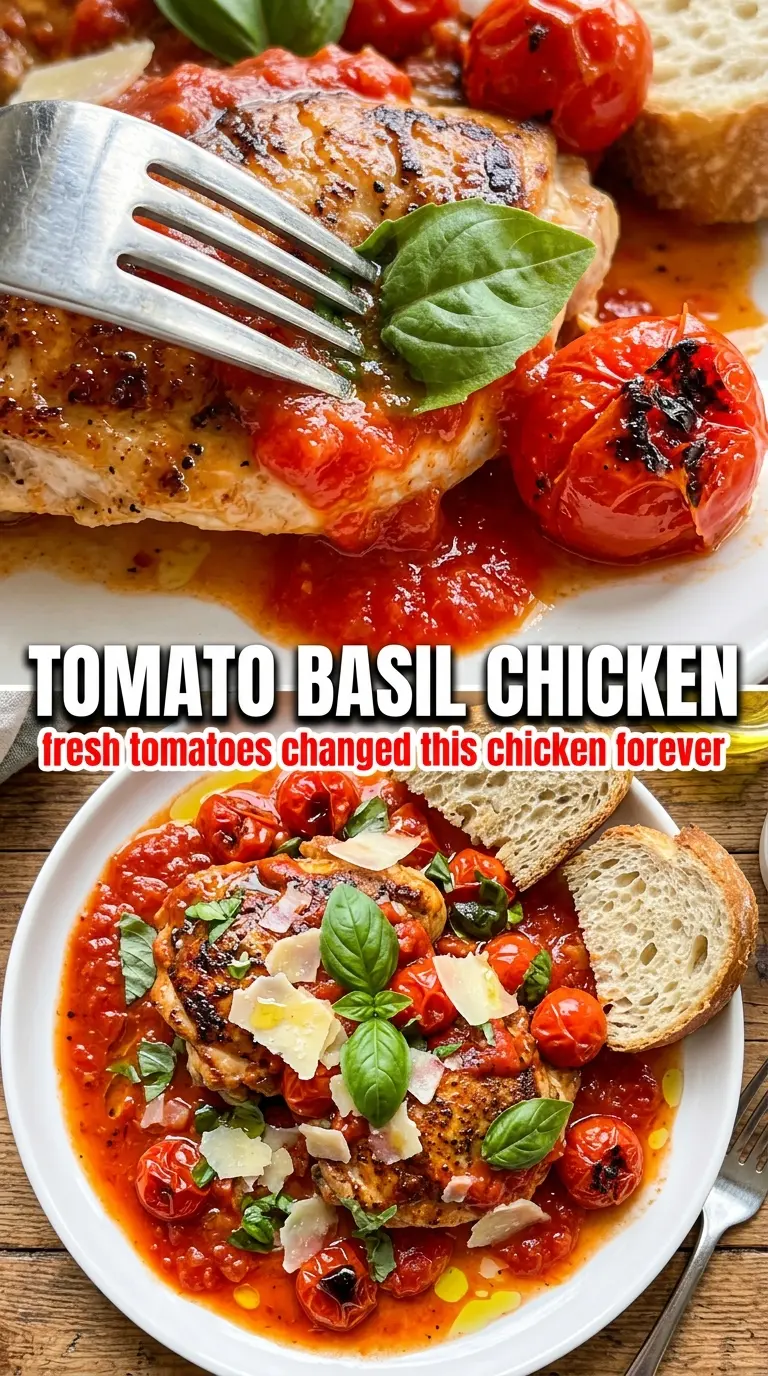
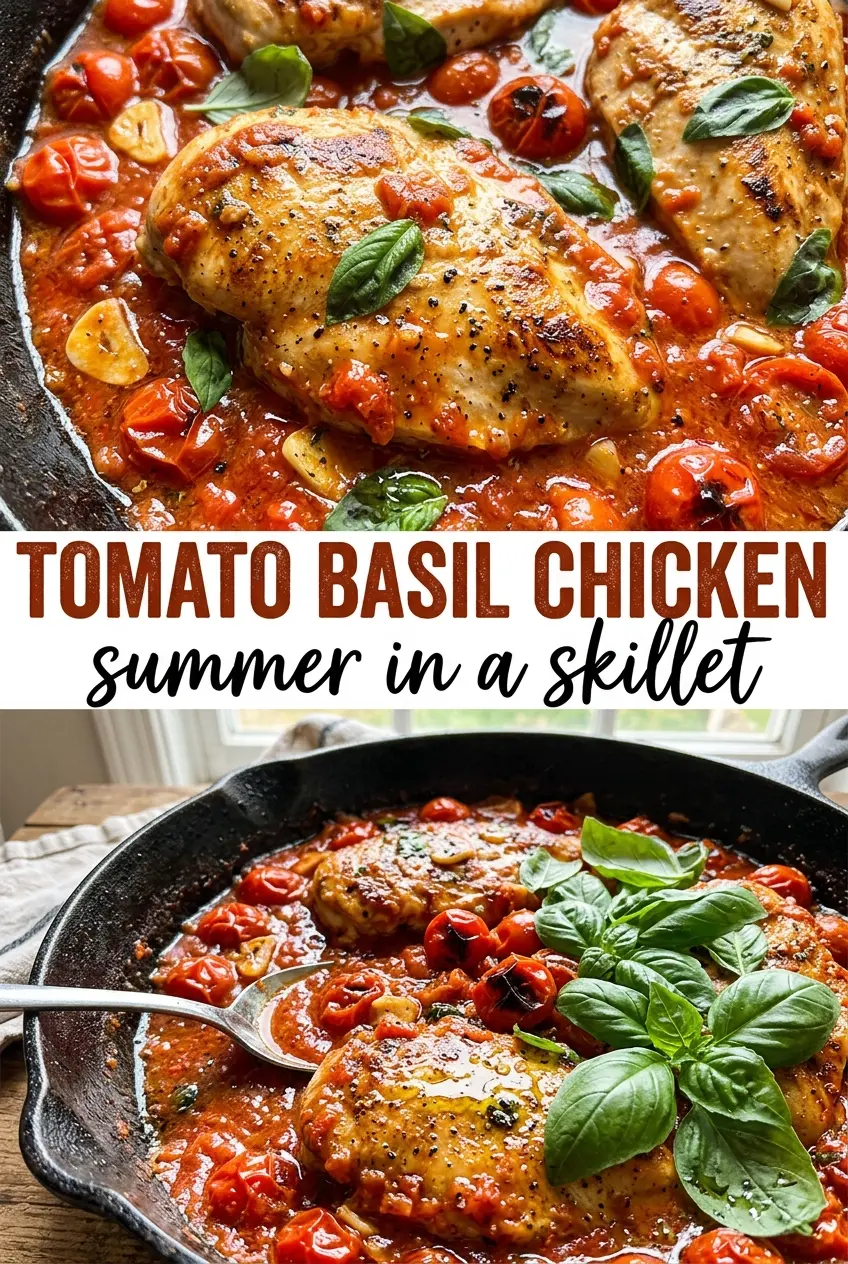
Golden chicken breasts tucked into a bright tomato basil sauce earn a permanent place in the dinner rotation because they cook fast without tasting rushed. The tomatoes break down just enough to turn glossy and jammy, the basil stays fresh, and the pan juices pick up the kind of depth you only get from a proper sear. It lands somewhere between a weeknight skillet dinner and a lighter Italian restaurant plate, which is exactly why it works.
The key is building the sauce in the same pan after the chicken comes out. Those browned bits left behind carry most of the flavor, and a short simmer with cherry tomatoes, garlic, and a splash of wine or broth pulls everything together without making the chicken soggy. A little balsamic sharpens the tomatoes, while Parmesan adds a salty finish that melts into the sauce instead of sitting on top as an afterthought.
Below, I’ve laid out the one part that matters most for keeping the chicken juicy, plus a few variations if you want to make this dairy-free or stretch it into a heartier meal. The FAQ covers the usual trouble spots too, like what to do if your tomatoes don’t burst quickly or your sauce looks thin at the end.
The tomatoes broke down into the prettiest sauce and the chicken stayed juicy even after I simmered it back in. I used chicken broth instead of wine and it still tasted like something I’d order at a little Italian place.
Save this tomato basil chicken for a fast skillet dinner with juicy seared chicken, burst tomatoes, and fresh basil.
The Seared Chicken Needs the Pan, Not the Oven
This dish gets its best texture when the chicken is browned hard in a skillet before the sauce goes in. If you crowd the pan or keep the heat too low, the breasts steam and turn pale, which leaves you without the flavor base the tomatoes need. You want a deep golden crust and a pan that still has enough heat to wake up the garlic without burning it.
The other mistake is simmering the chicken too long after it goes back into the sauce. Boneless breasts dry out fast, so the finish should be brief, just long enough for the sauce to coat the meat and bring everything to temperature. Pull it as soon as the thickest part reaches 165°F and the juices run clear.
- Chicken breasts — Use similar-sized breasts so they finish at the same time. If one end is much thicker, lightly pound it to an even thickness before seasoning.
- Cherry tomatoes — These burst quickly and give you a naturally sweet, silky sauce. Grape tomatoes work too, though they usually need an extra minute or two to soften.
- Dry white wine or chicken broth — Wine gives the sauce more brightness and a little edge. Broth is the clean substitute if you want to skip alcohol, and it still lifts the browned bits from the pan.
- Parmesan — Shaved Parmesan melts more gently than finely grated cheese and finishes the dish with a salty, nutty bite. If you only have grated Parmesan, use it sparingly so it doesn’t turn pasty in the sauce.
- Fresh basil — Add it at the end. Heat dulls basil fast, and the fresh leaves are what keep the sauce tasting vivid instead of heavy.
What Each Ingredient Is Actually Doing in This Chicken
- Chicken breasts (the protein) — Let them sit at room temperature 15 minutes before cooking. This helps them cook evenly without drying.
- Oil or butter (the cooking medium) — This prevents the chicken from drying out and carries herb and spice flavors throughout.
- Garlic (the aromatic foundation) — Fresh minced garlic mellows and becomes sweet when cooked. Don’t brown it or it turns bitter.
- Cream or sauce (the moisture keeper) — This prevents the chicken from drying out during cooking. Balance richness with acid.
- Lemon, wine, or acid (the brightness) — This prevents heavy cream sauces from tasting flat. Add at the end to preserve freshness.
- Fresh herbs (basil, thyme, parsley) — Add some during cooking and some after so you get both cooked and fresh flavors.
- Cheese or toppings (optional richness) — These add creaminess and depth. Don’t overdo it or the dish becomes heavy.
- Proper oven temperature (375-400°F) or pan heat — This cooks chicken through without drying the edges. Use a thermometer for 165°F.
Building the Sauce So It Stays Bright Instead of Watery
Seasoning and Searing the Chicken
Season the chicken generously on both sides with salt, pepper, garlic powder, and Italian seasoning before it hits the pan. The oil should shimmer, not smoke aggressively, when the chicken goes in. Leave it alone long enough to form a real crust; if it sticks at first, it usually needs another minute. Flip once the bottom releases cleanly and shows a deep golden color.
Softening the Garlic Without Burning It
Garlic only needs about 30 seconds in the leftover oil and chicken drippings. Stir as soon as it hits the pan, because garlic goes bitter fast once the edge of the pan is hot from searing. If it starts to brown before the tomatoes go in, pull the skillet off the heat for a few seconds and keep moving.
Letting the Tomatoes Do the Work
Add the halved cherry tomatoes and give them time to collapse. They should look wrinkled, split, and glossy as their juices collect in the pan. That’s the point where the sauce starts to build itself. If the pan looks dry, the heat is too high or the tomatoes are too cold straight from the fridge, so lower the heat and keep cooking until they start bursting on their own.
Finishing with Basil and Cheese
Return the chicken to the skillet for a short simmer, just enough for the sauce to coat the top and the center to finish cooking. Stir in the basil after the heat is off or very low so it stays fragrant and green. Finish with shaved Parmesan and a small drizzle of olive oil for sheen. That last bit keeps the sauce from tasting flat.
Three Ways to Bend This Recipe Without Breaking It
Dairy-Free Finish
Skip the Parmesan and finish with a little extra olive oil plus a pinch of salt. You lose the salty, nutty edge from the cheese, but the tomato-basil sauce stays clean and bright. If you want more richness, add a spoonful of unsalted butter-style dairy-free spread at the very end.
Turn It Into a Heartier Pasta Dinner
Toss the finished sauce with cooked linguine or penne and slice the chicken over the top. Reserve a splash of pasta water so the sauce clings instead of pooling in the bowl. This stretches the recipe for extra servings and turns the skillet into a full meal without adding much work.
Lower-Carb Serving
Serve the chicken over sautéed zucchini, cauliflower mash, or roasted asparagus. The sauce is already carrying the dish, so you don’t need a starchy base for it to feel complete. Keep the Parmesan, since it adds a lot of the savory finish without adding carbs.
Storage and Reheating
- Refrigerator: Store leftovers in an airtight container for up to 3 days. The basil will darken a bit, but the flavor holds up well.
- Freezer: Freeze the chicken and sauce for up to 2 months. The tomatoes soften more after thawing, so the texture turns a little less fresh, but it still reheats well for a quick dinner.
- Reheating: Warm gently in a covered skillet over low heat with a splash of broth or water. High heat dries out the chicken and can make the sauce separate, so keep it low and just heat until the center is hot.
Answers to the Questions Worth Asking
Tomato Basil Chicken Breasts
Ingredients
Equipment
Method
- Pat chicken breasts dry, then season both sides with salt, pepper, garlic powder, and Italian seasoning to taste.
- Heat olive oil in a large cast iron skillet over medium-high heat until shimmering, then sear chicken for 5-6 minutes per side until golden and internal temperature reaches 165°F.
- Transfer chicken to a plate while you make the sauce.
- In the same skillet, cook minced garlic for 30 seconds, stirring to prevent browning.
- Add halved cherry tomatoes and cook for 3-4 minutes until they burst and release their juices.
- Pour in white wine and let it bubble for 1 minute to reduce slightly.
- Stir in dried Italian seasoning, red pepper flakes, and balsamic vinegar, scraping up any browned bits.
- Return chicken to the pan and spoon the tomato sauce over each breast.
- Simmer for 2 minutes to warm through and lightly coat the chicken with sauce.
- Scatter chiffonade fresh basil over the top.
- Finish with shaved Parmesan and a drizzle of extra olive oil before serving.