Creamed pearl onions turn silky and rich in the pan, with just enough sweetness left in the onions to keep the sauce from feeling heavy. The whole dish has that old-fashioned side-dish comfort, but the sage and thyme keep it from tasting flat. Crispy sage on top gives each bite a little crackle before the cream sauce coats your tongue.
The trick is letting the onions take on a little color before the flour goes in. That light browning deepens the flavor and keeps the sauce from tasting like plain cream with onions floating in it. Frozen pearl onions work beautifully here because they stay tender without falling apart, and thawing them first keeps the sauce from thinning out while they cook.
Below, you’ll find the small timing details that matter most, plus a few smart swaps if you want to serve these alongside a holiday roast or a simple weeknight chicken dinner.
The onions stayed tender without turning mushy, and the cream sauce thickened up beautifully after about 7 minutes. I loved the crispy sage on top — it made the whole dish taste like a special occasion side.
Save these creamed pearl onions with sage and thyme for the side dish that brings a glossy, velvety sauce and crisp herb garnish to the table.
The Reason Pearl Onions Stay Sweet Instead of Watery
The mistake most people make with creamed onions is rushing straight to the sauce before the onions have had time to cook off their surface moisture and take on a little color. Pearl onions hold a lot of water, and if that moisture stays trapped in the pan, the sauce turns thin before it ever gets a chance to thicken. Giving them those 8 to 10 minutes in butter first does two jobs at once: it builds flavor and it protects the texture of the cream sauce.
Using thawed frozen pearl onions helps here because they cook evenly and peel the guesswork out of prep. Once the flour goes in, it needs a full minute to coat the onions and lose that raw taste before the broth and cream are added. Skip that minute and the finished sauce can taste pasty instead of smooth.
What Each Ingredient Is Actually Doing in This Dish

- Frozen pearl onions — These bring the sweet, gentle onion flavor that makes the dish work. Thawed onions cook more evenly and help the sauce thicken properly; if they go in frozen, extra water slips into the pan and you’ll fight a looser sauce.
- Butter — This carries the sage and gives the onions their first layer of richness. Don’t swap in oil unless you have to; oil won’t give you the same rounded flavor or help the herbs taste as plush.
- Fresh sage and thyme — Sage brings warmth and a little earthiness, while thyme keeps the sauce from tasting one-note. Dried thyme can stand in if needed, but use half as much and crush it between your fingers first.
- Flour — This is what gives the cream sauce enough body to cling to the onions. It needs that minute in the pan so it loses its raw edge and blends cleanly with the liquid.
- Chicken broth and heavy cream — The broth loosens the sauce without making it too rich, and the cream finishes it with that velvety texture. Half-and-half will work in a pinch, but the sauce will be a little lighter and won’t coat the onions as deeply.
- Parmesan — A small amount adds saltiness and a quiet savory finish. Grate it finely so it melts smoothly instead of turning grainy.
How to Keep the Sauce Smooth and the Onions Tender
Frying the Sage First
Start by frying a few whole sage leaves in the butter for about 30 seconds, just until they darken and crisp at the edges. Pull them out right away and set them on a paper towel; if they stay in the pan too long, they go bitter fast. The butter will pick up a sage aroma, which is exactly what you want before the onions go in.
Giving the Onions a Little Color
Add the thawed pearl onions and let them cook undisturbed for a few minutes at a time so they can brown in spots. Stirring constantly keeps them pale and soft, and pale onions make a flatter dish. You’re looking for a light golden surface and onions that are hot all the way through before the flour goes in.
Building the Cream Base
Stir in the chopped sage, thyme, and flour, then cook for a minute so the flour coats everything evenly. The mixture will look a little dusty at first, then it should turn glossy as the flour absorbs the fat. Whisk in the broth and cream gradually, scraping the pan as you go so the sauce stays smooth instead of lumpy.
Finishing to the Right Thickness
Let the sauce simmer gently for 6 to 8 minutes until it thickens enough to coat the onions and the onions are tender when pierced with a fork. Keep the heat low enough that the sauce barely bubbles; a hard boil can make cream look broken or oily. Stir in the Parmesan, salt, white pepper, and nutmeg at the end, then top with the crispy sage leaves right before serving.
How to Adapt These Creamed Pearl Onions for Different Tables
Make It Dairy-Free Without Losing the Silky Texture
Use a good unsweetened oat cream or cashew cream in place of the heavy cream, and swap the butter for olive oil or a plant-based butter. The sauce won’t taste quite as rich, but it will still cling to the onions if you keep the simmer gentle and finish with a little extra pinch of salt.
Make It Gluten-Free With One Small Change
Use a gluten-free all-purpose flour blend in place of the regular flour. Choose one that includes xanthan gum or another binder so the sauce thickens cleanly instead of tasting thin or sandy.
Swap in Shallots for a Sharper Edge
If you can’t find pearl onions, peeled shallots cut in halves or quarters give a similar sweet bite with a little more punch. They cook faster than pearl onions, so start checking tenderness a few minutes early.
Make It Ahead for a Holiday Meal
Cook the onions and sauce, then stop just before the crispy sage garnish. Reheat gently on the stove with a splash of broth or cream, because the sauce thickens as it cools and can look too tight straight from the fridge.
Storage and Reheating
- Refrigerator: Store leftovers in an airtight container for up to 3 days. The sauce will thicken as it chills, and the onions will soften a little more.
- Freezer: I don’t recommend freezing this one. Cream sauces can separate when thawed, and pearl onions lose their tender texture.
- Reheating: Warm slowly in a skillet over low heat with a splash of broth or cream, stirring gently until the sauce loosens. High heat is what breaks the sauce, so keep the burner low and patient.
Answers to the Questions Worth Asking
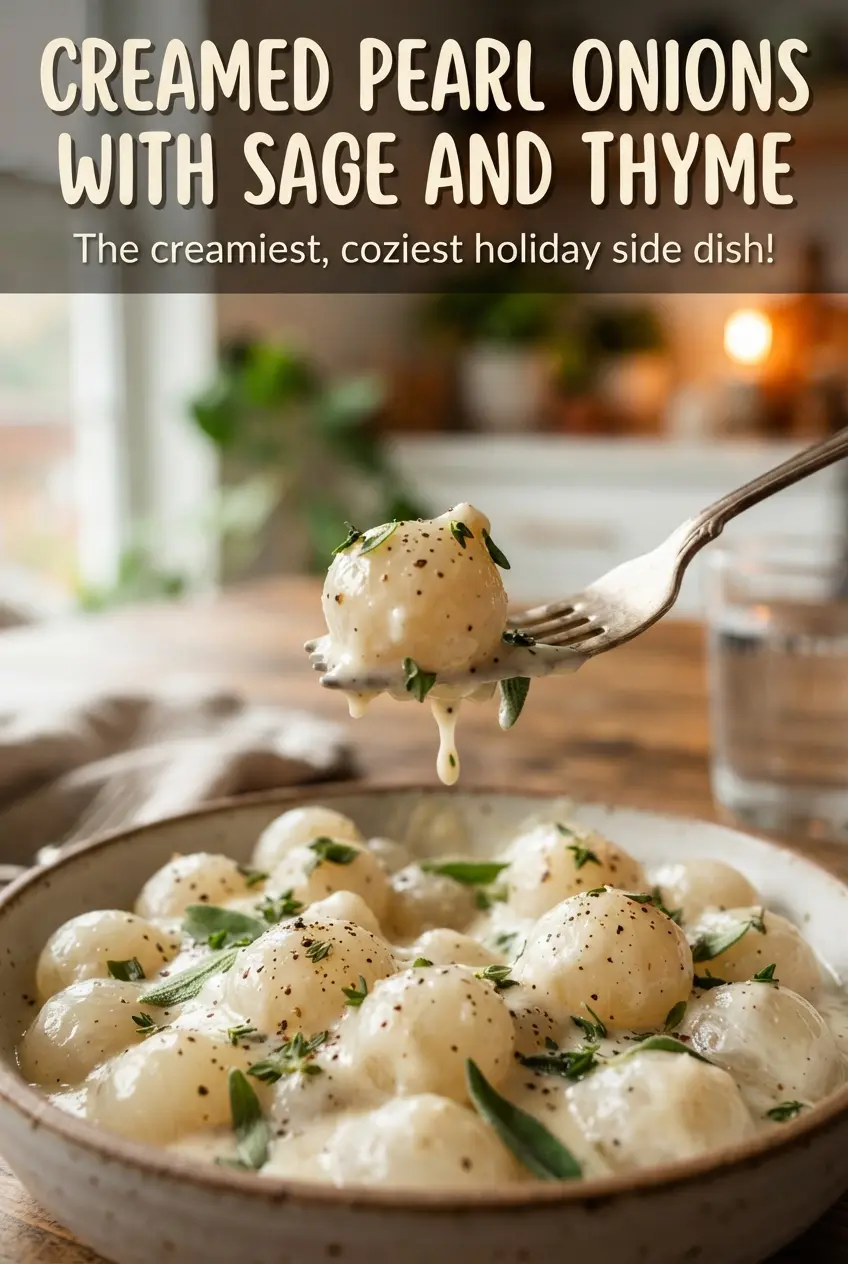
Creamed Pearl Onions with Sage and Thyme
Ingredients
Equipment
Method
- Melt the butter in a large skillet over medium heat, then fry a few whole sage leaves for 30 seconds until crisp and set aside. Watch for bubbling around the edges and a darker, crisp texture.
- Add the thawed pearl onions and cook for 8-10 minutes until lightly golden. Stir occasionally so the onions pick up color without drying out.
- Stir in the chopped sage, thyme leaves, and all-purpose flour, then cook for 1 minute. The mixture should look slightly paste-like and fragrant.
- Whisk in the chicken broth and heavy cream, then simmer for 6-8 minutes until thick and the onions are tender. The sauce should coat the onions and cling to a spoon.
- Stir in the grated Parmesan, salt, white pepper, and nutmeg. Keep stirring until the seasoning is evenly distributed and the sauce stays smooth.
- Top with the crispy sage leaves and serve warm. Add them right before serving so they stay crisp.