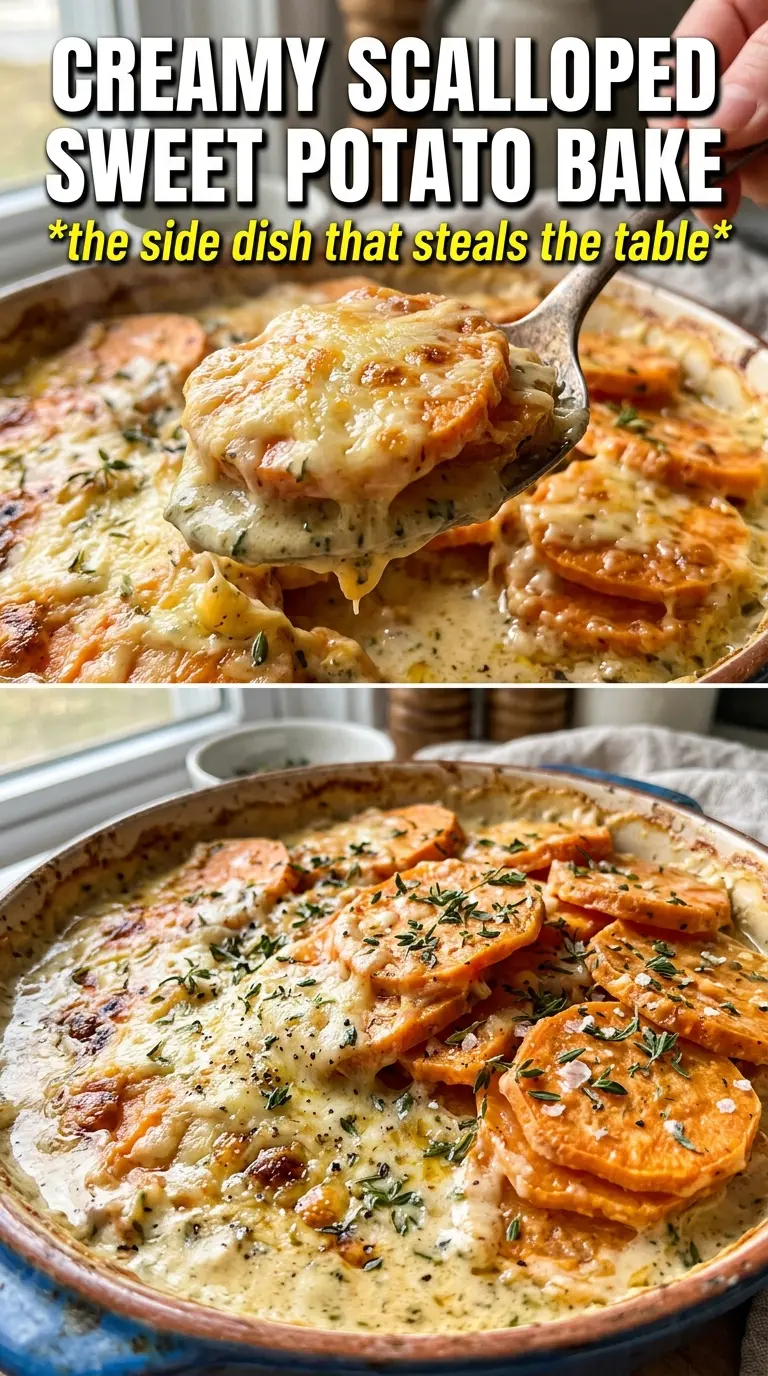
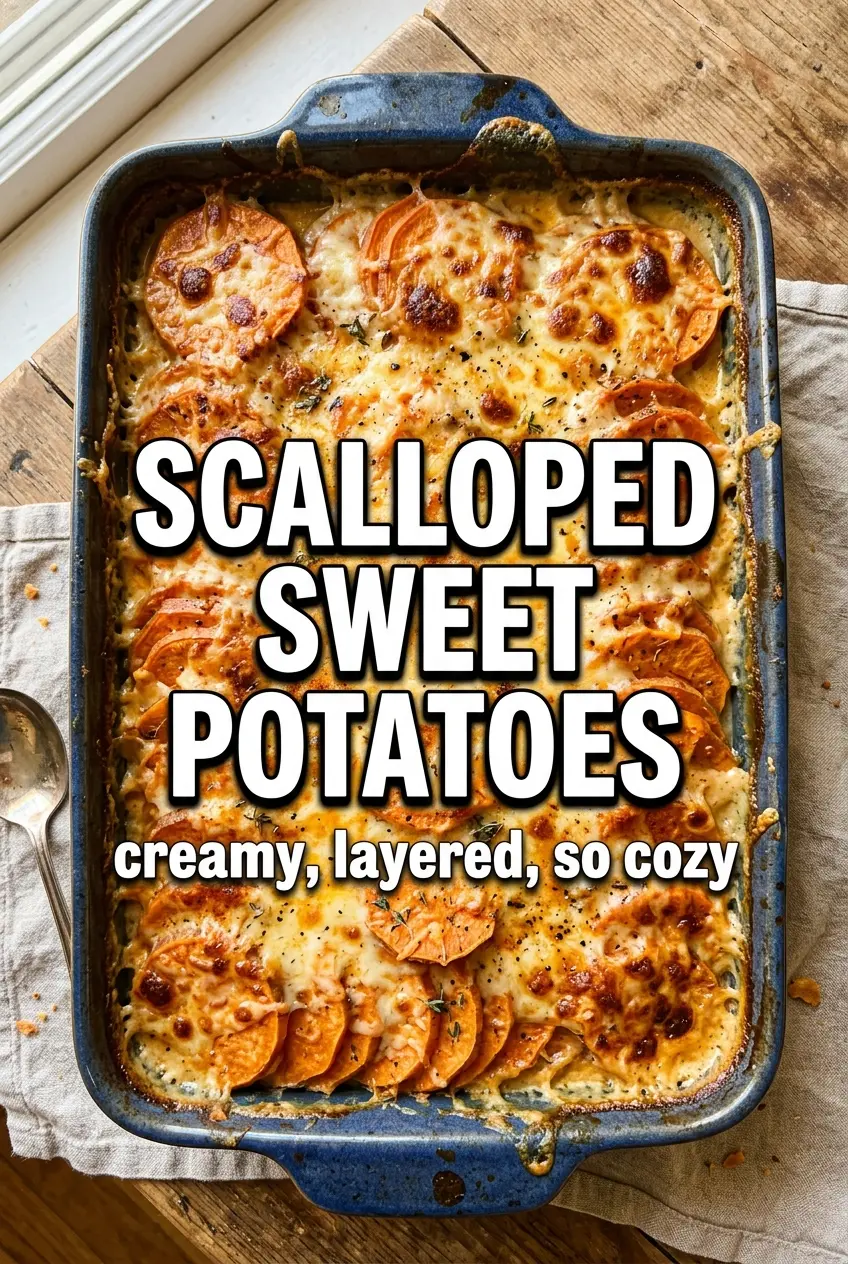
Scalloped sweet potatoes bake up tender at the center with caramelized edges, a creamy maple-kissed sauce, and a bronzed cheese crust that cracks just enough when you scoop into it. The sweet potatoes hold their shape instead of turning to mush, and the thyme, cinnamon, and nutmeg keep the dish grounded instead of overly sweet. It lands in that sweet spot where people go back for another spoonful even when they swear they’re full.
What makes this version work is the balance in the cream mixture and the way the potatoes are sliced. Thin, even slices cook at the same rate, which keeps the layers neat and gives the sauce time to thicken around them instead of pooling on the bottom. A little maple syrup brings out the natural sweetness of the potatoes, but the Gruyere and parmesan keep the finish savory and sharp. That’s the difference between a side dish that tastes rich and one that tastes flat.
You’ll find the layering trick that keeps the potatoes from sliding apart, the one resting step that keeps the sauce from running when you serve it, and a few practical swaps if you need to work with what you’ve got in the fridge.
The sauce baked into the layers instead of sitting on top, and the edges turned a little caramelized under the cheese. I used the full 10-minute rest, and it sliced cleanly without falling apart.
Save these scalloped sweet potatoes for the dinner table when you want creamy layers, a maple glaze, and a golden Gruyere crust.
The Trick to Keeping the Layers Tender Instead of Watery
Scalloped sweet potatoes can go wrong in two ways: the slices turn watery, or the top browns before the center softens. This version avoids both by giving the potatoes enough time under foil to steam gently in the cream mixture before the cheese goes on. That first covered bake matters. It’s what turns the starches soft all the way through without drying out the edges.
The other thing that matters is slicing. If the rounds are uneven, the thin pieces collapse while the thick ones stay firm, and the dish feels half-finished. Aim for slices that are close in thickness so the cream can move evenly through the pan. The goal is tender potatoes that still hold their shape when you lift them out, not a mash in a baking dish.
What Each Ingredient Is Actually Doing in This Dish
- Sweet potatoes — These are the backbone of the dish, and thin, even slices are nonnegotiable. A mandoline makes the job faster and more consistent, but a sharp knife works if you keep the slices as even as possible.
- Heavy cream and whole milk — The cream brings body, while the milk keeps the sauce from feeling heavy. You need both here; using all milk makes the sauce thinner, and using all cream can turn the dish too rich and greasy.
- Maple syrup — This doesn’t make the dish taste sugary. It rounds out the sweet potatoes and helps the edges caramelize. Honey can work in a pinch, but it reads a little sharper and less mellow.
- Gruyere and parmesan — Gruyere melts smoothly and gives the top that nutty, savory pull, while parmesan adds salt and a crisp finish. If you swap either cheese, choose one that melts well and one that brings sharpness, or the top will taste flat.
- Fresh thyme, cinnamon, and nutmeg — These are subtle, but they keep the dish from leaning dessert-like. Fresh thyme is worth using if you have it because dried thyme can taste dusty in a creamy bake.
- Garlic — Minced garlic perfumes the cream as it bakes. If you want a softer garlic note, grate it fine so it disappears into the sauce instead of landing in sharp little bites.
Building the Bake So the Sauce Stays Creamy and the Top Browns Right
Mixing the Cream Base
Whisk the cream, milk, garlic, maple syrup, thyme, cinnamon, nutmeg, salt, and pepper until the mixture looks smooth and evenly speckled. Don’t leave the garlic in clumps or it’ll bake up in sharp pockets. This is the part that carries the flavor into every layer, so season it confidently before it ever touches the pan. If the mixture tastes flat raw, it will taste flat baked.
Layering the Sweet Potatoes
Arrange the slices in overlapping rows, pressing them in gently so the layers settle together. You want the cream mixture to flow between the slices, not sit on top in a puddle. Pour it evenly over the dish, then tap the pan once or twice on the counter to help the liquid sink down. If the top looks dry before baking, add a spoonful from the bottom of the pan over the exposed slices.
Covered Baking Time
Cover the dish tightly with foil and bake until the sweet potatoes are starting to soften. Tight foil matters because it traps steam and keeps the top from setting too early. If the foil is loose, the edges dry out before the center is done. After 40 minutes, a knife should meet some resistance but not feel raw in the middle.
Cheese Finish and Final Browning
Uncover the pan, scatter the Gruyere and parmesan over the top, and return it to the oven until the cheese bubbles and the surface turns deep golden. If the top browns before the potatoes are tender, the oven is running hot and the dish needs more time covered next round. The best cue is a bubbling edge and a center that gives easily when pierced. Let it rest before serving so the sauce settles and the layers stay intact.
How to Adapt These Sweet Potatoes Without Losing the Creamy Finish
Dairy-Free Version
Use full-fat canned coconut milk in place of the cream and milk, then skip the Gruyere and parmesan or use a dairy-free melty cheese. The texture will still be rich, but the flavor shifts slightly sweeter, so keep the garlic, thyme, and pepper in place to balance it out.
Make It Ahead for a Holiday Table
Assemble the dish up to the point of baking, cover it well, and refrigerate it for up to 24 hours. Let it sit on the counter while the oven preheats so the center isn’t ice-cold, then add a few extra minutes to the covered bake. Cold casserole dishes need more time, and if you rush it, the edges will overcook before the middle softens.
Swap the Cheese if Gruyere Is Missing
Fontina or white cheddar can stand in for Gruyere. Fontina keeps the melt smooth, while white cheddar brings a sharper bite and a slightly less silky finish. If you use cheddar, grate it fresh so it melts cleanly instead of clumping on top.
Storage and Reheating
- Refrigerator: Store leftovers covered for up to 4 days. The sauce will thicken as it chills, which is normal.
- Freezer: It freezes, but the cream sauce can separate a little on thawing, so I only freeze it if I have to. Wrap portions tightly and thaw in the fridge before reheating.
- Reheating: Rewarm covered in a 325F oven until hot through. Microwaving works for a small portion, but it softens the top and can make the edges rubbery if you heat it too long.
Answers to the Questions Worth Asking
Scalloped Sweet Potatoes
Ingredients
Equipment
Method
- Preheat the oven to 375F. Butter a 9x13 baking dish so the layers release cleanly.
- Whisk heavy cream, whole milk, minced garlic, maple syrup, fresh thyme, cinnamon, nutmeg, salt, and pepper until smooth. This creates an even custard to seep through the slices.
- Layer the thinly sliced sweet potatoes in overlapping rows in the prepared dish. Aim for an even thickness so everything tenderizes at the same pace.
- Pour the cream mixture over the sweet potato layers evenly. Press gently only if needed to help the liquid reach the bottom.
- Cover tightly with foil and bake for 40 minutes at 375F. You should see steady bubbling around the edges after the dish heats through.
- Uncover the dish and scatter the shredded Gruyère and grated parmesan over the top. Make sure the cheese lands in a fairly even layer for browning.
- Bake uncovered for 20 to 25 minutes at 375F until the sweet potatoes are completely tender and the topping is golden and bubbly. The center should feel soft when pierced with a fork.
- Rest the scalloped sweet potatoes for 10 minutes before serving. The custard will thicken slightly as it settles, helping clean slices.