Golden chicken thighs, green salsa verde rice, and melted Monterey jack all come together in one pan with the kind of low-effort payoff that earns a spot in the regular dinner rotation. The rice cooks in the same skillet as the chicken, which means it picks up every bit of seasoning, browned fond, and tangy tomatillo flavor instead of tasting like plain rice on the side.
What makes this version work is the order. Searing the chicken first builds flavor, but the real payoff comes from toasting the rice briefly before the liquid goes in. That step keeps the grains from turning soft and sticky. The salsa verde and broth do the heavy lifting for moisture and flavor, while beans and corn round the skillet out into a complete meal without extra pots.
Below, you’ll find the exact cues that tell you when the rice is done, how to keep the chicken juicy, and a few swaps that still preserve the texture of the dish.
The rice cooked up fluffy and held onto the salsa verde flavor all the way through. I liked that the chicken stayed juicy, and the melted cheese on top made it taste like a full dinner in one pan.
Save this salsa verde chicken and rice skillet for nights when you want one pan, tender chicken, and rice that cooks right in the sauce.
The Trick to Keeping the Rice Tender Instead of Mushy
The biggest failure point in a skillet rice dish is crowding too much liquid into the pan and then stirring it constantly. Rice needs a short toast in the fat before the broth goes in, and then it needs to sit. That pause lets the grains absorb liquid evenly instead of breaking down into a heavy, sticky layer at the bottom.
The other thing that matters is heat control. Once the skillet comes to a simmer, drop it to low and cover it tightly. If the heat stays high, the liquid evaporates before the rice finishes cooking, and you end up with burned edges and raw centers. If the lid doesn’t fit well, lay a sheet of foil under it to trap steam.
- Toasting the rice builds a little shell around each grain so it holds its shape during the simmer.
- Covering the skillet traps steam, which finishes the rice without stirring it into paste.
- Low heat protects the bottom layer from scorching before the rice is tender.
What Each Ingredient Is Actually Doing in This Dish

- Boneless chicken thighs stay juicy through the simmer and reheat better than breast meat. If you swap in chicken breast, cut the simmer slightly and check early so it doesn’t dry out.
- Salsa verde is the main flavor base, so this is the place where quality matters. A brighter, tangier jar will make the whole skillet taste fresher. If yours is thick, loosen it with a splash more broth.
- Long-grain white rice gives you distinct grains instead of a heavy casserole texture. Short-grain rice turns softer and stickier here, and brown rice needs more liquid and a longer cook time than this recipe is built for.
- White beans or pinto beans add body and make the skillet feel complete without much extra work. Drain them well so they don’t water down the rice.
- Monterey jack melts cleanly into the top without getting greasy or stringy. Pre-shredded works, but freshly shredded melts smoother because it doesn’t carry the anti-caking coating.
The Sequence That Builds Flavor Without Overcooking Anything
Searing the Chicken First
Season the chicken thighs well, then sear them in a hot skillet until the outside turns deep golden and releases easily from the pan. If the chicken sticks, it needs another minute; forcing it too soon tears the crust. You’re not cooking it through here, just building flavor and color before it goes back into the rice.
Toasting the Rice in the Pan Drippings
Once the chicken comes out, add the garlic briefly, then stir in the rice and let it toast for about two minutes. The grains should look glossy and smell faintly nutty. If the rice goes from pale to tan too fast, the heat is too high and the garlic will burn before the rice has a chance to absorb the fat.
Simmering the Skillet Until the Liquid Disappears
Pour in the salsa verde and broth, then add the beans and corn before nesting the chicken back into the rice. Bring everything to a simmer, cover, and turn the heat down low. When the lid comes off, the rice should be tender, the liquid absorbed, and the chicken cooked through to 165°F in the thickest part.
Melting the Cheese at the End
Scatter the Monterey jack over the top, cover the skillet again, and let the residual heat melt it. Don’t crank the burner for this part; high heat can scorch the bottom while the cheese still looks unmelted on top. Finish with cilantro and lime, which cut through the richness and sharpen the salsa verde.
How to Adapt This Skillet Without Losing the Texture
Make It Dairy-Free
Skip the Monterey jack and finish with extra cilantro, lime, and a spoonful of diced avocado if you want the same fresh contrast. The skillet still eats like a full meal because the cheese is a finishing layer, not part of the base structure.
Use Chicken Breasts Instead of Thighs
Chicken breasts work, but they dry out faster and don’t bring quite as much richness to the skillet. Sear them briefly, then check for doneness a few minutes earlier than thighs so they stay tender.
Make It Vegetarian
Swap the chicken for extra beans and use vegetable broth instead of chicken broth. The dish becomes more of a hearty rice-and-bean skillet, and the salsa verde still carries the flavor, but you’ll lose the browned chicken drippings that deepen the base.
Stretch It for a Bigger Crowd
Add an extra 1/2 cup rice, another 3/4 cup broth, and a bit more salsa verde if your skillet is large enough. The important part is keeping the rice-to-liquid ratio balanced; too much liquid makes the center soft before the top layer finishes.
Storage and Reheating
- Refrigerator: Store covered for up to 4 days. The rice will firm up a little as it chills, but the flavor holds well.
- Freezer: It freezes well for up to 2 months. Cool it completely, portion it into airtight containers, and thaw overnight before reheating.
- Reheating: Reheat gently in a covered skillet or microwave with a splash of broth or water. The common mistake is blasting it dry on high heat, which toughens the chicken and makes the rice chalky.
Answers to the Questions Worth Asking
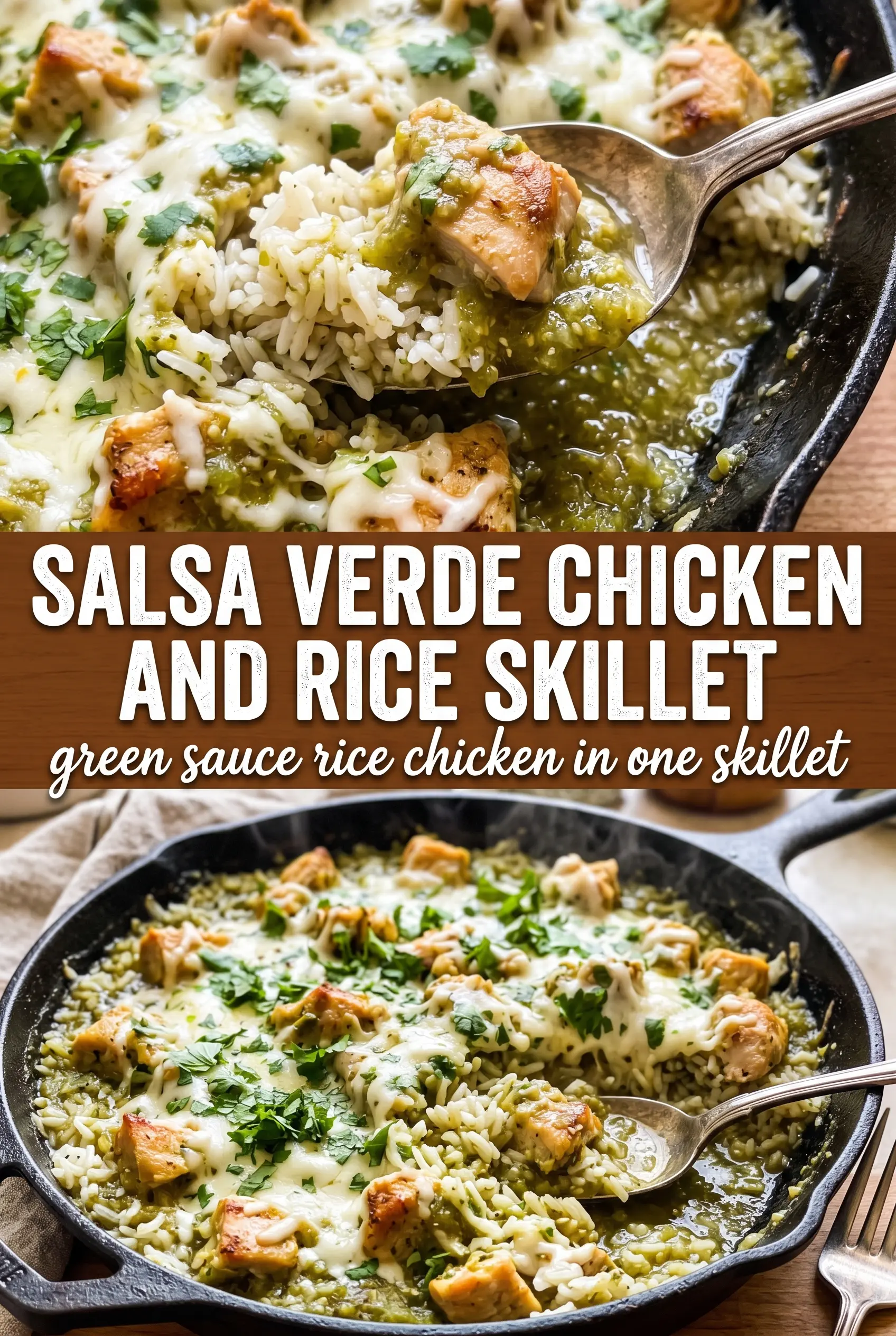
Salsa Verde Chicken and Rice Skillet
Ingredients
Equipment
Method
- Season chicken thighs with cumin, chili powder, salt, and pepper.
- Heat olive oil in a large oven-safe skillet over high heat, then sear chicken thighs for 4–5 minutes per side until golden; remove and set aside.
- Add garlic to the pan and cook for 30 seconds, then add rice and toast for 2 minutes while stirring.
- Pour in salsa verde and chicken broth, stir to combine, then add beans and corn.
- Nestle chicken thighs back into the rice, bring to a simmer, cover, and cook over low heat for 20 minutes until rice is cooked and chicken is done with visible doneness.
- Top with shredded Monterey jack, cover for 2 minutes until the cheese melts into a layer.
- Garnish with cilantro and lime wedges for serving.