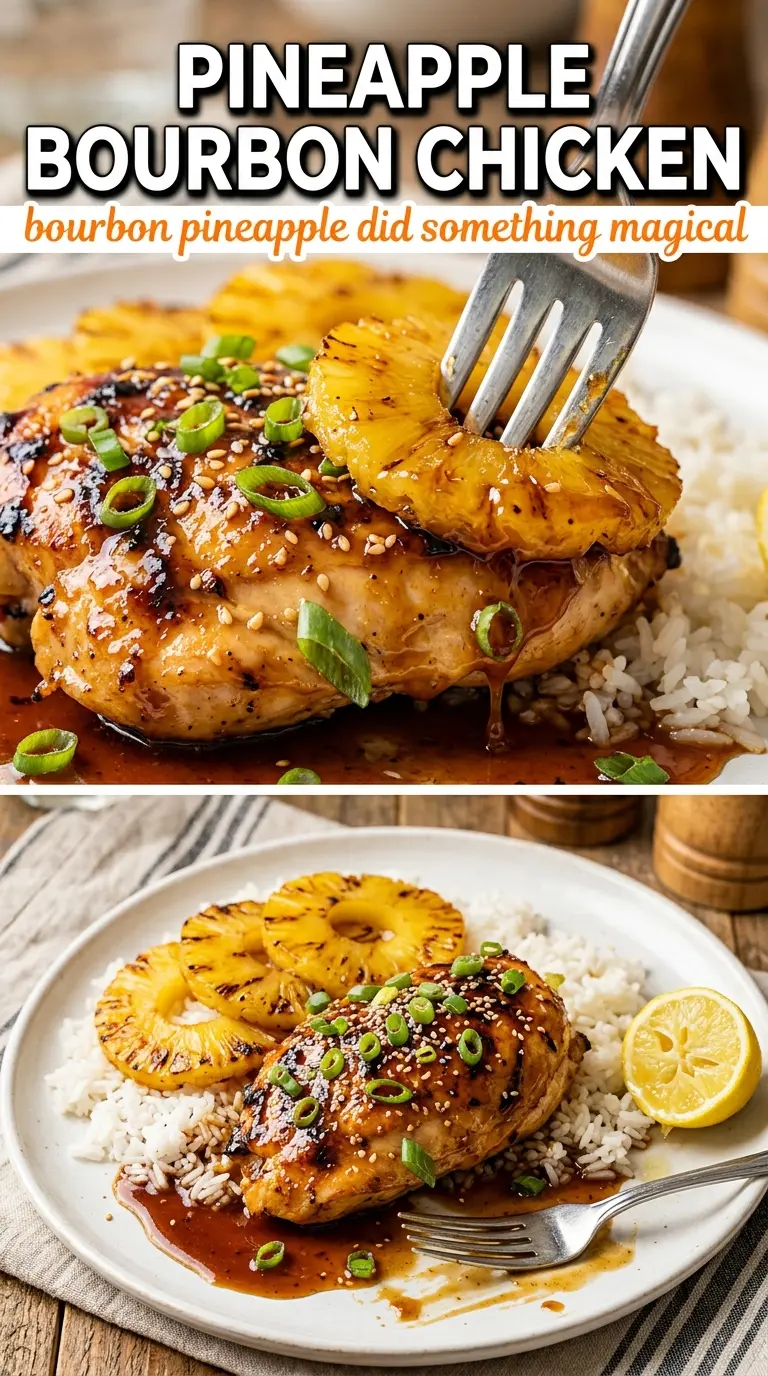
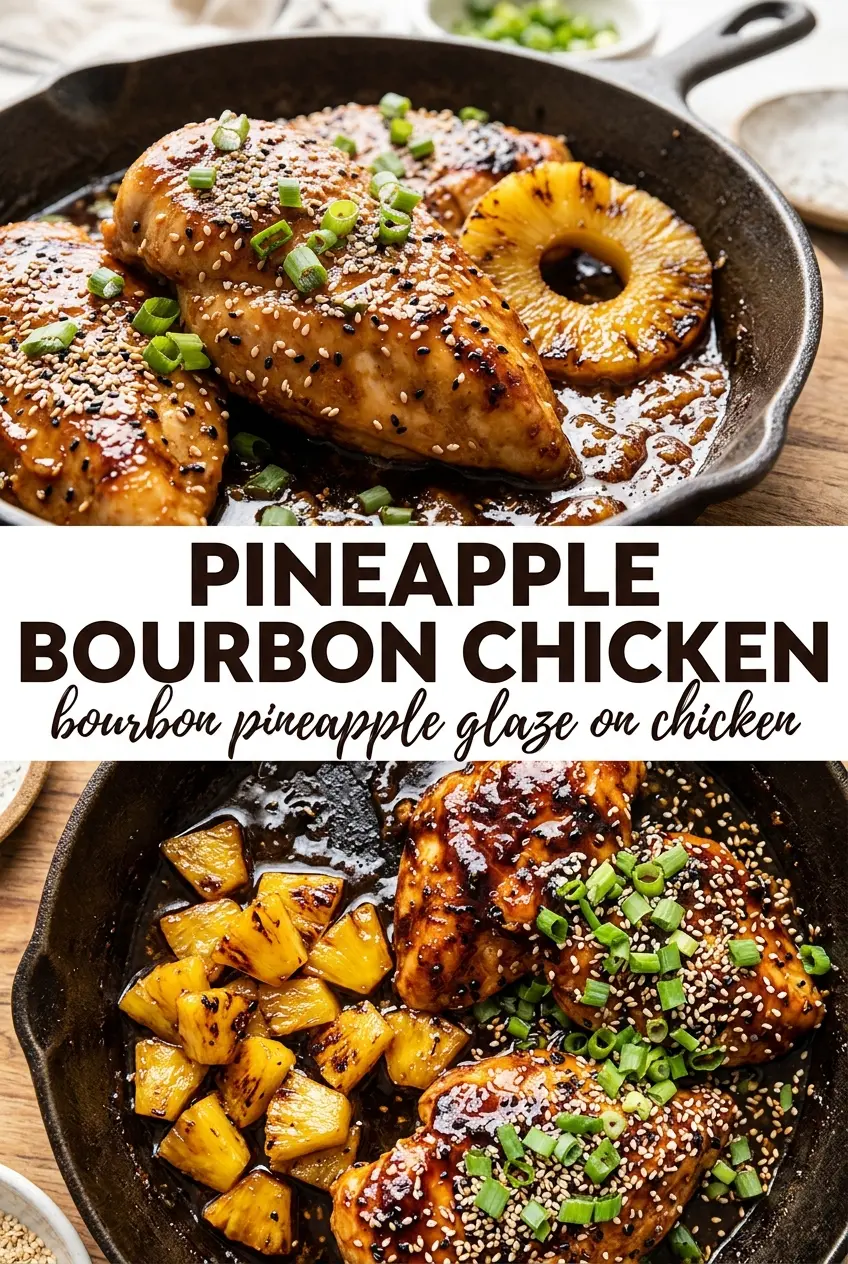
Sticky pineapple bourbon chicken lands in the pan with caramelized edges, glossy sauce, and just enough sweetness to keep you going back for one more bite. The chicken stays tender because it gets cooked first and pulled out before the sauce starts reducing. That keeps the glaze from turning muddy and gives the meat a clean sear instead of simmering in its own juices.
The sauce is built from pineapple juice, bourbon, soy sauce, brown sugar, ketchup, garlic, and ginger. That combination does the work of a takeout-style bourbon chicken without relying on bottled glaze. The cornstarch slurry goes in at the end, after the sauce has had time to reduce a little, which is what gives you that thick, sticky coating instead of a thin, sugary pan sauce.
Below, I’ve included the small details that keep the chicken browned, the sauce balanced, and the pineapple intact. There’s also a variation for skipping the bourbon if you need it, plus the reheating method that keeps the glaze from splitting.
The sauce got glossy and sticky in just a few minutes, and the pineapple chunks stayed bright instead of falling apart. My husband asked if I could put this on the weekly menu.
Save this pineapple bourbon chicken for the nights when you want a sticky skillet dinner with caramelized edges and a glossy glaze.
The Trick to Getting Bourbon Chicken Sticky Instead of Watery
The biggest mistake with a dish like this is rushing the sauce before the chicken has had a chance to brown. If the pan is crowded, the chicken steams, the fond stays weak, and the glaze never gets that deep savory edge. Cook the chicken in a single layer and let it pick up color before it comes out of the skillet.
The sauce also needs a little reduction before the slurry goes in. If you thicken it too early, the sugar can lock in a flat sweetness and the glaze won’t cling as well. You want it simmering, a little darker, and just starting to smell concentrated before the cornstarch mixture hits the pan.
- Boneless chicken thighs — Thighs stay juicy in a quick skillet sauce and hold up better than breasts. If you swap in chicken breast, cut it into even pieces and shorten the cooking time so it doesn’t dry out.
- Pineapple juice — This gives the sauce its bright base and gentle acidity. Bottled juice works fine here, but avoid pineapple syrup, which pushes the glaze too sweet and heavy.
- Bourbon — It adds depth, warmth, and a little caramel note once it simmers. If you want to skip it, use chicken stock with a teaspoon of vanilla extract or a splash more pineapple juice, but the sauce will taste softer and less rounded.
- Cornstarch slurry — This is what turns the sauce into a true sticky glaze. Mix it with cold water first, then stir it into the simmering sauce; if the pan isn’t hot enough, it won’t thicken cleanly.
What Each Ingredient Is Actually Doing in This Chicken
- Chicken breasts (the protein) — Let them sit at room temperature 15 minutes before cooking. This helps them cook evenly without drying.
- Oil or butter (the cooking medium) — This prevents the chicken from drying out and carries herb and spice flavors throughout.
- Garlic (the aromatic foundation) — Fresh minced garlic mellows and becomes sweet when cooked. Don’t brown it or it turns bitter.
- Cream or sauce (the moisture keeper) — This prevents the chicken from drying out during cooking. Balance richness with acid.
- Lemon, wine, or acid (the brightness) — This prevents heavy cream sauces from tasting flat. Add at the end to preserve freshness.
- Fresh herbs (basil, thyme, parsley) — Add some during cooking and some after so you get both cooked and fresh flavors.
- Cheese or toppings (optional richness) — These add creaminess and depth. Don’t overdo it or the dish becomes heavy.
- Proper oven temperature (375-400°F) or pan heat — This cooks chicken through without drying the edges. Use a thermometer for 165°F.
Building the Glaze in the Same Pan You Cook the Chicken In
Brown the Chicken First
Season the chicken with salt and pepper, then cook it in hot oil until the edges are golden and the centers are cooked through. Don’t keep stirring it around. You need contact with the pan to get color, and that color becomes part of the sauce later. If the skillet looks crowded, work in two batches so the chicken sears instead of steaming.
Reduce the Sauce Until It Smells Concentrated
Pour the pineapple juice, bourbon, soy sauce, brown sugar, ketchup, garlic, and ginger into the same pan. Scrape up the browned bits as the sauce comes to a simmer. Let it cook for about 5 minutes so the liquid reduces and the alcohol cooks off; the sauce should smell less sharp and more rounded before you thicken it.
Thicken, Then Coat
Stir in the cornstarch slurry and keep the sauce moving until it turns glossy and starts to cling to the spoon. It should look like a thin glaze at first, then tighten into something sticky and lacquered. Return the chicken to the pan, toss well, and add the pineapple chunks at the end so they warm through without turning soft.
Finish with Fresh Garnish
Spoon the chicken over rice and finish with green onions and sesame seeds. The garnish matters here because the sauce is rich and sweet. The green onions cut through that and keep each bite from feeling heavy.
Three Ways to Adjust This Pineapple Bourbon Chicken
Skip the Bourbon
Use chicken stock in place of the bourbon and add a teaspoon of apple cider vinegar for brightness. You’ll lose some of the warm caramel note, but the sauce will still reduce into a sticky glaze with a cleaner, lighter finish.
Make It Gluten-Free
Swap the soy sauce for tamari or coconut aminos. Tamari gives the closest savory depth, while coconut aminos taste a little sweeter, so you may want to reduce the brown sugar by a teaspoon or two.
Use Chicken Breast Instead of Thighs
Chicken breast works, but it cooks faster and dries out sooner. Cut it into even pieces, pull it from the pan as soon as it turns opaque and lightly golden, and return it to the sauce only at the end so it stays tender.
Storage and Reheating
- Refrigerator: Store leftovers in an airtight container for up to 4 days. The sauce will thicken as it chills, and the pineapple will soften a little.
- Freezer: It freezes well for up to 2 months, though the pineapple texture gets softer after thawing. Freeze it in a shallow container so it cools quickly and reheats evenly.
- Reheating: Warm it in a skillet over medium-low heat with a splash of water or pineapple juice. Stir gently until the glaze loosens again; high heat can make the sauce separate and can dry out the chicken.
Answers to the Questions Worth Asking About This Dish
Pineapple Bourbon Chicken
Ingredients
Equipment
Method
- Season the chicken pieces with salt and black pepper and cook in the vegetable oil in a large cast iron skillet over medium-high heat for 5–6 minutes, until cooked through and golden. Remove the chicken and set aside.
- In the same pan, combine the pineapple juice, bourbon, soy sauce, brown sugar, ketchup, garlic, and ginger, then bring to a simmer. Cook for 5 minutes.
- Stir in the cornstarch slurry (cornstarch mixed with water) and cook until thickened and sticky, stirring as it thickens.
- Return the chicken to the sauce, toss to coat, and add pineapple chunks, then cook for 2 more minutes. Continue tossing so caramelized edges form and the pineapple heats through.
- Serve over rice and garnish with green onions and sesame seeds.