Crispy chicken thighs and creamy Parmesan rice make the kind of one-pan dinner that disappears fast and doesn’t leave you with a sink full of pots. The chicken skin stays crackling on top while the rice underneath turns rich, garlicky, and full of browned pan flavor. It’s the sort of meal that feels like more work than it is, which is exactly why it earns a permanent spot in the weeknight rotation.
The trick here is building flavor in layers before the pan ever goes into the oven. Searing the chicken first gives you rendered fat and those deep brown bits that season the rice, while toasting the rice for a couple of minutes keeps it from turning gummy. Parmesan goes in with the broth, not at the end, so it melts into the rice instead of clumping on top.
Below, I’ll walk through the part that matters most: how to keep the chicken skin crisp while the rice finishes underneath. There’s also a simple way to swap ingredients if you need to work around what’s in the fridge without losing the texture that makes this dish work.
The chicken skin came out shatteringly crisp and the rice was creamy without getting mushy. I loved that the Parmesan melted right into the broth, and everything was cooked in one pan in under an hour.
Like this one-pan garlic Parmesan chicken and rice? Save it to Pinterest for the nights when you want crisp chicken, creamy rice, and one skillet to wash.
The Pan Juices Are What Keep the Rice from Tasting Flat
The biggest mistake with dishes like this is treating the rice like a side dish instead of the base of the whole meal. Here, the rice cooks in the same skillet as the chicken, so it picks up the rendered fat, garlic, onion, and browned bits left behind after searing. That’s what gives every spoonful depth instead of a bland, steamed texture.
Two things matter most: getting the chicken properly seared before it goes into the oven, and not drowning the rice in liquid. The rice should simmer gently once the broth goes in. If it’s boiling hard, the top can dry out before the grains underneath are tender, and the chicken skin won’t stay as crisp.
What Each Ingredient Is Actually Doing in This Chicken
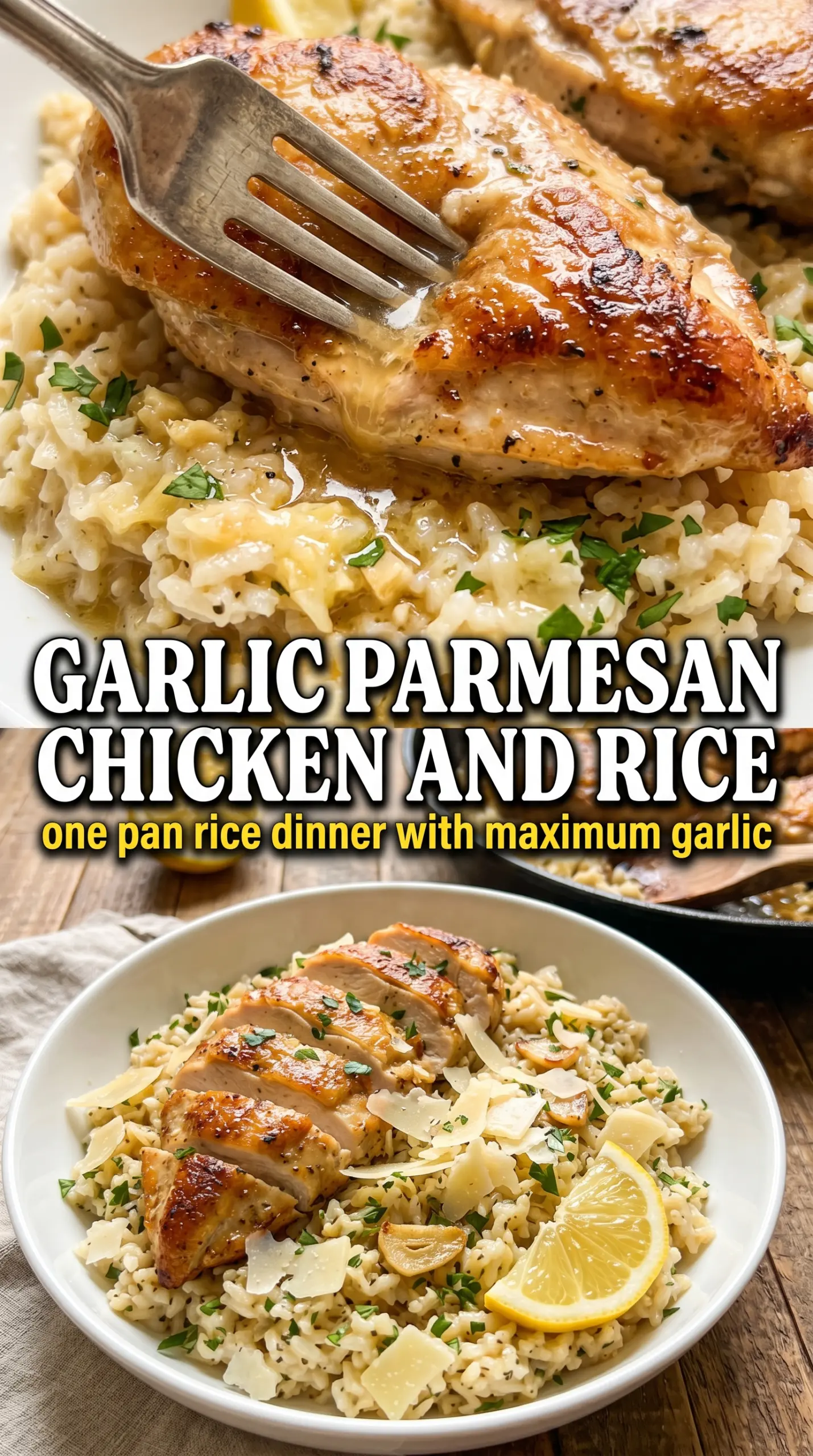
- Chicken breasts (the protein) — Let them sit at room temperature 15 minutes before cooking. This helps them cook evenly without drying.
- Oil or butter (the cooking medium) — This prevents the chicken from drying out and carries herb and spice flavors throughout.
- Garlic (the aromatic foundation) — Fresh minced garlic mellows and becomes sweet when cooked. Don’t brown it or it turns bitter.
- Cream or sauce (the moisture keeper) — This prevents the chicken from drying out during cooking. Balance richness with acid.
- Lemon, wine, or acid (the brightness) — This prevents heavy cream sauces from tasting flat. Add at the end to preserve freshness.
- Fresh herbs (basil, thyme, parsley) — Add some during cooking and some after so you get both cooked and fresh flavors.
- Cheese or toppings (optional richness) — These add creaminess and depth. Don’t overdo it or the dish becomes heavy.
- Proper oven temperature (375-400°F) or pan heat — This cooks chicken through without drying the edges. Use a thermometer for 165°F.
What the Parmesan Is Actually Doing Here
- Parmesan cheese — Use finely grated Parmesan, not a coarse shred, so it melts smoothly into the broth. The cheese adds salt, body, and that creamy finish without needing cream. If you use a wedge and grate it fresh, the rice will taste cleaner and more savory.
- Long-grain white rice — This is the right rice for a fluffy, separate grain texture. Short-grain rice turns softer and more risotto-like, while brown rice needs a different liquid ratio and longer cook time. If you need a swap, jasmine rice works well with the same timing, though it will be a little softer.
- Bone-in, skin-on chicken thighs — These stay juicy during the bake and give you the best pan drippings. Boneless thighs work, but they cook faster and won’t give you the same crisp skin on top. Trim only the loose excess fat so the skin can brown instead of steaming.
- Chicken broth — Use a broth you’d actually drink; this is the liquid that seasons the rice from the inside out. If yours is very salty, reduce added salt on the chicken. Low-sodium broth gives you the most control.
How to Keep the Chicken Skin Crispy While the Rice Bakes
Sear the Chicken Until the Skin Releases on Its Own
Start the thighs skin-side down in hot olive oil and leave them alone for 6 to 7 minutes. The skin should turn deeply golden and pull free from the pan without tearing; if it sticks, it needs another minute. That first sear is doing two jobs: crisping the skin and rendering fat that will flavor the rice. Don’t rush it, because pale skin at this stage stays rubbery in the oven.
Build the Rice in the Same Pan
After the chicken comes out, cook the onion until it softens and the edges start to turn translucent, then add the garlic just long enough for it to smell fragrant. Stir in the rice and toast it for about 2 minutes so the grains pick up the fat and lose that raw, chalky edge. When the broth goes in, scrape the bottom of the pan well; that’s where the best flavor lives. The mixture should look loose and brothy before it goes into the oven.
Bake Uncovered So the Top Stays Golden
Set the chicken thighs skin-side up over the rice and bake uncovered. The uncovered top is what keeps the skin crisp instead of trapping steam underneath it. When it’s done, the rice should be tender and the liquid mostly absorbed, with a little creamy moisture around the edges. If the rice still looks wet after 35 minutes, give it 5 more minutes before touching the pan.
Make It Dairy-Free Without Losing the Savory Finish
Leave out the Parmesan and add a small spoonful of nutritional yeast with the broth for a nutty, savory edge. The rice won’t be as rich or creamy, but it will still have good depth from the garlic, onion, and chicken drippings. This is the cleanest dairy-free swap if you still want a cheesy-adjacent finish.
Use Boneless Chicken Thighs for a Faster Bake
Boneless thighs will cook faster and are a good choice if you want this on the table sooner. Start checking them around 20 to 25 minutes in the oven, because they can dry out before the rice finishes if you leave them in too long. You’ll lose the crackly skin, but you’ll still get a juicy, flavorful chicken and rice dinner.
Swap in Jasmine Rice for a Softer, Fragrant Grain
Jasmine rice works with this method and gives the dish a slightly more aromatic finish. Keep the liquid the same and watch the texture near the end, since jasmine can soften a touch quicker than standard long-grain rice. If you like the rice a little looser and more tender, this is a good swap.
Storage and Reheating
- Refrigerator: Store leftovers in an airtight container for up to 4 days. The rice will firm up a little as it cools, but the flavor holds well.
- Freezer: Freeze in portions for up to 2 months. The chicken texture stays good, though the rice gets a little softer after thawing.
- Reheating: Reheat covered in a 325°F oven with a splash of broth or water until hot, or warm gently in a skillet over low heat. The common mistake is blasting it in the microwave, which dries out the chicken and turns the rice tough at the edges.
Answers to the Questions Worth Asking

One-Pan Garlic Parmesan Chicken and Rice
Ingredients
Equipment
Method
- Preheat the oven to 400°F and season the chicken thighs with salt, pepper, garlic powder, Italian seasoning, and smoked paprika. Heat olive oil in a large oven-safe skillet over medium-high heat until shimmering, then place chicken skin-side down and sear 6-7 minutes until the skin is golden and crackling; remove to a plate.
- In the same skillet, add the diced onion and cook 3 minutes until softened. Add minced garlic and cook 1 minute until fragrant, then stir in the uncooked long-grain white rice and toast 2 minutes.
- Pour in the chicken broth and stir in Parmesan and dried Italian seasoning, then bring to a simmer for 1-2 minutes. Nestle the chicken thighs skin-side up into the Parmesan rice and sprinkle with extra Parmesan, then bake uncovered at 400°F for 30-35 minutes until the rice is cooked and the chicken skin is golden.
- Garnish with fresh parsley and serve immediately, letting the pan rest for 2-3 minutes so the rice sets and the Parmesan thickens slightly.