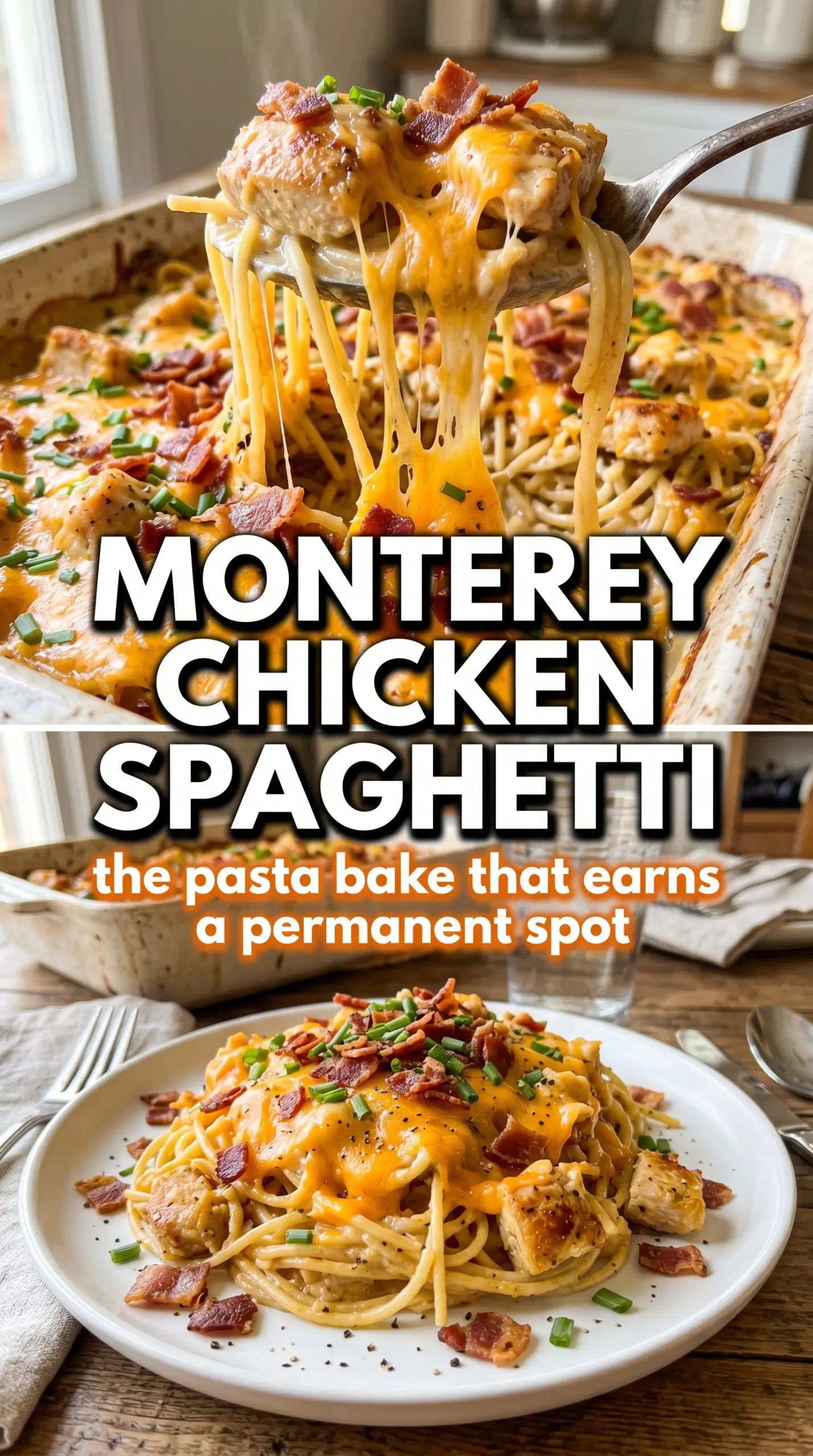
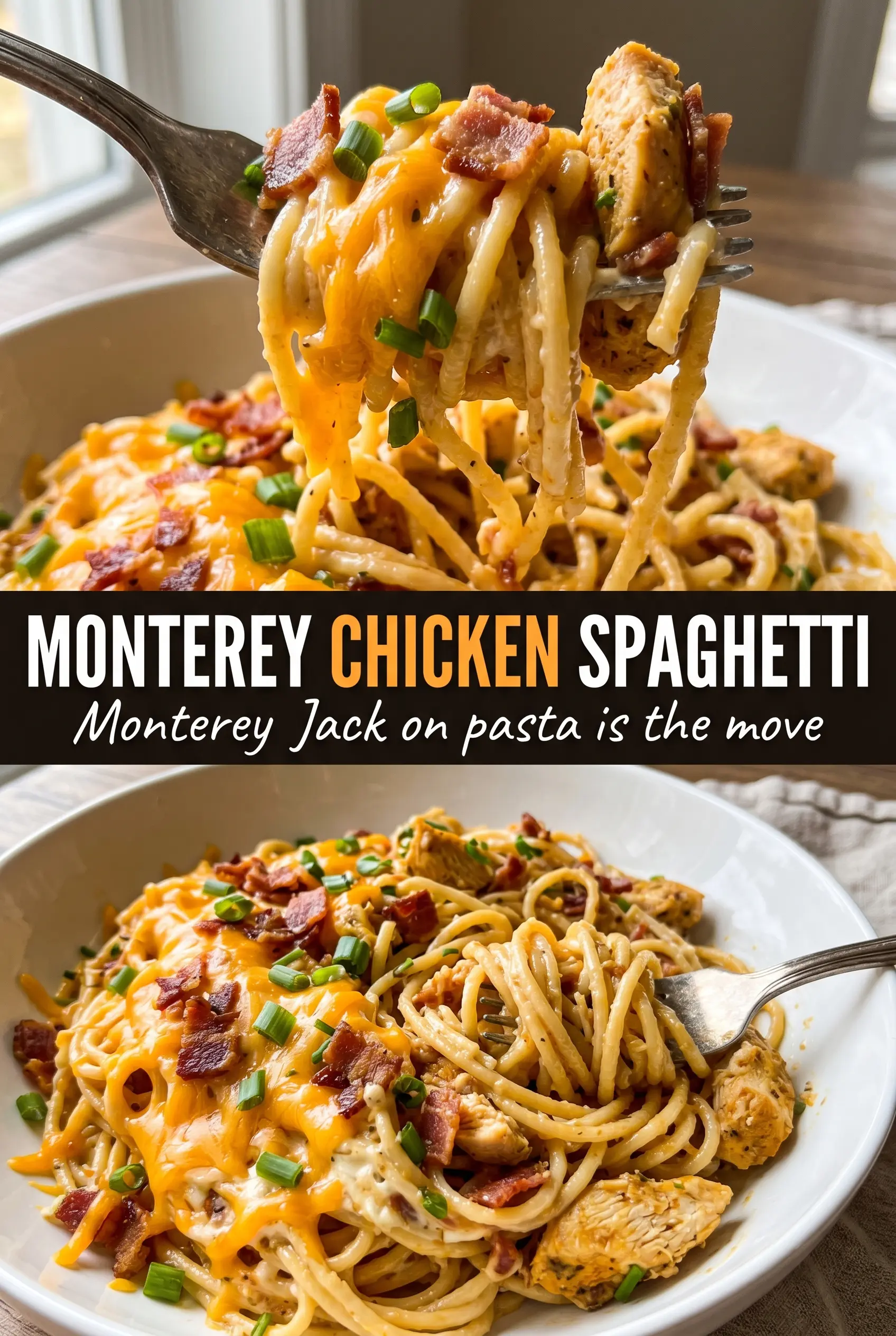
Monterey chicken spaghetti bakes into the kind of dinner that disappears fast: creamy noodles, smoky bacon, tender chicken, and a browned cheese lid that gives way to a saucy center underneath. The noodles hold onto the sauce instead of swimming in it, and every bite gets a little sweet onion, a little green chile, and that sharp, melty Monterey Jack-cheddar finish. It lands somewhere between casserole comfort and pasta-night convenience, which is exactly why it keeps showing up again.
The trick is balancing richness without turning the dish heavy. The cream of chicken soup and cream of mushroom soup build the base, but the sour cream and chicken broth loosen everything enough that the spaghetti can absorb flavor in the oven instead of clumping up. Breaking the pasta in half helps it settle into the baking dish and makes serving easier once the cheese crust sets.
Below, I’ll walk through the small details that keep the sauce creamy, not gluey, plus a few swaps if you want to use what you already have in the fridge. The bacon, bell pepper, and green chiles all earn their place here, and a little attention to the bake time keeps the top golden instead of dried out.
The sauce stayed creamy after baking and the bacon held onto its crunch around the edges. I used rotisserie chicken and it still tasted like I spent way more time on it than I did.
Creamy Monterey chicken spaghetti with a golden cheese crust is the kind of baked pasta you’ll want to keep handy for busy nights.
The Reason This Casserole Stays Creamy Instead of Turning Pasty
The common mistake with chicken spaghetti is treating it like a stovetop pasta sauce. In the oven, noodles keep absorbing liquid as the casserole bakes, so the mixture needs to look a little looser than you might expect before it goes into the dish. If it seems perfect in the bowl, it usually bakes up dry.
The other thing that matters is the order of the mix. The soup, sour cream, and broth need to be whisked smooth before they meet the pasta so the sauce coats every strand evenly. Once the spaghetti goes in, toss gently but thoroughly so the sauce gets between the noodles instead of sitting in pockets at the bottom.
- The broth keeps the casserole from tightening up as it bakes.
- The sour cream adds body and a slight tang that balances the cheese.
- The green chiles bring just enough heat to keep the richness from tasting flat.
- Bacon adds salt and smoke, but it also helps the casserole feel more complete, not just creamy.
What Each Ingredient Is Actually Doing in This Dish
- Cooked chicken — Rotisserie chicken works well here because it stays tender and saves time. If you cook it yourself, keep it moist; dry chicken gets even drier after baking.
- Spaghetti — Broken spaghetti is the right choice because it mixes more evenly into the casserole and serves cleanly. Don’t overcook it before baking; pull it while it still has a little bite.
- Cream of chicken soup and cream of mushroom soup — These build the base and give the sauce enough body to cling to the pasta. If you only have one kind, use two cans of the same soup, but the flavor gets a little less layered.
- Sour cream — This is what keeps the sauce from tasting one-note. Full-fat gives the best texture, but light sour cream will work if that’s what you have.
- Chicken broth — This loosens the mixture so it bakes creamy instead of stiff. Water works in a pinch, but the broth adds more depth.
- Bacon — Crisp bacon brings salt, smoke, and texture. Cook it until it’s properly crisp before crumbling, or it can go soft in the casserole.
- Monterey Jack and cheddar blend — Monterey Jack melts smoothly, while cheddar gives the top more flavor and color. Pre-shredded cheese works fine, though freshly shredded melts a little cleaner.
- Green bell pepper, onion, and green chiles — These keep the casserole from leaning too heavy. Dice the vegetables small so they soften during baking instead of staying crunchy.
Building the Casserole So Every Bite Cooks Evenly
Whisk the sauce before anything touches the pasta
Start with the soups, broth, sour cream, and garlic powder and whisk until the mixture looks smooth and loose. Any lumps at this stage tend to stay lumps, and they don’t disappear once the casserole bakes. The sauce should fall off the whisk in a thick ribbon, not plop in a paste.
Toss the pasta while the sauce still moves
Add the chicken, spaghetti, bacon, pepper, onion, and chiles to the sauce and toss until everything looks coated. If the mixture feels stiff in the bowl, add a splash more broth. The pasta should look heavily dressed, because the oven is going to absorb some of that liquid.
Bake until the center is hot and the top is browned
Spread the mixture into a greased 9×13 dish and cover it with the cheese blend. Bake until the edges bubble and the top turns golden in spots, about 25 to 30 minutes. If the cheese starts getting too dark before the center is hot, loosely tent the dish with foil for the last few minutes.
Let it settle before serving
Give the casserole a short rest after it comes out of the oven. That pause lets the sauce thicken slightly so the first scoop holds together instead of sliding apart. Fresh parsley on top gives it a clean finish and keeps the dish from looking heavy.
How to Adapt This for a Different Pantry or Dietary Need
Use rotisserie turkey instead of chicken
Shredded turkey works the same way as chicken and takes on the creamy sauce well. It’s a good swap after the holidays or any time you have leftovers that need a second life.
Make it gluten-free without losing the casserole texture
Use a gluten-free spaghetti that holds its shape after boiling, and swap in certified gluten-free condensed soups. The texture will still be creamy, but gluten-free pasta can soften faster, so keep an eye on the bake time.
Skip the bacon for a lighter version
You can leave the bacon out and still end up with a solid casserole. Add a pinch more salt and a little smoked paprika if you want some of that savory depth back.
Use extra cheese on top for a more pronounced crust
If you want a thicker browned top, add another half cup of cheese during the last 10 minutes of baking. That gives you a deeper crust without overcooking the noodles underneath.
Storage and Reheating
- Refrigerator: Store covered for up to 4 days. The pasta will absorb more sauce as it sits, so expect it to be a little thicker on day two.
- Freezer: This freezes fairly well in portions. Cool completely, wrap tightly, and freeze for up to 2 months; thaw overnight in the fridge before reheating.
- Reheating: Reheat covered in the oven at 325°F with a splash of broth or milk to loosen the sauce. The biggest mistake is blasting it in the microwave until the cheese turns greasy and the pasta goes tough.
Answers to the Questions Worth Asking
Monterey Chicken Spaghetti
Ingredients
Equipment
Method
- Preheat the oven to 350°F and grease a 9x13 baking dish. Keep it ready so the pasta mixture can go in right after it’s tossed.
- Whisk together the cream of chicken soup, cream of mushroom soup, chicken broth, sour cream, and garlic powder until smooth. Stop whisking once the mixture looks even with no streaks.
- Combine the cooked spaghetti, shredded chicken, soup mixture, green chiles, bacon, bell pepper, and onion; toss to coat and season with salt and pepper. Mix thoroughly so the creamy sauce clings to the noodles.
- Spread the mixture into the prepared dish and top with the cheese blend. Distribute the cheese evenly so it melts into a golden crust.
- Bake at 350°F for 25-30 minutes until bubbly and the cheese is golden. You should see active bubbling around the edges and a browned top.
- Garnish with fresh parsley. Let it sit briefly so slices hold together when scooped.