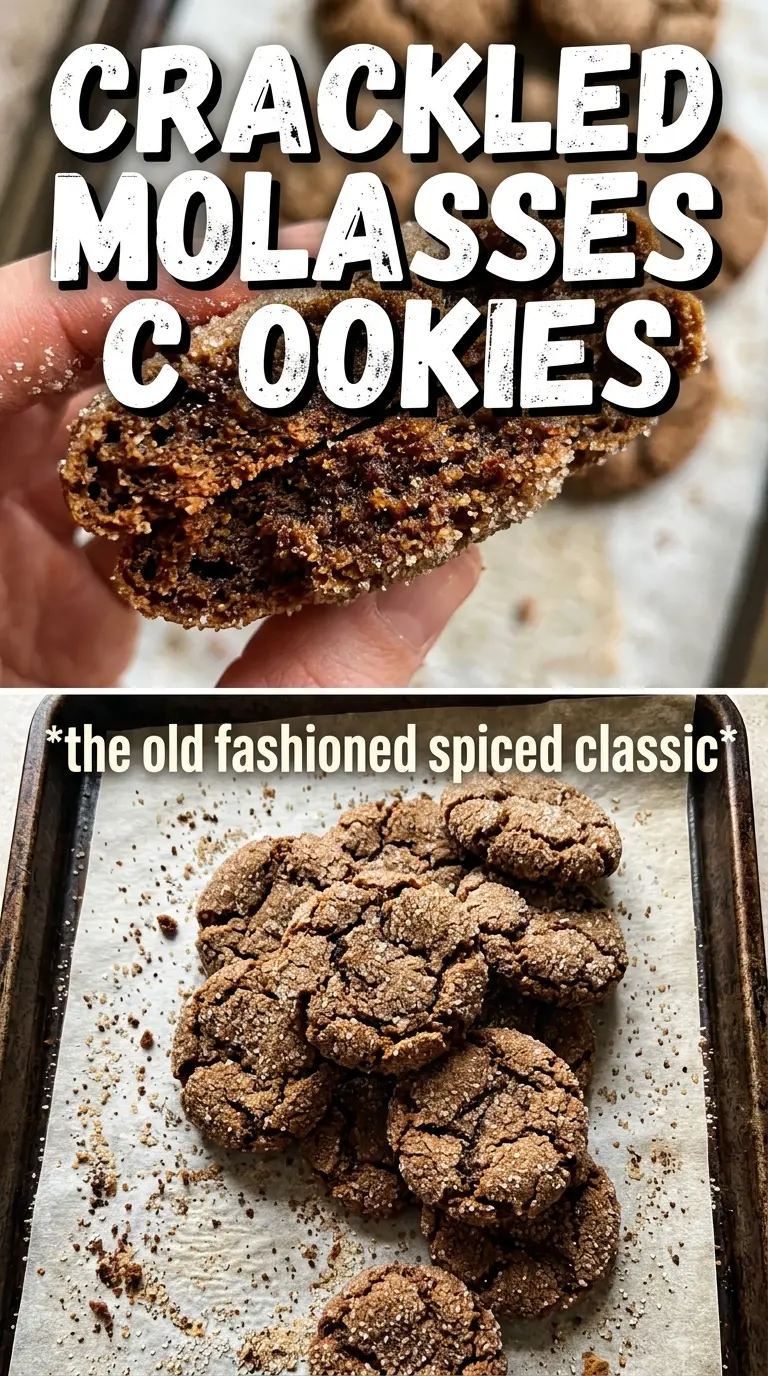
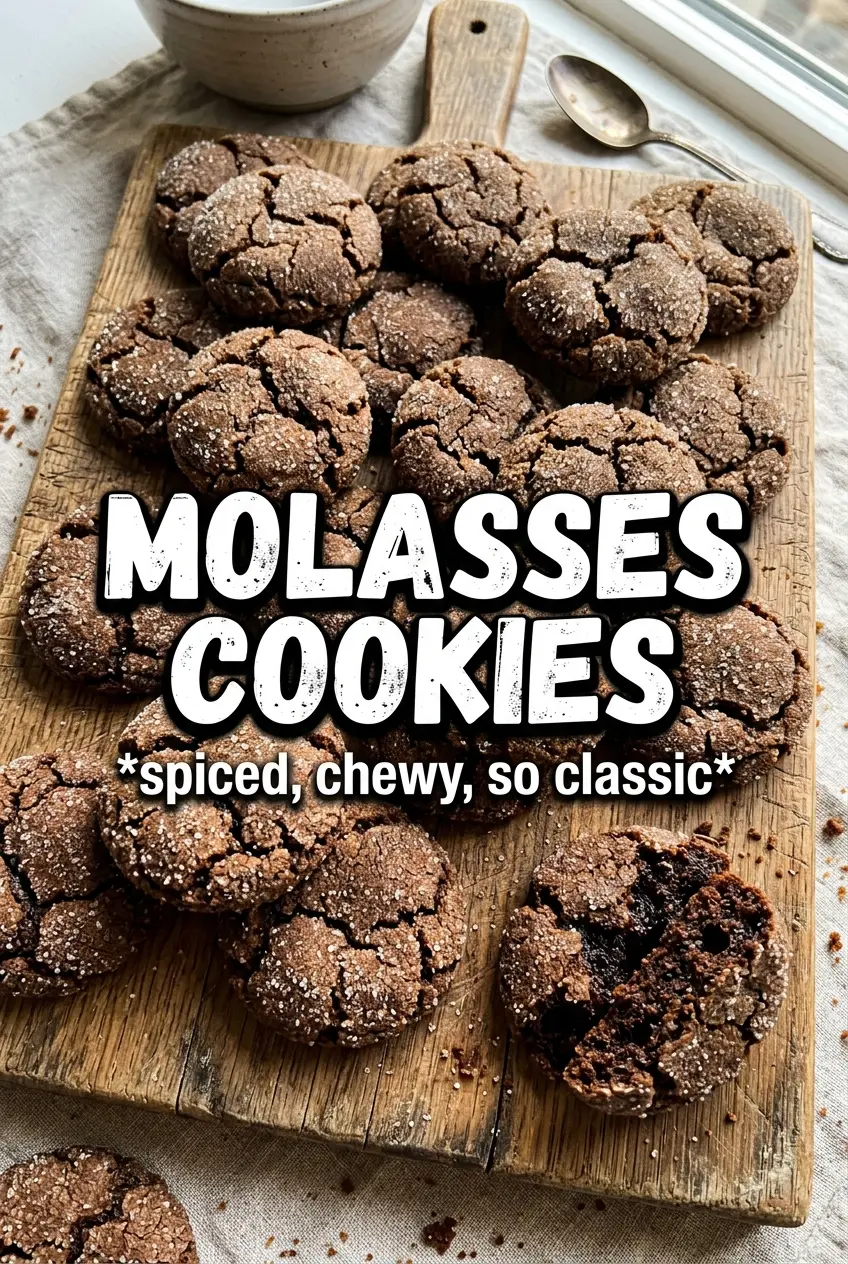
Molasses cookies bake up with the kind of crinkled tops and chewy centers that disappear fast from the cooling rack. The outside gets a sparkling sugar shell with crisp edges, while the middle stays soft, dark, and warmly spiced. That contrast is what keeps this cookie in regular rotation instead of getting lost in the usual holiday-cookie shuffle.
What makes this version work is the balance: enough molasses for deep flavor, but not so much that the cookies turn cakey or heavy. The dough gets chilled long enough to hold its shape and help the tops crack in the oven, and the black pepper adds a subtle edge that keeps the spice blend from tasting flat. Rolling the dough generously in sugar matters here too, because that’s what gives the finished cookies their little crunch and pretty sparkle.
Below, you’ll find the small details that matter most — how to keep the centers chewy instead of dry, which molasses to use, and the one timing cue that tells you to pull them before they overbake.
The cookies came out with that perfect crackly top and stayed soft in the middle even the next day. Chilling the dough made a big difference, and the sugar coating gave them such a nice little crunch.
Love those crackly sugar tops and chewy molasses centers? Save these molasses cookies for the next time you want a warmly spiced cookie that bakes up in under 12 minutes.
The Tiny Choices That Keep Molasses Cookies Chewy Instead of Cakey
A molasses cookie turns cakey fast when the dough is overmixed or the spices overwhelm the balance of fat, sugar, and molasses. The goal here is a dense, soft center with a little give when you bite in, not a puffy spice cake in cookie form. That’s why the dough gets mixed only until the flour disappears and then chilled before baking.
The other detail that matters is bake time. These should come out when the tops are crinkled and the centers still look slightly underdone. If you wait for the middle to look fully set in the oven, you’ve already gone too far; the cookies finish on the pan in those last few minutes of carryover heat.
What Each Ingredient Is Actually Doing Here
- Molasses — Use regular molasses, not blackstrap. Blackstrap tastes bitter and can overpower the cookie. The regular kind gives you that deep, warm sweetness and the chewy texture these cookies need.
- Brown sugar — This adds moisture and a soft, almost toffee-like depth that granulated sugar alone can’t give. Pack it firmly so the dough has enough body to spread just a little instead of melting flat.
- Butter — Softened butter creams with the sugar and gives the cookies their tender crumb. If it’s too melted, the dough will spread more than you want and lose that thick, crinkled look.
- Black pepper — It sounds small, but it wakes up the spice blend. You won’t taste pepper in a sharp way; you’ll notice the cookies taste more rounded and less one-note.
- Granulated sugar for rolling — This is not decoration only. The sugar shell helps the tops crack in the oven and gives the finished cookies their crisp edge.
How to Build the Crackle So the Centers Stay Soft
Mix the dry ingredients first
Whisk the flour, baking soda, spices, and salt until everything looks evenly distributed. This keeps pockets of cinnamon or baking soda from landing in one bite and throwing off the flavor or rise. If you skip the whisking and just dump the dry ingredients in later, the dough can bake unevenly and lose that even spice throughout.
Cream the butter and sugars until lightened
Beat the butter with the brown sugar and granulated sugar until it looks fluffy and a little paler, then mix in the molasses, egg, and vanilla. You’re building air here, which helps the cookies crack instead of staying dense and heavy. If the mixture looks broken after the molasses goes in, keep going at medium speed until it smooths out before adding the flour.
Fold in the flour just until the streaks disappear
Add the dry mixture and stop mixing as soon as you don’t see dry flour. Overmixing at this stage develops too much gluten and tightens the cookie, which works against the soft center you want. The dough will be soft and a little sticky; that’s normal and exactly why the chill time matters.
Chill, roll, and bake briefly
Refrigerate the dough for 30 minutes, then scoop and roll it generously in sugar before baking at 375°F. The chill gives the cookies enough structure to hold a rounded shape, and the sugar coating helps them crinkle as they spread. Pull them when the tops look cracked and the centers still seem underdone; five minutes on the pan finishes the texture without drying them out.
Three Ways to Adjust These Molasses Cookies Without Losing the Good Part
Gluten-Free Version
Swap in a 1:1 gluten-free flour blend that includes xanthan gum. The cookies will still spread and crack, though the centers may bake up a touch softer and a little more delicate, so let them cool fully before moving them.
Dairy-Free Swap
Use a plant-based butter stick instead of the unsalted butter. Choose one that behaves like real butter, not a soft tub spread, or the dough will get greasy and spread too much in the oven.
Extra-Spicy Ginger Finish
Add an extra 1/4 teaspoon ginger for a sharper bite. This pushes the cookies toward a warmer, more assertive spice flavor without changing the texture, and it works especially well if you like a little more back-of-the-throat heat.
Storage and Reheating
- Refrigerator: Store baked cookies in an airtight container for up to 5 days. They’ll stay chewy, though the sugar coating softens a bit after the first day.
- Freezer: Freeze the shaped dough balls, rolled in sugar, on a tray until solid, then transfer to a bag for up to 2 months. Bake from frozen and add 1 to 2 minutes if needed.
- Reheating: Warm a baked cookie for 8 to 10 seconds in the microwave if you want the center soft again. Don’t overheat them or they’ll turn dry at the edges and lose the chewy middle.
The Questions That Usually Come Up With Molasses Cookies
Molasses Cookies
Ingredients
Equipment
Method
- Whisk together the all-purpose flour, baking soda, cinnamon, ginger, cloves, allspice, black pepper, and salt until the spices are evenly distributed.
- Beat the softened unsalted butter, brown sugar, and granulated sugar until fluffy. Add molasses, egg, and vanilla extract and beat until smooth.
- Fold the flour mixture into the molasses mixture until just combined, stopping as soon as you no longer see dry streaks.
- Refrigerate the dough for 30 minutes to firm it up for scooping.
- Preheat the oven to 375F and line sheet pans with parchment.
- Scoop the dough into 1-1/2 tablespoon balls, then roll generously in granulated sugar so the tops sparkle.
- Bake for 9-11 minutes until the tops are crinkled and the centers look underdone.
- Cool the cookies on the pan for 5 minutes, so they finish setting into chewy cookies with crisp-edged texture.