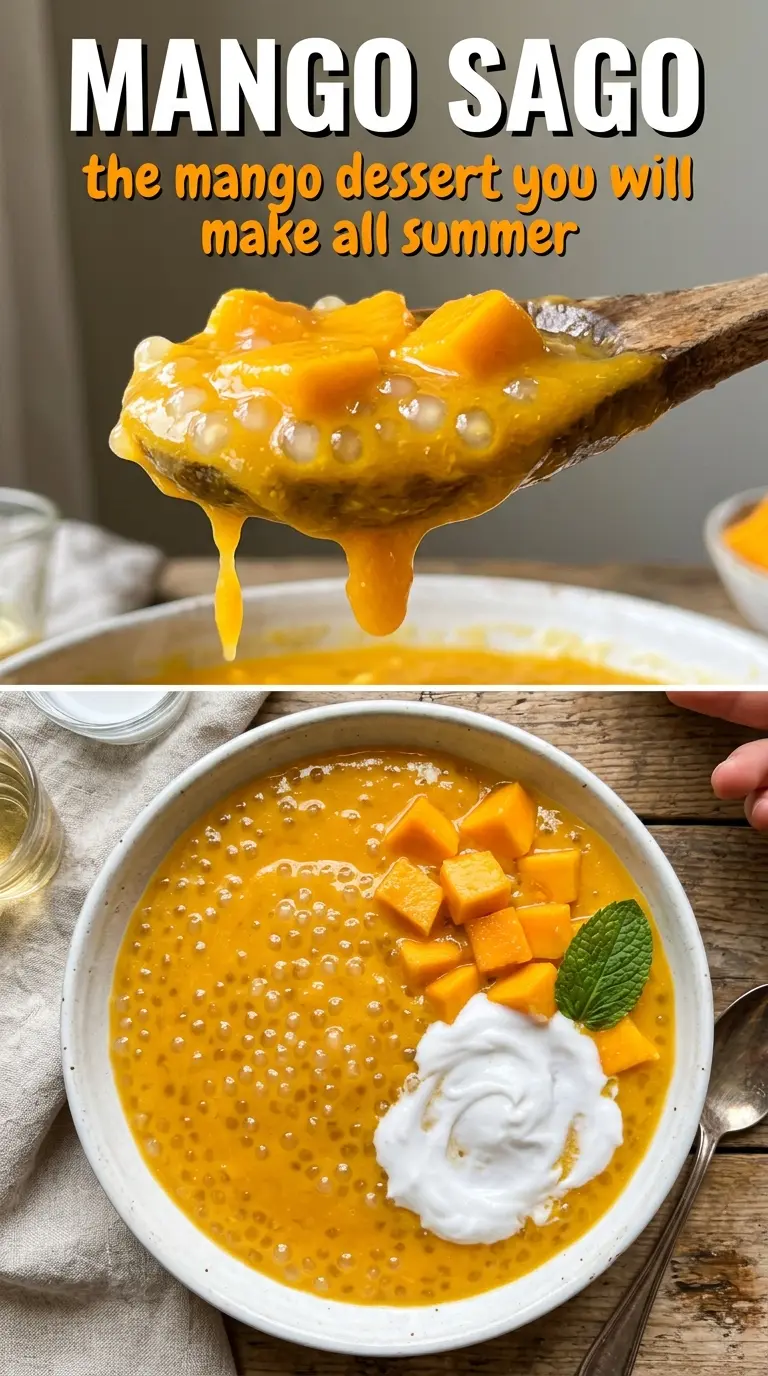
Silky mango puree, chewy sago pearls, and cold coconut milk come together in a dessert that lands somewhere between refreshing and rich. The texture is the point here: spoonfuls should give you soft mango cream, little pops of tapioca, and bright fresh fruit in every bite. When it’s chilled properly, the whole bowl tastes clean and lush at the same time.
What makes this version work is balance. One mango gets blended into the base with coconut milk, a little sugar, and condensed milk so the dessert tastes full and rounded without turning heavy. The other mango stays in cubes for contrast, which keeps the final bowl from feeling one-note. Cooking the sago until just translucent matters too; undercooked pearls stay chalky in the center, and overcooked ones turn gummy once they sit in the fridge.
Below, you’ll find the clearest way to cook the tapioca, the exact texture to look for in the puree, and a few smart variations if you want to adjust the dairy, sweetness, or coconut intensity.
The sago stayed chewy after chilling and the mango coconut base was smooth instead of icy. I added a little extra mango on top and my kids finished the whole bowl.
Save this mango sago recipe for the cold, creamy dessert with chewy pearls and fresh mango on top.
The Sago Needs a Full Boil, Not a Gentle Simmer
Sago is one of those ingredients that punishes hesitation. If the water is barely moving, the pearls can clump, cook unevenly, and leave you with a chalky center even after chilling. A full boil gives them room to move, and stirring in the first few minutes keeps them from sticking to the bottom of the pot.
The other thing that matters is the rinse. Once the pearls turn mostly translucent with only a tiny white dot in the center, drain them and rinse under cold water. That stops the cooking fast and washes off excess starch, which keeps the mango base smooth instead of gluey. If the pearls sit in hot water too long, they keep softening and lose that pleasant chew.
What Each Ingredient Is Actually Doing in This Dessert
- Small tapioca pearls — These give mango sago its signature chew. Larger pearls can work in a pinch, but they change the texture and usually need a longer cook.
- Ripe mangoes — Use fruit that smells fragrant and gives slightly at the stem. One mango goes into the blender for body and sweetness; the second should stay firm enough to cube cleanly for garnish.
- Full-fat coconut milk — This carries the dessert and gives it that lush, rounded texture. Light coconut milk makes the base thinner and less satisfying.
- Condensed milk — This adds sweetness and a little dairy richness at the same time. If you skip it, the dessert can taste flat unless your mangoes are extremely sweet.
- Whole milk — This softens the coconut milk so the dessert drinks more like a spoonable cream than a paste. You can swap in extra coconut milk if you want it dairy-free, but the result will be a bit heavier.
How to Build the Bowl So the Texture Stays Clean
Cooking the Sago Without the Sticky Mass
Bring a large pot of water to a full boil before the pearls go in. Add the sago and stir early, then again a few times during the cook so the pearls don’t clump into one mass at the bottom. They’re ready when most of them look translucent and only a tiny white core remains. Drain them right away and rinse with cold water until the surface feels slick but not gummy.
Blending the Mango Base Until It’s Completely Smooth
Blend one mango with the coconut milk, sugar, condensed milk, and whole milk until no fibrous bits remain. If the mango is stringy, stop and scrape down the blender once or twice instead of adding more liquid too soon. The base should pour like a loose custard, not a smoothie. If it looks too thick before chilling, it will set up even more in the fridge.
Chilling the Dessert So the Flavors Merge
Stir the cooled sago into the mango mixture, then chill for at least an hour. That resting time does two things: it firms the pearls to the right chew and lets the coconut and mango taste like one dessert instead of separate parts. If you serve it warm, the coconut reads thin and the sago feels unfinished.
Finishing with Fresh Mango Right Before Serving
Add the diced mango on top just before the bowls go out. Keeping the cubes separate preserves their clean flavor and gives each spoonful a fresher contrast against the creamy base. A mint sprig works well here because it keeps the dessert from looking flat and adds a clean aroma that fits the tropical notes.
Three Ways to Adjust Mango Sago Without Losing the Point
Dairy-Free Mango Sago
Use all coconut milk and skip the whole milk and condensed milk. The dessert gets richer and more coconut-forward, with a slightly heavier finish. If your mangoes aren’t very sweet, add a little sugar to taste after blending.
Lighter-Sweet Version
Cut the sugar in half and use just a small spoonful of condensed milk. This works best when the mangoes are fully ripe and fragrant. The final bowl tastes cleaner and more fruit-driven, though it will be a touch less creamy.
Extra-Chilled, Dessert-Style Glasses
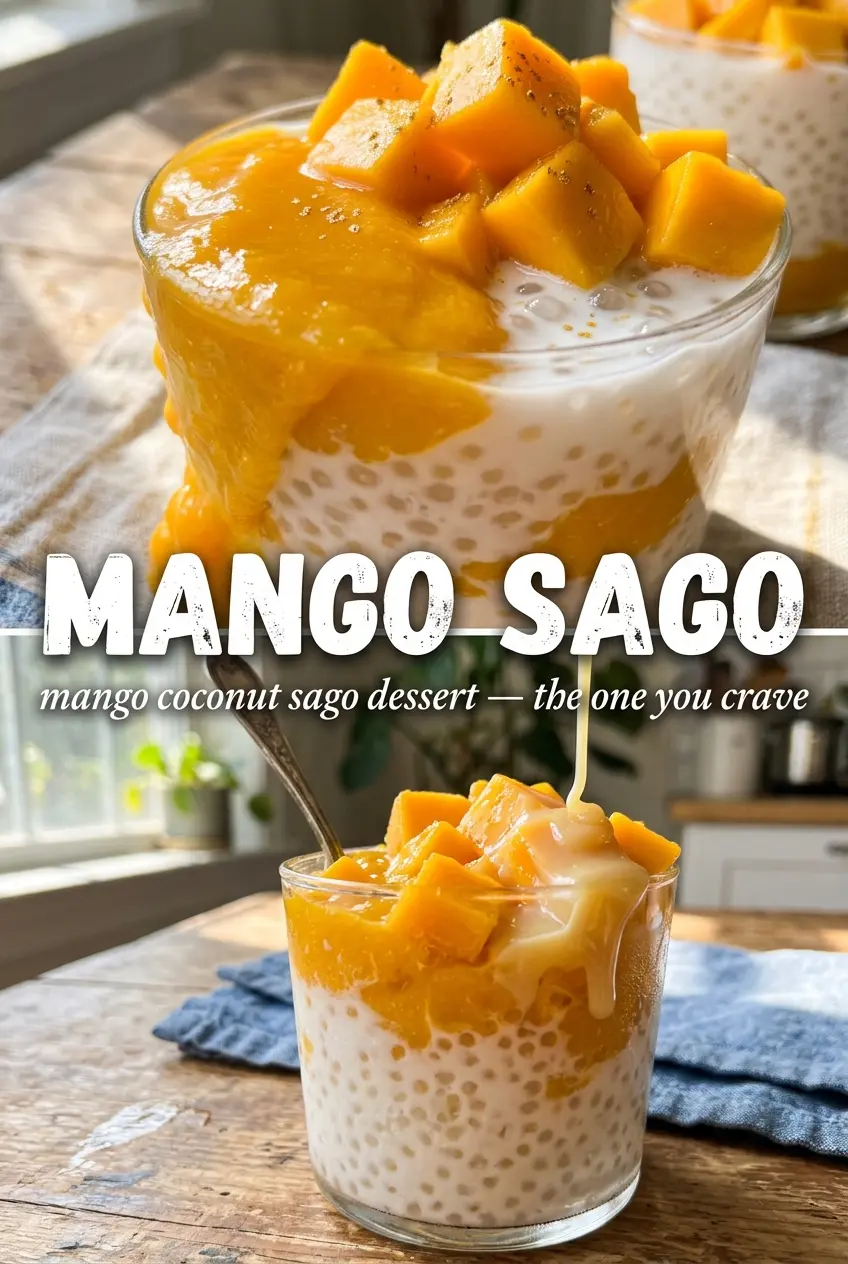
For a more polished presentation, chill serving glasses before you fill them and layer the mango cubes on top instead of folding them in. The dessert feels more composed and slightly firmer. This is a good move when you want a cleaner look and less fruit sinking to the bottom.
Storage and Reheating
- Refrigerator: Keep covered for up to 2 days. The sago will continue to soften a bit, and the dessert may thicken as it sits.
- Freezer: Don’t freeze it. The coconut base separates and the sago turns unpleasantly tough after thawing.
- Reheating: This dessert is meant to be served cold. If it thickens in the fridge, loosen it with a splash of milk or coconut milk and stir before serving instead of warming it.
Answers to the Questions Worth Asking
Mango Sago
Ingredients
Equipment
Method
- Bring a large pot of water to a rolling boil, then add small tapioca pearls (sago) and cook 12-15 minutes, stirring, until translucent.
- Drain the pearls and immediately rinse with cold water to stop the cooking, then set aside while you make the mango base.
- In a blender, puree 1 mango with full-fat coconut milk, granulated sugar, condensed milk, and whole milk until completely smooth and glossy.
- Dice the second mango into small cubes for a chunky texture that floats in the dessert.
- Stir the cooked sago pearls into the mango coconut mixture, then fold in the diced mango cubes.
- Refrigerate for at least 1 hour until the mixture is well chilled and the sago feels tender.
- Spoon the chilled mango sago into bowls or glasses and top with fresh mango cubes and a mint sprig to finish.