Butternut squash casserole bakes up soft and custardy under a crunchy pecan topping, with a sweet-savory balance that makes it fit in just as easily beside roast chicken as it does on a holiday table. The squash turns silky after boiling, then bakes into a creamy base that holds its shape when scooped, while the streusel stays crisp enough to give every bite a little snap.
The trick is draining the squash well before mashing it. Too much water is the fastest way to end up with a loose casserole that never sets. The eggs help the filling bake into that spoonable, almost pudding-like texture, and the butter-brown sugar mixture gives the topping enough richness to brown instead of just drying out.
Below, I’ve included the details that matter most: how to keep the casserole from getting watery, why the topping texture works, and the small adjustments that make this dish easier to serve for a crowd.
The squash baked up creamy instead of watery, and that pecan topping stayed crunchy even after sitting on the table for a while. I got asked for the recipe before dinner was over.
Pin this butternut squash casserole for the creamy filling and golden pecan streusel topping.
The Mistake That Makes Butternut Squash Casserole Watery
Most squash casseroles go wrong before they ever hit the oven. Butternut squash holds a lot of water, and if you mash it while it’s still wet, the filling turns loose and slumps instead of baking into a creamy, sliceable layer. Draining the squash well after boiling matters more here than fancy seasoning.
The eggs are doing real work too. They set the casserole as it bakes, which is why the mixture needs to be smooth before it goes into the pan. If you leave big chunks in the mash, the texture turns uneven and the topping settles in patches instead of sitting evenly over the surface.
What the Butter, Brown Sugar, and Pecans Are Actually Doing
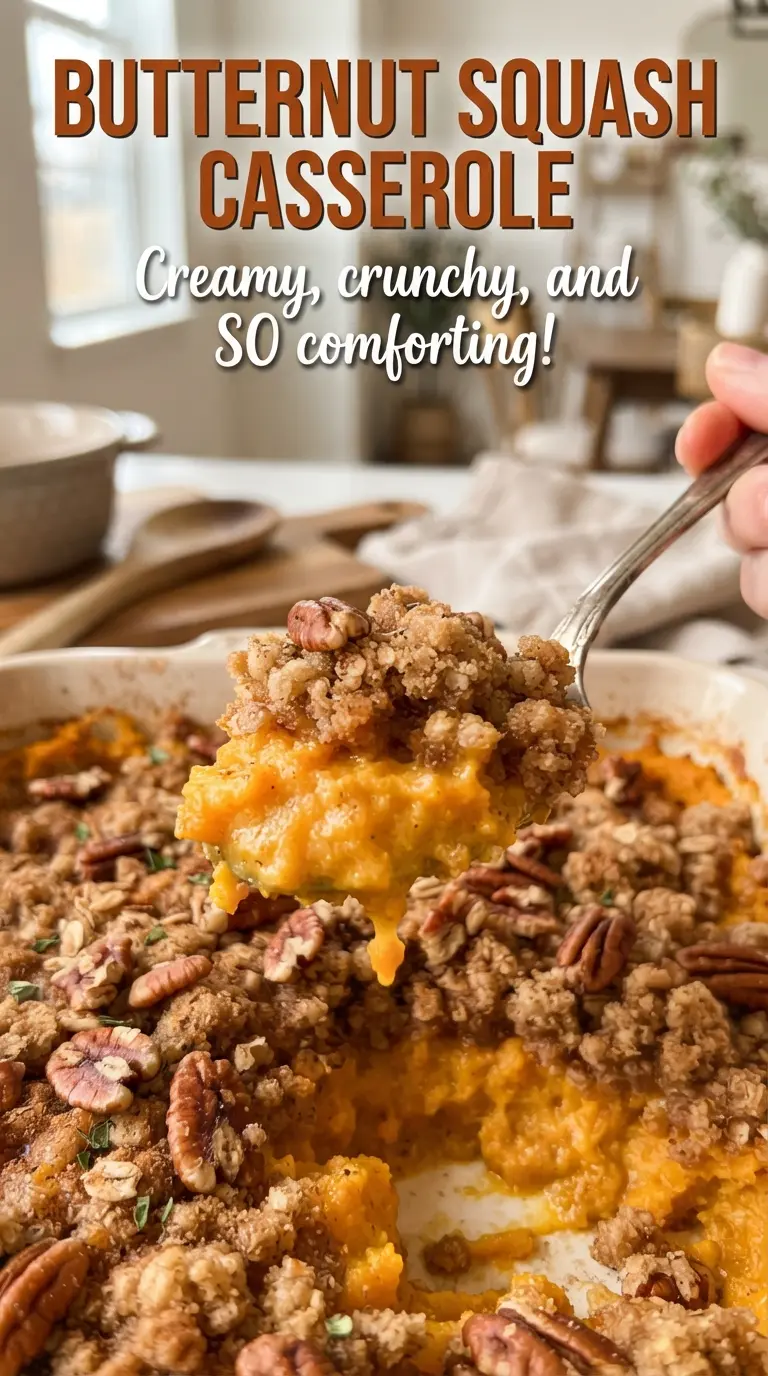
- Butternut squash — This is the base of the whole dish, so start with a squash that feels heavy for its size and has firm flesh. Pre-cut squash works in a pinch, but whole squash usually tastes sweeter and cooks with less surface moisture.
- Butter — The melted butter goes into both the filling and the topping, which gives the casserole richness and helps the streusel brown. If you need to soften the flavor, you can use half butter and half neutral oil in the filling, but the topping really does better with butter.
- Brown sugar — This adds caramel depth, not just sweetness. Light brown sugar works fine, and dark brown sugar will push the casserole a little deeper and more molasses-heavy.
- Pecans — They give the casserole its crunch and keep the topping from turning sandy or bland. Chop them medium-small so the topping clumps nicely instead of falling off in loose bits.
- Flour — This is what turns the topping into streusel. If you need a gluten-free version, a 1:1 gluten-free flour blend works well here because the topping just needs structure, not elasticity.
Building the Filling and Topping So They Bake Up Right
Cooking the Squash Until It Mashes Cleanly
Boil the cubed squash until it’s fully tender and a fork slides through without resistance. If it still feels firm in the center, the casserole will bake unevenly and you’ll end up with little firm bites inside the creamy filling. Drain it well, then give it a minute or two in the colander so steam can escape before mashing.
Mixing the Custard Base
Mash the squash with the butter, brown sugar, eggs, milk, vanilla, cinnamon, and salt until smooth. The eggs should disappear completely into the mixture, because streaks of egg can turn into odd little ribbons in the finished casserole. A potato masher gets you there, but a hand mixer makes the texture extra smooth if you want a finer finish.
Making the Pecan Streusel
Work the flour, chopped pecans, remaining butter, and remaining brown sugar together until the mixture looks crumbly and starts to clump when squeezed. If it turns paste-like, the butter was too warm; pop it in the fridge for a few minutes and break it up again. A loose, sandy topping won’t brown as nicely, so aim for uneven crumbs with some pea-size bits mixed in.
Baking Until the Edges Bubble
Spread the filling in a greased 9×13-inch baking dish and scatter the streusel evenly over the top. Bake until the topping is golden and the edges are bubbling, which tells you the custard has set enough to hold together. If the center still looks loose when you move the pan, give it a few more minutes before pulling it out.
Three Ways to Adapt This Casserole Without Losing What Makes It Good
Dairy-Free Version With Coconut Milk
Swap the milk for full-fat coconut milk and use a plant-based butter. The casserole will still set and stay creamy, but it picks up a subtle coconut note that plays well with the cinnamon and pecans.
Less Sweet, More Savory Side Dish
Reduce the brown sugar in the filling to 2 tablespoons and keep the topping only lightly sweet. This makes the casserole sit better next to ham, turkey, or roast chicken, and it puts more focus on the squash itself.
Gluten-Free Streusel
Use a 1:1 gluten-free flour blend in place of the all-purpose flour. The topping stays crisp and crumbly, which is what matters here, and you won’t lose the buttery pecan texture on top.
Make-Ahead Assembly
You can assemble the filling and topping separately a day ahead, then combine and bake just before serving. Keep the topping cold so it bakes crisp instead of melting into the surface.
Storage and Reheating
- Refrigerator: Store leftovers covered for up to 4 days. The topping softens a bit, but the filling stays creamy.
- Freezer: This freezes better after baking than before. Wrap portions tightly and freeze for up to 2 months; the streusel won’t stay fully crisp, but the texture is still good.
- Reheating: Warm uncovered in a 325F oven until heated through. The oven keeps the topping from turning soggy, which happens fast in the microwave.
Answers to the Questions Worth Asking
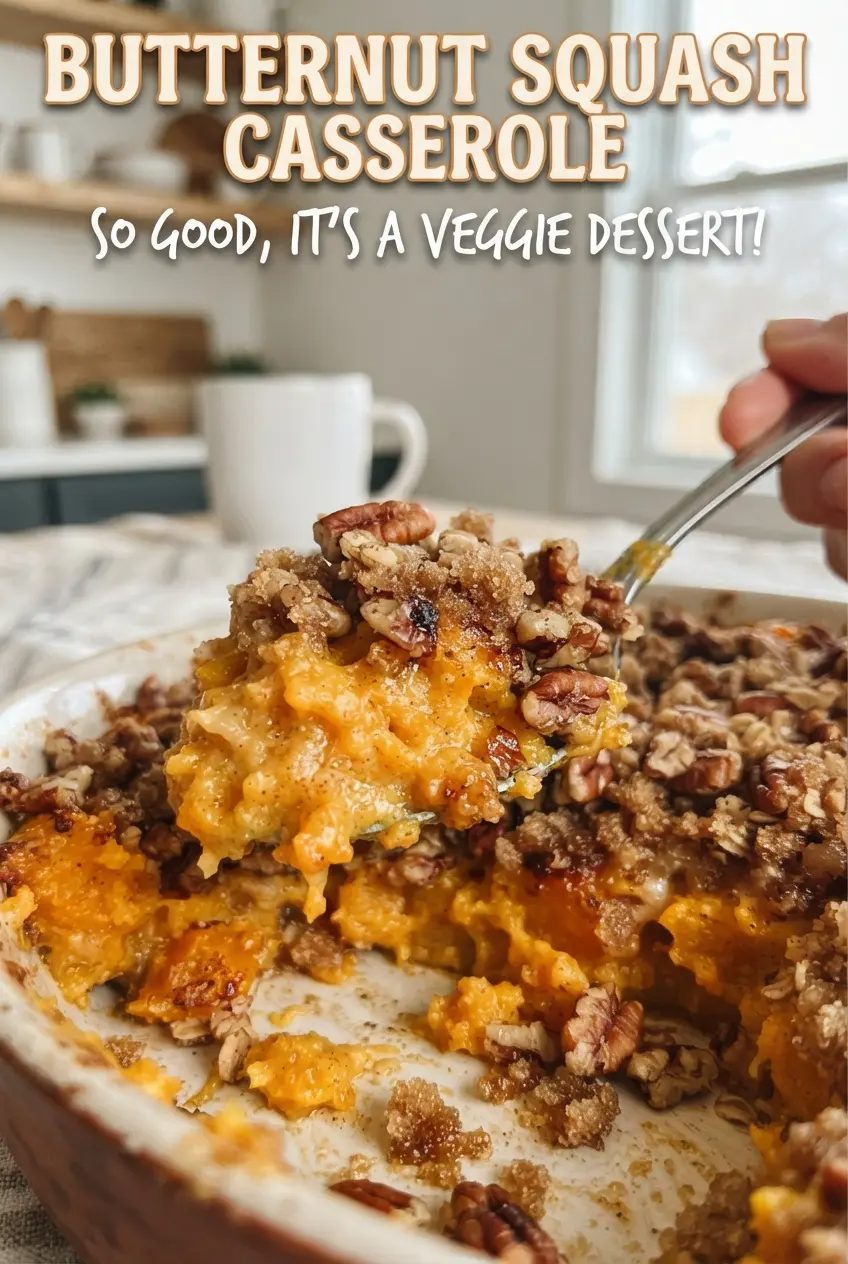
Butternut Squash Casserole
Ingredients
Equipment
Method
- Boil the peeled, cubed butternut squash in a Dutch oven for 15 minutes until very tender. Drain well so the casserole stays creamy instead of watery.
- Preheat the oven to 350°F and grease a 9x13-inch baking dish. Prepare the dish so the filling can be spread right away.
- Mash the hot squash with 1/4 cup melted butter, 1/4 cup brown sugar, eggs, milk, vanilla extract, ground cinnamon, and salt until smooth. Stop when the texture is fully creamy with no lumps.
- Spread the mashed squash mixture evenly into the prepared baking dish. Level the top so the topping bakes uniformly.
- Mix the all-purpose flour, chopped pecans, remaining melted butter, and remaining brown sugar into a crumbly topping. Press lightly just enough to form crumbles, not a paste.
- Sprinkle the crumbly topping over the squash in an even layer. Make sure the edges are covered so they bubble and brown.
- Bake at 350°F for 35-40 minutes until the topping is golden and the edges bubble. Rest briefly before serving for cleaner scoops from the dish.