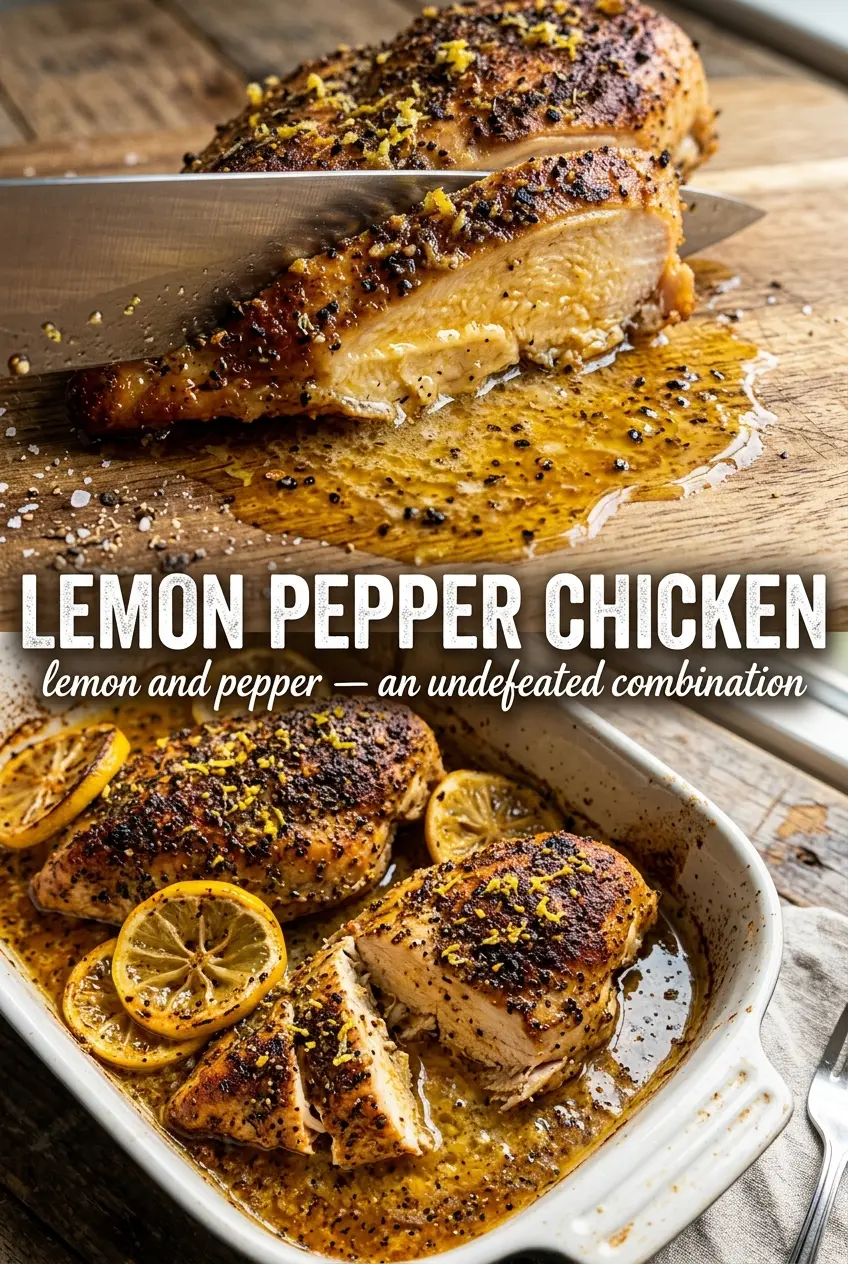
Golden seared chicken breasts with a sharp lemon pepper crust and a bright butter sauce hit the table fast, but they eat like something that took much longer. The crust gets deeply savory in the skillet before the lemon butter goes on, so you get real contrast instead of just another plain chicken dinner. The lemon comes through in layers: zest in the rub for aroma, juice in the sauce for brightness, and a final hit of pepper that keeps the whole dish from tasting flat.
The part that makes this version work is balance. The chicken gets seasoned before it hits the pan, which helps the surface dry out just enough to brown instead of steam. Then the sauce goes into the same skillet, so the butter picks up the browned bits left behind by the chicken. That’s where the flavor lives. If you’ve ever had lemon chicken that tasted thin or watery, it usually needed more seasoning up front and less heat once the butter went in.
The lemon butter sauce coated the chicken beautifully and stayed glossy instead of separating. I loved that the pepper stayed bold after cooking, and the chicken was still juicy at 5 minutes per side.
Keep this lemon pepper chicken in your back pocket for nights when you want a bright, skillet-seared dinner with a buttery finish.
The Lemon Zest Rub Needs Enough Time to Dry the Surface
Chicken that goes into the pan with a wet surface steams before it browns. With this recipe, the zest, pepper, and spices do more than season the meat — they form a thin, fragrant coating that helps the outside color quickly. That means you get a better crust before the center overcooks.
The other trap is pounding or slicing the chicken unevenly and then cooking it like it’s all the same thickness. The thin end will dry out long before the thick part is done. If your breasts are especially large, split them horizontally or pound them lightly so they finish close to the same time.
What Each Ingredient Is Actually Doing in This Dish

- Chicken breasts — Boneless, skinless breasts are neutral enough to carry the lemon and pepper without competing with them. If yours are very thick, butterfly them or pound them to even thickness so they sear before they dry out.
- Lemon zest — Zest gives you the sharp citrus aroma that juice can’t provide on its own. It belongs in the rub and again in the sauce so the lemon flavor reads as bright, not sour.
- Cracked black pepper — This is the backbone of the dish. Use coarse cracked pepper, not a fine grind, so it stays visible and gives a little bite after searing.
- Olive oil and butter — The oil handles the high heat for the sear, while the butter carries the sauce at the end. Don’t swap the butter for more oil unless you’re fine losing that glossy finish.
- Fresh lemon juice — Bottled juice works in a pinch, but fresh tastes cleaner and less flat in the sauce. Add it after the butter has melted and the heat is lower so the sauce stays smooth.
- Garlic — One clove is enough here. It adds background flavor without pushing the sauce into garlic-chicken territory.
The 20 Minutes That Matter: Sear First, Sauce Second
Season the Chicken Generously
Mix the zest, pepper, garlic powder, onion powder, and salt, then press it firmly onto both sides of the chicken. The coating should look speckled and even, not dusty. Let it sit while the pan heats so the salt starts pulling the surface moisture out of the meat. If the seasoning falls off when you lift the chicken, it wasn’t pressed on firmly enough.
Get a Deep Sear Without Moving the Pan
Heat the oil over medium-high until it shimmers, then lay the chicken in and leave it alone for 5 to 6 minutes. You want a deep golden crust that releases on its own when it’s ready. If it sticks, it needs another minute. Flipping too early tears the crust and leaves it patchy.
Build the Lemon Butter Sauce in the Same Skillet
Pull the chicken out once it reaches 165°F, then lower the heat before adding the butter. The pan will still be hot enough to melt it and bloom the garlic without burning anything. Stir in the lemon juice and zest after the garlic smells fragrant, not browned. If the sauce looks greasy or broken, the heat was too high; take it off the burner and whisk in a teaspoon of water.
Finish With the Sauce, Not the Other Way Around
Return the chicken to the pan and spoon the sauce over each breast so the crust stays glossy. A sprinkle of parsley and a few lemon slices give it a fresh finish without hiding the pepper. Serve it right away while the sauce is still loose and shiny. As it sits, the butter tightens up and the crust softens.
How to Adapt This for Different Kitchens and Diets
Use Chicken Thighs Instead of Breasts
Boneless thighs work well if you want a juicier result and a little more forgiveness on timing. They need a few extra minutes in the pan, and the final texture is richer and less lean than breast meat. Keep the same seasoning and sauce method.
Make It Dairy-Free
Swap the butter for a good dairy-free butter alternative that melts cleanly. The sauce won’t taste quite as rich, but it will still coat the chicken and carry the lemon well. Use a brand that browns lightly instead of one that tastes watery.
Lower the Heat, Keep the Flavor
If you want a gentler version, reduce the cracked pepper by half and add a pinch of smoked paprika for warmth. You’ll lose some bite, but the chicken will still taste bright and savory. This works well for kids or anyone who doesn’t want a sharp pepper finish.
Storage and Reheating
- Refrigerator: Store leftovers for up to 3 days. The crust softens a bit, but the flavor holds well.
- Freezer: It freezes, but the sauce loses some of its silky texture. Wrap tightly and freeze for up to 2 months.
- Reheating: Reheat gently in a covered skillet over low heat with a splash of water or chicken broth. High heat dries out the chicken and can make the butter separate.
Answers to the Questions Worth Asking
Lemon Pepper Chicken
Ingredients
Equipment
Method
- In a small bowl, mix lemon zest, cracked black pepper, garlic powder, onion powder, and salt, then rub the mixture generously over both sides of each chicken breast.
- Heat olive oil in a large skillet over medium-high heat and sear the chicken for 5-6 minutes per side until golden, reaching an internal temperature of 165°F; remove to a plate and keep warm.
- In the same pan over medium heat, melt butter, then add minced garlic and cook for 1 minute, stirring until fragrant.
- Stir in fresh lemon juice and lemon zest, scraping up any browned bits; cook until the sauce looks glossy and lightly bubbling.
- Return chicken to the pan and spoon the lemon butter sauce over each breast so the crust stays coated and bright.
- Garnish with fresh parsley and lemon slices, then serve immediately while the chicken is hot and the sauce still shimmers.