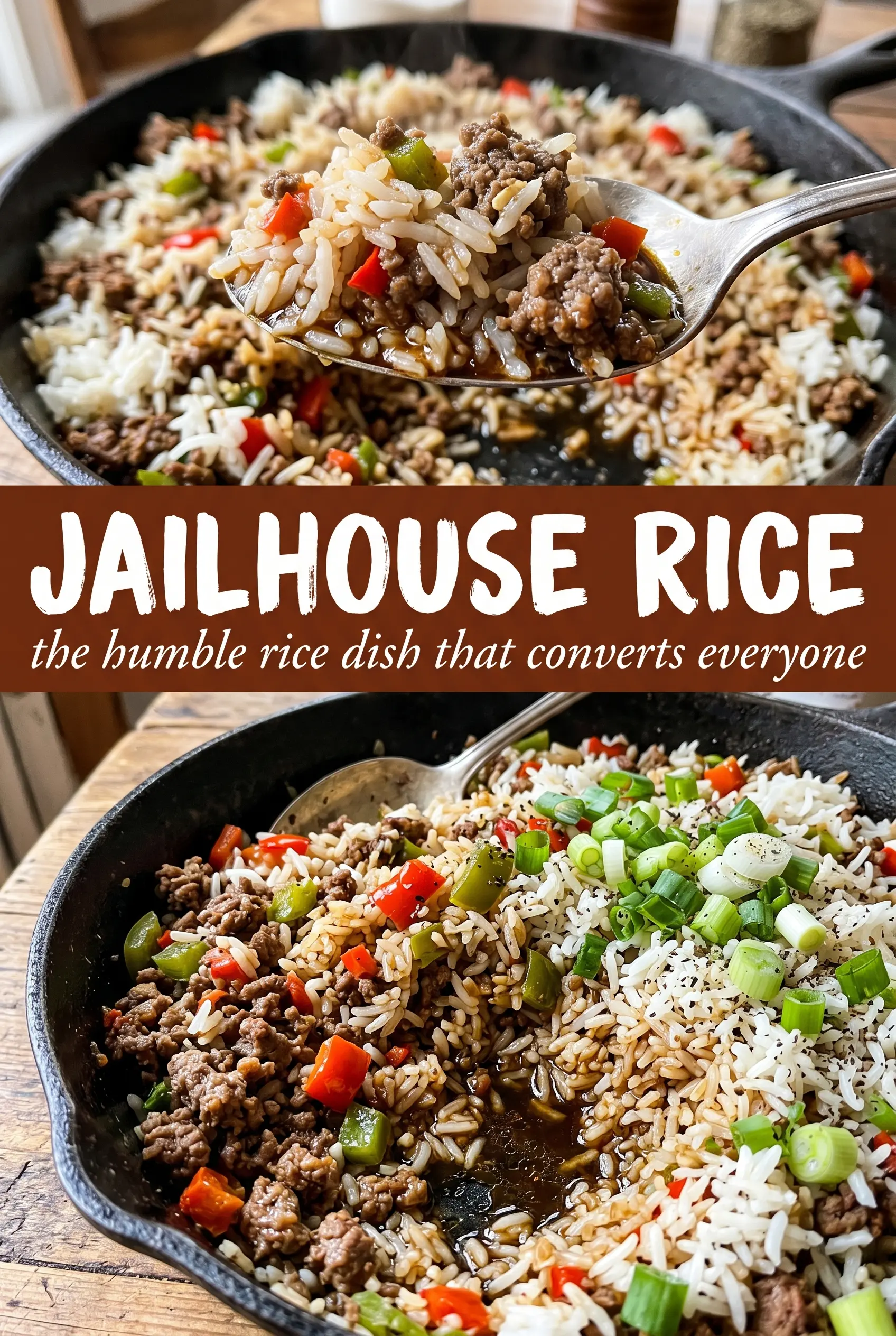
Golden, savory jailhouse rice hits the table like a full dinner, not a side dish pretending to be enough. The rice cooks in beef broth and soaks up the seasoning while the ramen noodles add a soft, springy bite that makes every forkful feel a little different. Ground beef carries the whole pan, and the soy-Worcestershire glaze gives the dish the deep, salty finish that keeps people going back for another scoop.
The trick here is building layers in the same pot. Browning the beef first gives you a base that tastes cooked, not just mixed. Toasting the rice for a couple of minutes before the broth goes in keeps the grains separate and gives the final dish a little nuttiness. The ramen goes in near the end so it stays tender instead of collapsing into mush.
Below, you’ll find the small details that keep the rice from turning gummy, plus a few useful ways to adapt it when you’re cooking on a budget or working with what you already have.
The rice came out fluffy, the ramen stayed tender, and the broth seasoning soaked into everything without getting salty. I’ve made it twice this week and my teenager actually asked for leftovers.
Keep this jailhouse rice handy for nights when you want a skillet full of beefy, noodle-studded comfort without extra dishes.
The Part That Keeps the Rice from Turning Soft and Heavy
The biggest mistake with a one-pot rice dish like this is rushing the liquid stage. If the beef hasn’t been browned properly or the rice gets dumped straight into the broth without a quick toast, the whole pan can land in the heavy, pasty zone instead of staying separate and spoonable. The two-minute toast after the beef cooks is what gives the grains a little structure before they start absorbing broth.
The other thing that matters is the ramen timing. Those noodles need only a short cook at the end, after the rice has already had its time under the lid. If they go in too early, they break apart and turn the whole skillet starchy. Added late, they soften into the rice and keep their shape just enough to give the dish that signature texture.
What Each Ingredient Is Actually Doing in the Skillet
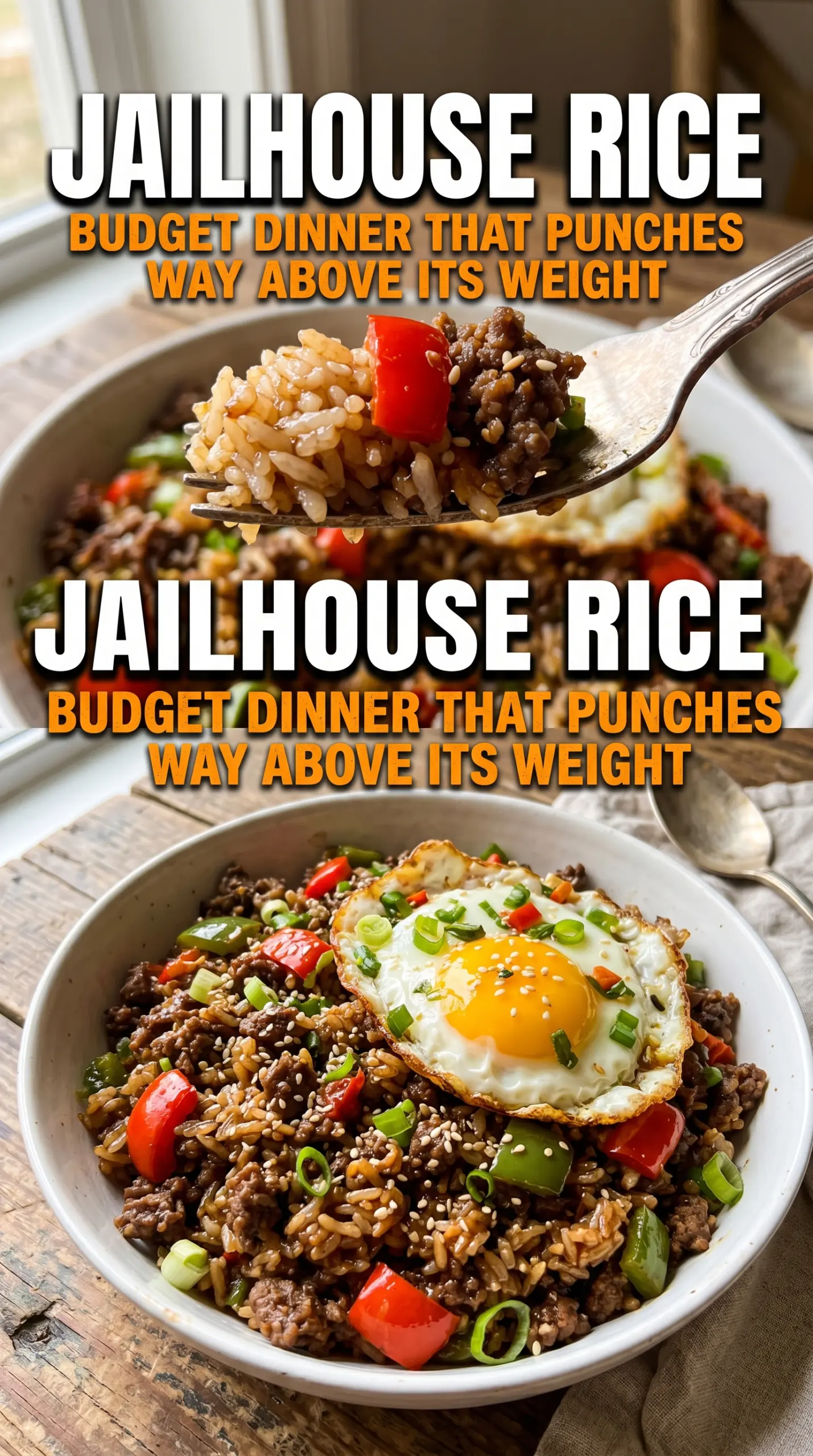
- Ground beef — This gives the dish its backbone and enough fat to carry the seasoning. An 80/20 blend adds the best flavor, but lean beef works if you drain it well and add the broth right after to keep the pan from drying out.
- Long-grain white rice — Long-grain rice stays fluffier than short-grain rice, which matters here because the ramen already adds softness. If you use jasmine rice, reduce the chance of a sticky finish by rinsing it once and keeping the simmer gentle.
- Ramen noodles — The noodles are more than a budget filler. They add that chewy, slurpable texture that makes this dish feel heartier. Discard the seasoning packets; they’d only push the salt level too far once the broth and soy sauce go in.
- Beef broth, soy sauce, and Worcestershire sauce — This is the savory base that makes the dish taste cooked all the way through instead of just seasoned on top. Broth does the heavy lifting, soy adds salt and depth, and Worcestershire brings a darker, slightly tangy edge that rounds out the beef.
- Garlic powder, onion powder, and smoked paprika — These season the whole pan evenly, which fresh garlic alone won’t do in a quick rice dish. Smoked paprika adds a little warmth and color without turning the skillet into something spicy.
- Green onions — Don’t skip the garnish if you have them. That fresh bite cuts through the richness and keeps the final bowl from tasting flat.
How to Build the Flavor Before the Lid Goes On
Brown the Beef Until It Has Edges
Cook the ground beef over medium-high heat until it loses the pink and starts to pick up browned bits on the bottom of the pan. Those little browned spots are what give the rice its meaty depth later, so don’t stir constantly. If the beef is steaming in liquid, your pan is too crowded or too cool, and you’ll miss that flavor foundation.
Toast the Rice in the Fat
Once the beef is drained, add the rice and stir it around for about two minutes. The grains should look a touch glossy and smell faintly nutty. That quick toast helps the rice stay separate once the broth hits the pan, and it keeps the finished texture from turning mushy.
Simmer Covered Without Peeking Too Soon
Stir in the broth, soy sauce, Worcestershire, and seasonings, then bring the pot to a boil before lowering it to the gentlest simmer. The lid should stay on for the full cook time so the rice can absorb liquid evenly. If you lift the lid too often, you lose steam and the center can stay hard while the bottom turns soft.
Add the Ramen at the End
Break the ramen noodles into the skillet after the rice has cooked for 15 minutes, then cover again for about 5 minutes. That short finish lets the noodles soften without disappearing into the rice. When the lid comes off, the noodles should be tender but still visible, not bloomed into a broken paste.
How to Adapt Jailhouse Rice When You Need to Work with What’s on Hand
Make it dairy-free as written
This recipe already lands naturally dairy-free, which makes it an easy one to serve to a crowd. The broth, beef, and seasonings build all the richness you need without relying on butter or cream.
Use ground turkey for a lighter version
Ground turkey works, but it needs a little help because it brings less fat and less built-in flavor than beef. Leave a tablespoon of drippings in the pan if there’s any, or add a small drizzle of oil before toasting the rice so the base still tastes full.
Swap in brown rice if you have the time
Brown rice will work, but it needs more liquid and a longer simmer than this quick version. Expect a nuttier flavor and a firmer bite, and plan on the ramen going in later so it doesn’t overcook while the rice finishes.
Stretch it with frozen vegetables
A cup or two of peas, corn, or mixed vegetables can go in with the broth and seasonings. Frozen vegetables make the skillet feel a little more complete, but add them early enough that they heat through without watering down the final texture.
Storage and Reheating
- Refrigerator: Store leftovers in an airtight container for up to 4 days. The rice and noodles will absorb more liquid as they sit, so the texture gets a little softer by day two.
- Freezer: It freezes well for about 2 months, though the noodles soften a bit after thawing. Cool it completely first and pack it in flat portions for quicker reheating.
- Reheating: Warm it in a skillet or microwave with a splash of broth or water to loosen the grains. The common mistake is reheating it dry, which makes the rice clump and the noodles tough at the edges.
Answers to the Questions Worth Asking
Jailhouse Rice
Ingredients
Equipment
Method
- Brown the ground beef in a large deep skillet or pot over medium-high heat, breaking it apart until cooked through, then drain the fat. You should see no pink remaining and light browning on the bits stuck to the pan.
- Add the long-grain white rice to the skillet and toast for 2 minutes, stirring to coat, until slightly golden. The grains should look glossy and begin to smell nutty.
- Add the beef broth, soy sauce, Worcestershire sauce, garlic powder, onion powder, smoked paprika, salt, and black pepper, then stir and bring to a boil. Keep stirring until the seasoning is fully dissolved and the liquid is bubbling.
- Reduce heat to low, cover, and cook for 15 minutes. The rice should be mostly tender and the liquid should be absorbed with steam building under the lid.
- Break the ramen noodles into the skillet, stir them in, cover, and cook for 5 more minutes until both the rice and noodles are tender. You want the noodles softened but not falling apart into mush.
- Fluff with a fork, garnish with green onions, and serve. The dish should look mixed and evenly coated, with green onion added on top for a fresh pop.