Honey garlic kielbasa turns out best when the sausage gets a little sticky on the edges and the vegetables pick up those same caramelized spots from the glaze. The whole pan tastes balanced: smoky, sweet, savory, and just sharp enough from the Dijon to keep the honey from leaning cloying. It’s the kind of sheet pan dinner that feels effortless, but still lands with a lot of payoff.
What makes this version work is the way the sauce coats everything before it hits the oven. The honey and mustard thicken as they roast, the garlic softens instead of burning, and the kielbasa releases just enough fat to help the vegetables brown instead of steam. Cutting the broccoli, peppers, zucchini, and onion into similar sizes matters here, because uneven pieces mean some vegetables finish early while others stay pale and soft.
Below, you’ll find the trick to keeping the glaze from pooling, the ingredient swaps that still give you a good roast, and a few practical answers for leftovers and reheating. It’s a simple dinner, but there are a couple of small moves that make it taste like you paid attention.
The sauce got sticky and glossy in the oven, and the kielbasa browned instead of drying out. I tossed it halfway like suggested, and the zucchini held its shape without turning mushy.
Save this honey garlic kielbasa sheet pan dinner for a night when you want glossy sausage, caramelized veggies, and one pan to clean.
The Reason the Pan Needs Space for Browning
The biggest mistake with a dish like this is crowding the pan. If the broccoli, zucchini, and sausage are piled up, they steam in the glaze instead of roasting in it, and you lose the caramelized edges that make the whole dish worth making. A large baking sheet gives the honey enough contact with the hot metal to thicken and catch in spots instead of turning watery.
That halfway toss matters for more than just even cooking. It moves the vegetables from the bottom edges to the center and brings the lighter pieces into direct contact with the heat, which keeps the red onion from scorching while the kielbasa browns. If your sheet pan is small, use two pans. A little extra cleanup beats a tray of pale vegetables every time.
What Each Ingredient Is Actually Doing in This Dish
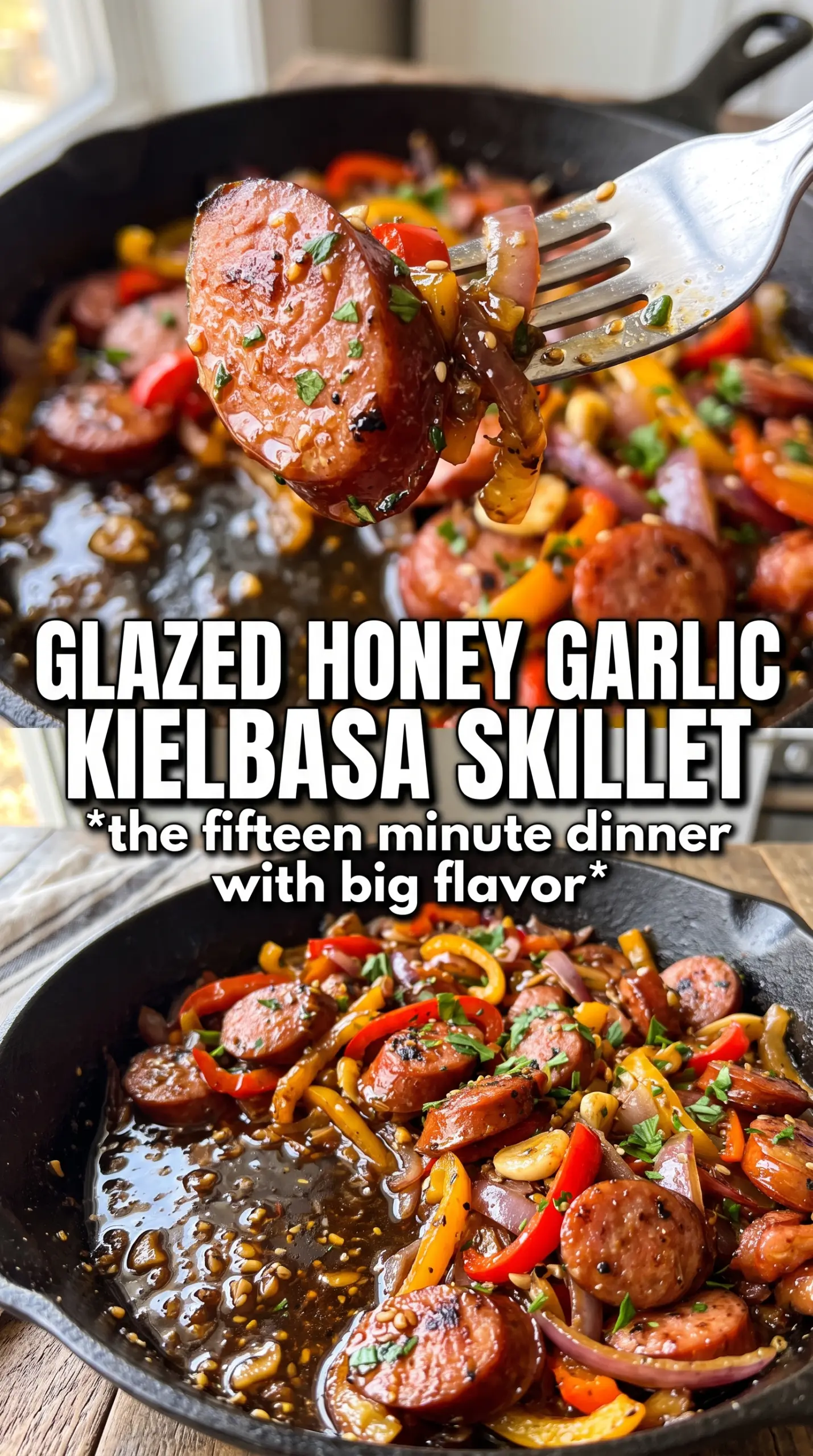
- Kielbasa — This is the backbone of the dish. It brings salt, smoke, and fat, which help the vegetables brown and give the glaze something rich to cling to. Any fully cooked smoked sausage will work, but kielbasa gives the best balance of flavor and texture.
- Honey — This is what makes the sauce turn sticky and shiny in the oven. If you use less, you’ll get a lighter glaze; if you use more, it can scorch around the edges, so keep the roast at 400°F and don’t push it longer than needed.
- Dijon mustard — Dijon keeps the sauce from tasting flat. Yellow mustard won’t give the same sharp depth, and whole-grain mustard adds texture but a little less smoothness. Dijon is the best choice if you want the glaze to coat evenly.
- Broccoli, bell peppers, zucchini, and red onion — This mix gives you different textures in one pan. Broccoli takes the longest and gets the best roasted edges, peppers bring sweetness, zucchini adds softness, and onion turns jammy in the hot glaze. Cut everything into similar sizes so the zucchini doesn’t collapse before the broccoli is done.
- Red pepper flakes — Just enough heat to keep the honey in check. If you want a milder pan, reduce it to a pinch. If you like a little bite, add an extra pinch after roasting instead of piling more into the sauce.
- Soy sauce — This is the salt and umami in the glaze. Low-sodium soy sauce works fine if that’s what you keep on hand, and it’s the easier swap if you’re sensitive to salt. Tamari works too for a gluten-free version.
How to Roast Everything So the Glaze Stays Sticky
Mix the Sauce First
Whisk the honey, garlic, soy sauce, Dijon, olive oil, and red pepper flakes until the mixture looks smooth and loose. The garlic needs to be dispersed before it goes on the pan, or the small bits can burn on the hot edges while the rest of the glaze stays underseasoned. If your honey is thick and sluggish, warm it for a few seconds so it blends without leaving streaks.
Coat the Pan, Not the Bowl
Toss the kielbasa and vegetables with the sauce until everything is lightly coated, then spread it out in a single layer on the baking sheet. If a puddle of sauce sits under the food, it steams instead of caramelizing. Scrape the bowl well, because that sticky sauce clinging to the sides is where a lot of the flavor lives.
Roast Until the Edges Darken
Slide the pan into a 400°F oven and roast for 20 to 25 minutes, tossing once halfway through. You’re looking for browned sausage edges, broccoli with dark little tips, and zucchini that’s tender but still shaped like zucchini. If the pan still looks wet near the end, give it a few more minutes rather than pulling it early; the sauce needs that extra time to tighten up.
Finish While the Pan Is Hot
Scatter on sesame seeds and green onions as soon as the pan comes out. The residual heat wakes up the onions just enough to soften their bite, and the sesame seeds stick better while the glaze is still tacky. Serve it right away, because this dish loses a little of its gloss as it sits.
How to Adapt This Without Losing the Good Part
Make it gluten-free
Swap the soy sauce for tamari or coconut aminos. Tamari keeps the glaze closest to the original flavor, while coconut aminos taste a little sweeter and lighter, so you may want to hold back a teaspoon of honey if you use them.
Make it lower carb
Use a sugar-free honey substitute and check the sausage label for added sugars. The texture will still be glossy, but it won’t caramelize quite as deeply, so watch the pan closely near the end of roasting.
Swap in different vegetables
Cauliflower, Brussels sprouts, and green beans all work well here. Use sturdier vegetables if you want a longer roast, and keep watery vegetables like mushrooms to a smaller amount so the pan doesn’t turn soggy.
Storage and Reheating
- Refrigerator: Store leftovers in an airtight container for up to 4 days. The vegetables soften a little, but the flavor stays good.
- Freezer: It freezes, but the zucchini and peppers lose some texture after thawing. If you want to freeze it, cool it completely and pack it tightly for up to 2 months.
- Reheating: Reheat on a sheet pan in a 375°F oven until hot, about 10 to 15 minutes. The microwave works in a pinch, but it softens the vegetables and can make the glaze dull, so the oven is the better call.
Answers to the Questions Worth Asking
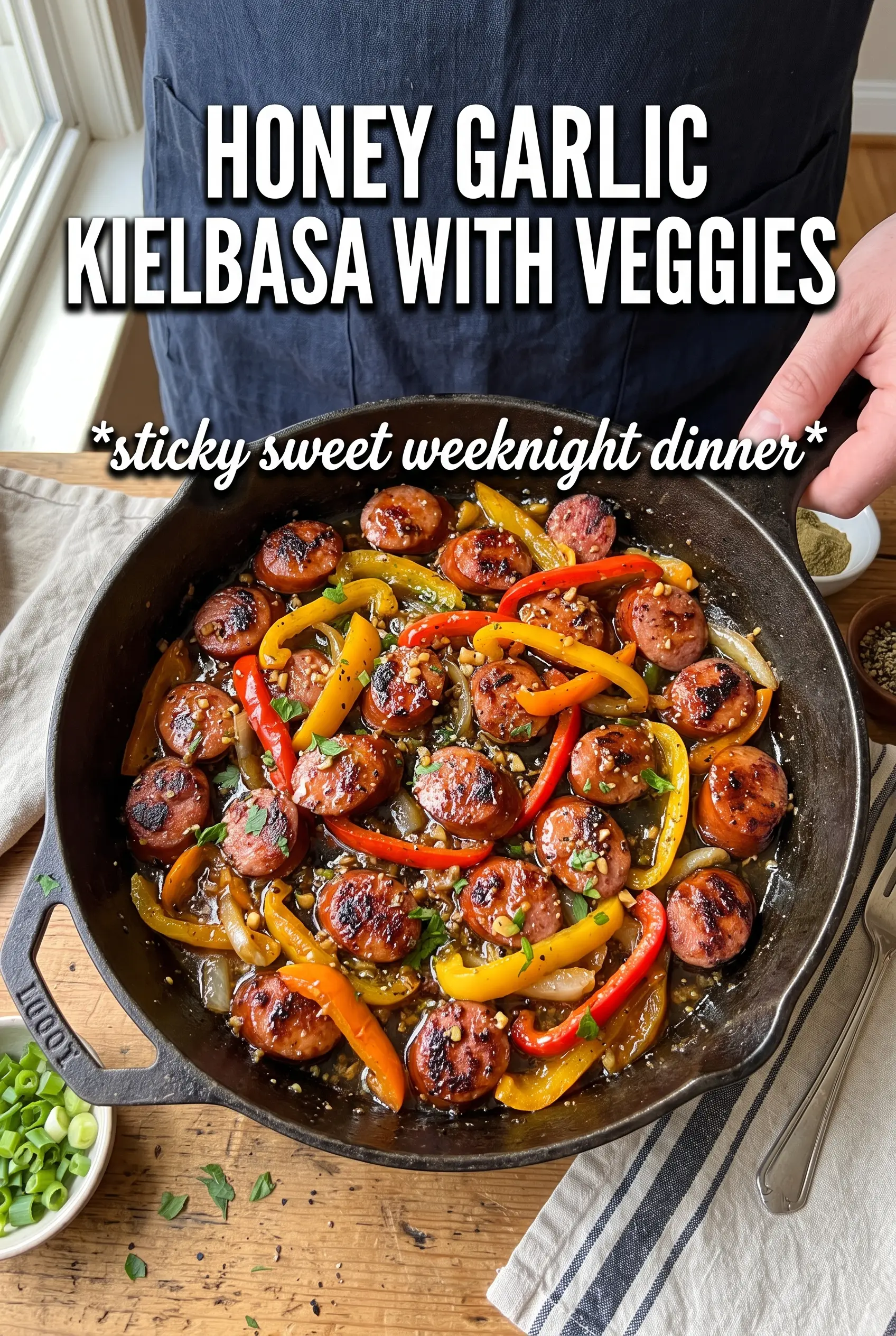
Honey Garlic Kielbasa With Veggies
Ingredients
Equipment
Method
- Preheat the oven to 400°F and line a large baking sheet with parchment or foil for easy cleanup. You should see the pan ready for roasting at the full temperature.
- Whisk together honey garlic sauce ingredients until the honey and mustard fully combine. Mix until the sauce looks smooth and glossy with no honey streaks.
- Toss kielbasa, broccoli, red bell pepper, green bell pepper, zucchini, and red onion with the sauce until evenly coated. Everything should glisten and look lightly glazed.
- Spread the coated mixture on the baking sheet in a single layer. Arrange so vegetables aren’t piled, giving room for caramelization.
- Roast for 20-25 minutes, tossing halfway, until the vegetables are caramelized and the kielbasa is golden. Look for browned edges on broccoli and tender-crisp vegetables with darker, glazed spots.
- Scatter sesame seeds and green onions over the hot sheet pan and serve immediately. The garnish should lightly toast from the heat without losing brightness.