Glossy, sticky honey garlic ground turkey is the kind of skillet dinner that disappears fast because it hits every note at once: sweet, savory, a little sharp from the vinegar, and just enough heat to keep each bite interesting. The sauce clings to the crumbled turkey instead of pooling in the pan, which is what makes it work so well over rice.
The key is building flavor in layers. Browning the turkey first gives you savory bits that the sauce can grab onto, and adding the garlic and ginger only after the meat is cooked keeps them fragrant instead of burnt. The cornstarch slurry finishes the job by thickening the sauce right at the end, so you get that lacquered coating without simmering it down into something heavy.
Below, I’ve included the small details that keep the sauce glossy, plus a few smart swaps if you need to adjust the heat, sweetness, or serving style.
The sauce thickened up exactly the way you said it would, and the turkey stayed juicy instead of drying out. I served it over jasmine rice and my husband went back for seconds before I sat down.
Save this honey garlic ground turkey for nights when you need a sticky, fast rice bowl with big flavor and almost no cleanup.
The Reason Ground Turkey Stays Juicy Instead of Turning Crumbly and Dry
Ground turkey can go from tender to chalky fast if it sits on heat too long before the sauce goes in. The trick here is to cook it until just no longer pink, then move straight into the aromatics and sauce while there’s still some moisture left in the pan. That moisture helps dissolve the browned bits and keeps the turkey coated instead of tasting flat.
Another common mistake is adding the sauce and leaving it alone. This dish needs a little stirring at the end so the cornstarch can thicken evenly and the honey doesn’t settle into a sticky layer on the bottom. Once the sauce turns glossy and starts clinging to every crumble, pull it off the heat. It will thicken a touch more as it sits.
What Each Ingredient Is Doing in the Skillet
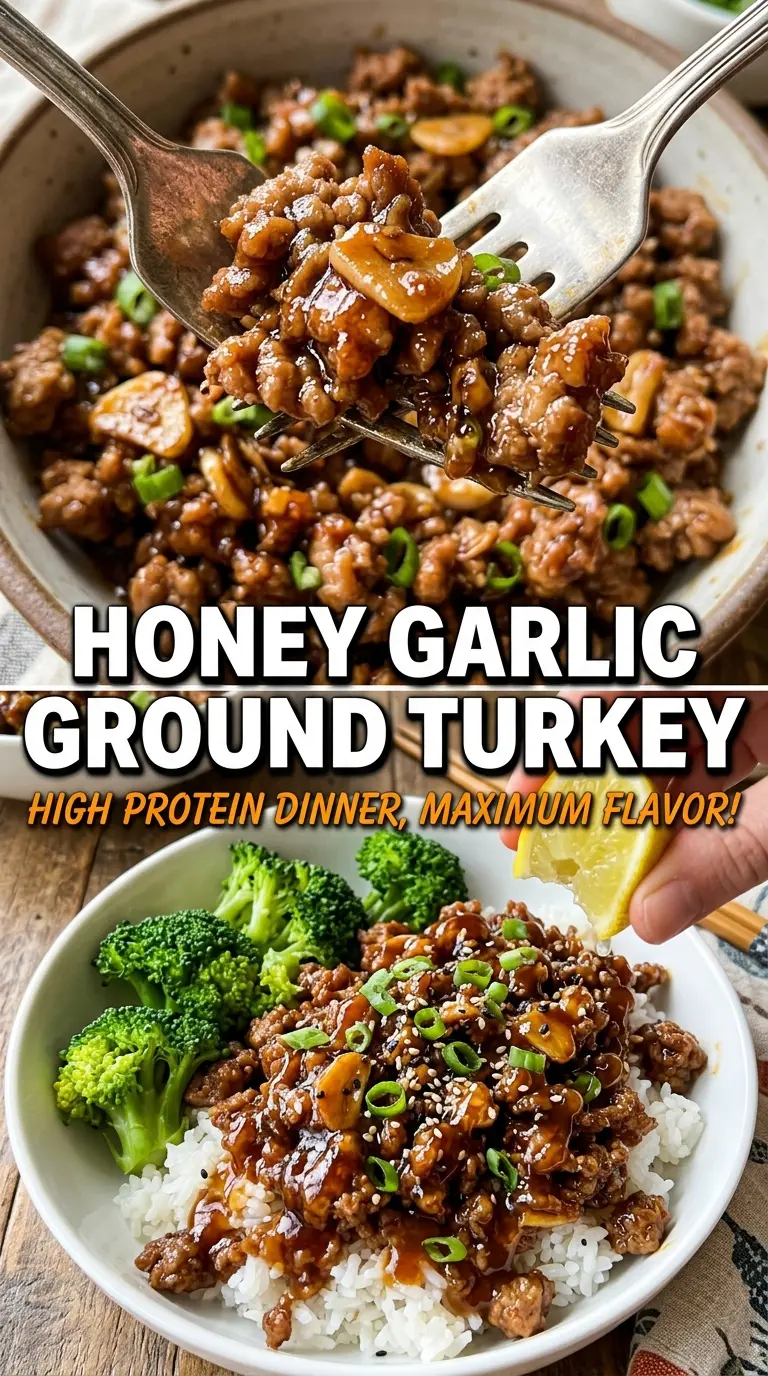
- Lean ground turkey — This gives you a lighter main dish that still takes on flavor well. If you use extra-lean turkey, the skillet needs a little more attention because there’s less fat to carry the sauce; don’t overcook it before the liquid goes in.
- Garlic and ginger — These two are the backbone of the dish. Fresh ginger matters here because it cuts through the sweetness and keeps the sauce from tasting one-note.
- Honey — This is what gives the sauce its sticky shine. Maple syrup will work in a pinch, but the flavor will lean darker and less clean, and the glaze won’t taste quite as bright.
- Soy sauce, rice vinegar, and sesame oil — Soy brings salt and depth, vinegar keeps the sauce from feeling heavy, and sesame oil adds that toasted finish you notice at the end of the bite. Tamari works well if you need the dish gluten-free.
- Cornstarch slurry — This thickens the sauce quickly without long simmering. Mix it fully before it hits the pan, or you’ll get little white clumps instead of a smooth glaze.
Building the Sauce So It Clings to Every Crumble
Browning the Turkey First
Warm the oil over medium-high heat and add the turkey in a single layer. Let it sit long enough to pick up some color before breaking it into small crumbles. If you stir immediately, the meat steams and stays pale, which leaves the finished dish tasting less savory.
Waking Up the Garlic and Ginger
Add the garlic and ginger after the turkey is cooked through, then stir for about a minute until they smell sharp and fragrant. That short cook time matters. Garlic burns fast in a dry skillet, and burnt garlic will overpower the honey instead of supporting it.
Finishing with the Glaze
Whisk the honey, soy sauce, rice vinegar, sesame oil, and red pepper flakes together before pouring them in. Once the sauce hits the pan, stir in the cornstarch slurry and keep it moving for 2 to 3 minutes until it looks glossy and lightly thickened. If it still looks thin, give it another 30 seconds; if it turns pasty, the heat was too high.
How to Make This Skillet Work for Different Nights
Make It Gluten-Free
Use tamari or a certified gluten-free soy sauce in place of regular soy sauce. The flavor stays deep and salty, and the sauce still thickens the same way. Check your rice vinegar too if you’re cooking for someone with celiac disease.
Turn Up the Heat
Add another pinch of red pepper flakes or a drizzle of chili crisp at the end. That keeps the heat bright instead of muddying the sauce while it cooks.
Swap the Turkey for Chicken or Pork
Ground chicken works almost exactly the same way. Ground pork gives you a richer skillet with more fat, so you may not need quite as much oil at the start and the sauce will taste a little rounder and sweeter.
Storage and Reheating
- Refrigerator: Store in an airtight container for up to 4 days. The sauce will thicken as it chills, which is normal.
- Freezer: Freezes well for up to 2 months. Cool it completely first, then freeze in portions so it thaws evenly.
- Reheating: Reheat gently in a skillet over low heat with a splash of water to loosen the sauce. The common mistake is blasting it in the microwave, which can dry out the turkey and make the glaze seize up.
Questions I Get Asked About This Recipe
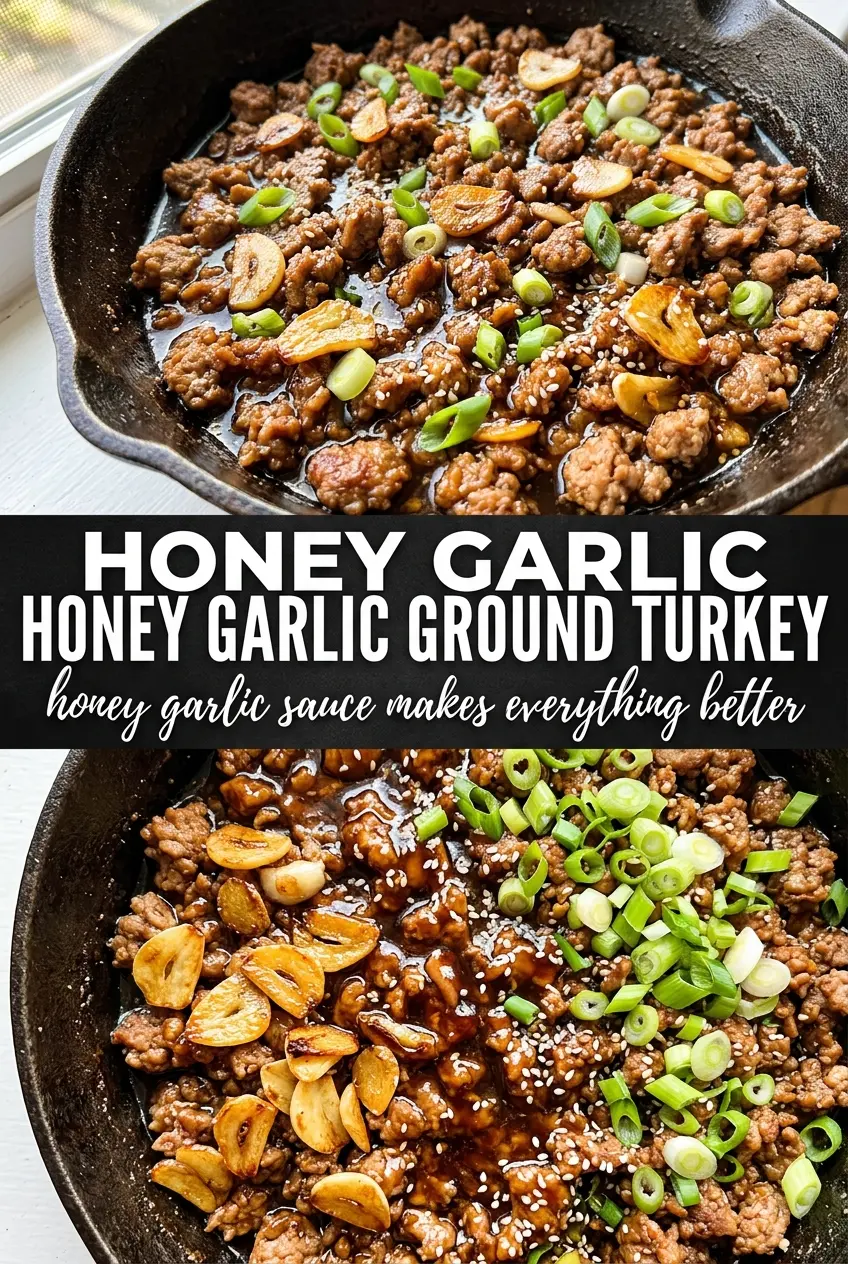
Honey Garlic Ground Turkey
Ingredients
Equipment
Method
- Heat the olive oil in a large skillet over medium-high heat. Add the ground turkey and cook until no longer pink, breaking it into crumbles.
- Add the garlic and grated ginger and cook for 1 minute until fragrant. Stir constantly so the aromatics don’t burn.
- Whisk together honey, soy sauce, rice vinegar, sesame oil, and red pepper flakes. Pour the mixture over the turkey and stir to coat.
- Stir in the cornstarch slurry (cornstarch mixed with water) and cook for 2–3 minutes until the sauce thickens and coats the turkey. Keep the heat at medium-high for a glossy finish.
- Spoon the honey garlic turkey over cooked rice. Garnish with sesame seeds and sliced green onions right before eating.