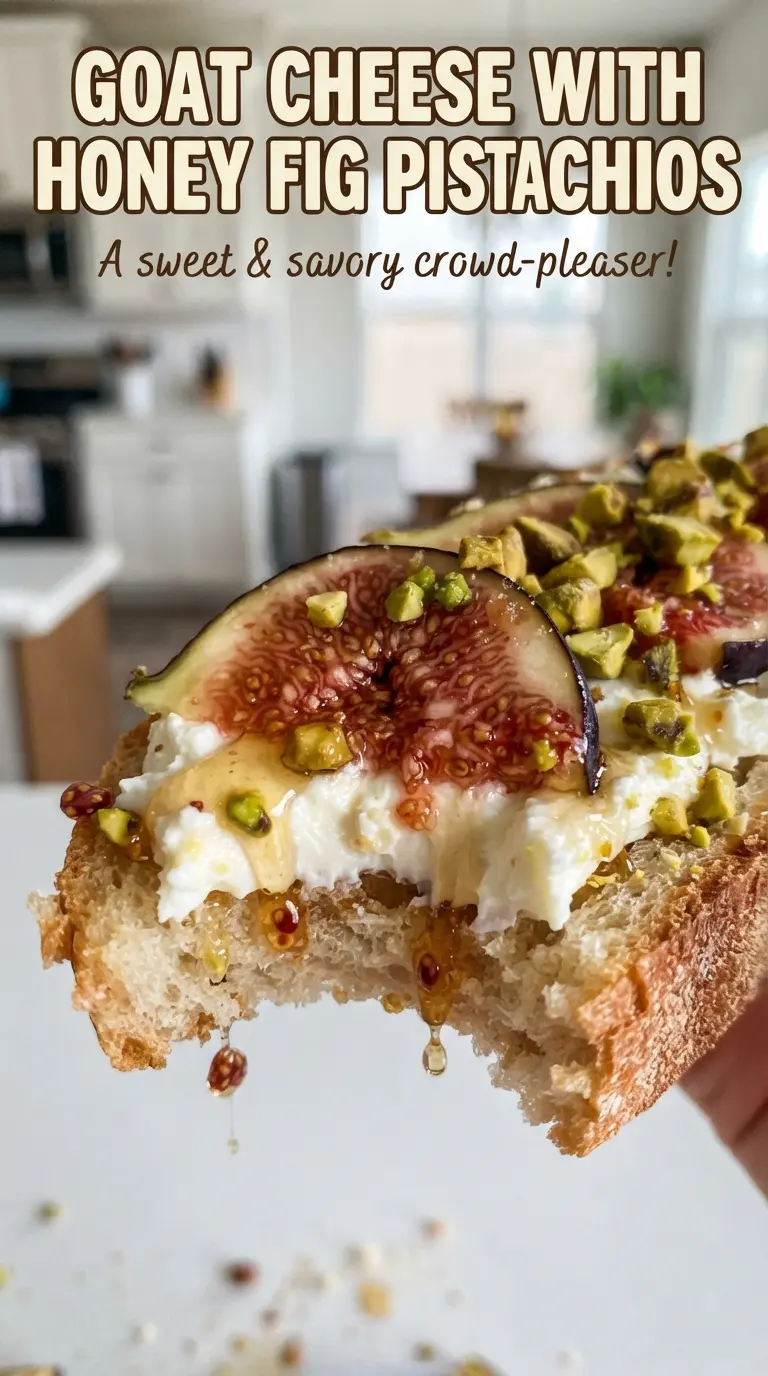
Goat cheese with honey, fig, and pistachios lands on the table looking elegant, but what makes it worth repeating is how fast it disappears. The cheese softens into a spreadable center, the figs bring jammy sweetness, and the pistachios keep every bite from turning one-note. A drizzle of honey ties it together without hiding the tang of the goat cheese.
The little details matter here. Letting the cheese sit out for a few minutes takes the chill off so it spreads cleanly and tastes fuller. Orange zest sharpens the honey, fresh thyme keeps the sweetness from feeling flat, and a pinch of flaky salt makes the figs taste even fruitier. None of those touches are fussy, but together they turn a simple appetizer into something people hover around.
Below, you’ll find the small tricks that help this platter look composed instead of messy, plus a few smart swaps if your figs are out of season or you want to change up the toppings.
I loved how the goat cheese softened just enough to spread on the crostini, and the orange zest made the honey taste brighter without taking over.
Love the mix of creamy goat cheese, fresh figs, and honey? Save this Mediterranean appetizer for your next grazing board or cocktail hour.
The Trick to Keeping the Goat Cheese Spreadable, Not Stiff
The biggest mistake with a platter like this is serving the cheese straight from the fridge. Cold goat cheese tastes muted and fights you when you try to spread it, which makes the whole dish feel less polished. Give it about 15 minutes at room temperature, and it softens just enough to press into a thick round without turning slack.
The second thing that matters is balance. Honey and figs bring sweetness, but the cheese needs salt, herbs, and citrus to stay lively. If you skip the thyme or orange zest, the plate still looks pretty, but it eats flatter and sweeter than it should. The salty pistachios are not just garnish; they keep each bite moving.
What Each Ingredient Is Actually Doing in This Recipe
- Primary ingredient (the star) — Quality matters most. Choose the best you can find.
- Cooking medium (oil, butter, or broth) — This carries flavors and prevents dryness.
- Seasonings (salt, pepper, spices, herbs) — Layer flavors so nothing overpowers. Build depth gradually.
- Aromatics (garlic, onion, herbs) — Cook with fat to bloom flavors. Become the foundation.
- Supporting ingredients — Complement the main ingredient without overpowering it.
- Sauce or liquid (if applicable) — Brings flavors together. Balance richness with acid.
- Acid (lemon, vinegar, wine, or other) — Brightens and prevents flat-tasting results.
- Final finish (garnish, glaze, or sauce) — Prevents one-dimensional taste and adds visual appeal.
What Each Topping Is Actually Doing Here
- Goat cheese log — A fresh log has the best tang and creamy structure for this appetizer. A whipped goat cheese spread will work in a pinch, but it won’t hold the same sculpted round or give you that soft, sliceable center once guests start serving themselves.
- Fresh figs — These bring the jammy middle that makes the plate feel special. If figs aren’t at their peak, ripe blackberries or halved grapes can carry the same sweet-savory idea, but the texture shifts from plush to juicy.
- Pistachios — Roughly chopped pistachios add crunch and a little earthy bitterness that cuts through the honey. Use unsalted if you can; salted is fine, but then go lighter on the flaky salt at the end.
- Honey — This is the finishing glue. A thinner honey drizzles better than a very thick one, and it lets the orange zest and thyme stay visible instead of sinking into the cheese.
- Orange zest — The zest wakes up the figs and keeps the honey from reading one-dimensional. Don’t use juice here; it adds acidity without the aromatic lift, and it can make the plate watery.
How to Layer This Appetizer So It Eats as Good as It Looks
Softening the Cheese First
Set the goat cheese out before you start any other prep. When it gives slightly under your fingertips, it will press into a neat mound instead of cracking. If it’s too cold, it tends to tear and lose that clean shape on the plate. Press gently, not hard; you want a thick round, not a flat disc.
Building the Fruit and Crunch
Arrange the figs around and partly over the cheese so the platter looks abundant, not stacked in one spot. Sprinkle the pistachios after the fruit is in place so the nuts catch in the honey instead of skittering off the plate. If you chop them too finely, they lose their crunch and disappear into the cheese.
Finishing With Honey, Herbs, and Salt
Drizzle the honey last so it lands on the figs, cheese, and nuts in loose ribbons. Scatter the thyme and orange zest over the top right before serving so they stay bright and aromatic. Finish with a pinch of flaky salt at the end; if you add it too early, the salt dissolves and the whole thing tastes less sharp.
Make It With Another Soft Cheese
If goat cheese is too tangy for your crowd, use a log of fresh chèvre mixed with a spoonful of cream cheese for a milder spread. The texture gets a little smoother and less crumbly, and the flavor softens enough for people who usually avoid goat cheese.
Fruit Swaps When Figs Aren’t at Their Best
Fresh blackberries, sliced grapes, or thin pear wedges all work here. You lose the dense, jammy texture of figs, so lean harder on the honey and flaky salt to keep the bite feeling layered instead of simply sweet.
Dairy-Free Version for a Similar Spread
Use a plant-based cream cheese or almond-based spread shaped into a round, then top it the same way. You’ll still get the sweet-salty contrast, though the tang from goat cheese will be missing, so add a tiny squeeze of lemon zest if the spread tastes too flat.
Storage and Make-Ahead Notes
- Refrigerator: The assembled platter is best served right away, but the toppings can be prepped a few hours ahead and kept separately. Once plated, the figs soften and the nuts lose their crunch after a few hours.
- Freezer: Don’t freeze this appetizer. The cheese texture turns grainy and the figs turn watery once thawed.
- Reheating: No reheating needed. If the cheese has chilled after assembly, let the plate sit at room temperature for 15 to 20 minutes before serving so the cheese loosens again.
Questions I Get Asked About This Recipe
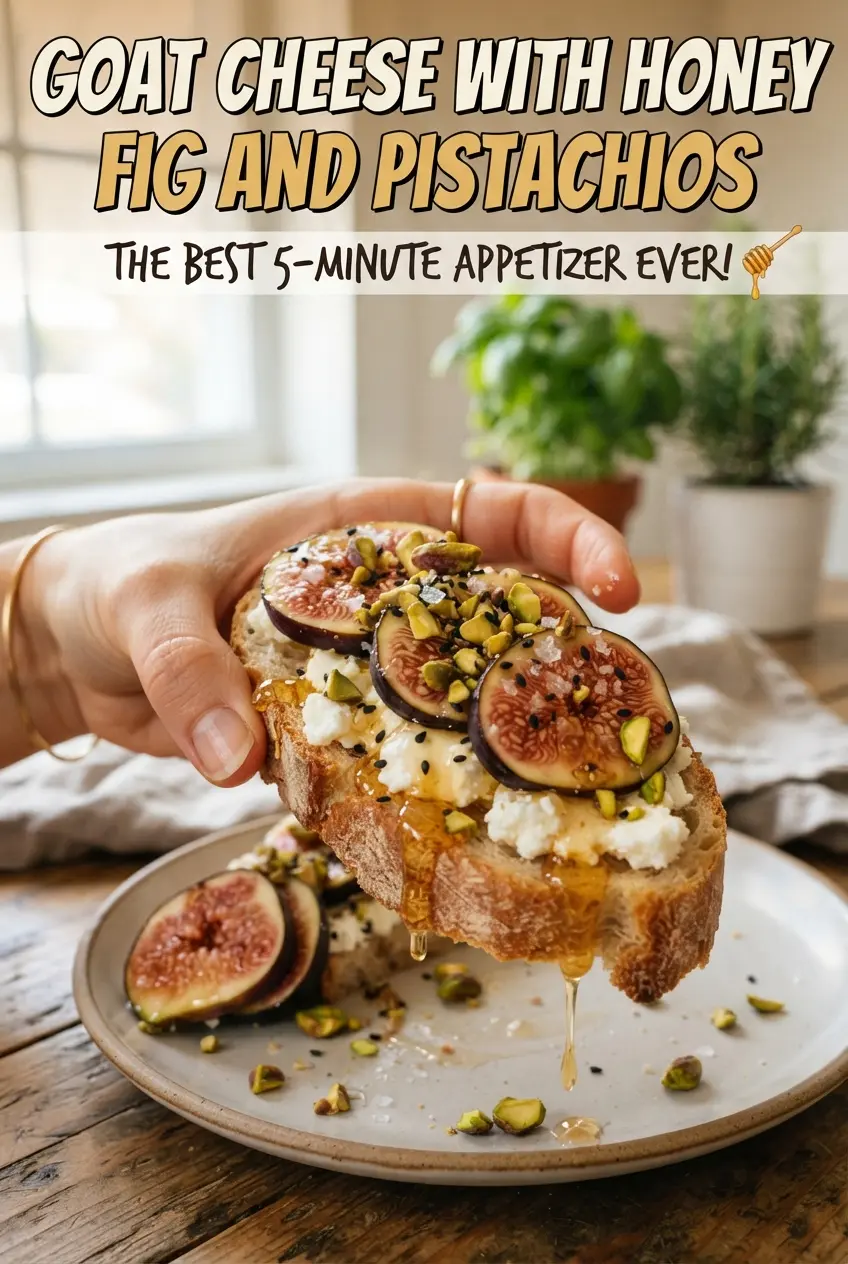
Goat Cheese with Honey Fig and Pistachios
Ingredients
Method
- Let goat cheese sit at room temperature 15 minutes to soften slightly.
- Place goat cheese on a serving plate and press gently to flatten into a thick round.
- Arrange fresh figs around and over the cheese so they’re visible on top.
- Sprinkle pistachios, thyme, and orange zest on top for even coverage.
- Drizzle generously with honey to let it pool slightly, then finish with flaky salt.
- Serve immediately with crostini or crackers.