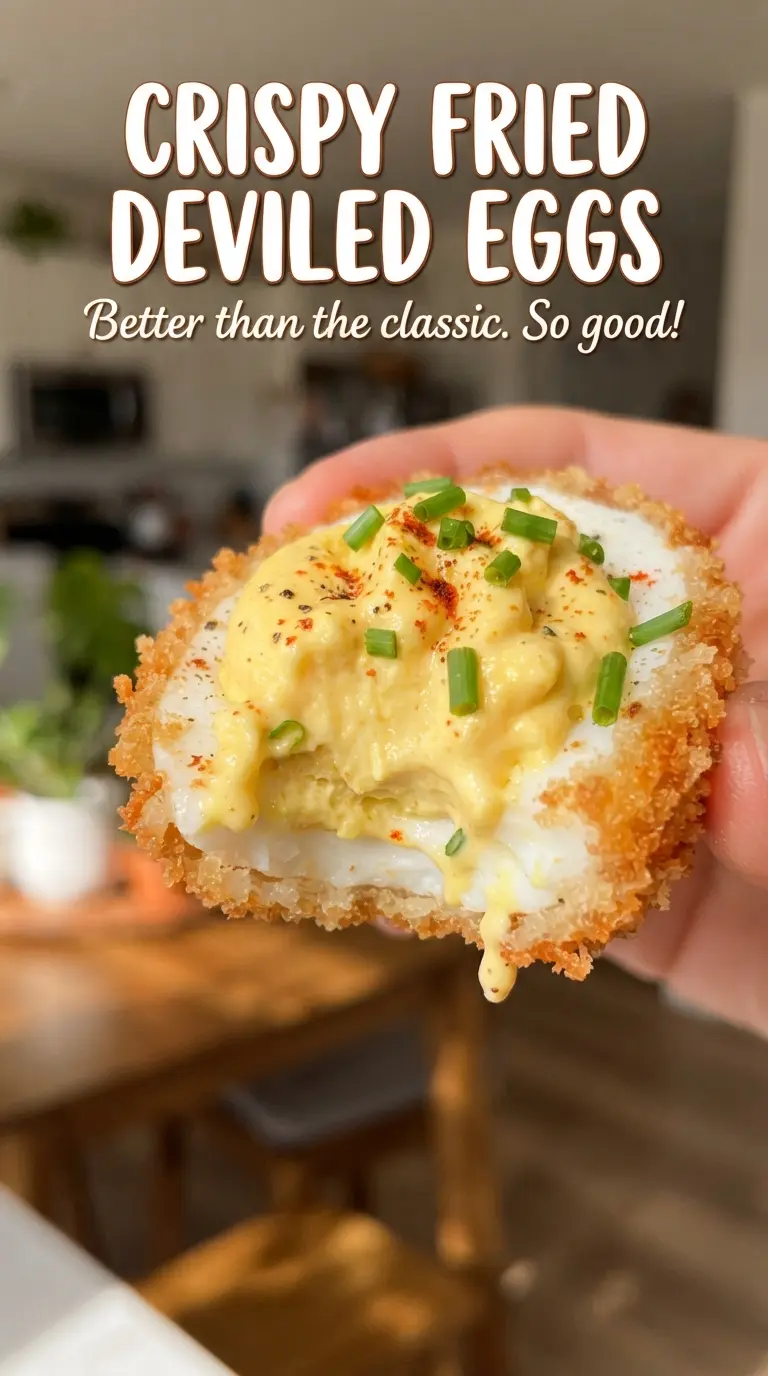
Golden, crunchy fried deviled eggs bring the best parts of two classics together: the creamy, tangy filling you expect and a shattering crisp shell that turns each bite into something people notice right away. The contrast is the whole point here. Soft yolk filling, crisp panko coating, a little paprika on top, and that first bite through the fried white make these disappear faster than any plain deviled egg platter ever does.
The trick is treating the egg whites like a breaded cutlet. A dry flour layer, then egg, then panko gives the coating something to cling to, and the brief fry is just long enough to turn the crumbs deep golden without overcooking the whites. Chill the yolk filling before piping it in, because warm filling softens the crust and makes the eggs harder to serve neatly.
Below you’ll find the small details that keep the coating crisp, the filling smooth, and the finished eggs sturdy enough to pass around at a party without falling apart. The timing is short, but the order matters.
The panko stayed crisp and the filling piped in cleanly after chilling. I made these for a game day spread and people kept asking how the egg whites got so crunchy without getting greasy.
Crispy Fried Deviled Eggs with that golden panko crust belong on your next appetizer tray.
The Coating Has to Be Dry Before It Can Get Crisp
Fried deviled eggs fail when the coating slips off in the oil or the whites pick up too much moisture from the filling. The flour is not there for flavor; it’s there to dry the surface and give the egg a grip layer, which is why skipping it usually means the panko falls off in patches. Keep the yolk filling cold until the very end so it stays thick and doesn’t soften the crust as you pipe it in.
- The egg whites need to be patted dry after peeling. Any surface moisture turns the flour into paste, and pasty coating fries up blotchy instead of crisp.
- Panko works better than fine breadcrumbs here because it gives a lighter, crunchier shell. Regular breadcrumbs brown too fast and can taste dense around the delicate white.
- The beaten eggs act as the glue. If they are whisked too thin, the flour sheds; if they are too thick, the coating turns heavy, so beat them just until the yolks and whites are fully blended.
What Each Ingredient Is Actually Doing in These Fried Eggs
- Eggs — Use large eggs and cool them fully before peeling. Freshly peeled warm eggs can tear, and torn whites don’t bread evenly.
- Mayonnaise — This keeps the yolk filling smooth and pipeable. Full-fat mayo gives the best body; reduced-fat versions can taste thin and won’t hold the same creamy shape.
- Sweet pickle relish — This adds a little sweetness and acidity that cuts through the rich yolks. Finely chopped pickles can work in a pinch, but the texture will be less even.
- Dijon mustard — Dijon brings sharpness without making the filling watery. Yellow mustard is milder and sweeter, so it changes the balance of the filling noticeably.
- Panko breadcrumbs — These create the crunchy shell. If you swap in standard breadcrumbs, the crust gets tighter and less airy.
- Garlic powder — A small amount seasons the coating without overpowering the egg filling. Fresh garlic is the wrong move here because it can scorch in the short fry time.
The Short Fry That Makes the Crunch Stay Put
Building the Filling First
Mash the yolks until no dry bits remain, then work in the mayonnaise, relish, Dijon, and salt until the mixture looks smooth and thick. The filling should hold its shape on a spoon; if it looks loose, it will slide around when you pipe it into the fried whites. Chill it before breading the egg whites so it firms up and pipes cleanly.
Coating Without Crushing the Whites
Set up the flour, beaten eggs, and panko in separate bowls and move each egg half through them gently. The whites are tender after boiling, so press the panko on just enough to cover every exposed surface. Missed spots will show up fast in the fryer because bare patches brown unevenly and lose that crisp edge.
Frying to Deep Gold, Not Dark Brown
Heat the oil to 350°F and fry in batches so the temperature doesn’t drop too far. If the oil is cooler, the coating drinks grease before it crisps; if it’s hotter, the crumbs brown before the whites have time to set. One to two minutes is enough. You’re looking for a deep golden shell that feels firm when lifted out of the oil.
Piping After the Shell Sets
Let the fried whites rest for about five minutes before piping. That brief pause keeps the filling from melting the crust and gives the shells time to firm up after draining. Pipe the yolk mixture into the center just before serving, then finish with paprika and chives so the top looks clean and fresh.
How to Adapt These Fried Deviled Eggs Without Losing the Crunch
Gluten-Free Coating Swap
Use a gluten-free all-purpose flour blend and gluten-free panko. The method stays the same, but the coating can be a touch more fragile, so let each layer set before moving the egg halves. The result is still crisp, just a little lighter.
No Relish, More Bite
Swap the sweet pickle relish for finely minced dill pickles if you want a sharper filling. You lose a little sweetness, so add a tiny pinch of sugar or an extra spoonful of mayo if the yolks taste too aggressive. The filling ends up more savory and less classic-southern.
Air Fryer Version
Brush or spray the breaded whites generously with oil and air fry at 390°F until the coating is deep golden, flipping once. The crust won’t taste quite as shattery as a true fry, but it’s still crisp and much easier for a smaller batch. Don’t skip the oil coating or the panko will look dry and dusty.
Storage and Reheating
- Refrigerator: Store the fried whites and yolk filling separately for up to 2 days. The crust softens once assembled, so wait to pipe until just before serving.
- Freezer: Don’t freeze these. The egg whites turn rubbery and the filling becomes watery after thawing.
- Reheating: Recrisp the fried whites in a 375°F oven for a few minutes, then cool and refill them. Microwaving ruins the coating and makes the eggs soggy.
Answers to the Questions Worth Asking
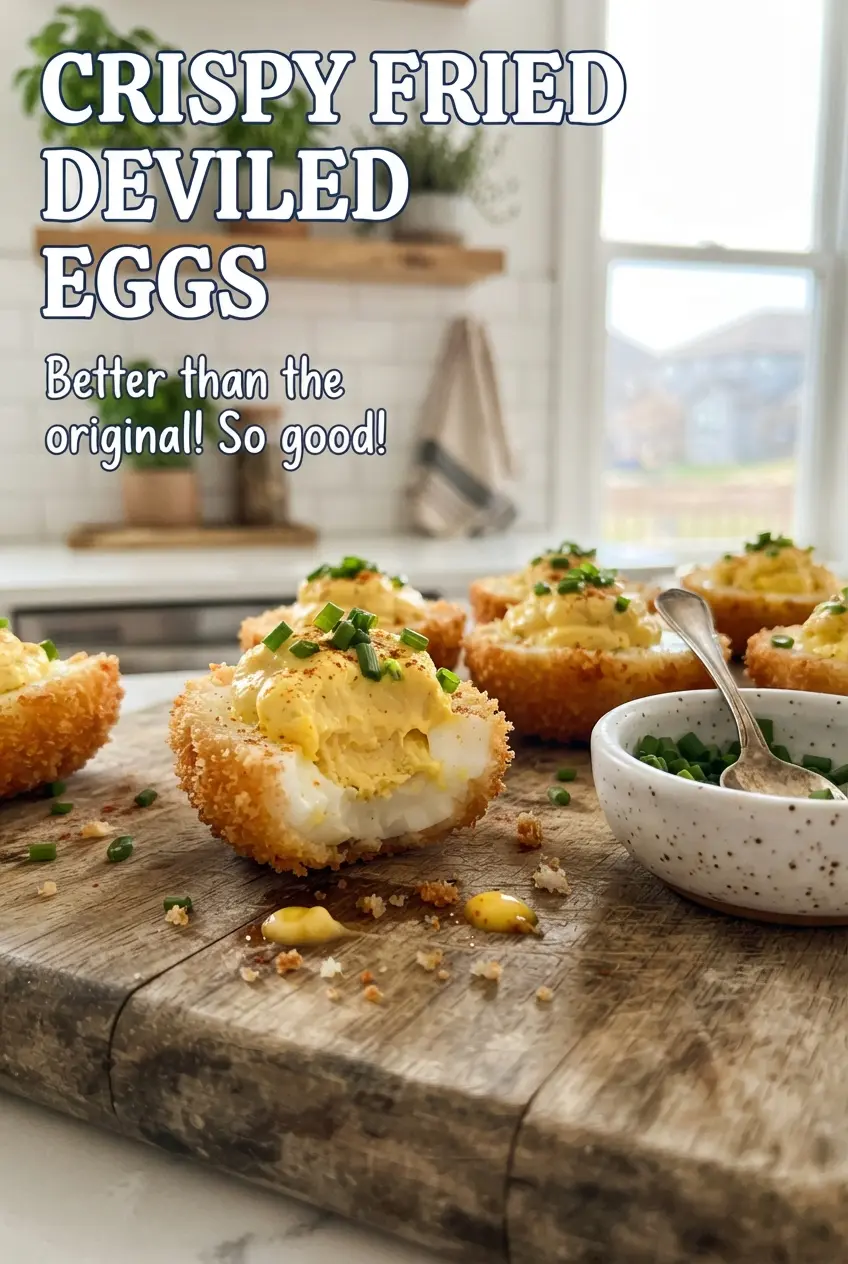
Crispy Fried Deviled Eggs
Ingredients
Equipment
Method
- Place the large eggs in a pot, cover with cold water, and bring to a boil. Cover, remove from heat, and let stand 12 minutes, then chill before peeling.
- Halve the peeled eggs lengthwise and separate the yolks from the whites. Keep the egg white halves ready for breading.
- Mash the egg yolks with mayonnaise, sweet pickle relish, Dijon mustard, and salt until smooth. Transfer the mixture to a piping bag and chill to firm up.
- Coat each egg white half in all-purpose flour, then dip in the beaten eggs, then press into panko breadcrumbs mixed with garlic powder. Arrange the breaded halves so they’re ready to fry.
- Heat 1 inch of vegetable oil in a cast iron skillet to 350F. Fry the whites in batches for 1-2 minutes until golden, then drain on paper towels.
- Cool the fried egg halves for 5 minutes so the crust sets. Pipe the deviled filling into the crispy whites.
- Dust with paprika and sprinkle with chives for garnish. Serve right away for maximum crunch.