Shatteringly crisp beef, glossy sweet-spicy sauce, and hot rice underneath make this the kind of bowl that disappears fast. The beef stays light and crunchy because it gets coated in cornstarch before frying, then tossed in the sauce at the very last second so it keeps some of that fried edge instead of turning soggy. That contrast is the whole point here: crisp meat, sticky sauce, fluffy rice, fresh green onion, and a little sesame bite on top.
The technique matters more than the ingredient list. Thin-sliced flank steak fries up best because it cooks quickly before the crust has time to burn, and cornstarch gives you that dry, brittle shell that holds onto sauce without turning heavy. The sauce itself is built from sweet chilli sauce, soy, vinegar, and a little brown sugar, which keeps it balanced instead of one-note sweet. Garlic and fresh chilli go into hot oil first, just long enough to wake everything up without letting the garlic turn bitter.
Below, I’ve included the timing detail that keeps the beef crisp, the one substitution that still gives you a good result, and the best way to serve it if you want that takeout-style finish at home.
The beef stayed crazy crispy even after I tossed it in the sauce, and the sweet chilli flavor with the vinegar and soy had that takeout balance I was hoping for. I served it over jasmine rice and my son asked if I could pack the leftovers for lunch the next day.
Love the shatteringly crispy beef and sticky sweet chilli sauce in this rice bowl? Save it to Pinterest for the nights when takeout-style dinner needs to happen fast.
The Crisp-to-Sauce Timing That Keeps the Beef From Going Soft
The mistake most people make with crispy chilli beef is letting the beef sit in the sauce too long. Once that cornstarch crust gets wet, it starts losing the crackly texture that makes the dish worth making. The fix is simple: fry the beef until deeply crisp, get the sauce hot and ready, then toss everything together for just long enough to coat.
Batch frying matters here too. If you crowd the pan, the oil temperature drops and the coating turns pale and greasy instead of crisp and blistered. You want each strip to fry in space, with steady bubbling around it. That’s what gives you the brittle outside that can stand up to the sweet-spicy glaze.
- Flank steak — Thin slicing is non-negotiable. Across the grain, against the grain, and as thin as you can manage gives you tender pieces that fry fast instead of turning chewy.
- Cornstarch — This is what creates the crisp shell. Flour won’t give the same light, dry crunch, and it won’t cling as evenly to the beef.
- Sweet chilli sauce — This is the backbone of the glaze, so use one you actually like the taste of. If yours runs very sweet, the vinegar and soy balance it back into something more savory.
- Rice vinegar — It cuts the sweetness and keeps the sauce from tasting flat. White vinegar works in a pinch, but rice vinegar has a softer edge that fits this dish better.
What Each Ingredient Is Actually Doing in This Bowl

The garlic and fresh chilli go into the wok before the sauce so they can bloom in the oil for just a few seconds. That brief hit of heat takes the raw edge off and builds a deeper base without burning them. If the garlic starts to darken, the oil is too hot and the sauce will pick up bitterness fast.
Sesame oil is tiny but important. It doesn’t replace another fat here; it finishes the sauce with a nutty note that sits on top of the sweet heat instead of blending into it. The rice underneath is there to catch the sauce, and plain white rice works best because it lets the beef stay the star. Green onions and sesame seeds add freshness and a little texture right at the end, which keeps each bite from feeling heavy.
Frying, Saucing, and Serving While the Beef Still Cracks
Coating the Beef Evenly
Toss the sliced beef with cornstarch, salt, and pepper until every piece looks dusty and fully covered. Any bare spots will fry up soft instead of crisp. If the coating turns pasty, the beef was too wet; pat it dry before dredging so the starch stays powdery and light.
Frying in Hot Oil
Heat the oil until it’s around 350°F and fry the beef in small batches. You should hear an active, steady sizzle the moment the meat hits the oil. In 2 to 3 minutes, the strips should look deep golden and feel rigid when lifted out. Drain them on paper towels so the excess oil doesn’t soften the crust.
Building the Sauce Quickly
Use a wok or skillet and cook the garlic and chilli for about 30 seconds in a little oil. Pour in the mixed sauce and let it bubble for a minute until it looks slightly thickened and glossy. If you reduce it too long, it gets sticky before the beef goes in and can coat unevenly.
Combining and Serving Fast
Add the crispy beef to the pan and toss just until every piece is coated. Stop as soon as the sauce clings and shines. Serve it over rice right away with green onions and sesame seeds, because this dish is at its best in the few minutes after the toss.
What to Change When You Want a Different Bowl
Gluten-Free Version That Still Tastes Close
Use a gluten-free soy sauce or tamari and check that your sweet chilli sauce is gluten-free too. The beef coating already works well because cornstarch gives the same crisp texture without wheat, so this swap changes the flavor less than people expect.
Air Fryer Shortcut for Less Oil
You can air fry the coated beef in a single layer at 400°F until crisp, then toss it with the sauce. You won’t get the exact same shattering crust as shallow-frying, but you do keep the flavor and cut down on oil and cleanup.
Making It Spicier Without Throwing Off the Sauce
Add chilli flakes with the garlic, then finish with fresh sliced red chilli on top. That layers heat into the sauce and also gives the bowl a brighter bite at the end, instead of making the whole dish taste one-dimensional.
Storage and Reheating
- Refrigerator: Store leftovers for up to 3 days. The beef will soften as it sits, but the flavor stays good.
- Freezer: It doesn’t freeze well once sauced because the coating turns soggy after thawing. If you want to freeze ahead, freeze the fried beef separately and add fresh sauce later.
- Reheating: Reheat the beef in a hot skillet or air fryer until warmed through, then add a fresh splash of sauce. Microwaving turns the crust soft fast, which is the main thing you’re trying to avoid.
Answers to the Questions Worth Asking
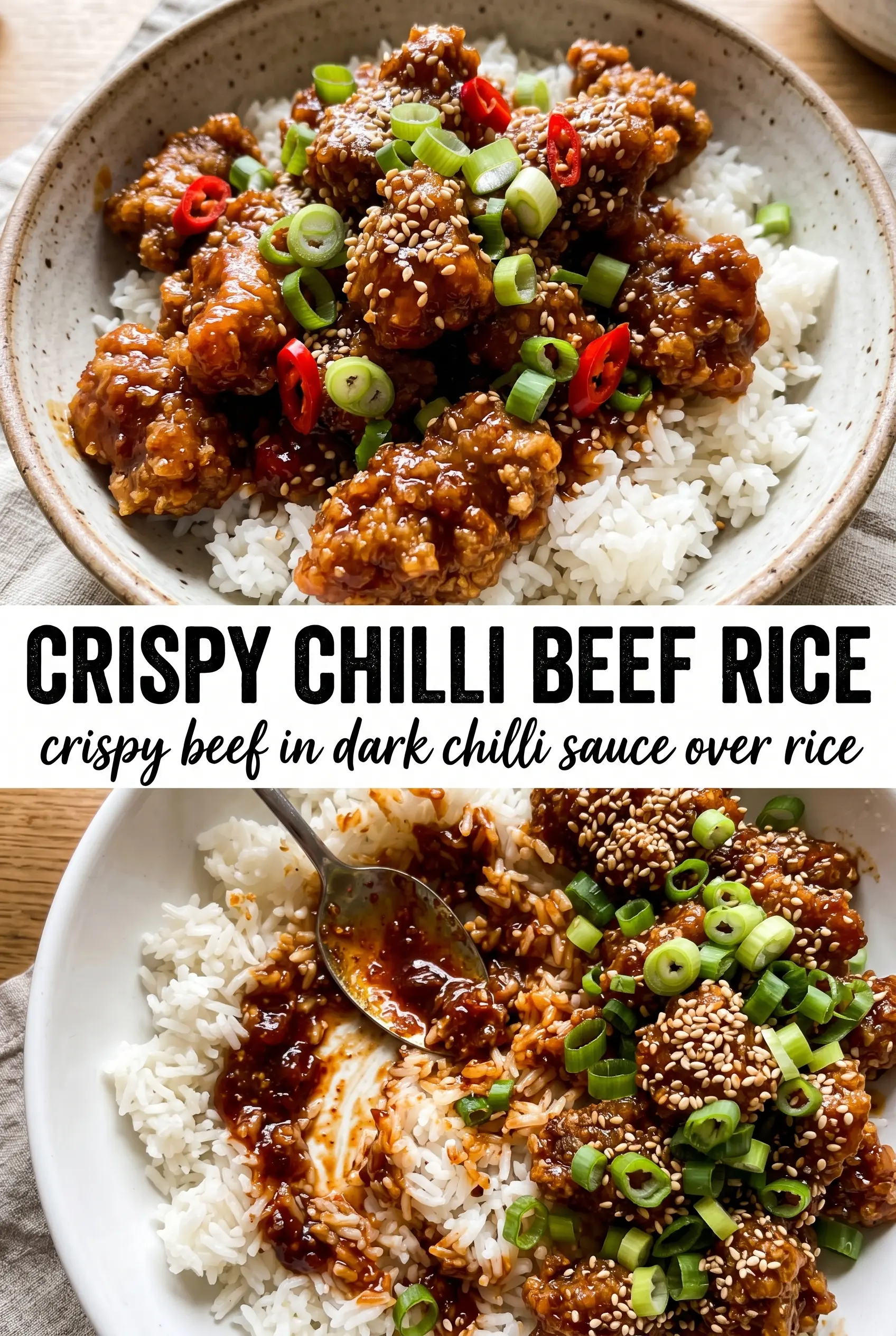
Crispy Chilli Beef Rice
Ingredients
Equipment
Method
- Toss the sliced flank steak with cornstarch, salt, and black pepper until every strip is well coated.
- Fry the beef in batches in about 1/2 inch of hot oil at 350°F for 2–3 minutes per batch until extremely crispy and golden, then drain on paper towels.
- Mix the sweet chilli sauce, soy sauce, rice vinegar, brown sugar, and sesame oil together until smooth.
- Heat 1 tablespoon oil in a wok, cook the garlic and red chilli for 30 seconds, then add the chilli sauce and simmer for 1 minute.
- Add the crispy beef and toss quickly just to coat, then serve immediately over cooked rice before the beef loses its crunch.
- Top with green onions and sesame seeds and serve right away.