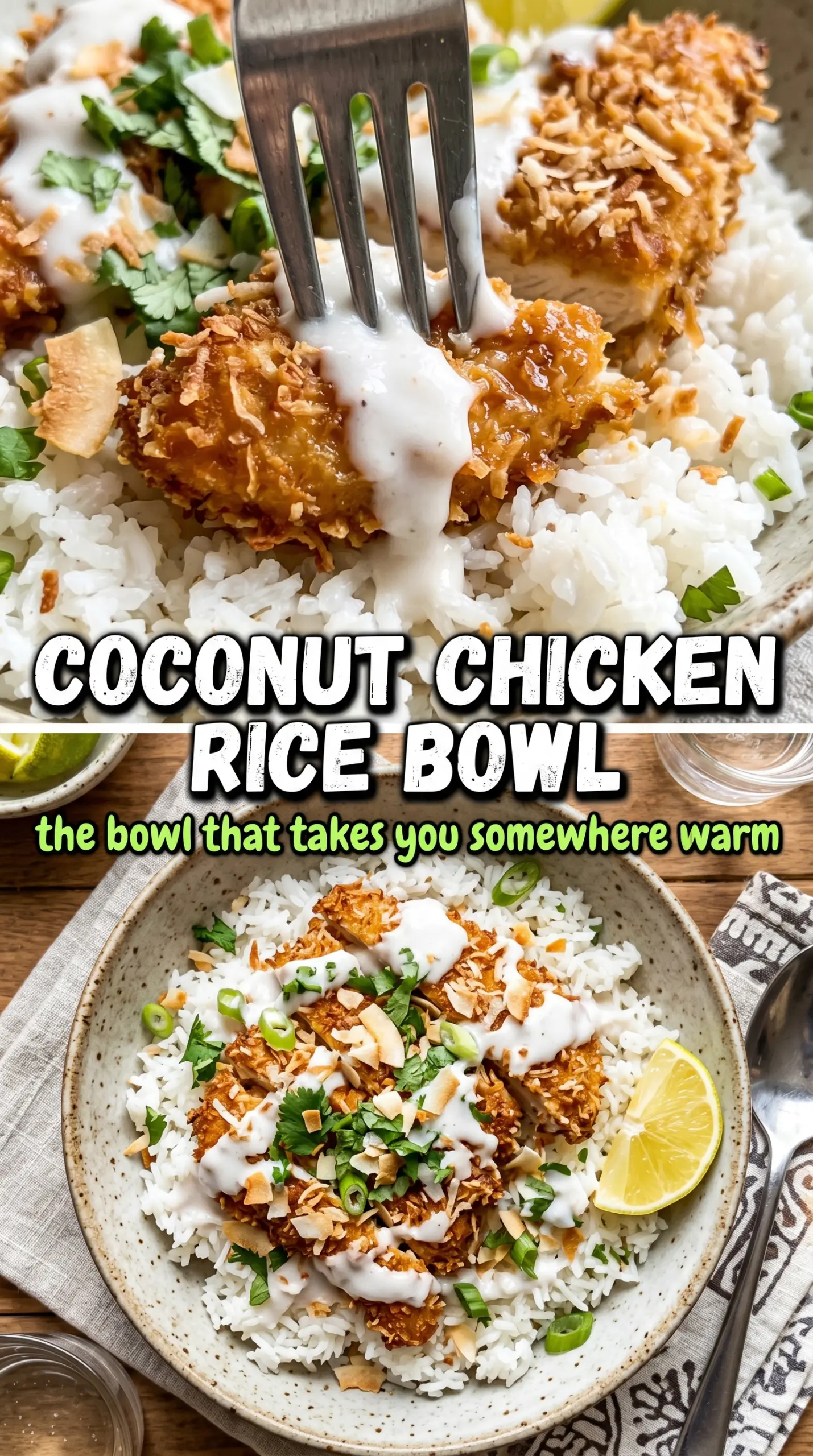
Coconut chicken rice bowl lands in that sweet spot between fast weeknight food and something that feels built with care. The chicken gets a hard sear first, so it stays flavorful under a creamy coconut sauce instead of turning pale and boiled. Then the mango salsa and lime cut through the richness and keep every bite bright.
What makes this version work is the order. The chicken browns before the sauce goes in, which gives you more flavor in the pan and better texture on the meat. Coconut milk brings body, but the soy sauce, lime juice, and a small amount of honey keep it from tasting flat or heavy. The turmeric and red curry paste add warmth without pushing the dish into a long simmered curry.
Below, I’ll walk through the part that matters most: how to keep the sauce creamy, not greasy, and how to time the rice so everything lands in the bowl hot at the same moment.
The sauce clung to the chicken instead of pooling at the bottom, and the lime at the end kept it from tasting heavy. My husband went back for seconds before I even sat down.
Save this coconut chicken rice bowl for the night you want creamy coconut sauce, juicy chicken, and a bright mango finish without a long ingredient list.
The Sear Is Doing More Work Than the Sauce
The biggest mistake with a bowl like this is rushing straight to the sauce and skipping real browning. Coconut milk can carry a lot of flavor, but it can’t create it from scratch. The chicken needs direct heat first so the pan picks up those browned bits, and that fond becomes the base of the sauce. If you crowd the pan, the chicken steams and the sauce tastes thinner from the start.
High heat for a short sear is the right move here. You’re looking for golden edges and opaque centers, not fully cooked chicken. It finishes gently in the coconut sauce, which keeps it tender and lets the sauce reduce without overcooking the meat. If the pan looks dry before the garlic goes in, that’s fine. The coconut milk will loosen the bits left behind.
- Chicken breast — Bite-sized pieces cook fast and stay tender when they only spend a short time in the sauce. Thighs also work if you want a little more richness and less risk of drying out.
- Coconut milk — Use full-fat coconut milk for a sauce that clings to the rice. Light coconut milk will work, but the finish is looser and less silky.
- Red curry paste — A small amount gives background heat and depth. If yours is very spicy, start with half and taste the sauce before adding more.
- Mango salsa — This is not just garnish. It adds acid, sweetness, and freshness that keep the bowl from tasting one-note. Fresh diced mango with lime and cilantro is enough if you don’t have a prepared salsa.
What Each Ingredient Is Actually Doing in This Chicken Dish
- Chicken (cut into uniform pieces) — Even-sized pieces cook at the same rate. Slice against the grain so each piece stays tender.
- Aromatics (garlic, ginger, onion) — Cook these first with oil to bloom the flavors. They become the foundation of the dish, not separate elements.
- Vegetables (variety, cut by size) — Add in order of cooking time so everything finishes together. Hard vegetables first, softer ones near the end.
- Sauce (soy-based, peanut, or cream) — This coats everything and brings flavors together. The right sauce-to-ingredient ratio matters.
- Oil (for high-heat cooking) — High-heat oil helps vegetables and chicken brown quickly. Don’t skimp or everything steams instead of searing.
- Acid (vinegar, lime, or citrus juice) — This brightens the dish and prevents it from tasting heavy. Add near the end to preserve freshness.
- Spices or heat (chili, ginger, hot sauce) — These add complexity and depth. Layer them so no single flavor overwhelms the others.
- High heat and quick cooking (the technique) — Fast cooking keeps chicken tender and vegetables crisp. Don’t overcook or the chicken becomes dry.
Building the Coconut Sauce Without Letting It Split
Brown the Chicken First
Season the chicken with salt and pepper, then sear it in hot oil until the outside is golden and the pieces release easily from the pan. Don’t stir constantly; give the pieces room to color. If the pan is crowded, cook in two batches. That short, hard sear is what keeps the final bowl from tasting soft and flat.
Cook the Garlic and Ginger Briefly
Once the chicken is set aside, add the garlic and ginger to the same pan and stir for about a minute. You want them fragrant, not browned. If they catch, the sauce will pick up bitterness, so keep the heat under control and move quickly to the liquids.
Simmer, Then Reduce
Stir in the coconut milk, soy sauce, lime juice, honey, turmeric, and red curry paste, then bring the mixture to a gentle simmer. Add the chicken back in and let it cook through as the sauce thickens slightly. A hard boil can make the coconut milk look greasy or separated. You’re aiming for a glossy sauce that lightly coats the back of a spoon.
Finish the Bowl While the Sauce Is Still Bright
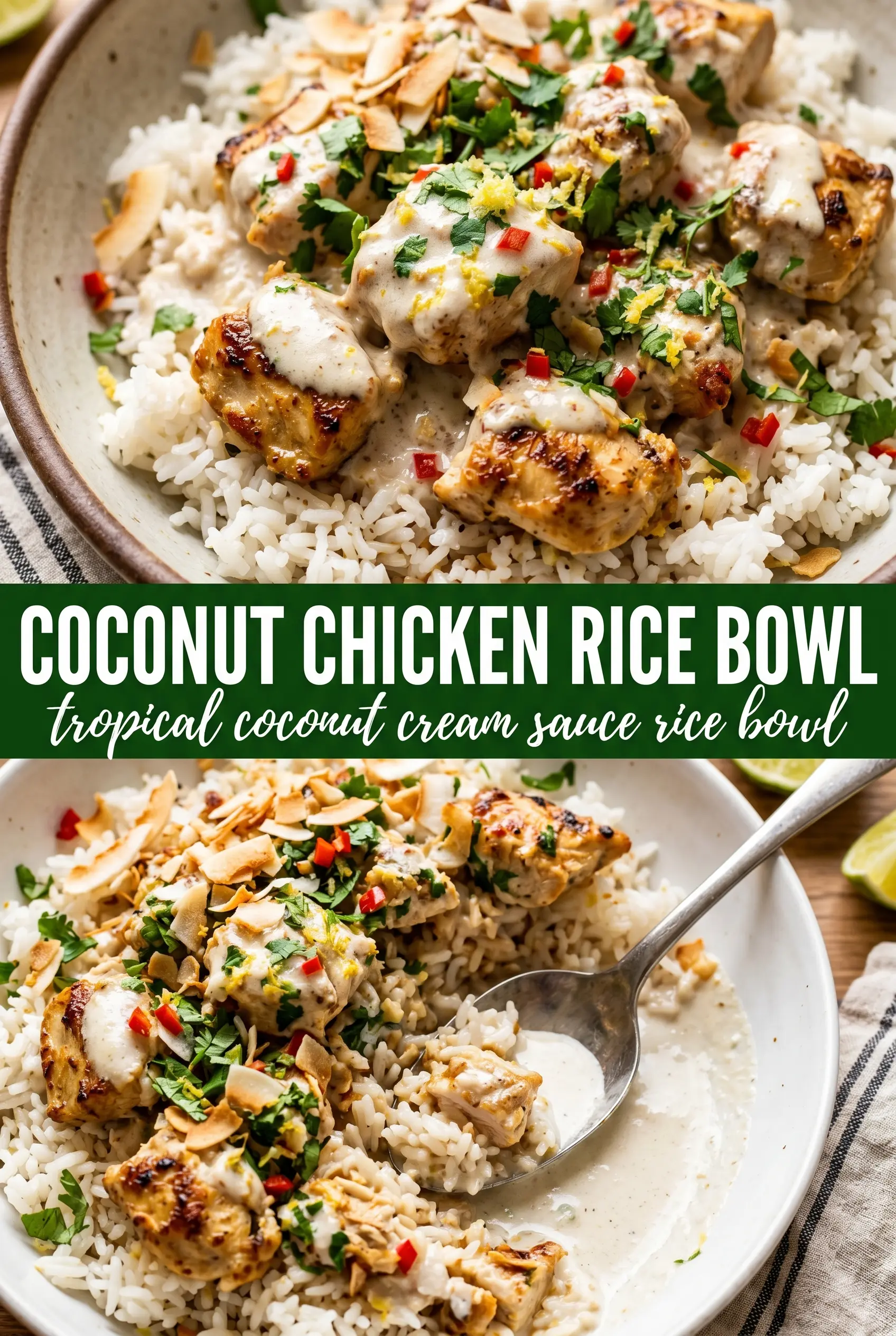
Spoon the chicken and sauce over hot jasmine rice, then top with cilantro, lime wedges, and mango salsa. The lime at the table matters. It sharpens the coconut and wakes up the turmeric, especially once the rice starts soaking up the sauce. Serve it right away while the chicken is juicy and the sauce is at its best texture.
How to Change This Coconut Chicken Bowl Without Losing What Makes It Work
Use Chicken Thighs for a Richer Bowl
Chicken thighs hold up well in the sauce and stay juicy even if they simmer a minute too long. The flavor is a little richer, and the bowl feels more forgiving. Keep the cook time similar, but check for tenderness instead of only using the clock.
Make It Dairy-Free and Gluten-Free Without Changes
This bowl already fits both of those needs as written if you use a gluten-free soy sauce or tamari. The coconut milk gives the sauce its body, so you don’t need any dairy to make it creamy. Check the curry paste label too, since a few brands include wheat-based thickeners.
Swap the Mango Salsa for Pineapple or Cucumber
Pineapple salsa gives you the same sweet-acid contrast with a sharper tropical note. A cucumber-lime topping works if you want something cooler and less sweet. The bowl still needs that fresh topping, or the coconut sauce takes over.
Turn It Into a Bigger-Batch Meal
Double the sauce if you’re serving four hungry people or planning leftovers. The chicken and sauce reheat well, but the rice soaks up liquid over time, so keep the rice separate until serving. That keeps the bowl from turning mushy by day two.
Storage and Reheating
- Refrigerator: Store the chicken and sauce for up to 4 days. The sauce thickens as it chills, which is normal.
- Freezer: Freeze the chicken and sauce for up to 2 months. Rice freezes separately better than it does mixed into the sauce.
- Reheating: Warm gently on the stove or in the microwave with a splash of water or coconut milk. High heat can make the sauce look oily, so reheat slowly until just hot.
Questions I Get Asked About This Recipe
Coconut Chicken Rice Bowl
Ingredients
Equipment
Method
- Season the chicken pieces with salt and pepper, then sear in oil over high heat for 4–5 minutes until golden. Transfer the chicken to a plate and set aside.
- In the same pan, sauté the garlic and ginger over medium-high heat for 1 minute, stirring until fragrant.
- Add coconut milk, soy sauce, lime juice, honey, turmeric, and red curry paste, then stir to combine.
- Bring the mixture to a simmer and cook until hot and cohesive, about 2–3 minutes while stirring occasionally.
- Return the seared chicken to the pan and bring back to a gentle simmer.
- Simmer for 10–12 minutes until the sauce reduces and thickens slightly and the chicken is cooked through, stirring a few times for even coating. If it gets too thick, splash in a teaspoon of water.
- Serve the coconut-sauced chicken over cooked jasmine rice and top with mango salsa, fresh cilantro, and lime wedges. Finish with a squeeze of lime before eating.