Golden chicken cutlets with a dark, glossy Marsala mushroom sauce have a way of making an ordinary dinner feel like a place where somebody knows what they’re doing. The chicken stays tender because it’s pounded thin and cooked fast, while the sauce picks up every browned bit from the pan and turns it into something deep, silky, and a little bit rich without feeling heavy.
The trick here is balance. Marsala wine needs enough time to simmer down so it loses that sharp alcohol edge and turns nutty and warm, but not so long that the sauce gets reduced past the point of being spoonable. The mushrooms and shallots build the base, and the last swirl of cold butter gives the sauce that restaurant sheen people always try to recreate at home.
Below, I’m walking through the parts that matter most: how to keep the chicken golden instead of soggy, why the sauce tastes better when it’s built in the same pan, and the small finishing move that makes the whole dish look polished enough for company.
The sauce reduced beautifully and coated the chicken instead of running all over the plate. I used the full 3 minutes on the Marsala and the flavor was deep, not boozy at all.
Save this Chicken Marsala for the nights when you want tender cutlets and a silky Marsala mushroom sauce without a lot of cleanup.
The Step That Keeps Chicken Marsala From Going Watery
The fastest way to lose the magic in Chicken Marsala is to crowd the pan or rush the mushrooms. If the chicken goes in before the pan is hot enough, it steams and sheds juices instead of picking up a golden crust. If the mushrooms are stirred constantly, they never get the chance to brown, and the sauce ends up tasting thin instead of deep.
The other thing worth respecting is the reduction. Marsala needs a few minutes bubbling on its own so the raw edge cooks off and the wine concentrates into something round and savory. If you add the broth too soon, you dilute that flavor before it has a chance to build.
- Thin chicken cutlets cook quickly and stay juicy. Halving the breasts horizontally gives you even pieces that brown fast without overcooking the center.
- All-purpose flour does two jobs here: it protects the chicken from drying out and helps thicken the pan sauce later. Shake off the excess so you don’t end up with a pasty coating.
- Dry Marsala wine is the flavor anchor. Sweet Marsala makes the sauce heavier and noticeably sweeter, while dry Marsala keeps it savory and balanced.
- Cold butter at the end is what gives the sauce that glossy finish. Stir it in off the heat or with the pan barely simmering so the sauce emulsifies instead of turning greasy.
What Each Ingredient Is Actually Doing in This Dish
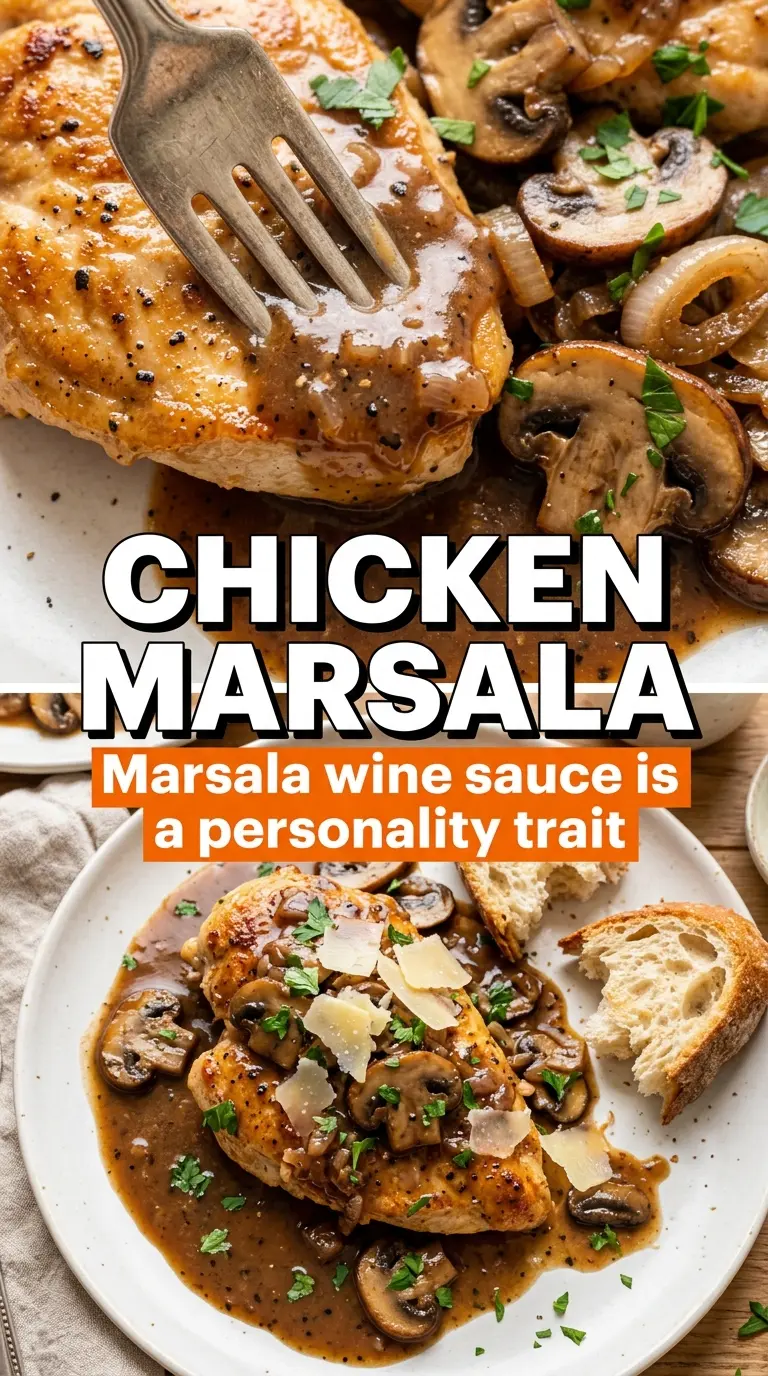
- Chicken breasts are sliced into cutlets so they cook in minutes. That thin shape is what keeps the texture tender while still giving you enough surface area for browning.
- Cremini mushrooms bring the earthy backbone of the sauce. White button mushrooms work in a pinch, but cremini give you a deeper, meatier flavor.
- Shallots and garlic build sweetness and aroma without overpowering the Marsala. If you don’t have shallots, use a small yellow onion and cook it a minute or two longer until it softens.
- Heavy cream softens the wine’s sharp edges and rounds out the sauce. You can skip it if you want a looser, more wine-forward sauce, but the texture will be less plush.
- Fresh thyme and parsley lift the finished dish. Dried thyme can work, but use less because it reads more concentrated and less fresh.
Building the Sauce in the Same Pan as the Chicken
Getting the Chicken Golden First
Season the cutlets, dredge them lightly in flour, and lay them in hot olive oil and butter without crowding the pan. You want a deep golden crust and a clean release from the skillet, which usually takes 3 to 4 minutes per side. If the chicken sticks, it isn’t ready yet. Pull it too early and the coating tears; leave it alone until the crust forms and it lifts cleanly.
Letting the Mushrooms Brown, Not Sweat
After the chicken comes out, the mushrooms go into the same pan with the shallots. Let them sit long enough to pick up color before stirring them around. They’ll start out sounding wet, then turn quieter and smell nutty as their moisture cooks off. Add the garlic only near the end so it doesn’t burn and turn bitter.
Reducing the Marsala Into the Sauce
Pour in the Marsala and let it bubble for 2 to 3 minutes before adding the broth and cream. That step matters because it cooks off the sharp alcohol taste and leaves the wine’s darker, sweeter notes behind. Once the broth and cream go in, simmer until the sauce coats a spoon. If it’s still thin, give it another minute or two; if it gets too tight, loosen it with a splash of broth.
Finishing With Butter and Herbs
Swirl in the remaining cold butter off the heat or over very low heat. That’s what gives the sauce a glossy, almost lacquered look. Stir in the thyme, return the chicken to the pan, and spoon sauce over the top so every piece gets covered before serving. A final scatter of parsley keeps the dish from looking muddy.
How to Adapt This for a Bigger Crowd or a Lighter Plate
Gluten-Free Chicken Marsala
Use a good 1:1 gluten-free flour blend for dredging. You’ll still get a light crust and enough starch to help the sauce thicken, though the coating may be a little more delicate when you turn the cutlets. Let the chicken brown fully before moving it so the crust has time to set.
Dairy-Free Version
Swap the butter for olive oil or a plant-based butter and leave out the cream. The sauce will taste a little leaner and less silky, but the Marsala and mushrooms still carry the dish. If you want a little more body, simmer the sauce a touch longer before returning the chicken.
Using Sweet Marsala
Sweet Marsala makes the sauce rounder and richer, but it can push the dish toward dessert-like if you aren’t careful. Use it only if that’s the style you want, and lean on the mushrooms, thyme, and extra black pepper to keep the sauce savory.
Scaling It for Company
Cook the chicken in batches and keep it warm on a sheet pan while you build the sauce. If you overcrowd the skillet, the cutlets steam and the sauce takes on that flat, boiled taste nobody wants. A larger pan helps, but the real key is keeping enough space for browning.
Storage and Reheating
- Refrigerator: Store leftovers in an airtight container for up to 3 days. The sauce will thicken as it chills, which is normal.
- Freezer: It freezes, but the cream sauce can separate a little when thawed. For the best texture, freeze only if you need to, and thaw it slowly in the refrigerator.
- Reheating: Warm gently in a covered skillet over low heat with a splash of broth. High heat can make the chicken tough and can split the sauce, so go slow and stir only enough to keep it moving.
Answers to the Questions Worth Asking
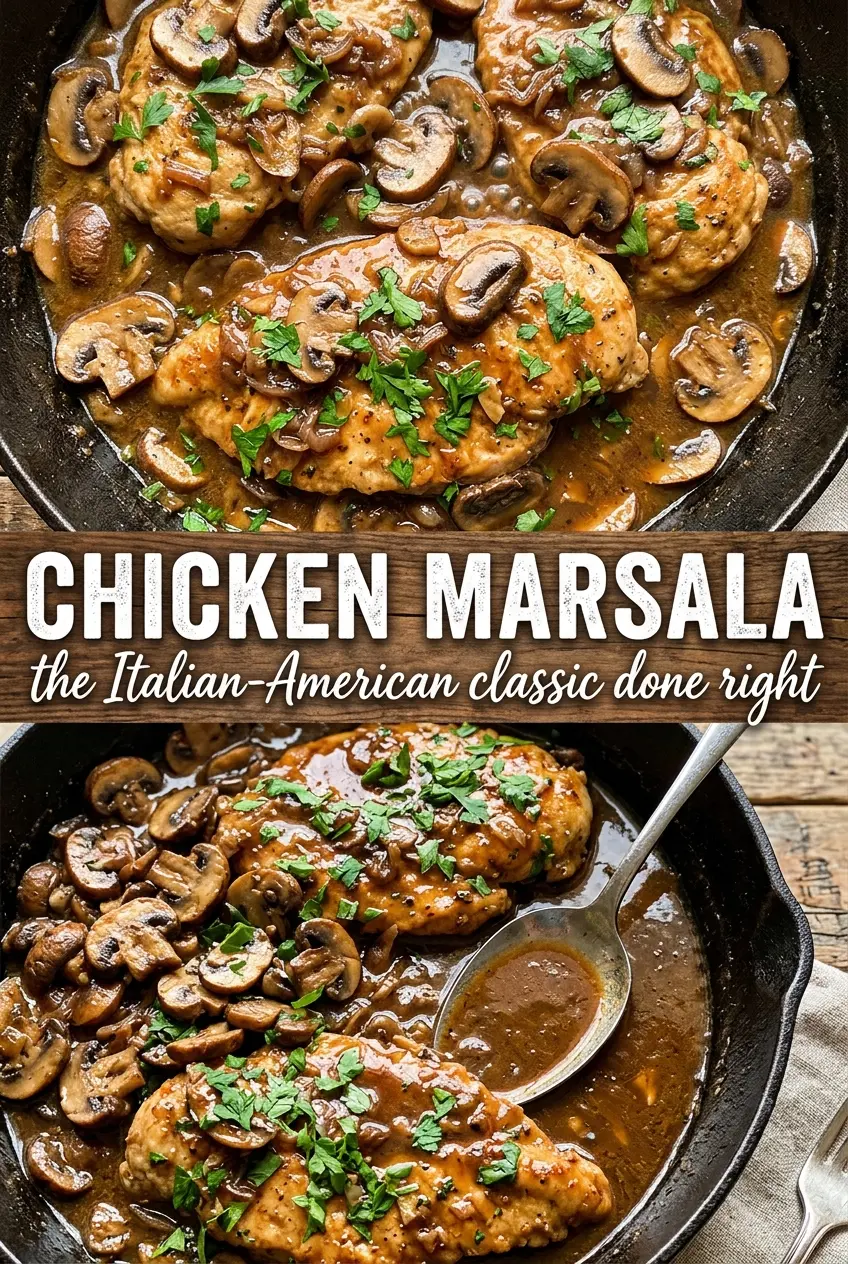
Chicken Marsala
Ingredients
Equipment
Method
- Season the chicken cutlets with salt and pepper to taste, then dredge them in all-purpose flour, shaking off excess so they stay lightly coated.
- Heat olive oil and 2 tablespoons butter in a cast iron skillet over medium-high heat, then pan-fry the cutlets for 3-4 minutes per side until golden; remove to a plate.
- In the same skillet, cook the sliced cremini mushrooms and minced shallots for 5-6 minutes, stirring until they turn golden.
- Add the minced garlic and cook for 1 minute, stirring constantly until fragrant and lightly softened.
- Pour in the dry Marsala wine and let it bubble for 2-3 minutes, scraping up any browned bits from the pan.
- Add the chicken broth and heavy cream, then simmer for 5 minutes until the sauce looks slightly reduced and glossy.
- Swirl in the remaining 2 tablespoons cold butter until the sauce is glossy, then stir in the fresh thyme leaves.
- Return the cutlets to the pan and spoon the sauce over them, letting them warm through briefly.
- Garnish with fresh parsley and serve immediately.