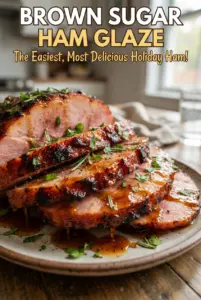
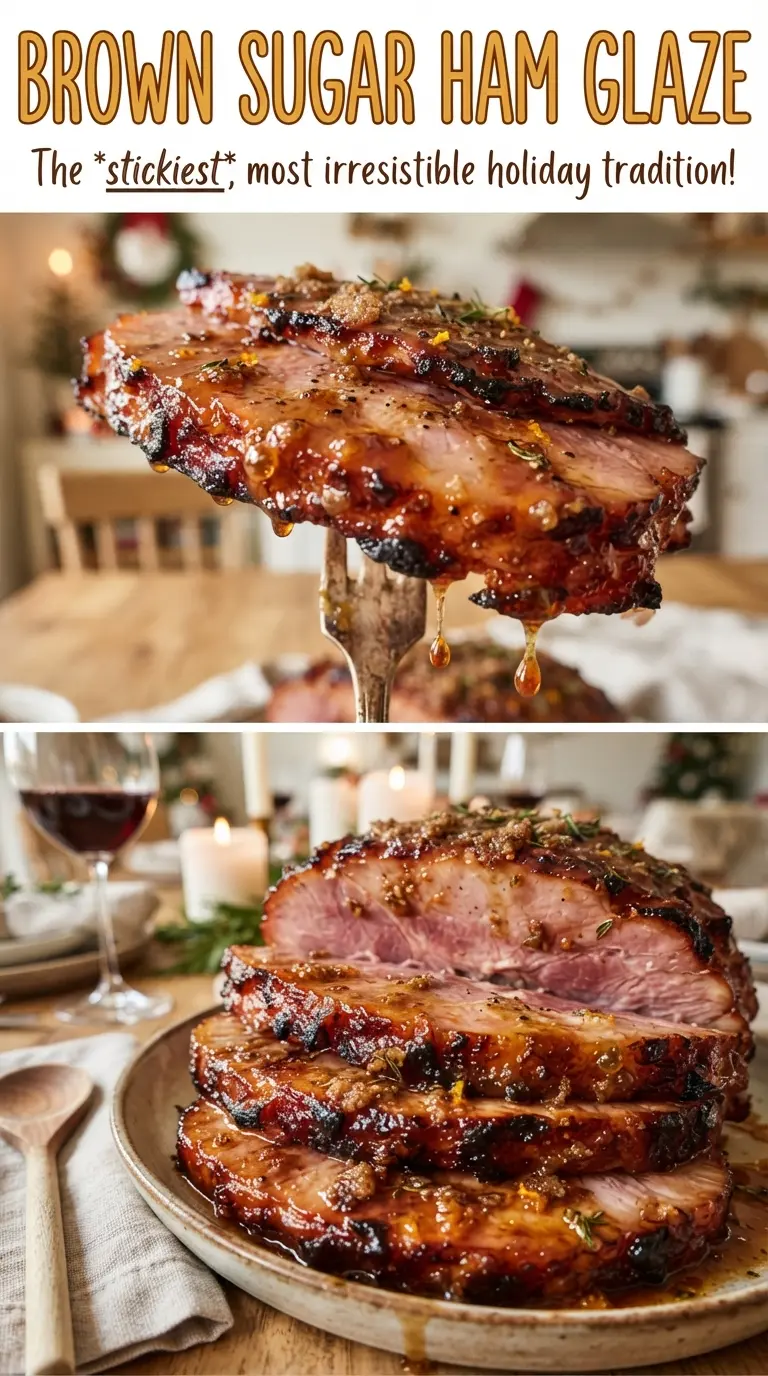
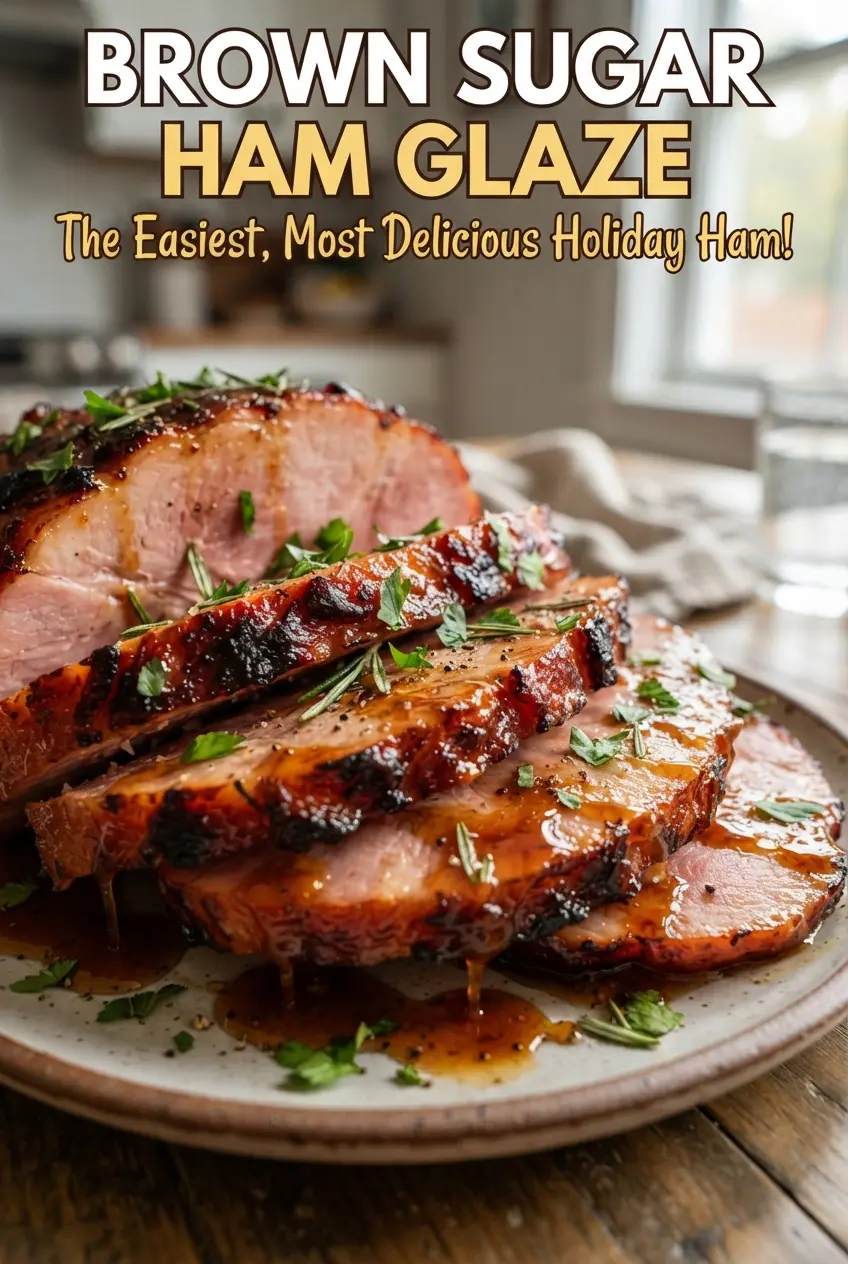
Brown sugar ham glaze turns a fully cooked ham into something glossy, sticky, and worth circling on the plate. It clings to the diamond cuts instead of sliding off, and it bakes into a lacquered finish with just enough sweetness to balance the salt in the ham. The best part is that it takes minutes to make, but it tastes like you paid attention.
What makes this version work is the balance. Brown sugar and honey build the shine, while Dijon and apple cider vinegar keep the glaze from turning one-note. A little pineapple or orange juice gives it that classic holiday-style brightness, and the cinnamon and cloves add warmth without making it taste like dessert. The glaze cooks just long enough to dissolve and thicken, which matters; if you rush it, you end up with grainy sugar instead of that smooth, brushable finish.
You’ll also find the timing that keeps the glaze from burning, plus a few smart swaps if you’re out of juice or want a slightly bolder finish. This is the kind of ham glaze that earns repeat use because it’s dependable, fast, and hard to mess up when you know what to look for.
The glaze thickened up beautifully and brushed on like silk. I used orange juice, and the ham came out shiny with just the right sweet-tangy balance — even the leftovers were incredible.
Save this glossy brown sugar ham glaze for a ham that tastes sweet, tangy, and beautifully lacquered.
The Balance That Keeps This Glaze From Turning Cloying
A ham glaze lives or dies on contrast. Brown sugar and honey bring the sticky shine people expect, but they need acid and mustard to keep the glaze from tasting flat by the second bite. Dijon doesn’t make it taste mustardy; it sharpens the sweetness and helps the glaze cling. The vinegar does the same job, only quietly, by cutting through the richness and keeping the finish clean.
The other mistake is cooking it too hard for too long. This glaze only needs a brief simmer, just until the sugar disappears and the mixture looks slightly syrupy. If you reduce it until it looks thick in the pan, it usually turns too stiff on the ham and can even scorch during the final basting. You want glossy and brushable, not jammy.
What Each Ingredient Is Actually Doing in the Pan
- Brown sugar — This is the backbone of the glaze and the source of that deep caramel color. Packed brown sugar gives better body than loose sugar, and light or dark brown sugar both work. Dark brown sugar tastes a little richer.
- Honey — Honey adds shine and helps the glaze stay silky on the ham. Maple syrup can stand in if needed, but the flavor shifts toward maple and the glaze won’t have quite the same classic finish.
- Pineapple or orange juice — This is where the brightness comes from. Pineapple gives a softer, more traditional sweet-tart note; orange tastes a little fresher and less tropical. Use unsweetened juice if you can, since sweetened juice can push the glaze too far.
- Dijon mustard — Dijon keeps the sweetness in check and helps the glaze taste layered instead of sugary. Yellow mustard is harsher and thinner, so it changes the whole profile.
- Butter — Butter rounds out the glaze and gives it that smooth, glossy texture when it hits the warm ham. It also helps the spices disperse evenly.
- Apple cider vinegar — The vinegar wakes everything up. If you skip it, the glaze tastes heavier and sweeter; if you’re out, a small splash of white wine vinegar works, but the flavor is a little less rounded.
- Cinnamon and cloves — These spices are quiet but important. They add warmth and make the glaze taste complete without taking over. Don’t overdo the cloves; a little goes a long way.
How to Cook It Until It’s Glossy, Not Grainy
Melting the Sugar Base
Combine everything in a saucepan and stir over medium heat until the butter melts and the sugar dissolves. At first it will look cloudy and loose, then it turns smoother as the granules disappear. If you still hear or feel crunchiness against the spoon, it needs more time before it can glaze properly. Don’t crank the heat to speed this up; high heat can scorch the sugars before they fully dissolve.
The Short Simmer That Builds Body
Once the glaze comes to a gentle simmer, let it bubble for 3 to 4 minutes. You’re looking for a slightly thicker texture and a glossy sheen, not a sticky paste. If it starts to look too thick in the pan, take it off the heat early — it will thicken more as it cools. A glaze that’s perfect in the pot can become too stiff by the time it reaches the ham if you over-reduce it.
Brushing on the Ham
Brush the glaze over a fully cooked ham during the last 30 minutes of baking, then repeat every 10 minutes. Those layers build the lacquer, and the repeated brushing is what gives you the deep amber finish instead of a thin coating. Use a shallow pan or a foil-lined roasting pan if possible, because the drips can caramelize at the edges and turn sticky fast. If the glaze starts to darken too quickly, tent the ham loosely with foil.
Serving the Remaining Glaze
Warm the leftover glaze and spoon it over sliced ham at the table. The sauce thickens as it cools, so warming it back up loosens it enough to pour cleanly. If it gets too thick, stir in a teaspoon or two of juice until it flows again. That final spoonful on the plate is where the glaze really shines, especially over the salty outer slices.
How to Change the Glaze Without Losing the Shine
Orange-Centered Glaze
Use orange juice instead of pineapple for a brighter, cleaner sweetness. The glaze tastes a little less tropical and a little more classic, which works especially well if your ham is already heavily spiced.
Dairy-Free Version
Swap the butter for a dairy-free butter or skip it entirely and add a teaspoon of neutral oil. You’ll lose a little roundness, but the glaze still reduces, shines, and brushes on well.
Bolder, More Savory Finish
Add an extra teaspoon of Dijon and a pinch more vinegar if you want the sweetness pulled back. This makes the glaze taste less like candy and more like a proper roast glaze with balance.
Storage and Reheating
- Refrigerator: Store leftover glaze in an airtight container for up to 5 days. It will thicken as it chills.
- Freezer: It freezes well for up to 2 months. Thaw overnight in the fridge before reheating.
- Reheating: Warm it gently in a saucepan over low heat or in short bursts in the microwave, stirring often. Don’t boil it again or it can turn too thick and sticky.
Answers to the Questions Worth Asking
Brown Sugar Ham Glaze
Ingredients
Equipment
Method
- Combine brown sugar, honey, pineapple or orange juice, Dijon mustard, butter, apple cider vinegar, cinnamon, and cloves in a saucepan.
- Bring the mixture to a simmer over medium heat, stirring until the sugar dissolves.
- Simmer 3-4 minutes until slightly thickened and glossy, then keep it warm for glazing.
- Brush the glaze over a fully cooked ham during the last 30 minutes of baking, applying it about every 10 minutes for even coverage.
- Spoon the remaining warm glaze over sliced ham at the table.