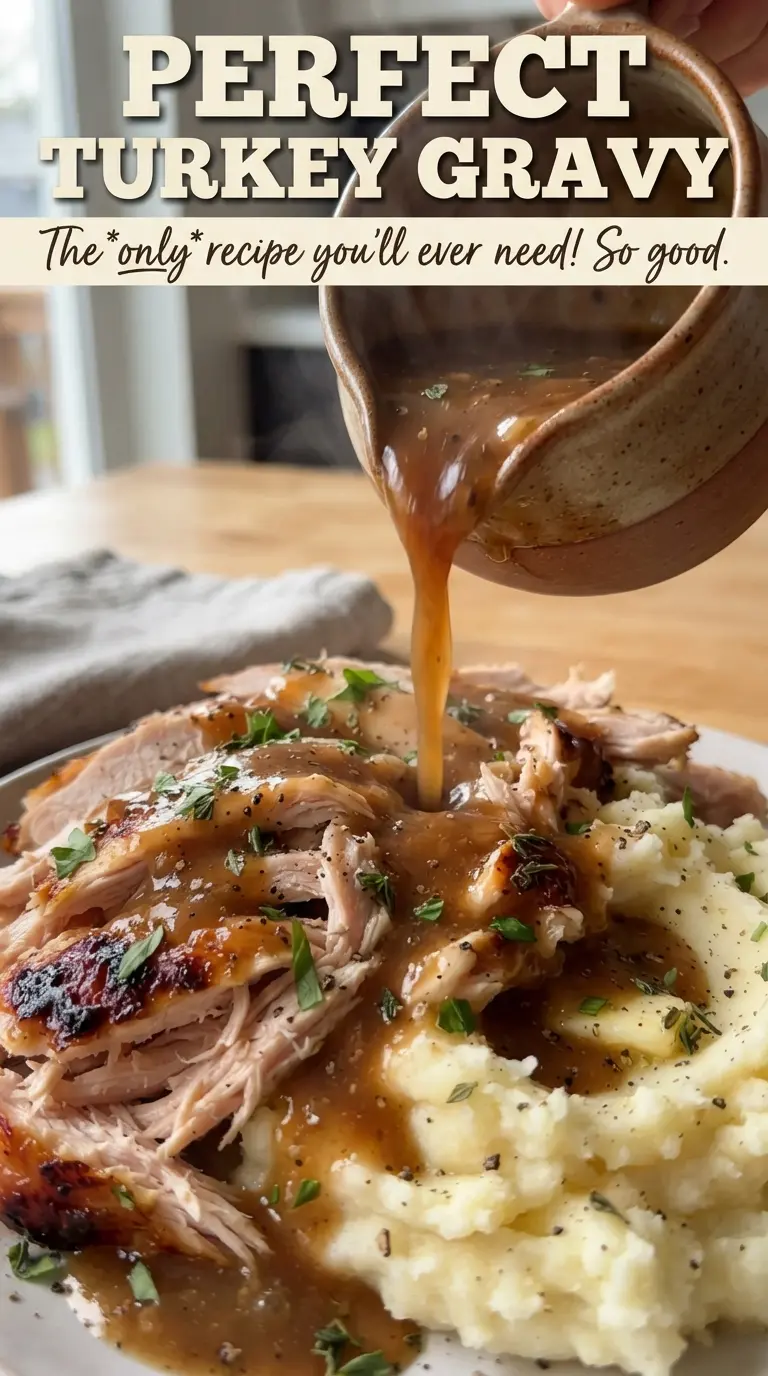
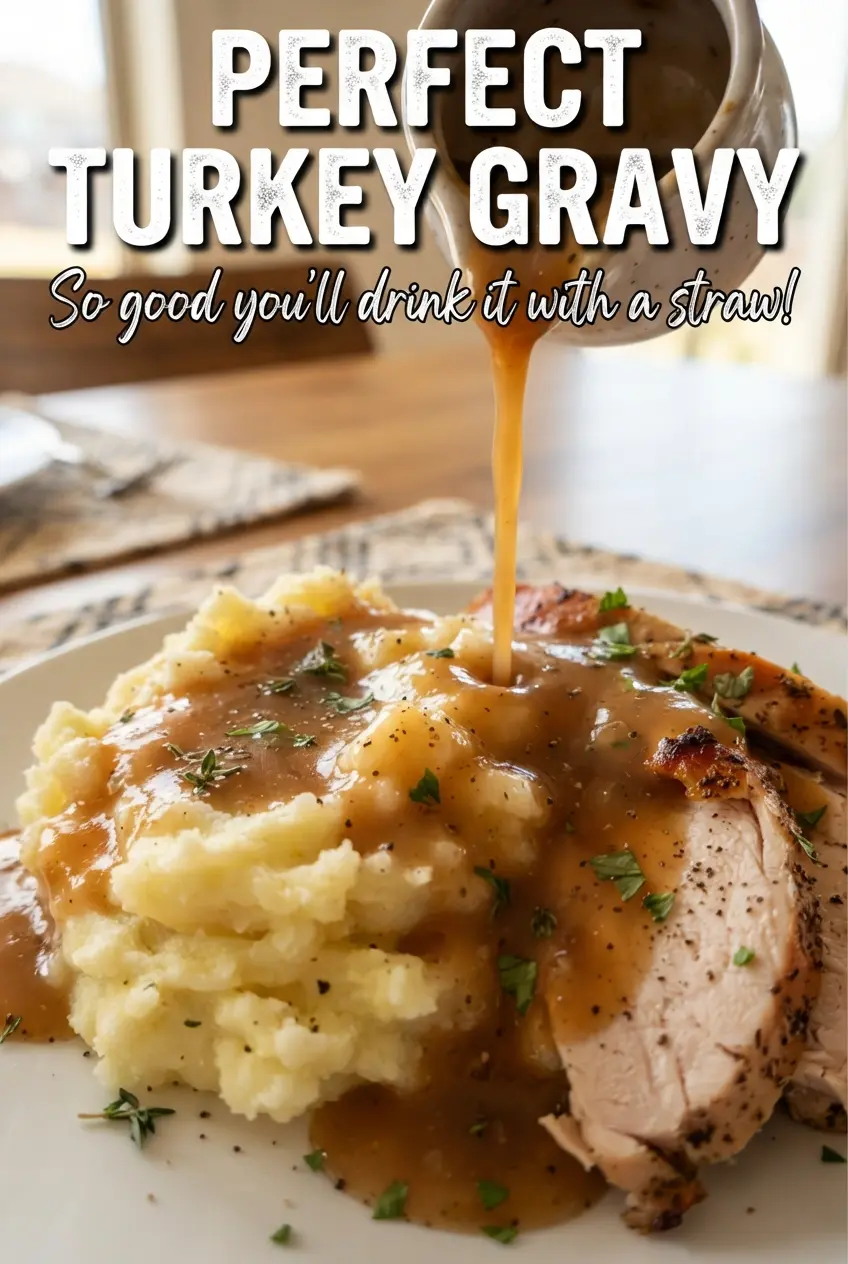
Silky turkey gravy turns a good roast dinner into the plate everyone remembers. The texture should be glossy and spoon-coating, with enough body to cling to mashed potatoes and sliced turkey without sliding off in a puddle. This version gets there fast, and it stays smooth because the roux cooks first, the stock goes in warm, and the pan juices get folded in after the fat is separated.
The little details matter here. Cooking the flour in the fat for a few minutes takes away that raw paste taste and gives the gravy a deeper color. Warm stock blends in cleanly, which means fewer lumps and less whisking panic. A splash of soy sauce adds quiet depth; you don’t taste soy, you just taste a gravy that somehow tastes more like itself.
Below you’ll find the easiest way to use pan drippings without making the gravy greasy, plus a few fixes for lumps, thin gravy, and make-ahead storage. If gravy has ever felt fussy, this is the version that settles down and behaves.
The gravy thickened up perfectly and stayed smooth even after I added the pan juices. I served it with turkey and mashed potatoes, and there wasn't a lump in sight.
Like this silky turkey gravy? Save it to Pinterest for the roast dinners when you need rich, lump-free gravy fast.
The Trick That Keeps Turkey Gravy Smooth Instead of Lumpy
The biggest mistake with gravy is dumping cold stock into hot flour-fat paste all at once. That shock is what locks in lumps. A steady whisk and warm liquid keep the roux loose enough to absorb gradually, so the flour disperses instead of clumping. Once the stock is in, let the gravy simmer long enough for the starch to fully hydrate and thicken; if you stop early, it can taste floury and look thin until it cools.
Pan drippings matter here, but not all drippings are equal. You want the fat for the roux and the browned juices for flavor, but you don’t want to pour in a whole cup of greasy liquid and hope for the best. Separating the fat from the juices gives you control over both texture and taste. If your drippings are light, butter fills the gap cleanly.
What the Pan Drippings, Stock, and Soy Sauce Are Each Doing
- Turkey pan drippings — This is the flavor anchor. The fat becomes the base for the roux, and the browned bits in the roasting pan bring the roasted turkey taste that plain butter can’t fully mimic. If you don’t have enough drippings, use butter for the full 1/4 cup of fat and add a little extra deglazed stock for depth.
- Warm turkey or chicken stock — Warm stock blends into the roux smoothly and keeps the gravy from seizing into lumps. Turkey stock tastes the most like a holiday pan gravy, but a good low-sodium chicken stock works well when that’s what you have. If your stock is salty, wait until the end to season.
- Fresh thyme — Thyme gives the gravy a clean savory edge that cuts through richness. Dried thyme works in a pinch, but use half as much because it blooms more aggressively. Add it during the simmer so it softens into the gravy instead of tasting dusty on top.
- Soy sauce — This is the quiet trick. It deepens color and adds umami without making the gravy taste Asian or obviously seasoned. Worcestershire can work, but it changes the profile more; soy sauce is the cleaner swap.
Building the Roux and Finishing the Gravy Without Breaking It
Separating the Fat From the Drippings
Pour the roasting pan juices into a measuring cup and let them sit long enough for the fat to rise. Skim off 1/4 cup of fat for the pan and save the rest of the juices; those browned liquids are worth adding back later. If you skip the separation and use the full drippings straight from the pan, the gravy can turn greasy and won’t thicken as evenly.
Cooking the Roux Until It Loses the Raw Flour Taste
Whisk the flour into the hot fat over medium heat and keep it moving for 3 to 4 minutes, until it smells nutty and turns light golden brown. That short cook time is what removes the pasty flour flavor and gives the gravy a deeper, roasted note. If it gets too dark too fast, the heat is too high; pull the pan back and keep whisking so it doesn’t scorch.
Whisking in the Stock a Little at a Time
Add the warm stock and the defatted pan juices gradually, whisking after each addition until smooth. At first it will look too thin, then suddenly it will start to thicken as the starch hydrates. Keep it at a steady simmer for 8 to 10 minutes; if it still tastes like flour, it needs more time, not more flour.
Seasoning and Straining at the End
Stir in the thyme and soy sauce, then taste before adding salt. Different stocks vary a lot, and the pan drippings may already carry enough seasoning. If you want an extra-smooth gravy, strain it through a fine-mesh sieve right before serving. That catches any browned bits or tiny flour flecks and leaves you with a glossy finish.
How to Adapt This Gravy for Different Dinners and Diets
Use butter instead of drippings
If your turkey didn’t give you much fat, butter works cleanly and gives you a neutral, reliable roux. You’ll lose a little roasted depth, so lean harder on the pan juices and stock. This is the easiest fix when the roasting pan comes up short.
Gluten-free gravy with cornstarch
Swap the flour for 2 tablespoons cornstarch mixed with 2 tablespoons cold stock, then whisk that slurry into the simmering liquid at the end. The texture turns glossier and a little more delicate than a roux-based gravy, and it won’t freeze quite as well. Don’t add cornstarch directly to hot liquid or it will clump immediately.
Make it ahead for a big holiday meal
Cook the gravy a touch thinner than you want it on the table, because it thickens as it cools and tightens again when reheated. That keeps it pourable instead of pasty on serving day. Reheat it gently with a splash of stock and whisk until it loosens.
Dairy-free as written
This recipe already skips dairy, so it fits naturally if you’re avoiding butter-based gravies. Just use turkey fat when you have it, or any neutral fat that came off the roast. The gravy still gets its richness from the drippings, stock, and roux.
Storage and Reheating
- Refrigerator: Keep in an airtight container for up to 4 days. It will thicken as it chills.
- Freezer: It freezes well for up to 2 months, though the texture can loosen a little after thawing. Freeze in a sealed container with a little headspace.
- Reheating: Warm slowly on the stove over low heat with a splash of stock, whisking until smooth. High heat is what causes the gravy to look broken or gluey.
Answers to the Questions Worth Asking
Perfect Turkey Gravy
Ingredients
Equipment
Method
- Pour the roasting pan drippings into a measuring cup and let the fat rise to the top. Wait until you clearly see a separated layer of fat before using it.
- Spoon 1/4 cup of the fat into a saucepan over medium heat and whisk in the all-purpose flour. Whisk until the mixture forms a smooth paste with no dry spots.
- Cook the roux 3-4 minutes over medium heat, whisking, until golden brown. Watch for a deeper brown color and a fragrant, nutty aroma.
- Gradually whisk in the warm turkey or chicken stock (including deglazed pan juices) until the mixture is smooth. Add slowly to prevent lumps and keep the texture glossy.
- Add the fresh thyme leaves and soy sauce, then simmer 8-10 minutes until thick enough to coat a spoon. You should see steady simmering bubbles and a thicker, clingy consistency.
- Season with salt and pepper to taste. Taste and adjust while the gravy is hot.
- Strain the gravy if desired, then serve hot. Straining gives a fully smooth finish for ladling over turkey and mashed potatoes.