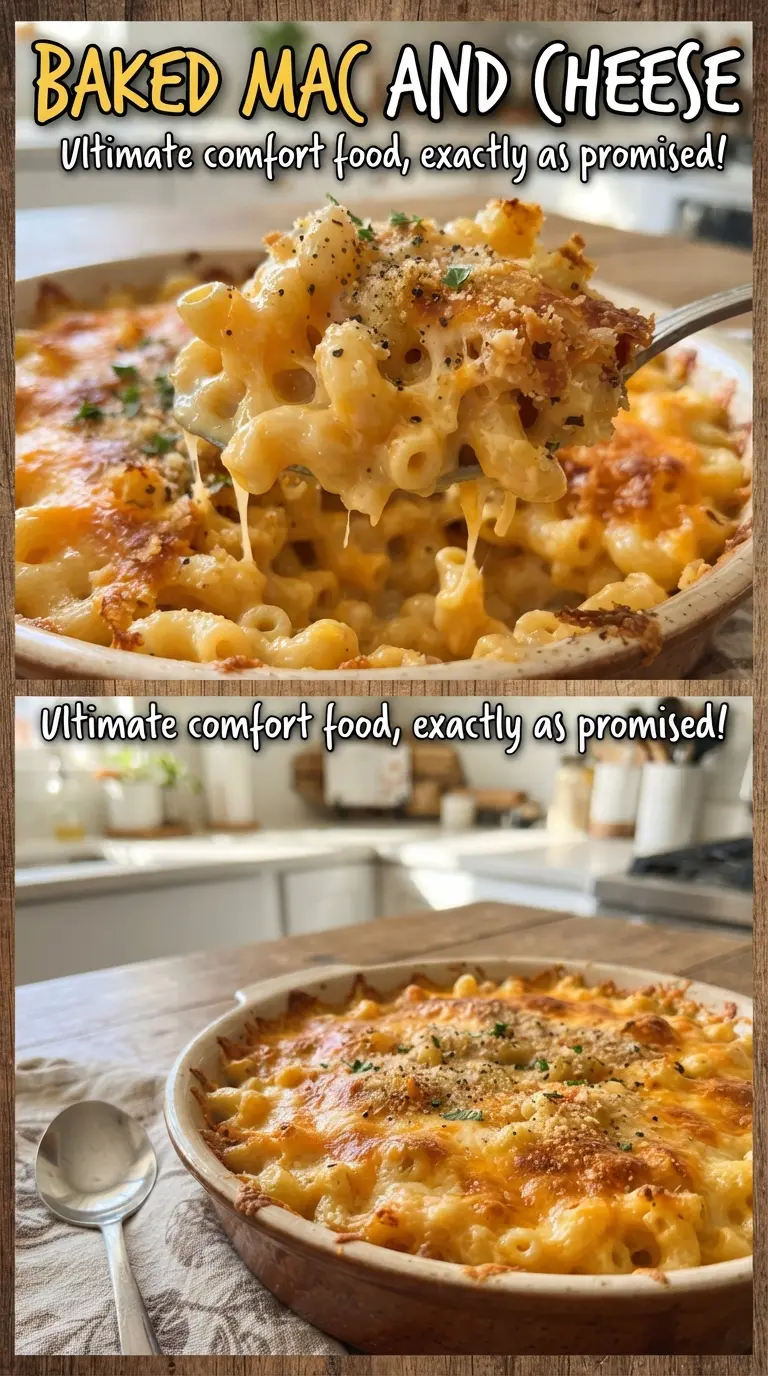
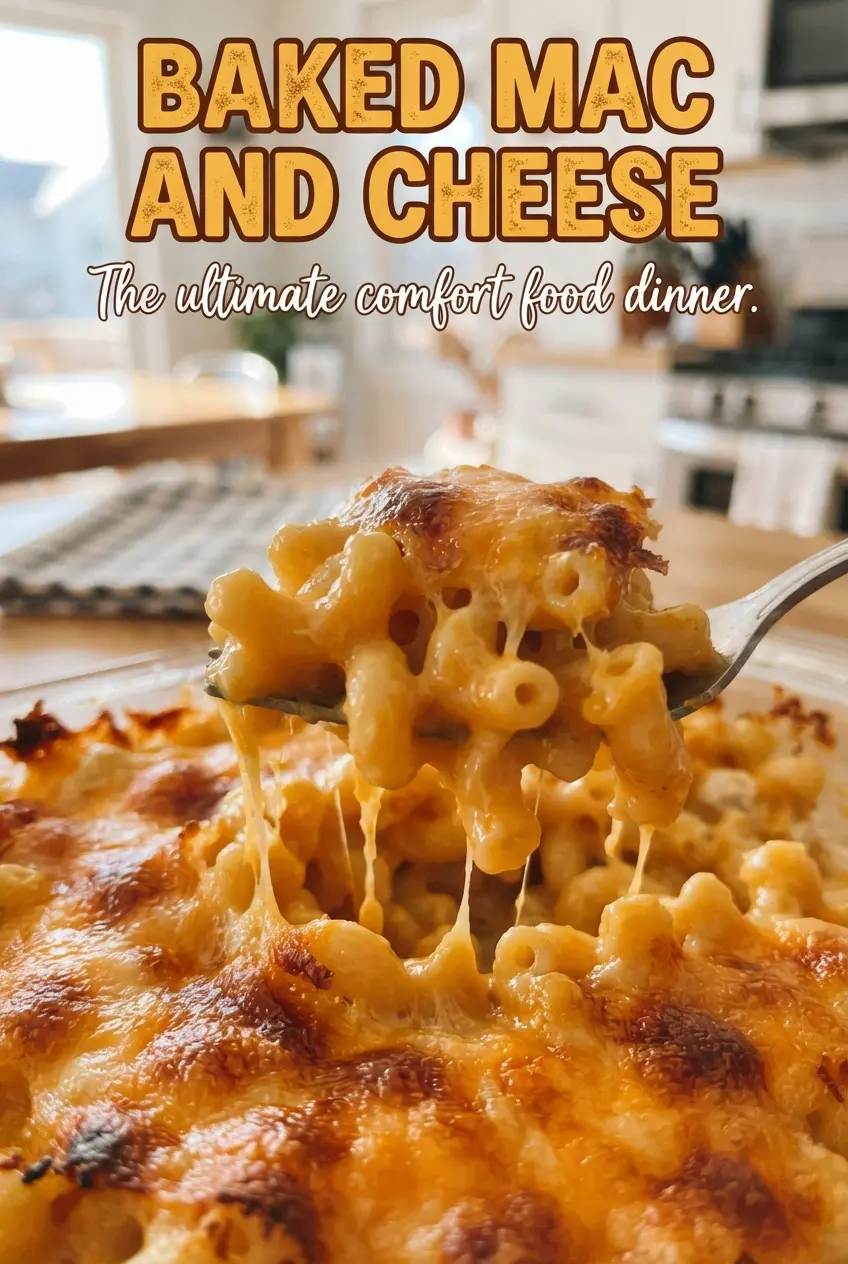
Baked mac and cheese should come out creamy inside, bubbling at the edges, and capped with a browned cheese top that crackles just a little when you spoon through it. The version that gets made again and again is the one that stays saucy after baking, not the one that turns dry and grainy the moment it leaves the oven.
The difference comes down to the sauce base and the pasta timing. A quick roux gives the milk enough body to cling to every elbow without turning pasty, and evaporated milk adds a little extra richness and stability so the sauce doesn’t split as it bakes. Cooking the pasta just shy of done matters too, because it finishes in the oven and soaks up the cheese sauce instead of stealing all of it.
Below you’ll find the little details that keep the texture right, from the cheese blend to the resting time. The crust, the stretch, and the creamy middle all depend on those small choices.
The sauce stayed silky after baking and the top got that perfect browned crust without drying out the middle. I used the full resting time and it sliced cleanly instead of spilling all over the plate.
Save this baked mac and cheese for the nights when you want a creamy center, a browned cheddar crust, and no watery sauce.
The Sauce Breaks If You Rush the Heat
The mistake that ruins baked mac and cheese most often is boiling the sauce after the dairy goes in. Once the milk is added, the roux needs a calm simmer, not a hard boil. That gentle heat gives the starch time to thicken the sauce without turning it pasty or causing the cheese to seize later.
Undercook the pasta by about two minutes and stop there. The noodles absorb sauce as the dish bakes, and fully cooked pasta turns soft fast in a casserole like this. Resting after baking matters just as much as the bake itself, because the sauce tightens slightly and settles back into the noodles instead of running across the pan.
What the Cheeses Are Doing Here
- Sharp cheddar — This is the backbone of the flavor. Freshly shredded cheddar melts better than pre-shredded because the anti-caking coating can make the sauce a little grainy. If you only have pre-shredded, it still works, but the sauce won’t be quite as silky.
- Gruyere or Colby jack — Gruyere brings a nutty, savory depth and a better stretch; Colby jack gives you a milder, creamier finish. Either one softens the sharpness of the cheddar and keeps the casserole from tasting one-note.
- Evaporated milk — This is the insurance policy. It adds body and a little extra protein, which helps the sauce stay smooth in the oven. Regular milk alone works, but the finished dish is looser and a little less stable.
- Dry mustard and smoked paprika — Neither one makes the dish taste like mustard or smoke. They deepen the cheese flavor and keep the sauce from tasting flat.
Building the Cheese Sauce Before It Hits the Oven
Starting the Roux
Melt the butter over medium heat, then whisk in the flour and cook it for about a minute. The mixture should look smooth and smell a little nutty, not browned. If the flour stays raw, the finished sauce can taste chalky, so that short cooking time matters.
Adding the Milk Slowly
Whisk in the whole milk and evaporated milk gradually so the roux stays smooth. The sauce will look thin at first, then it will start to coat the back of a spoon after a few minutes of steady simmering. If you dump the liquid in all at once, the roux can clump and you’ll spend the next several minutes chasing lumps around the pan.
Melting in the Cheese
Pull the pan off the heat before adding the cheese. That lower temperature keeps the sauce glossy instead of oily. Stir in the cheddar and Gruyere a handful at a time until melted, then fold in the pasta while the sauce is still loose enough to coat every piece.
Baking for the Top and the Set
Transfer the pasta to the baking dish, add the remaining cheese, and bake until the center is bubbling and the top has browned in spots. You want active bubbles around the edges and a little color on top, not a dry crust from overbaking. Give it ten minutes to rest before serving so the sauce settles and the scoop holds together.
How to Adapt It Without Losing the Creamy Center
Gluten-Free Version
Swap the elbow macaroni for a gluten-free pasta shape that holds sauce well, and replace the all-purpose flour with a 1:1 gluten-free blend or cornstarch slurry. The sauce will still thicken, but it may be a little softer, so don’t overbake it or the noodles can break down.
Lighter Cheese Swap
Colby jack in place of some of the cheddar gives you a milder, smoother casserole with less tang. The flavor gets softer, but the texture stays creamy, which makes this the better choice if you want a more kid-friendly pan.
Make-Ahead Casserole
Assemble the dish up to the point of baking, cover tightly, and refrigerate. Add 10 to 15 minutes to the bake time if it goes into the oven cold. If the top starts browning before the center is hot, lay a piece of foil loosely over the dish and finish baking that way.
Storage and Reheating
- Refrigerator: Store covered for up to 4 days. The sauce will firm up as it chills, so expect a denser texture the next day.
- Freezer: It freezes better before baking than after. Wrap the assembled casserole tightly and freeze for up to 2 months, then thaw overnight in the refrigerator before baking.
- Reheating: Reheat covered in a 325F oven with a splash of milk stirred in if it looks tight. The main mistake is blasting it in the microwave until the cheese separates and the edges dry out.
Answers to the Questions Worth Asking
Baked Mac and Cheese
Ingredients
Equipment
Method
- Preheat the oven to 350F, then butter a 9x13-inch baking dish for easy release.
- Cook the elbow macaroni 2 minutes less than package directions, then drain so it finishes cooking in the oven.
- Melt the butter, whisk in the all-purpose flour, and cook 1 minute over medium heat until it smells lightly toasted.
- Slowly whisk in the whole milk and evaporated milk, stirring until smooth and no flour streaks remain.
- Simmer for 5-6 minutes until the sauce thickens enough to coat the back of a spoon, then season with salt, black pepper, dry mustard, and smoked paprika.
- Stir in 3 cups shredded sharp cheddar and 1 1/2 cups shredded Gruyere or Colby jack until melted, then fold in the drained pasta.
- Pour the mixture into the buttered baking dish and top with the remaining cheeses for a browned crust.
- Bake 25-30 minutes at 350F until bubbly around the edges and golden on top, then rest 10 minutes before serving.