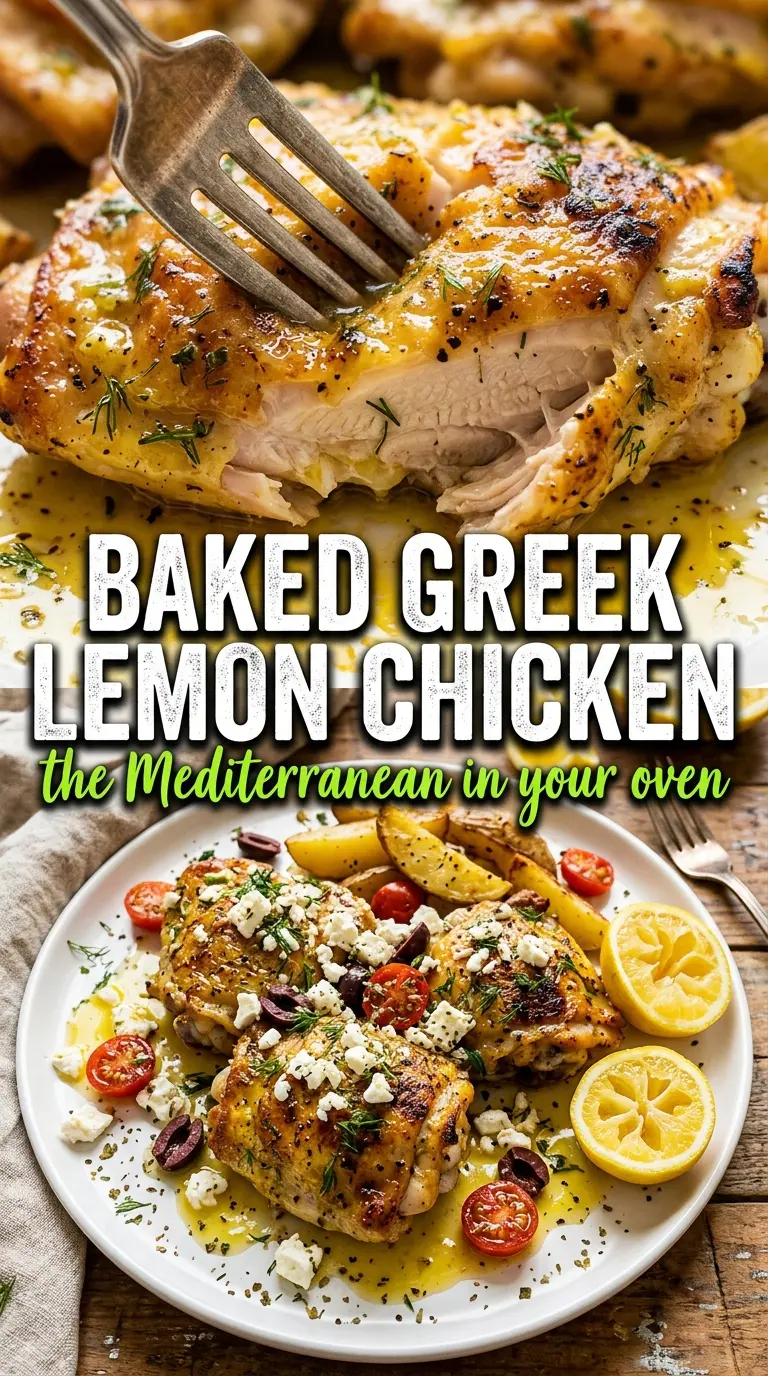
Golden baked Greek lemon chicken earns its place in the regular dinner rotation because the skin turns deeply bronzed while the pan juices reduce into a sharp, garlicky glaze that clings to every piece. The lemon doesn’t just brighten the chicken; it cuts through the richness of the skin and olive oil, so each bite tastes clean instead of heavy.
The trick is balancing acidity, fat, and heat. A short marinade seasons the meat all the way through, but it’s not long enough to make the chicken mushy. Roasting at a high temperature lets the skin take on color before the broth and lemon slices soften into a glossy sauce in the pan. The result is the kind of dinner that looks like you worked harder than you did.
Below, you’ll find the details that matter most: how to keep the chicken from turning pale in the oven, which ingredient gives the drippings their boldest flavor, and what to change if you want to make it dairy-free, lower-carb, or ahead for another night.
The chicken came out with crisp, golden skin and the lemon-garlic pan juices were incredible spooned over rice. I followed the roasting time exactly and the thighs were juicy all the way through.
Save this baked Greek lemon chicken for the nights when you want crisp skin, bright lemon drippings, and almost no cleanup.
The Secret to Lemon Chicken That Roasts, Not Steams
The most common mistake with lemon chicken is crowding the pan or drowning it in liquid. Both lead to pale skin and diluted flavor. Here, the chicken sits skin-side up in a hot oven with just enough broth in the pan to create steam around the edges without washing out the seasoning on top.
High heat matters because it helps the skin render and brown before the juices evaporate completely. If your chicken is arranged too tightly, the pieces trap moisture and the tops stay soft. Give each piece a little breathing room, and let the oven do the browning instead of relying on a long marinade for color.
- Bone-in chicken pieces — Skin-on thighs, drumsticks, breasts, or a cut-up whole chicken all work here. Bone-in pieces hold up to the long roast and stay juicier than boneless chicken, which can dry out before the skin gets the color you want.
- Fresh lemon juice and zest — Juice brings the sharp, clean acidity, while zest carries the fragrant lemon oil that makes the marinade taste vivid instead of flat. Bottled juice won’t give the same lift.
- Olive oil — This helps the herbs and garlic coat the chicken and encourages browning. A good everyday olive oil is fine; save the expensive finishing oil for drizzling at the table.
- Chicken broth — The broth keeps the pan from drying out and turns into the base for the drippings you’ll spoon over the finished chicken. Use low-sodium broth if you want more control over the salt level.
What Each Ingredient Is Actually Doing in This Chicken
- Chicken breasts (the protein) — Let them sit at room temperature 15 minutes before cooking. This helps them cook evenly without drying.
- Oil or butter (the cooking medium) — This prevents the chicken from drying out and carries herb and spice flavors throughout.
- Garlic (the aromatic foundation) — Fresh minced garlic mellows and becomes sweet when cooked. Don’t brown it or it turns bitter.
- Cream or sauce (the moisture keeper) — This prevents the chicken from drying out during cooking. Balance richness with acid.
- Lemon, wine, or acid (the brightness) — This prevents heavy cream sauces from tasting flat. Add at the end to preserve freshness.
- Fresh herbs (basil, thyme, parsley) — Add some during cooking and some after so you get both cooked and fresh flavors.
- Cheese or toppings (optional richness) — These add creaminess and depth. Don’t overdo it or the dish becomes heavy.
- Proper oven temperature (375-400°F) or pan heat — This cooks chicken through without drying the edges. Use a thermometer for 165°F.
Building the Marinade and Roasting the Chicken
Whisking the Marinade Until It Smells Like Dinner
Stir the olive oil, lemon juice, zest, garlic, oregano, thyme, paprika, salt, and pepper until the mixture looks slightly emulsified and flecked with herbs. That coating matters because it helps the garlic and dried herbs cling to the chicken instead of sliding off into the pan. If the garlic is left in big pieces, it can scorch in the hot oven, so mince it finely.
Letting the Chicken Take on the Flavor
Coat the chicken pieces well and let them sit for at least 30 minutes. That short rest gives the surface time to season without letting the lemon start breaking down the meat too much. If you marinate it much longer, the outside can take on a cured texture and the citrus will start to dominate the chicken instead of balancing it.
Roasting for Color, Not Just Doneness
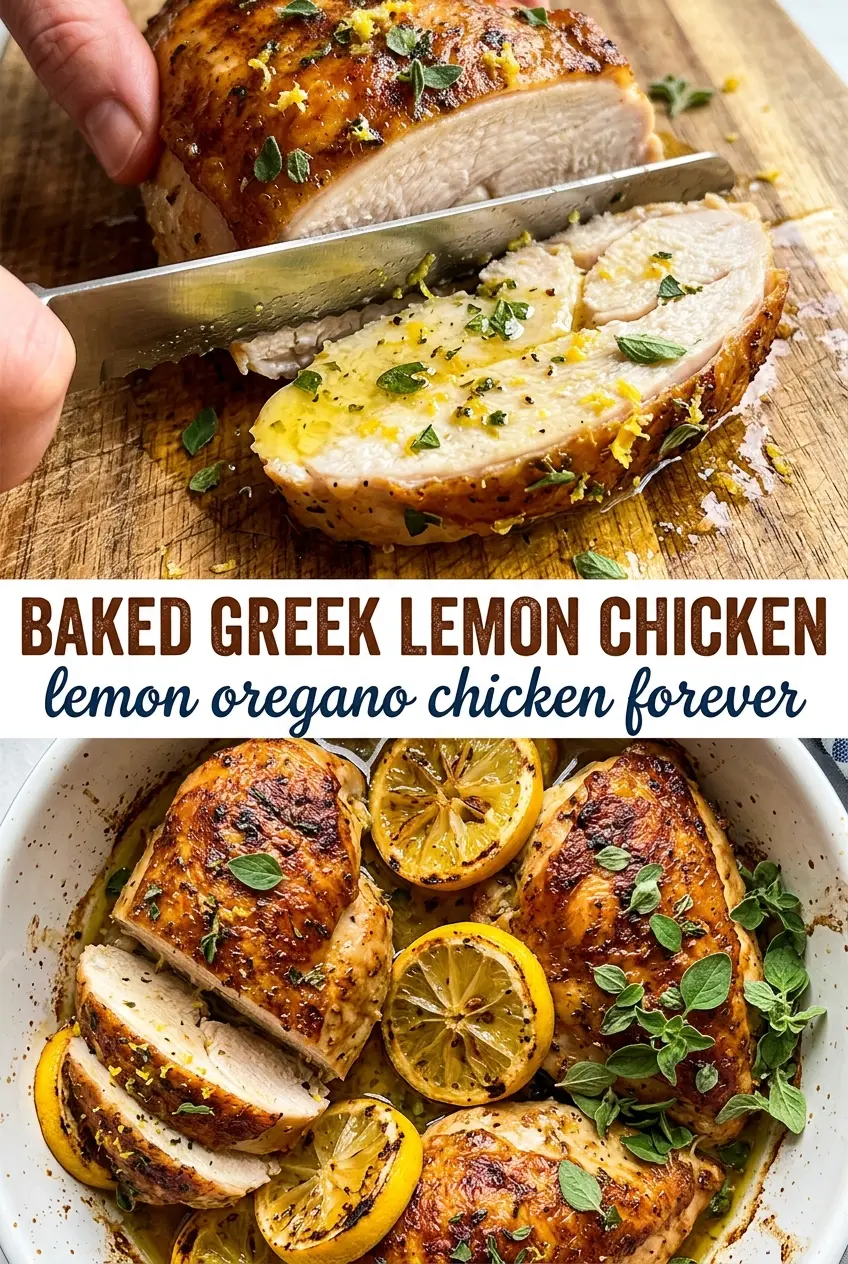
Arrange the chicken skin-side up in a large baking dish, then pour the broth around it and tuck the lemon slices in between the pieces. Roast at 425°F until the skin is deeply golden and the thickest part reaches 165°F. If the skin still looks pale near the end, run the pan higher in the oven for a few minutes instead of adding more liquid, which will only soften what you worked to crisp.
Basting at the Right Moment
Spoon the pan juices over the chicken once during roasting, about halfway through. That keeps the top glossy and helps the lemon slices caramelize in the drippings without flooding the skin. When the chicken is done, spoon those reduced juices over everything before serving; that last drizzle is where the roasted garlic and lemon really come together.
How to Adapt This for Different Pans, Cuts, and Dietary Needs
Boneless chicken thighs
Boneless thighs cook faster and stay juicy, but they won’t give you the same dramatic pan juices or crispy skin. Start checking them around 25 to 30 minutes so they don’t overcook, and keep the broth in the pan so the lemon and garlic still have something to reduce into.
Dairy-free and naturally gluten-free
This recipe already fits both of those needs as written, which is part of why it’s such an easy weeknight keeper. Just double-check that your chicken broth is gluten-free if that matters for your kitchen.
More herb-forward flavor
Add a few sprigs of fresh oregano or thyme to the pan before roasting if you want a more fragrant finish. Fresh herbs won’t replace the dried oregano in the marinade, but they do perfume the drippings and make the dish taste brighter at the table.
Make-ahead marinating
You can marinate the chicken up to 12 hours ahead. That gives the seasoning deeper flavor without pushing the citrus so long that it changes the texture of the meat. Keep it covered in the refrigerator and bring the pan close to room temperature while the oven heats.
Storage and Reheating
- Refrigerator: Store leftovers in an airtight container for up to 4 days. The skin softens in the fridge, but the flavor holds up well.
- Freezer: It freezes well if you remove the chicken from the bones first and pack it with a little of the pan juices. Freeze for up to 2 months.
- Reheating: Warm it covered in a 325°F oven until heated through. A microwave works in a pinch, but it will make the skin rubbery and dull the lemony drippings.
Questions I Get Asked About This Recipe
Baked Greek Lemon Chicken
Ingredients
Equipment
Method
- Whisk together olive oil, lemon juice, lemon zest, garlic, dried oregano, dried thyme, smoked paprika, salt, and cracked black pepper until evenly combined. Marinate the chicken for at least 30 minutes so the seasoning clings to the pieces.
- Preheat the oven to 425°F and arrange the marinated chicken skin-side up in a large roasting pan or baking dish. Set the lemon slices around and under the pieces to roast against the chicken.
- Pour the chicken broth around the chicken so the pan has braising liquid while the skin roasts. Roast for 40-45 minutes, basting with pan juices once halfway through, until skin is deeply golden and internal temperature reaches 165°F.
- Spoon the caramelized pan drippings over the chicken before serving to intensify the glaze. Garnish with fresh oregano for a fresh, herb-flecked finish.