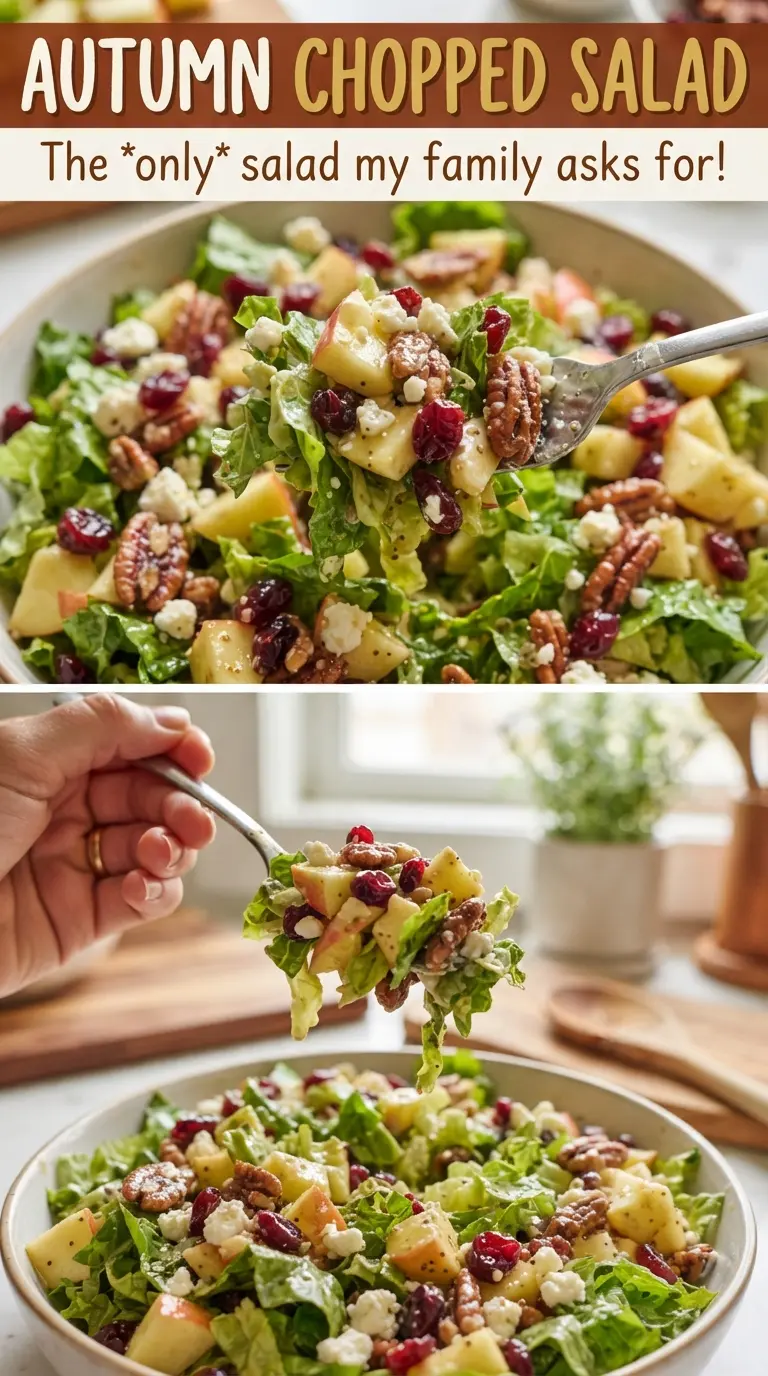
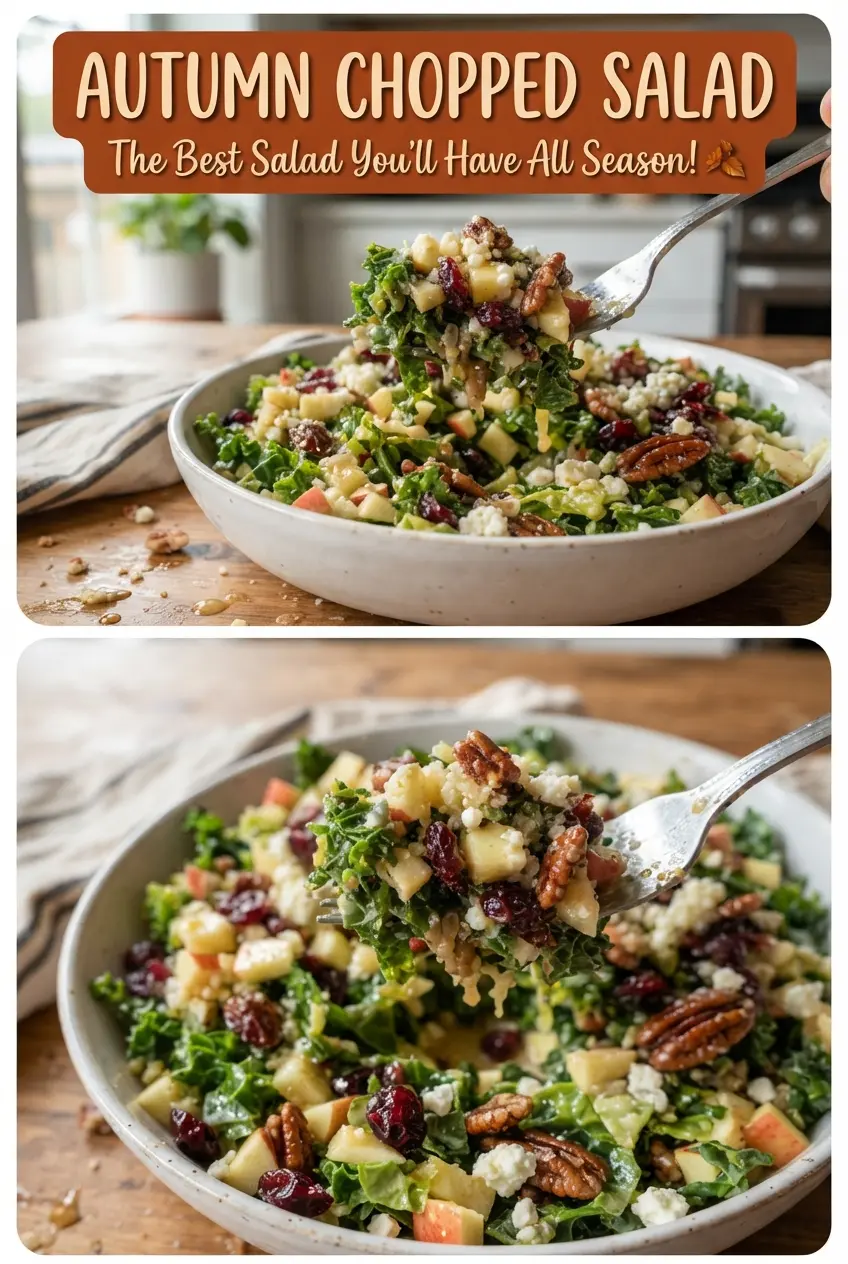
Autumn chopped salad gets its appeal from contrast: crisp apples, juicy pear, chewy cranberries, crunchy pecans, and salty feta all cut into small, fork-friendly pieces so every bite tastes complete. The kale and Brussels sprouts hold their texture instead of collapsing, which means this salad stays lively on the plate and doesn’t turn limp before dinner is over.
The trick is in the cut and the massage. Finely chopping the greens helps the dressing coat every surface, and a short massage with a spoonful of vinaigrette takes the raw edge off the kale without making it soft. The maple-Dijon dressing gives just enough sweetness to tie the fruit and nuts together without turning the bowl into something sugary.
Below, you’ll find the easiest way to keep the greens tender, not soggy, plus a few smart swaps if you need to work with what you already have. This is the kind of salad that works for a quiet lunch or a crowded table, and it holds up better than most tossed salads once it’s dressed.
I massaged the kale for a minute like you said, and the whole salad stayed crisp instead of tough. The maple dressing coated everything evenly, and the feta with the pears was such a good combo.
Save this autumn chopped salad for the days when you want crisp greens, sweet fruit, and a maple-Dijon finish in one bowl.
The Part That Keeps This Salad Crisp Instead of Watery
Chopped salads fail when the greens are cut too large or dressed too early. Big pieces don’t pick up enough dressing, so the bowl tastes uneven, and once watery fruit sits against tender leaves, the whole thing gets soft at the bottom. This version avoids both problems by chopping the kale and Brussels sprouts finely enough that they act almost like a base, not a garnish.
The other important move is giving the kale a brief massage before anything else goes in. That one minute changes the texture from stiff to pleasantly tender, which matters because raw kale needs help if you want it to eat well cold. The Brussels sprouts stay crunchy, so the salad still has structure even after the dressing hits it.
- Finely chopped kale — The small cut helps the dressing cling and keeps the texture pleasant. If you use whole leaves or large ribbons, the salad eats rough and the dressing slides off.
- Shredded Brussels sprouts — These add crunch and a mild, nutty bite. Freshly shredded is best; bagged shaved sprouts work fine if they look bright and aren’t dry at the edges.
- Apple and pear — You need both for contrast: the apple brings snap, the pear brings juice and perfume. A firm apple like Honeycrisp or Pink Lady holds up best.
- Maple-Dijon dressing — This is the backbone of the salad. The mustard keeps the dressing emulsified so it coats the greens instead of pooling at the bottom.
What Each Ingredient Is Actually Doing in This Recipe
- Primary ingredient (the star) — Quality matters most. Choose the best you can find.
- Cooking medium (oil, butter, or broth) — This carries flavors and prevents dryness.
- Seasonings (salt, pepper, spices, herbs) — Layer flavors so nothing overpowers. Build depth gradually.
- Aromatics (garlic, onion, herbs) — Cook with fat to bloom flavors. Become the foundation.
- Supporting ingredients — Complement the main ingredient without overpowering it.
- Sauce or liquid (if applicable) — Brings flavors together. Balance richness with acid.
- Acid (lemon, vinegar, wine, or other) — Brightens and prevents flat-tasting results.
- Final finish (garnish, glaze, or sauce) — Prevents one-dimensional taste and adds visual appeal.
Building the Bowl So Every Bite Tastes Balanced
Whisking the Dressing First
Start by whisking the olive oil, vinegar, maple syrup, Dijon, salt, and pepper until the dressing looks glossy and slightly thickened. If you drizzle the oil in slowly while whisking, the dressing emulsifies better and clings to the greens instead of slipping off. Taste it before it goes on the salad; it should be tangy with enough sweetness to round out the cranberry and fruit.
Softening the Kale
Add just 1 tablespoon of the dressing to the chopped kale and massage it with your hands or a spoon for about a minute. The leaves should darken slightly and feel less rigid, but they should not turn wet or broken down. If you skip this, the kale will stay prickly and chew harder than the rest of the salad.
Layering the Texture
Once the kale is ready, add the Brussels sprouts, apple, pear, cranberries, pecans, feta, and pepitas. Keep the pieces small and even so each forkful gives you a little of everything. If you toss too aggressively, the pears bruise and the feta smears; a gentle fold keeps the salad looking fresh.
Finishing Right Before Serving
Pour over the remaining dressing and toss until the greens look lightly coated, not drenched. This salad can sit for a short stretch, but it eats best soon after it’s dressed because the fruit stays crisp and the nuts stay crunchy. If you’re holding it for later, keep the dressing separate until the last minute.
How to Adapt This Salad When the Pantry Changes
Make it dairy-free
Skip the feta and add a little extra salt plus a handful more pecans or pepitas. You lose the salty creaminess, but the salad stays balanced because the dressing and fruit are already doing the bright, rich work.
Swap the fruit by texture, not just by season
Use firm apples, ripe but not mushy pears, or even thinly sliced grapes if that’s what you have. Soft fruit makes the bowl soggy fast, while crisp fruit keeps the chopped salad lively and gives the dressing something fresh to play against.
Turn it into a heartier side
Add roasted chicken, turkey, or chickpeas if you want this to eat more like a meal. Chickpeas give the best vegetarian boost because they soak up the maple-Dijon dressing and bring enough substance to stand next to the greens.
Storage and Reheating
- Refrigerator: Store dressed salad for up to 2 hours for the best texture, or keep the components separate for up to 2 days. The fruit will soften after that.
- Freezer: This one doesn’t freeze well. The greens and fruit lose their texture completely once thawed.
- Reheating: No reheating needed. If the salad has been chilled, let it sit at room temperature for 10 to 15 minutes so the flavors wake back up before serving.
Answers to the Questions Worth Asking
Autumn Chopped Salad
Ingredients
Method
- Whisk olive oil, apple cider vinegar, maple syrup, Dijon mustard, salt, and pepper until smooth.
- Pour about 1 tablespoon of the dressing into the chopped kale and massage for 1 minute, until the kale looks slightly darker and more tender.
- Add shredded Brussels sprouts, diced apple, diced pear, dried cranberries, candied pecans, crumbled feta, and roasted pepitas to the bowl.
- Pour the remaining dressing over the salad in an even layer.
- Toss well until everything is coated, then serve right away or chill up to 2 hours for a crisper bite.