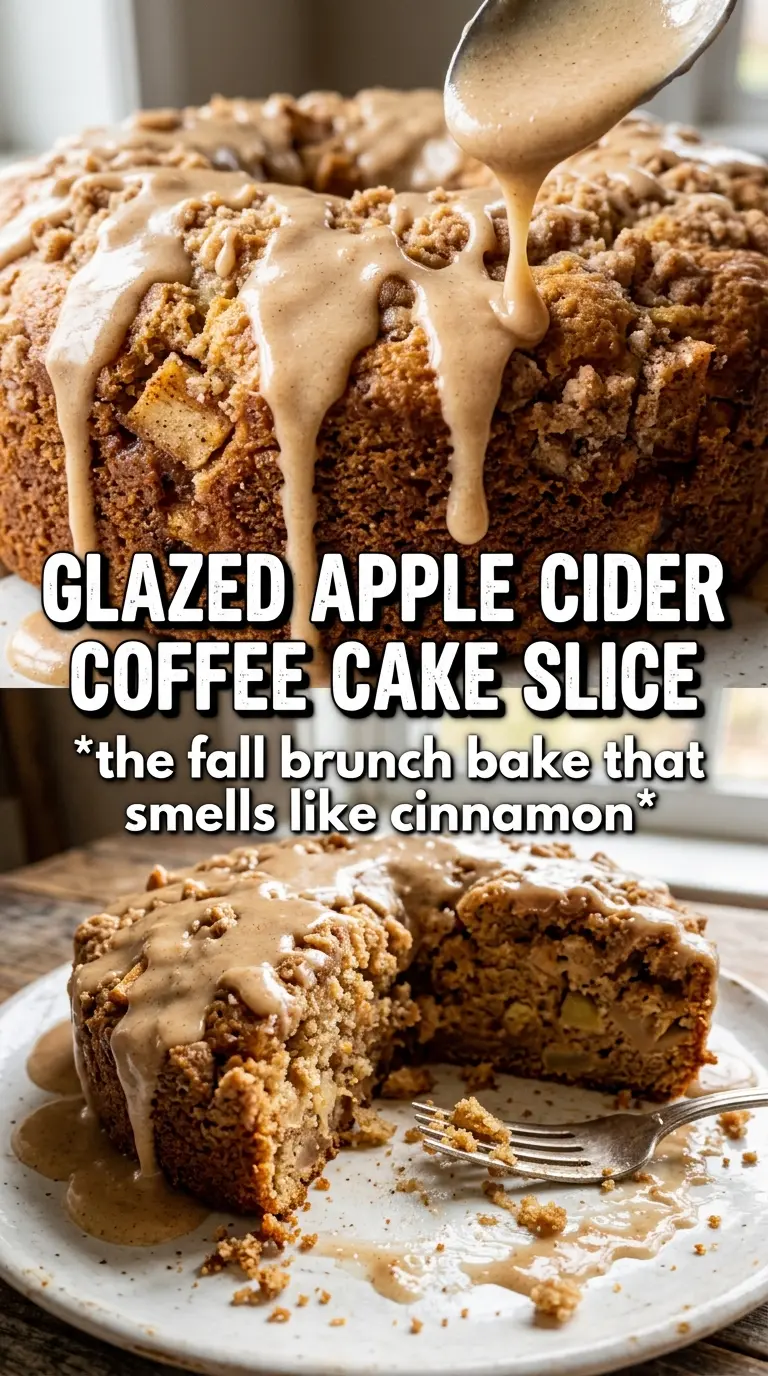
Thick streusel, tender apple-studded cake, and a shiny cider glaze make this coffee cake feel like the kind of pan that disappears before the second cup is poured. The crumb stays soft and moist, but the top bakes into a cinnamon-scented crust that gives each slice just enough contrast to keep it interesting. The glaze isn’t there just for looks, either. Reduced apple cider brings a sharper, deeper apple flavor than plain milk or water ever could.
What makes this version work is the balance. Sour cream keeps the crumb rich without making it heavy, while the diced apples add little pockets of moisture and texture. The streusel uses cold butter cut in until the mixture looks sandy and clumpy at the same time, which is what helps it stay crumbly instead of melting into the batter. A quick simmer on the cider concentrates the flavor before it goes into the glaze, so the topping tastes like apple instead of just sugar.
Below, I’ll walk through the one detail that keeps the streusel from sinking, plus the best apples to use if you want clean slices and a strong cider finish. This is the kind of breakfast cake that holds up well for brunch, but it’s just as good the next day with coffee.
The streusel stayed crisp on top, and the glaze soaked in just enough to make each slice taste like apple cider without getting soggy. I served it warm and the pan was basically gone by lunch.
Save this apple coffee cake with apple cider glaze for a brunch-worthy breakfast with a crisp streusel top and warm spice in every bite.
The Trick to Keeping the Streusel on Top Instead of Melting Into the Cake
Streusel should sit on the batter in loose, uneven clumps, not disappear into it. If the butter is too warm, it turns greasy and soft, and the topping sinks while the cake bakes. Cold butter is what gives you those little nubbly pieces that toast on top instead of blending in.
The other piece that matters here is pan depth and batter thickness. This cake batter is thick enough to hold the streusel where you scatter it, which is why the 9×13 pan works so well. If you use a pan that’s too small, the batter rises unevenly and the topping can slide into the center. If you use a pan that’s too shallow, the edges brown before the middle has set.
- Cold butter for the streusel — This is the difference between a sandy crumble and a greasy topping. Cut it in until you still see pea-sized bits.
- Sour cream — This keeps the crumb tender and gives the cake enough body to support the streusel. Plain yogurt works in a pinch, but the cake will be a touch tangier and less rich.
- Diced apples — Small cubes distribute better than big chunks, which helps the cake bake evenly and keeps every slice moist without turning wet.
- Reduced apple cider — Unreduced cider tastes thin in the glaze. Simmering it first concentrates the apple flavor and keeps the drizzle from tasting like sweetened juice.
What Each Ingredient Is Doing in This Apple Coffee Cake
- All-purpose flour — Use standard flour here; cake flour makes the crumb too delicate for the apples and streusel. The flour in the topping also gives the streusel structure so it bakes up crisp.
- Brown sugar — This is what gives the streusel its caramel note and helps it cling in clusters. Light or dark both work, but dark brown sugar gives a deeper molasses flavor.
- Cinnamon and nutmeg — Cinnamon is the main background note, while nutmeg adds just enough warmth to make the apple flavor taste fuller. Don’t overdo the nutmeg or it starts to read as perfumy.
- Butter — For the cake, softened butter creams with the sugar and traps air so the crumb stays light. For the streusel, cold butter keeps the topping distinct and crumbly. Those are two different jobs, and the temperature matters for both.
- Apples — Use a firm baking apple such as Granny Smith, Honeycrisp, or a mix. Softer apples can turn mushy and disappear into the batter.
From Creaming the Batter to the Final Glaze
Building the Base
Beat the softened butter and sugar until the mixture looks pale and fluffy, not just combined. That air is what keeps the cake from becoming dense around the apple pieces. Add the eggs one at a time, then the vanilla and sour cream, and mix just until smooth. If the mixture looks a little curdled after the sour cream goes in, that’s normal and it will come together once the dry ingredients are added.
Folding in the Apples Without Overmixing
Stir the dry ingredients into the batter just until you stop seeing streaks of flour, then fold in the diced apples. Overmixing at this stage makes the cake tight and can knock out the lift you built in the creaming step. The batter will be thick, which is exactly what you want. Spread it into the pan and smooth it gently so the streusel can sit evenly on top.
Baking Until the Middle Sets
Scatter the streusel over the batter in an even layer, then bake until the top is deep golden and the center springs back lightly when pressed. Start checking at 45 minutes, but don’t rely on color alone, because the streusel can brown before the cake is fully baked. A toothpick should come out with a few moist crumbs, not wet batter. If the center still jiggles, give it another few minutes and check again.
Finishing With the Cider Glaze
Reduce the apple cider until it smells concentrated and tastes sharp, then let it cool before whisking it with the powdered sugar and cinnamon. If it’s too warm, the glaze thins out and runs off the cake instead of setting in ribbons. Drizzle it over the cooled cake in thick lines so it lands on the streusel and settles into the cracks. That’s where the best bites are.
How to Adjust This Coffee Cake Without Losing the Texture
Dairy-Free Version
Swap the butter for a solid plant-based baking stick and use a thick dairy-free yogurt in place of the sour cream. The cake will still be tender, but the flavor will be a little less rich, so the cider glaze matters even more here. Keep the butter cold for the streusel or it can turn pasty.
Use Pears Instead of Apples
Firm pears can stand in for apples if that’s what you have, but choose them on the firm side so they hold their shape. The cake will taste a little softer and more floral, and the glaze brings the fruit flavor back into focus. Dice them the same size as the apples so the bake time stays the same.
Make It Ahead for Brunch
Bake the cake the day before and wait to glaze it until the morning you plan to serve it. The crumb settles overnight, which makes cleaner slices, and the streusel stays much crisper if it’s not glazed too early. Warm the glaze slightly if it thickens up too much before drizzling.
Storage and Reheating
- Refrigerator: Store covered for up to 4 days. The streusel softens a bit after the first day, but the cake stays moist.
- Freezer: Freeze individual slices tightly wrapped for up to 2 months. Thaw at room temperature before reheating, and glaze after thawing if possible for the best texture.
- Reheating: Warm slices in a 300F oven for 8 to 10 minutes or microwave briefly. The mistake to avoid is blasting it too long, which makes the crumb rubbery and the glaze sticky instead of set.
Questions I Get Asked About This Recipe
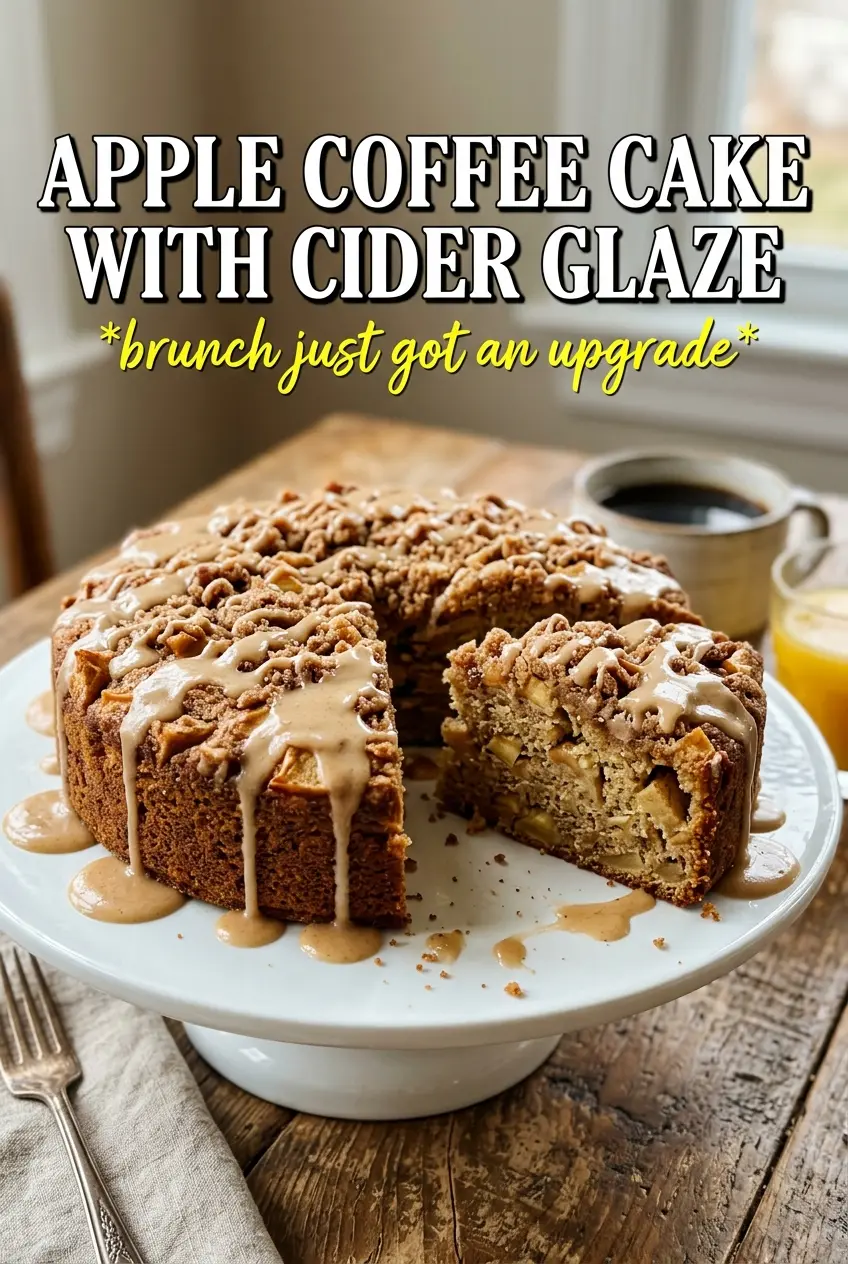
Apple Coffee Cake With Apple Cider Glaze
Ingredients
Equipment
Method
- Preheat the oven to 350F and grease a 9x13 pan so the cake releases cleanly.
- Cut the cold butter into the flour, brown sugar, and cinnamon until crumbly, with no large butter chunks left visible.
- Beat the butter and sugar until smooth, then beat in the eggs and vanilla until fully combined.
- Mix in the sour cream until the batter looks thick and creamy.
- Fold in the dry ingredients and then fold in the diced apple just until no dry streaks remain.
- Spread the batter into the prepared pan, then scatter the streusel evenly over the top.
- Bake at 350F for 45-50 minutes, until the center is set and a toothpick comes out with a few moist crumbs.
- Reduce the apple cider until concentrated, then cool it slightly before whisking.
- Whisk the reduced cider into the powdered sugar and cinnamon until smooth and thick, then drizzle over the warm cake in thick ribbons.