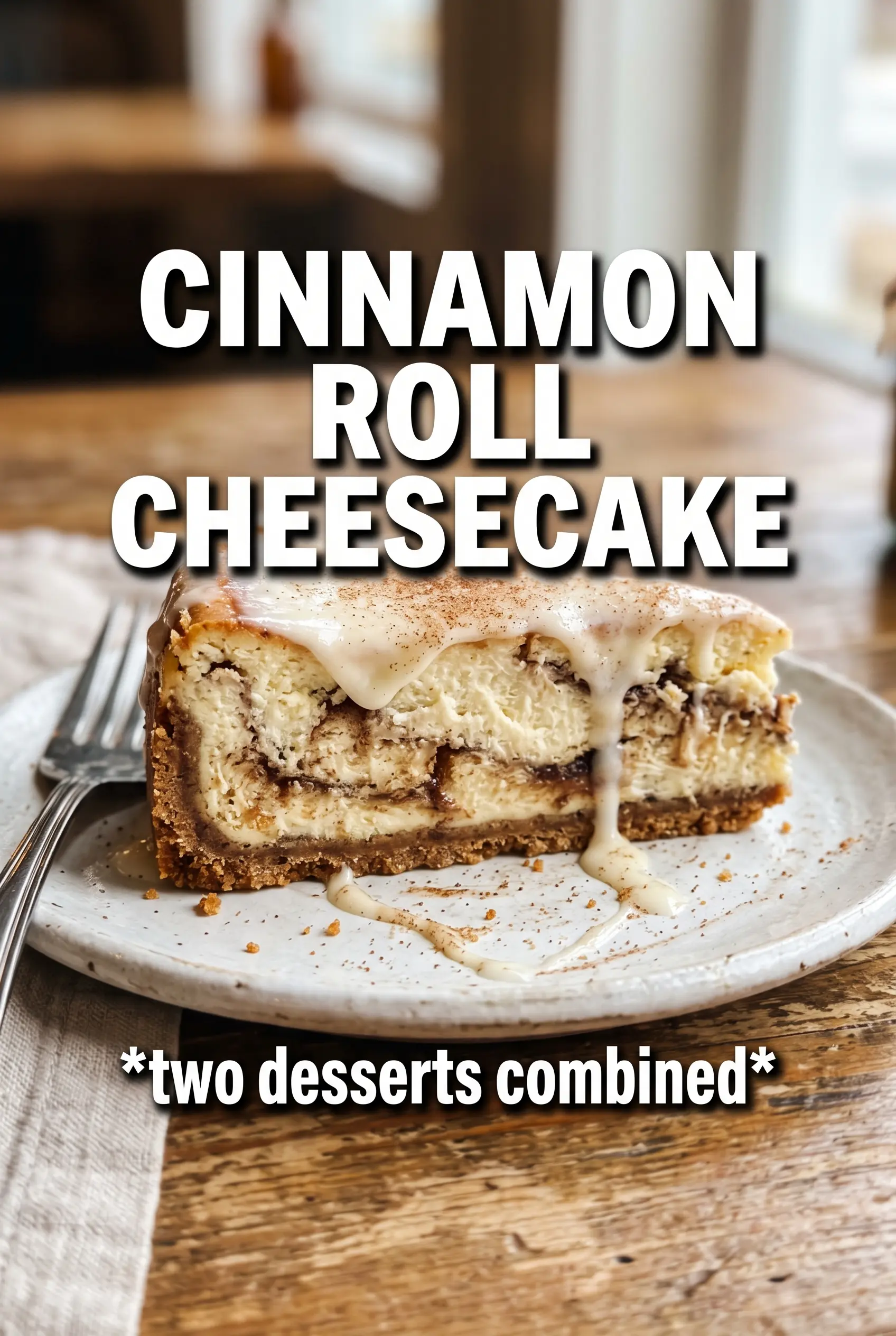
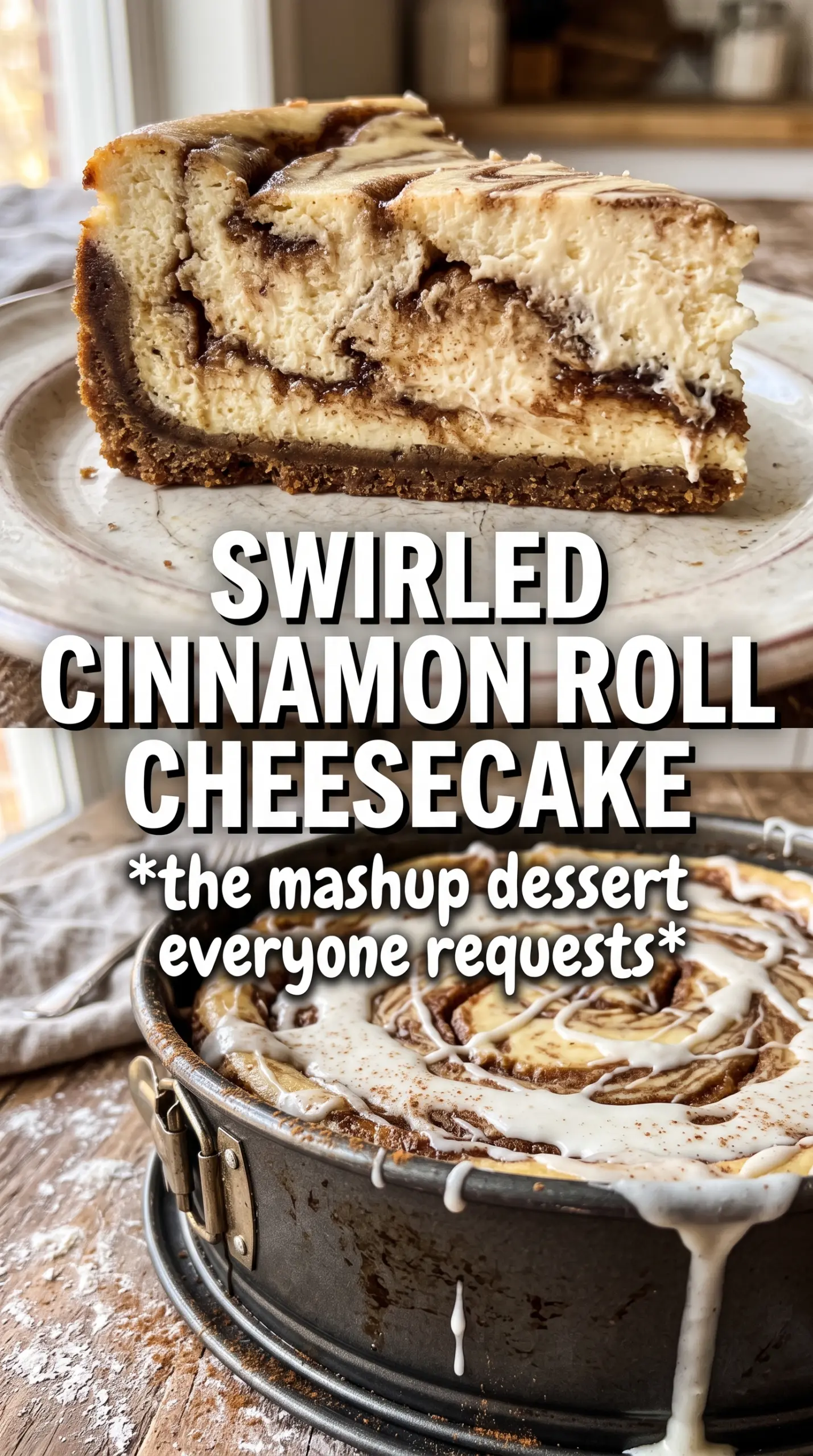
Cinnamon roll cheesecake lands in that sweet spot between bakery-style comfort and a dessert that feels special enough for company. The filling bakes up dense and creamy, the cinnamon swirl cuts through with a warm ribbon of spice, and the graham crust keeps every slice grounded instead of overly rich. The glaze on top finishes it with the same creamy, sticky look you expect from a good cinnamon roll, just in cheesecake form.
What makes this version work is the balance. The cheesecake batter stays plain and smooth so the cinnamon swirl can do its job without muddying the texture, and the water bath keeps the edges from setting too fast before the center catches up. A few small details matter here: room-temperature cream cheese beats up silky, the swirl mixture needs to stay spoonable, and the cake has to chill long enough to slice cleanly. Rush any of that and you lose the clean layers that make this dessert worth baking.
Below, I’ve laid out the part that matters most if you want neat slices and a strong cinnamon ribbon instead of a muddy middle. There’s also a note on the one swap I’d use if you don’t have sour cream on hand, plus a few answers for the issues that usually show up with cheesecakes.
The cinnamon swirl stayed distinct and the cheesecake set up with clean slices after chilling overnight. My husband went back for a second piece because the glaze tasted just like the icing on a warm cinnamon roll.
Love the creamy cinnamon swirl and glaze? Save this Cinnamon Roll Cheesecake for your next dessert night.
The Part That Keeps the Cinnamon Swirl from Sinking
Cheesecake batter is heavier than a cake batter, which is exactly why the swirl needs a little care. If the cinnamon mixture is too thin, it disappears into the filling. If it is too thick, it sits on top in clumps and bakes into hard streaks instead of soft ribbons. The goal is a smooth, spoonable paste that drizzles but still holds its shape when you drag a knife through it.
The other thing that matters here is how full you make the pan. Leave a little space at the top so the cheesecake can rise gently without spilling over in the water bath. I also like to keep most of the batter plain and use the swirl sparingly, because too much cinnamon mixture can overpower the cheesecake and make the center look muddy once it bakes.
What Each Ingredient Is Actually Doing in This Cheesecake
- Cream cheese — This is the backbone of the dessert, so full-fat blocks matter here. Tub-style cream cheese usually has extra water and stabilizers that can make the filling looser. Let it soften fully before mixing so the batter turns smooth without lumps.
- Sour cream — This adds tang and keeps the cheesecake from tasting heavy. It also softens the texture just enough that the slices feel creamy instead of dense. Plain Greek yogurt works in a pinch, but it brings a sharper finish and can set a little firmer.
- Brown sugar cinnamon swirl — Brown sugar gives the swirl that caramel edge, while the butter keeps it pourable. Mix it until smooth so the cinnamon doesn’t stay gritty. If it looks dry, add a tiny bit more butter rather than more sugar.
- Graham crust with cinnamon — The cinnamon in the crust ties the whole dessert together from the first bite. Bake it briefly before filling so it firms up and doesn’t go soggy under the cheesecake layer. Press it firmly into the pan, especially around the edges.
- Cream cheese glaze — This finishes the cake with the same sweet-tangy note you get from cinnamon roll icing. Keep it loose enough to drizzle; if it gets too thick, add milk a teaspoon at a time. Pour it on after chilling so it sits on top instead of melting into the cheesecake.
Building the Layers Without a Cracked Center
Press and Prebake the Crust
Mix the graham crumbs, sugar, cinnamon, and melted butter until the texture feels like damp sand, then press it into the springform pan in an even layer. Use the bottom of a measuring cup to compact it so it holds together when sliced. Ten minutes in the oven is enough to set the crust; if you skip that, the base stays loose and can crumble under the filling.
Mix the Filling Until It’s Smooth, Not Puffy
Beat the cream cheese and sugar first, then add the eggs one at a time, followed by the sour cream, vanilla, and cinnamon. Stop mixing as soon as the batter looks glossy and even. Overbeating adds too much air, and that air expands in the oven and gives you cracks or a soufflé-like rise that falls as it cools.
Swirl, Don’t Stir
Pour most of the cheesecake batter over the crust, drizzle on the cinnamon mixture, then add the rest of the batter in spoonfuls. Run a knife through the top just enough to create ribbons. If you drag too deeply or too often, the swirl disappears into the filling and you lose the cinnamon-roll look.
Bake Low and Let It Chill Hard
Bake the cheesecake in a water bath until the edges are set and the center still has a slight wobble when you tap the pan. That last bit of movement is what you want; it finishes setting as it cools. Pull it out, cool it completely, then chill for the full six hours. If you cut early, the middle will smear instead of slicing cleanly.
Gluten-Free Crust Swap
Use gluten-free graham-style crumbs in the crust and keep the filling the same. The texture stays close to the original, though the crust may be a touch more delicate when sliced. Press it firmly and prebake it so it doesn’t fall apart under the cheesecake.
Dairy-Free Version
Use dairy-free cream cheese, plant-based butter, and a thick unsweetened dairy-free yogurt in place of sour cream. The flavor still lands in the same cinnamon-roll lane, but the filling will be a little softer and less tangy. Chill it longer before slicing so it firms up fully.
Extra Cinnamon Swirl Top
Reserve a spoonful of the swirl mixture and dot it over the top after baking for a stronger cinnamon note. This gives the finished cheesecake a more obvious cinnamon-roll look, but use only a little or the topping can turn sticky and heavy once chilled.
Storage and Reheating
- Refrigerator: Keep covered for up to 5 days. The crust softens a little over time, but the texture stays creamy.
- Freezer: Freeze slices tightly wrapped for up to 2 months. Thaw overnight in the refrigerator; freeze without the glaze if possible and add it after thawing.
- Reheating: Cheesecake is best served cold or lightly cool-room temperature, not heated. Warming it makes the filling loosen and the glaze slide off, which ruins the clean layers.