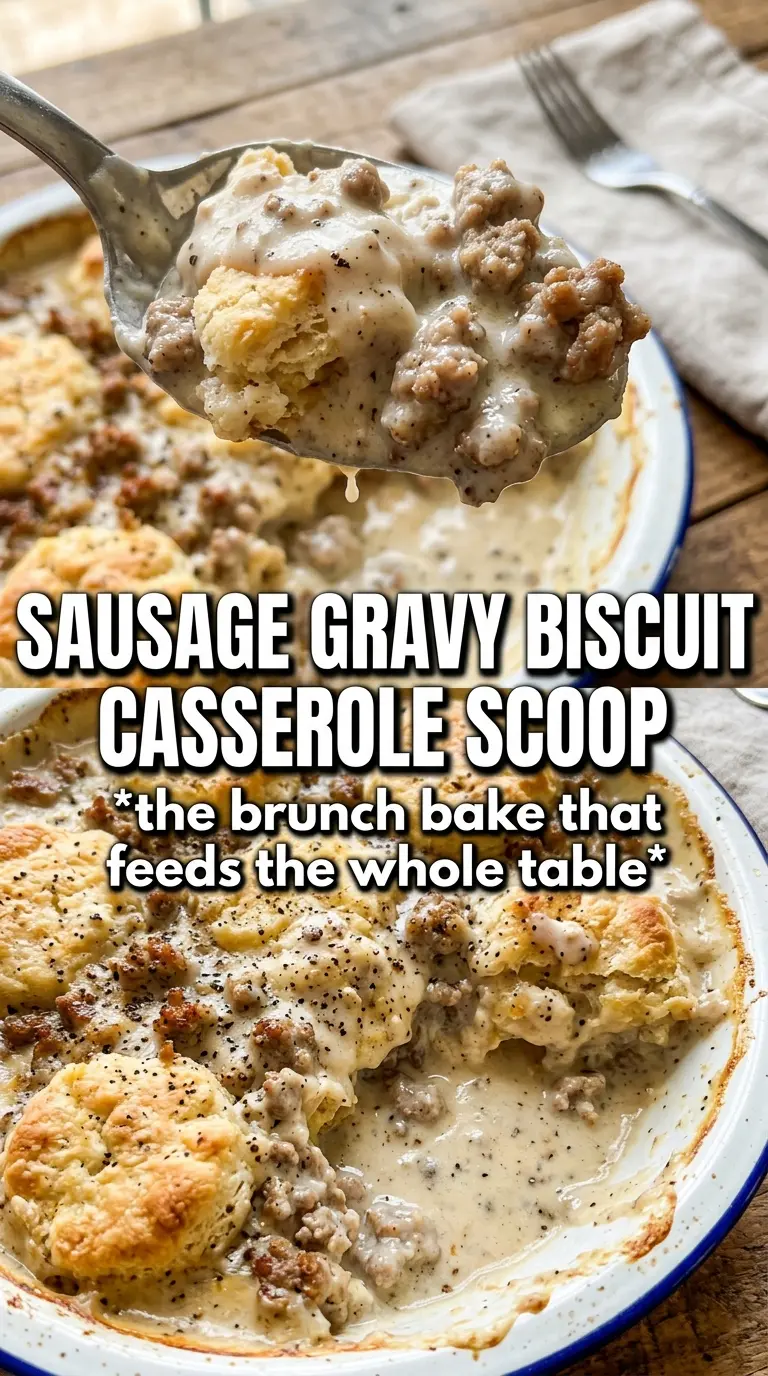
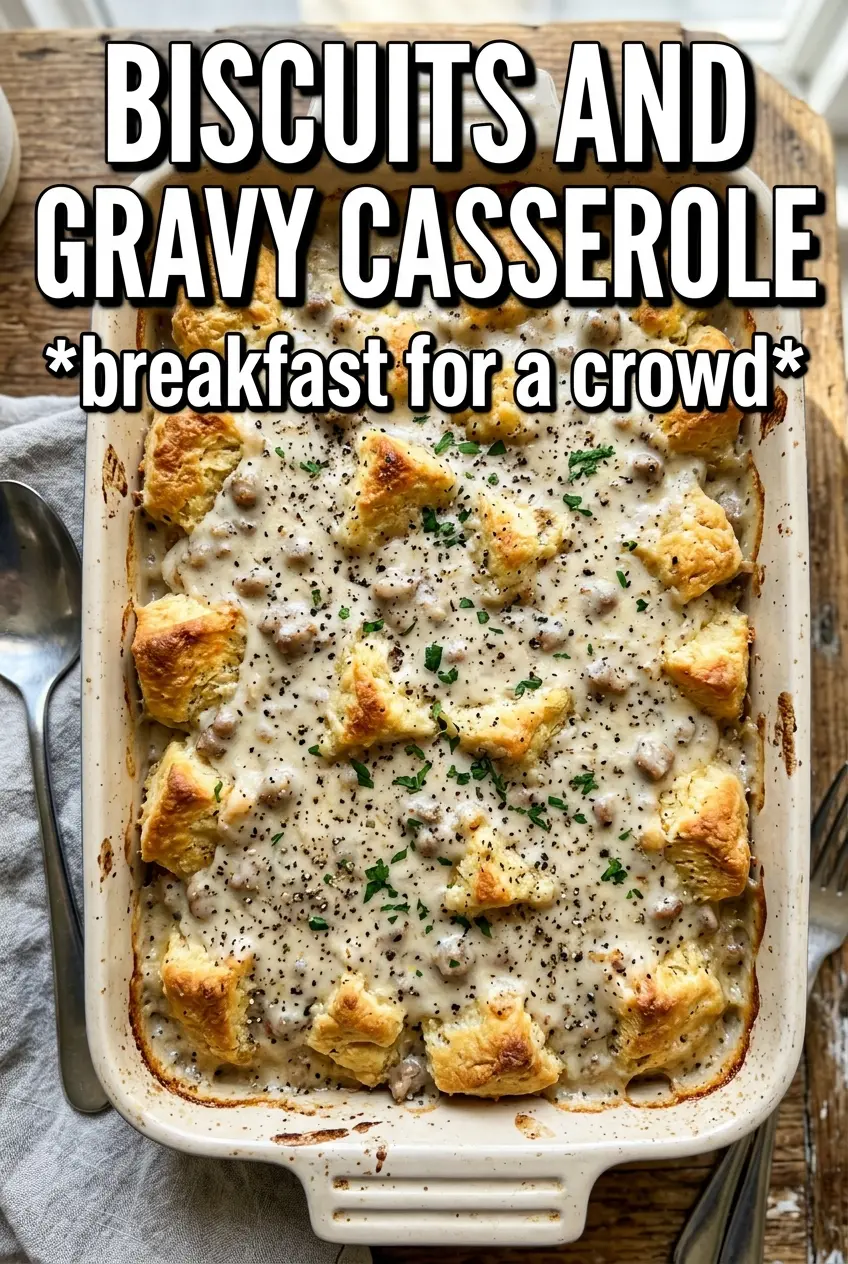
Biscuits and gravy casserole bakes up with the kind of breakfast comfort that disappears fast from the pan: creamy sausage gravy underneath, golden biscuit tops above, and just enough egg to make each serving hearty without turning it heavy. The best bites are the ones that scoop up both layers at once, with the biscuits staying crisp on top while the gravy underneath stays thick and peppery.
What makes this version work is the way the gravy is cooked before it ever hits the baking dish. The flour goes into the sausage drippings first, so the filling thickens properly instead of staying loose and watery in the oven. Cutting the biscuits into quarters helps them cook through on the surface while still soaking up a little gravy underneath, which gives you soft centers and browned edges instead of doughy caps.
If you’ve ever had biscuits and gravy turn soggy in the oven, the details below will help. I’ve included the one texture cue that tells you the gravy is ready, plus a few swaps that still keep the casserole balanced.
The gravy thickened up beautifully and the biscuits baked through without getting gummy on the bottom. I used a little extra black pepper and it tasted just like the diner breakfast I grew up with.
Save this biscuits and gravy casserole for a weekend breakfast that bakes into creamy sausage gravy and golden biscuit layers.
The Reason the Gravy Has to Be Thick Before It Goes in the Oven
Biscuits and gravy casserole only works when the gravy starts out thicker than a regular skillet gravy. If it’s still loose when you pour it into the dish, the biscuits steam on top while the bottom layer turns soupy, and the whole casserole slices badly. You want the gravy to coat a spoon and leave a visible trail when you drag a spatula through the pan.
The other thing that matters is how much fat you leave behind after browning the sausage. Two tablespoons is enough to cook the flour and build a roux without making the finished gravy greasy. Too much fat and the sauce can taste slick; too little and the flour tastes raw because it never really cooks in the pan.
- Breakfast sausage — This is the backbone of the dish. Use a well-seasoned sausage with enough fat to flavor the gravy, but drain off the excess so the filling stays rich instead of oily.
- Whole milk — Whole milk gives the gravy its body and a rounder taste. Lower-fat milk works in a pinch, but the sauce won’t feel as lush and it may need a little more simmering to thicken.
- Refrigerated biscuits — Canned biscuits keep this fast and reliable. If you use homemade biscuits, cut them a little smaller so they cook through at the same pace as the filling below them.
- Black pepper — Don’t hold back here. This casserole needs that sharp peppery bite to balance the creamy gravy and the rich sausage.
- Cheddar — Optional, but useful if you want a little salty pull on top. Add it near the end so it melts without overbrowning.
What Each Ingredient Is Actually Doing in This Recipe
- Primary ingredient (the star) — Quality matters most. Choose the best you can find.
- Cooking medium (oil, butter, or broth) — This carries flavors and prevents dryness.
- Seasonings (salt, pepper, spices, herbs) — Layer flavors so nothing overpowers. Build depth gradually.
- Aromatics (garlic, onion, herbs) — Cook with fat to bloom flavors. Become the foundation.
- Supporting ingredients — Complement the main ingredient without overpowering it.
- Sauce or liquid (if applicable) — Brings flavors together. Balance richness with acid.
- Acid (lemon, vinegar, wine, or other) — Brightens and prevents flat-tasting results.
- Final finish (garnish, glaze, or sauce) — Prevents one-dimensional taste and adds visual appeal.
Building the Casserole So the Bottom Stays Creamy and the Top Bakes Golden
Cooking Out the Sausage
Brown the sausage over medium heat until there’s no pink left and the edges are starting to take on color. That browned fond is part of the flavor, so don’t rush it with high heat that scorches the drippings. Drain off the excess fat, but leave about 2 tablespoons in the pan so the flour has enough to cook in. If the pan looks dry, the gravy will taste flat and the flour can clump instead of smoothing out.
Thickening the Gravy
Whisk the flour into the sausage drippings and let it cook for about a minute before adding the milk. That short cooking time takes the raw edge off the flour and keeps the gravy from tasting pasty. Pour in the milk gradually, whisking as you go, then simmer until the mixture looks glossy and thick enough to mound slightly on a spoon. If you add the milk all at once without whisking, the flour can seize into little lumps that never fully disappear.
Layering the Dish
Pour the gravy into a greased 9×13 dish, then cut the biscuits into quarters and scatter them over the surface. The smaller pieces bake more evenly than whole biscuits and give you more browned edges. Leave a little space between the pieces so steam can move around them in the oven. If you pile them too tightly, the centers stay pale while the tops brown too fast.
Baking to the Right Finish
Bake until the biscuits are golden and the filling is bubbling at the edges, then add the cheddar if you’re using it and bake a few minutes longer. The biscuits should feel set on top and pull apart without raw dough in the center. Let the casserole sit for about 10 minutes before serving so the gravy settles and the slices hold together instead of running across the plate.
How to Adjust This Casserole Without Losing the Comfort
Use homemade biscuits for a softer, less processed finish
Homemade biscuits work well here, but cut them into smaller pieces so they cook through before the top overbrowns. They’ll give the casserole a more tender bite and a less salty finish than canned biscuits, though you lose the convenience and the sturdier structure of the refrigerated kind.
Make it gluten-free with a 1:1 flour blend and GF biscuits
A good 1:1 gluten-free flour blend can thicken the gravy, and gluten-free biscuits keep the structure of the dish intact. The texture will be a little less silky than the original, so let the gravy simmer until it looks fully glossy before it goes into the baking dish.
Swap in turkey sausage for a lighter casserole
Turkey sausage works if you want a leaner version, but it gives you less drippings and a milder gravy. Add a little extra butter if the pan looks dry, and taste the sauce well so it still has enough pepper and salt to stand up to the biscuits.
Storage and Reheating
- Refrigerator: Store leftovers covered for up to 3 days. The biscuits will soften as they sit, but the flavor holds well.
- Freezer: Freezes best in individual portions, tightly wrapped and stored in an airtight container for up to 2 months. The biscuits turn a little softer after thawing, but the casserole still reheats well.
- Reheating: Warm in a 325F oven, covered loosely with foil, until hot in the center. Microwave works for a single serving, but use short bursts so the gravy doesn’t break and the biscuits don’t turn rubbery.
Questions I Get Asked About This Recipe
Biscuits And Gravy Casserole
Ingredients
Equipment
Method
- Preheat oven to 375F, then grease a 9x13 dish.
- Brown the breakfast sausage, then drain excess fat but leave 2 tablespoons in the pan.
- Whisk the all-purpose flour into the sausage drippings and cook for 1 minute.
- Gradually add the whole milk, then simmer until thick and creamy, stirring so it stays smooth.
- Season the gravy with black pepper, garlic powder, onion powder, cayenne, and salt, then taste and adjust as needed.
- Pour the sausage gravy into the prepared 9x13 dish.
- Cut the refrigerated biscuits into quarters and arrange them over the gravy.
- Bake for 30-35 minutes, or until the biscuits are golden.
- Scatter the shredded cheddar over the casserole, then bake for 5 more minutes until melted and bubbly.