Pillowy cheese tortellini and carbonara sauce are a perfect match when you want dinner to feel fast but still a little special. The pasta brings its own soft, cheesy center, and that means the sauce doesn’t have to do all the work; it only needs to coat every curve with silky egg and parmesan richness. Crispy bacon or pancetta adds salt and texture, and plenty of black pepper keeps the whole bowl from tasting flat.
The trick here is treating the tortellini like the main event, not just a vehicle for sauce. You want it just al dente so it can finish in the pan without turning gummy, and you want the egg mixture ready before the pasta hits the skillet. That timing matters because carbonara doesn’t like to wait. The heat from the pasta and pan gently thickens the sauce into something glossy and clingy without scrambling the eggs.
Below, I’ll show you how to keep the sauce smooth, what kind of tortellini gives the best result, and the one adjustment that makes this work even on a rushed weeknight.
The sauce turned silky as soon as I tossed the hot tortellini with the egg mixture, and the bacon stayed crisp instead of getting lost. My husband said it tasted like something from a restaurant.
Save this tortellini carbonara for the nights when you want silky pasta, crisp bacon, and a dinner that comes together in 15 minutes.
The Part That Keeps Carbonara Creamy Instead of Scrambled
The biggest mistake with carbonara is blasting the eggs with heat. That’s how you end up with little shreds of breakfast scramble instead of a glossy sauce. Here, the skillet comes off the burner before the egg mixture goes in, and the hot tortellini does the work of gently thickening everything. If the pan is too hot, the sauce tightens too fast and turns grainy.
Reserve pasta water before you drain the tortellini. That starchy liquid is what turns the egg and parmesan into a sauce that actually coats the pasta instead of slipping off. Add it a splash at a time and keep tossing so the sauce stays loose enough to move but thick enough to cling.
What Each Ingredient Is Actually Doing Here
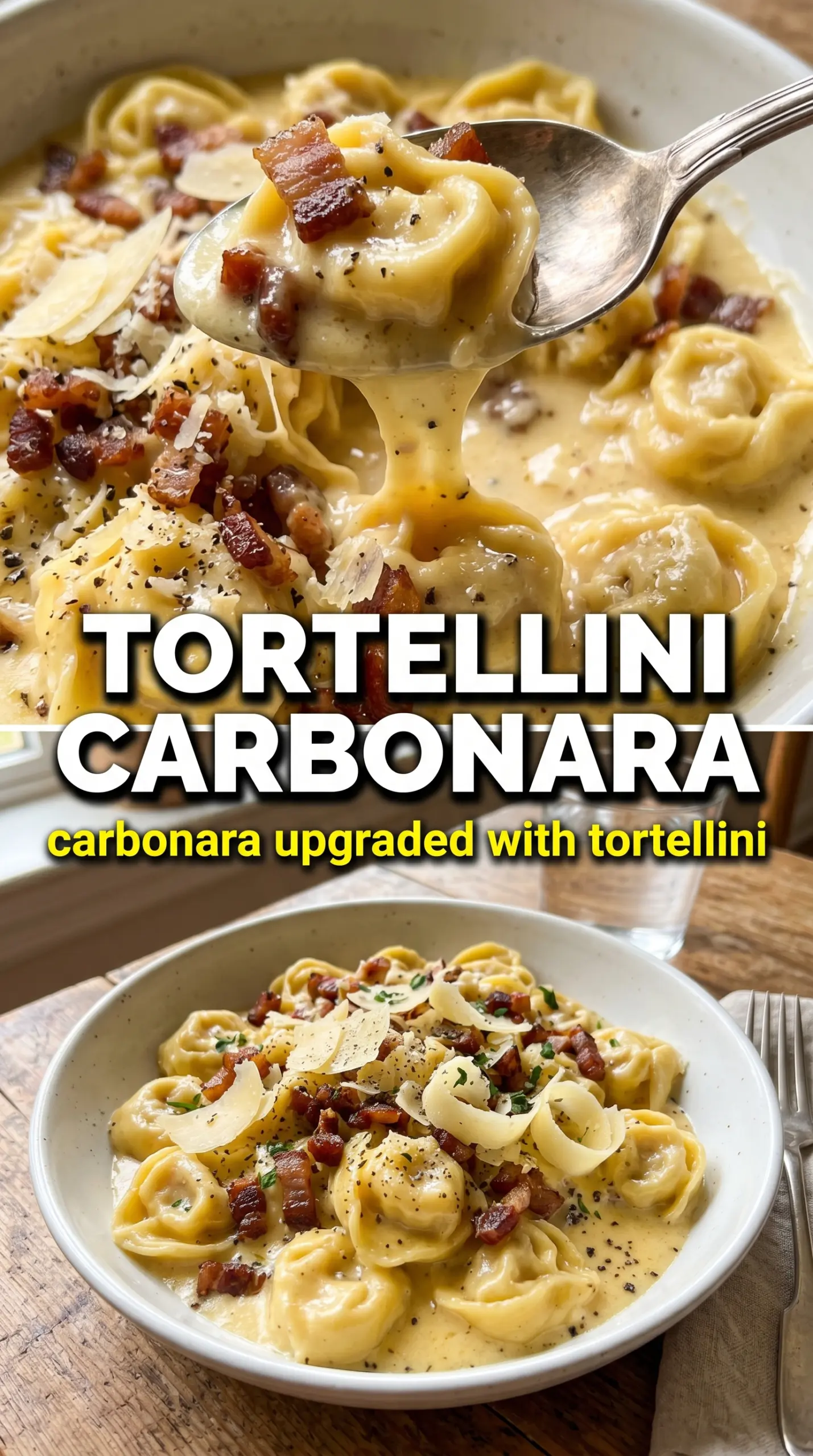
- Refrigerated cheese tortellini — This is what makes the dish feel substantial without needing a separate protein. Fresh or refrigerated tortellini holds its shape better here than dried pasta, and the cheesy filling gives the sauce more body. If you use frozen tortellini, cook it just to al dente so it doesn’t blow out when you toss it in the pan.
- Pancetta or thick-cut bacon — You need rendered fat for the sauce base and crisp pieces for texture. Pancetta tastes a little cleaner and more classic, while bacon brings a smokier edge. Either works, but don’t drain the pan dry; a thin layer of fat is what carries the garlic and helps the sauce coat the pasta.
- Eggs and egg yolk — The whole eggs build the sauce, and the extra yolk gives it that rich, silky finish. The yolk matters here because tortellini can soak up more sauce than regular pasta. If you skip it, the sauce still works, but it won’t feel as lush.
- Finely grated parmesan — Finely grated cheese melts into the eggs more smoothly than coarse shreds. Pre-grated can work in a pinch, but it often melts less cleanly and can make the sauce a little gritty. Grate it yourself if you can.
- Black pepper — Don’t treat this like garnish. Carbonara needs a heavy hand with pepper so the egg and cheese don’t taste flat. Crack it fresh if possible; the bite is sharper and more aromatic.
How to Bring the Sauce Together Without Overcooking It
Render the Bacon Until the Edges Crisp
Cook the pancetta or bacon over medium heat until the fat has rendered and the pieces are browned at the edges. You want crisp, not brittle, because the bacon will sit on top of the finished pasta and keep a little chew. If the pieces start scorching before the fat has had time to melt out, lower the heat. The rendered fat left in the pan is part of the sauce base, so don’t wipe it out.
Whisk the Egg Mixture Before the Pasta Hits the Pan
Whisk the eggs, yolk, parmesan, and a heavy amount of black pepper in a bowl until the mixture looks thick and even. This step needs to happen before you drain the tortellini because once the pasta is in the skillet, the timing moves fast. A lumpy egg mixture won’t disappear on its own, so whisk until the cheese is evenly suspended.
Toss Off Heat and Loosen With Pasta Water
Add the hot tortellini to the skillet after you’ve turned off the burner, then pour in the egg mixture and toss constantly. The sauce should look glossy almost immediately. Add pasta water a tablespoon or two at a time if it seems tight, and keep tossing until every tortellini is coated and the sauce moves like cream. If it turns too thick, it usually just needs a little more hot pasta water to relax again.
Finish Fast and Serve Right Away
Stir the crisp bacon back in, taste for salt, and top with more parmesan and parsley. Carbonara waits for no one, and tortellini is at its best when the sauce is still loose and shiny. If it sits too long, the sauce tightens around the pasta and loses that silky finish. Serve it immediately while the bowl is steaming.
How to Adapt This for Different Pans, Diets, and Leftovers
Make It With Bacon Instead of Pancetta
Bacon gives you a smokier, saltier carbonara, which works especially well with cheese tortellini. Thick-cut bacon is best because it renders enough fat without disappearing into the sauce. If your bacon is very salty, go lighter on the final salt until you’ve tasted the finished pasta.
Go Gluten-Free With Gluten-Free Tortellini
Use a refrigerated gluten-free tortellini that holds together well in boiling water, and watch the cook time closely because it can go from firm to bloated fast. The sauce method doesn’t change, but you’ll want to be extra careful with the pasta water since some gluten-free pastas need a little less to stay glossy.
Make It Vegetarian
Skip the bacon and build the sauce with a little olive oil plus the garlic for flavor, then add a pinch of smoked paprika if you want that savory depth back. You’ll lose the salty crunch, so I’d finish with extra parmesan and a good amount of black pepper. It’s different, but still rich and satisfying.
Storage and Reheating
- Refrigerator: Store leftovers in an airtight container for up to 3 days. The sauce will firm up and the tortellini will absorb some of it.
- Freezer: I don’t recommend freezing this one. Egg-based sauces and tortellini both suffer in the freezer, and the texture turns uneven when thawed.
- Reheating: Warm it gently in a skillet over low heat with a splash of water or milk, stirring often. High heat is the fastest way to turn the eggs grainy, so keep the burner low and stop as soon as the sauce loosens again.
Answers to the Questions Worth Asking
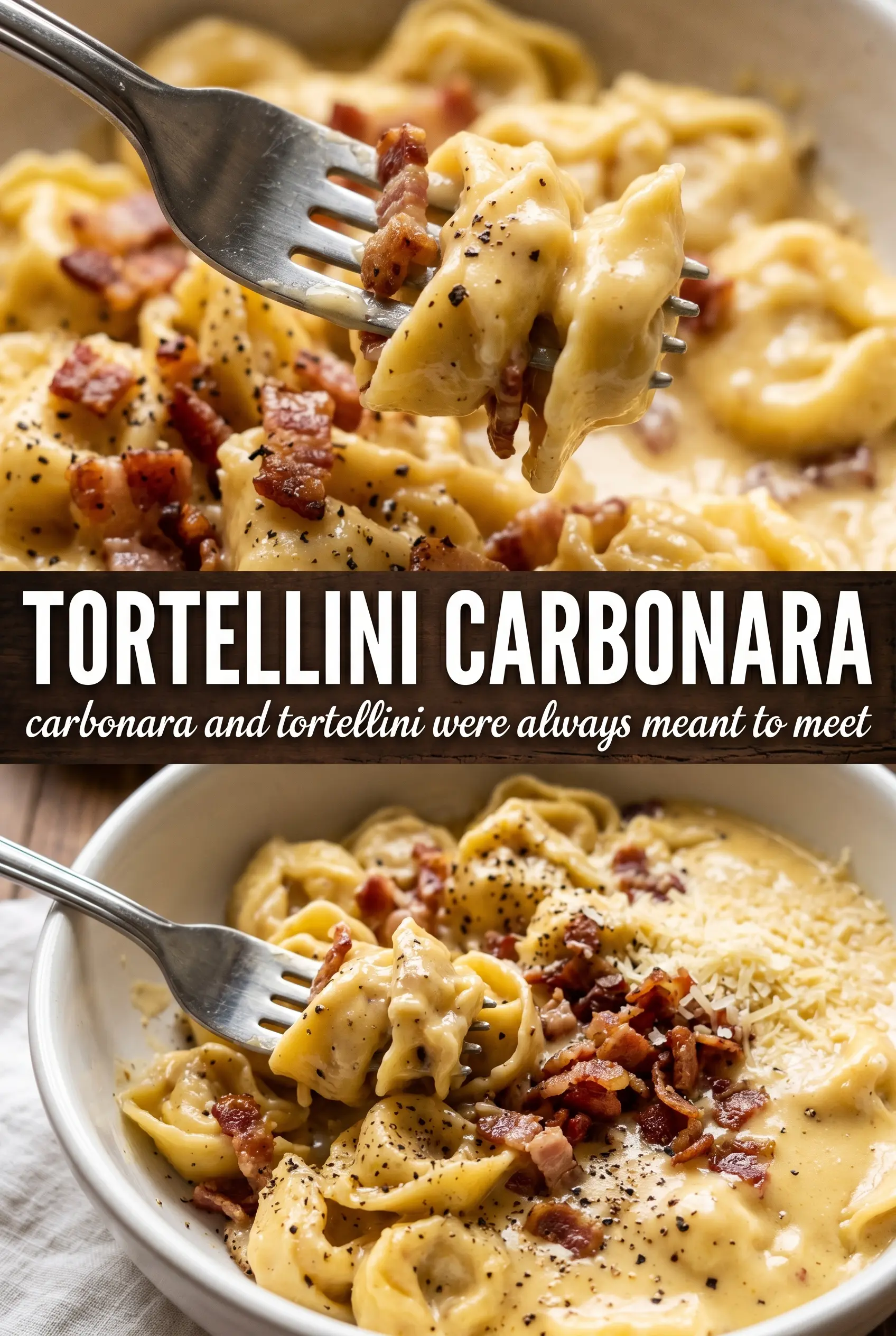
Tortellini Carbonara
Ingredients
Equipment
Method
- Bring a large pot of salted water to a boil and cook the refrigerated cheese tortellini until just al dente, about 8 to 10 minutes. Visual cue: the tortellini should be tender with a slight bite in the center.
- Reserve 1 cup of pasta water, then drain the tortellini completely. Visual cue: the tortellini should be steaming but not wet with extra water.
- Cook the pancetta or thick-cut bacon in a large skillet over medium heat until crispy, about 7 to 9 minutes, then remove with a slotted spoon and leave the fat in the pan. Visual cue: the fat should look glossy while the bits are browned and crisp.
- Add the minced garlic to the fat and cook for 30 seconds off heat while the pan is still warm. Visual cue: it becomes fragrant but does not brown.
- Whisk the eggs, egg yolk, and finely grated parmesan together with plenty of cracked black pepper in a bowl. Visual cue: the mixture turns pale and slightly thickened from the eggs.
- Add the hot tortellini to the skillet off the heat, pour the egg mixture over top, and toss quickly. Visual cue: the sauce starts to thicken immediately and turns glossy.
- Add reserved pasta water a splash at a time while tossing constantly until the sauce is silky and clings to every tortellini, about 1 to 2 minutes. Visual cue: a coating forms on the pasta and you can draw a line through it that slowly levels back in.
- Top with the crispy pancetta or bacon, extra parmesan, and fresh parsley, then serve immediately. Visual cue: you should see pepper specks and crisp bits on the creamy surface.