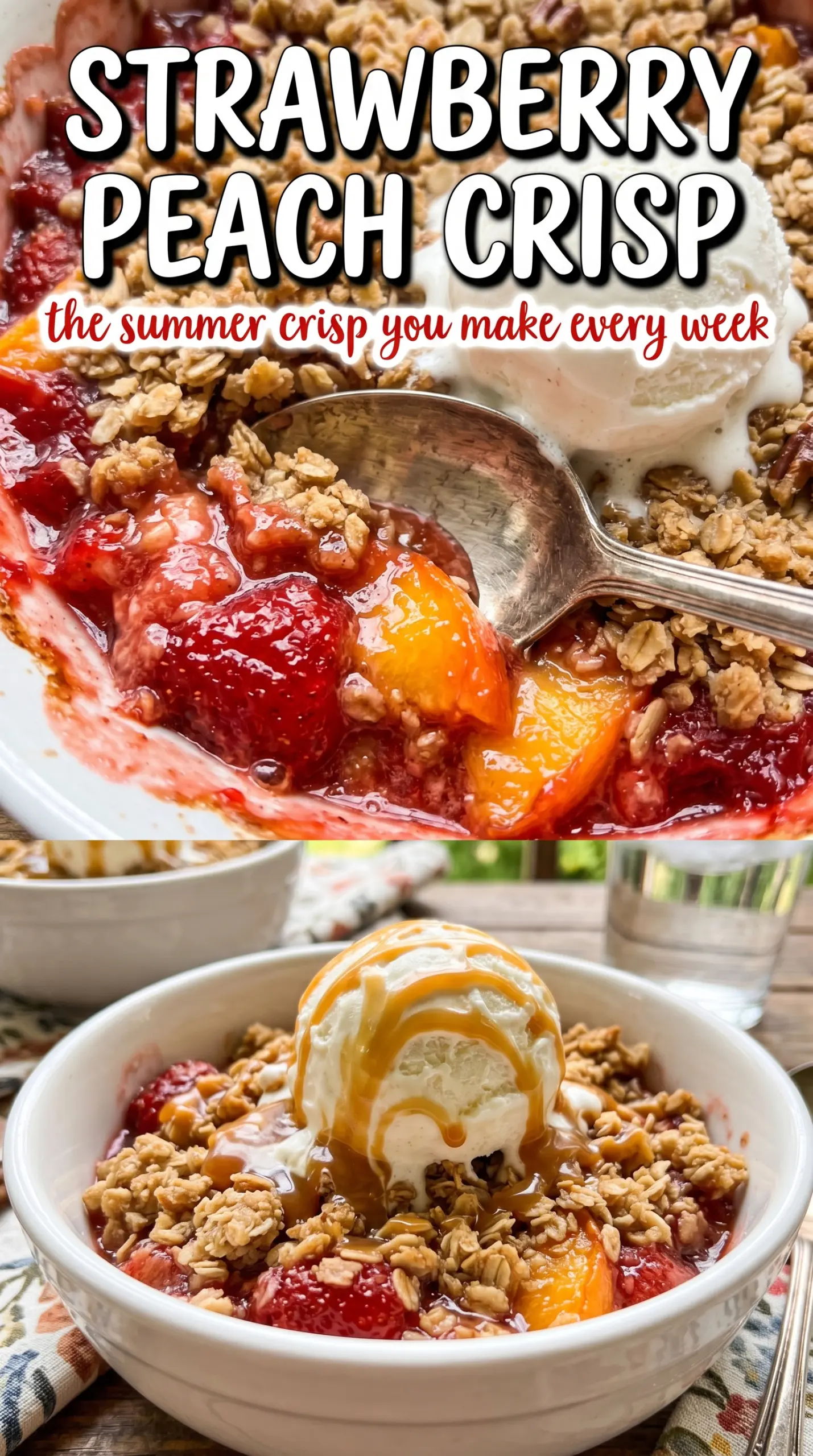
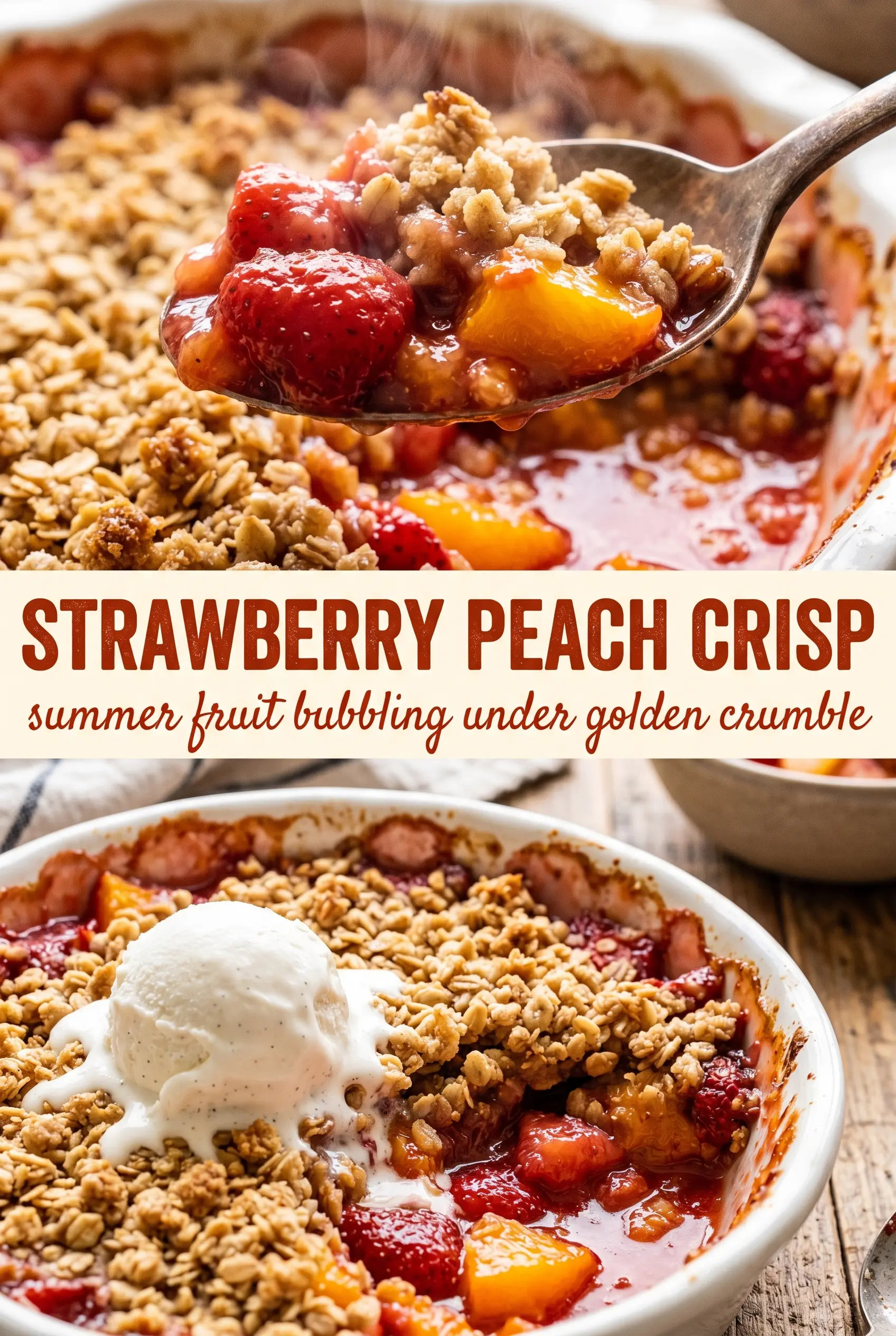
Juicy strawberries and peaches bake down into a bubbling filling that tastes bright, fragrant, and a little jammy without turning soupy. Underneath, the oat crumble stays thick and golden, with buttery clusters that hold their crunch even after the fruit starts to seep up around the edges. Served warm with vanilla ice cream, it lands in that sweet spot between rustic and polished.
The part that makes this version work is the balance between the fruit and the topping. Fresh peaches bring body and perfume, while strawberries add enough acidity to keep the crisp from tasting flat. Cornstarch thickens the juices as they bake, and a small amount of lemon juice keeps the filling lively instead of overly sweet. On the topping side, cold butter cut into the oat mixture gives you those nubby pieces that brown deeply instead of melting into a sandy layer.
If you’ve ever pulled a fruit crisp from the oven only to find a watery pan under a pale topping, the notes below will help. There’s a reason to use ripe fruit, how to tell when the crumble is baked through, and a few variations for changing the fruit or adapting it for different diets.
The filling bubbled up thick around the edges just like you said, and the topping stayed crisp even after we added ice cream. I used very ripe peaches and it tasted like summer in a bowl.
Save this strawberry peach crisp for the nights when you want a bubbling fruit dessert with a thick oat crumble and melted ice cream on top.
The reason this crisp stays thick instead of watery
Fruit crisps fail when the filling releases more juice than the topping can handle. Peaches and strawberries both bring a lot of moisture, and if you bake them without a thickener, you end up with a loose syrup under a topping that tastes fine but eats like soup. Cornstarch solves that by setting the juices as the fruit heats through. It doesn’t make the filling gummy when the ratio is right; it gives the fruit enough structure to spoon cleanly.
The other piece that matters is the bake time. The topping should be deeply golden before you pull the dish, and the filling should be actively bubbling around the edges. That bubbling is the sign the cornstarch has actually thickened the fruit juices. If the top looks pale but the fruit is already bubbling, keep going. Pale crumble usually means the butter hasn’t fully melted and browned yet, which leaves you with a soft, pasty top instead of crisp clusters.
- Strawberries — They break down faster than peaches and bring the bright, jammy part of the filling. Slice them evenly so they cook at the same pace. Very large berries should be halved again; otherwise you’ll get some pieces that stay too firm while the rest go soft.
- Peaches — Ripe peaches give you sweetness and perfume, but they should still hold their shape once sliced. If yours are a little firm, the bake time handles them. Overripe peaches can work, but they’ll release more juice, so don’t skip the cornstarch.
- Brown sugar — This belongs in the topping because it adds moisture, caramel flavor, and helps the crumble brown. White sugar would make the topping drier and less complex. Light or dark brown sugar both work; dark gives a deeper molasses note.
- Cold butter — Cold butter is what creates the crisp, nubby texture. When it melts in the oven, it leaves little pockets that brown and hold the oats together. If the butter gets soft before it goes in the dish, the topping turns sandy and dense instead of craggy.
What Each Ingredient Is Actually Doing in This Dessert
- Sugar (the sweetness and structure) — Sugar tenderizes baked goods and creams with butter to create air. Don’t reduce it too much or the dessert becomes dense and dry.
- Butter or fat (the richness and texture) — This carries flavors and creates tender crumb. Proper creaming with sugar adds volume to cakes and bars.
- Eggs (the binder and lift) — These create structure and help baked goods rise. Room temperature eggs incorporate better than cold ones.
- Flour (the structure base) — This holds everything together. Don’t overmix or the texture becomes tough and dense instead of tender.
- Fruit (the flavor and moisture) — Fresh or cooked fruit adds natural sweetness and moisture. Layer it evenly so every bite has balanced flavor.
- Leavening (baking powder or soda) — This creates rise and light crumb. Too much makes the dessert taste bitter and fall flat.
- Flavoring (vanilla, spices, citrus) — These define the personality. Use good quality flavorings so they shine through the sweetness.
- Final finish (glaze, whipped cream, topping) — This adds moisture, flavor, and visual appeal. Don’t skip it or the dessert feels incomplete and one-dimensional.
Building the fruit layer and crumble so they bake at the same pace
Coating the Fruit
Toss the strawberries and peaches with the sugar, cornstarch, lemon juice, and vanilla until every piece looks lightly coated. You want the cornstarch dispersed before it hits the oven, or it will clump and leave thin spots in the filling. Spread the fruit in an even layer so the center doesn’t mound higher than the edges. If the fruit is piled too deep, the top browns before the middle has had time to bubble.
Making the Oat Crumble
Combine the oats, flour, brown sugar, cinnamon, and salt first, then cut in the cold butter with your fingertips until the mixture looks like coarse crumbs with some pea-sized pieces. Those bigger pieces matter; they bake into the crunchy clusters people fight over. If the topping starts to feel like paste, the butter has warmed up too far. Stop, chill it for a few minutes, and continue once it firms back up.
Baking Until the Edges Bubble
Scatter the crumble evenly over the fruit and bake at 350°F until the top is deep golden brown and the fruit is bubbling thickly around the edges, usually 38 to 42 minutes. The pan should smell buttery and the topping should look dry on the surface, not glossy with raw butter. Let it cool for about 10 minutes before serving so the juices thicken slightly. Scoop too early and the filling runs everywhere; wait a little and it settles into that spoonable, glossy texture that holds together on the plate.
How to change this crisp without losing the texture
Make It Gluten-Free
Swap the all-purpose flour for a 1:1 gluten-free baking blend. The topping will still crisp up, though it may be a little more delicate once cooled. Keep the oats certified gluten-free if you need the dish fully gluten-free.
Make It Dairy-Free
Use a plant-based butter that bakes well and stays solid when cold. The crumble won’t taste exactly the same, but it will still brown and cluster if the substitute is firm enough to cut into the dry ingredients. Soft tub-style spreads usually make the topping greasy, so skip those.
Swap the Fruit
Nectarines work in place of peaches, and raspberries can stand in for part of the strawberries if you want a sharper finish. Just keep the total fruit amount about the same. Very juicy fruit may need an extra teaspoon of cornstarch to keep the filling thick.
Storage and Reheating
- Refrigerator: Store covered for up to 4 days. The topping softens a little in the fridge, but the flavor stays good.
- Freezer: It freezes well after baking. Cool completely, wrap tightly, and freeze for up to 2 months. Thaw in the refrigerator before reheating so the topping doesn’t steam.
- Reheating: Warm in a 325°F oven until heated through and the top dries back out, about 15 to 20 minutes. The microwave works in a pinch, but it softens the crumble fast, which is the main thing to avoid.
Answers to the questions worth asking
Strawberry Peach Crisp
Ingredients
Equipment
Method
- Preheat the oven to 350°F and grease a 9x13 baking dish. Spread it aside so the fruit can go in right after tossing.
- Toss strawberries and peaches with granulated sugar, cornstarch, fresh lemon juice, and vanilla extract, then spread the mixture in the greased baking dish. Make sure the cornstarch is evenly distributed so the filling thickens.
- Combine rolled oats, all-purpose flour, brown sugar, cinnamon, and salt in a bowl. Mix until the dry ingredients look evenly speckled.
- Cut cold butter into the oat mixture with your fingertips until it forms coarse crumbs with pea-sized pieces. Stop when you still see small butter lumps for a crisp, golden topping.
- Sprinkle the crumble topping evenly over the fruit. Aim for full coverage so the edges caramelize as it bakes.
- Bake at 350°F for 38-42 minutes until the topping is deep golden brown and the fruit is bubbling thickly around the edges. Look for a glistening surface and caramelized spots.
- Cool for 10 minutes, then serve warm with vanilla ice cream. The topping should set slightly so each scoop holds while the ice cream melts over it.