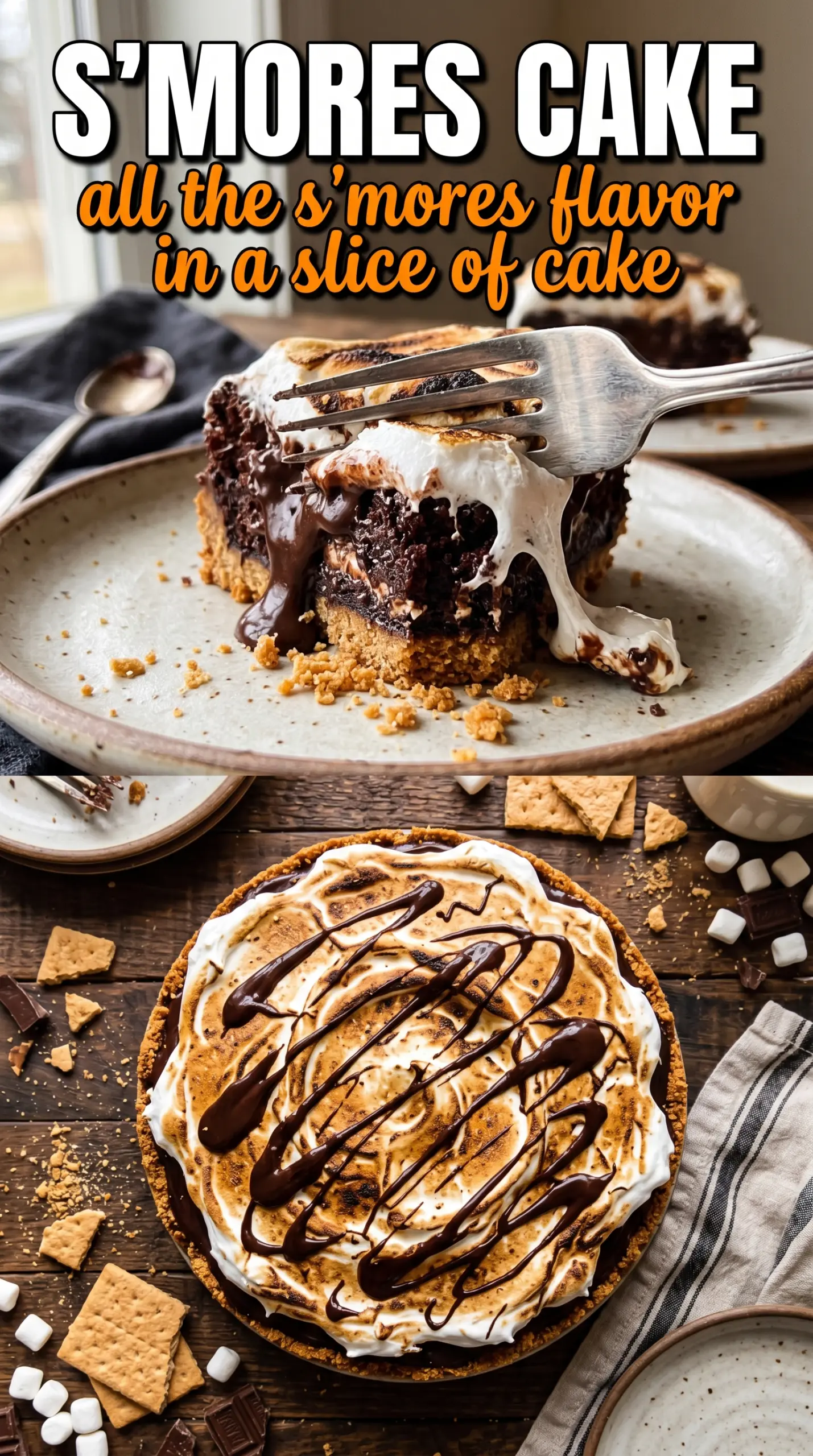
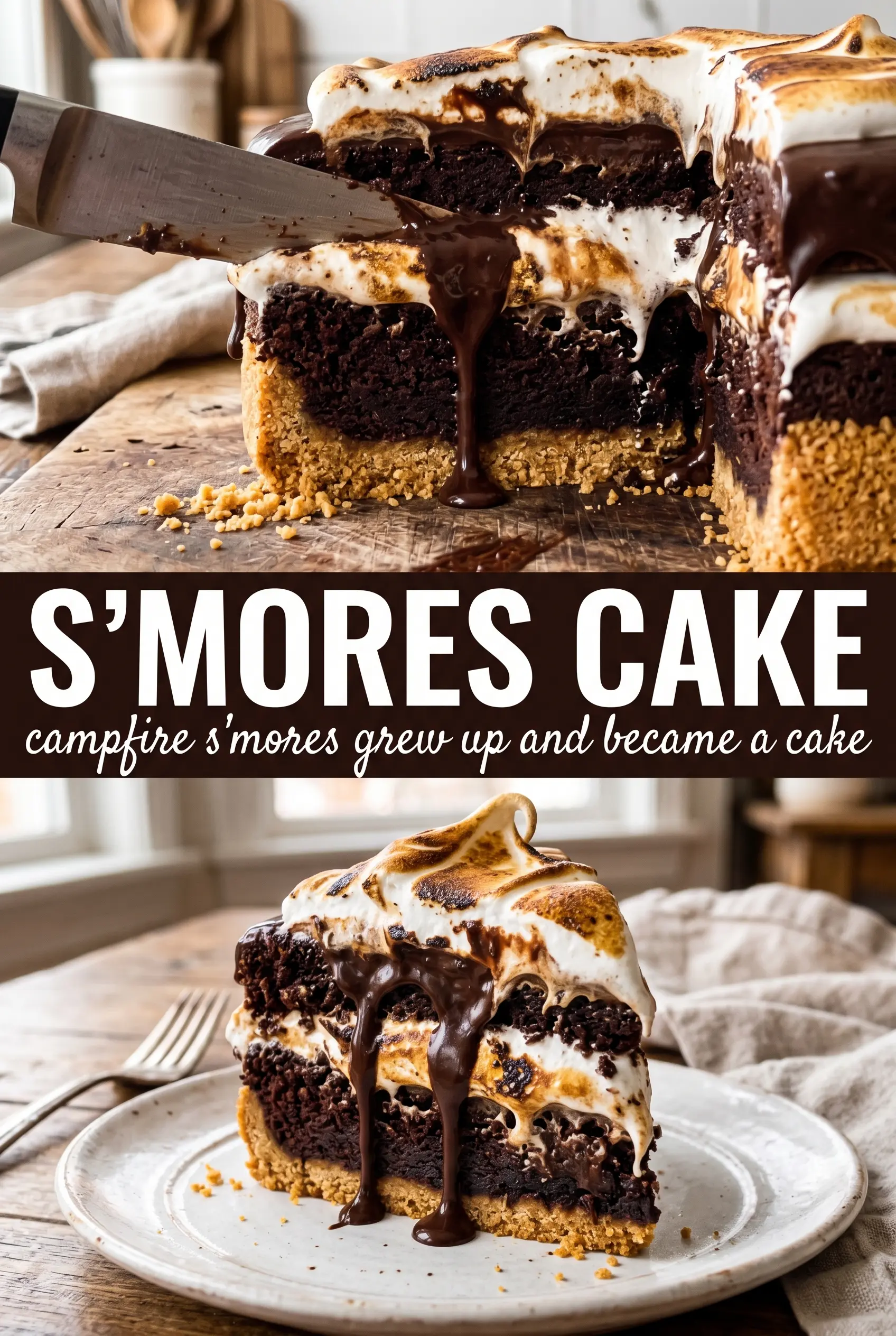
S’mores cake hits the same nostalgic notes as the campfire treat, but in layer-cake form it gets a little more dramatic: tender chocolate layers, a glossy ganache middle, and a marshmallow meringue that toasts into golden peaks instead of melting into a puddle. The graham cracker crumbs at the base give you that familiar sandy crunch, and the chocolate drip keeps each slice from feeling too sweet or one-note.
What makes this version work is balance. The cake itself uses buttermilk, oil, and brewed coffee, which keeps the crumb moist and deepens the chocolate flavor without tasting like coffee. The meringue is cooked over a double boiler before whipping, which helps dissolve the sugar so it turns smooth instead of gritty, and the ganache is cooled just enough to stay pourable without running straight off the cake.
Below you’ll find the part that matters most: how to keep the meringue glossy, how to time the ganache so it lands in the right texture, and what to do if you want to make the cake a little easier to serve cleanly.
The meringue held its shape beautifully after torching, and the chocolate layer stayed rich without making the whole cake soggy. I was nervous about the marshmallow frosting, but it sliced cleanly after chilling for an hour.
Like this s’mores layer cake? Save it to Pinterest for the chocolate drip, toasted meringue peaks, and graham cracker crunch.
The Trick to a S’mores Cake That Slices Cleanly Instead of Sliding Apart
The biggest mistake with a cake like this is building it while the ganache is still hot and the cake layers are still warm. That combination turns into movement. The filling softens the crumb, the meringue loses structure, and the whole cake starts leaning before you even get the torch out.
Let the layers cool all the way down. Then let the ganache cool until it thickens slightly but still pours in a ribbon. That middle texture matters because it gives you a sturdy filling that settles into place instead of leaking out the sides. The meringue also holds better when the cake base is fully cool, since any trapped heat underneath can make it weep.
- Strong brewed coffee — This won’t make the cake taste like coffee; it deepens the chocolate and gives the crumb more backbone. If you don’t want to brew coffee, hot water works, but the cake loses a little of its dark edge.
- Buttermilk — The acid helps the cake stay tender and reacts with the baking soda for lift. Whole milk won’t do the same job, so if you need a substitute, mix regular milk with a teaspoon of vinegar or lemon juice and let it sit for a few minutes first.
- Egg whites for the meringue — Fresh whites whip with more volume and cleaner structure. Separate them carefully; even a trace of yolk can keep the meringue from reaching glossy peaks.
- Dark chocolate — Use something you actually like to eat on its own. Since the ganache is only two ingredients, the chocolate flavor comes through plainly.
What Each Ingredient Is Actually Doing in This Dessert
- Sugar (the sweetness and structure) — Sugar tenderizes baked goods and creams into butter to create air. Don’t skip it or reduce it too much.
- Fat (butter, oil, or cream cheese) — This carries flavors and creates tender crumb. Proper creaming with sugar adds volume to cakes.
- Eggs (the binder and lift) — Eggs create structure and help baked goods rise. Room temperature eggs incorporate better than cold ones.
- Flour (the structure) — This is what makes baked goods hold together. Don’t overmix or the texture becomes tough and dense.
- Flavoring (vanilla, chocolate, fruit, spices) — These define the personality of the dessert. Use good quality flavorings so they shine.
- Leavening (baking powder, baking soda, whipped eggs) — This creates rise and light crumb. Too much makes the dessert taste bitter.
- Liquid (milk, water, or fruit juice) — This hydrates flour and carries flavors. Too much makes the dessert dense; too little makes it dry.
- Final finish (frosting, glaze, fruit, whipped cream) — The topping adds moisture, flavor, and visual appeal. Don’t skip it or the dessert feels incomplete.
Building the Layers So the Marshmallow Topping Stays Tall
Mixing the Cake Batter
Whisk the dry ingredients until the cocoa is fully broken up and there are no pale streaks of flour left behind. The wet ingredients should look smooth before you combine them. Once they come together, stop mixing as soon as the batter is uniform; overworking it makes the cake tighter and less plush. The batter will be thin, and that’s right for this style of chocolate cake.
Baking and Cooling the Layers
Divide the batter evenly between the pans so both layers bake at the same rate. Pull them when the centers spring back and a tester comes out with a few moist crumbs, not wet batter. Let the cakes sit in the pans for about 10 minutes, then turn them out onto racks. If you frost too soon, the meringue and ganache will slide on warm cake and the filling will turn messy fast.
Making the Ganache and Meringue
Heat the cream until it just starts to simmer, then pour it over the chopped chocolate and let it stand before stirring. That pause helps the chocolate soften evenly, which keeps the ganache smooth. For the meringue, cook the egg whites, sugar, and cream of tartar over simmering water until the sugar disappears between your fingers and the bowl feels hot, then beat until the peaks are stiff and glossy. If it looks grainy, the sugar didn’t dissolve enough before whipping.
Assembling and Torch-Finishing
Spread a layer of ganache between the cakes, then add a thick layer of meringue on top. Coat the outside with the rest of the meringue and press graham cracker crumbs around the base before torching. Use quick passes with the kitchen torch so the peaks turn golden in spots without collapsing into liquid. Drizzle the remaining ganache at the end so it stays visible against the toasted white topping.
How to Adjust the Cake Without Losing the S’mores Character
Make It a Little Easier to Slice
Chill the assembled cake for 30 to 60 minutes before serving. That firms the ganache and meringue just enough to give you cleaner slices, especially if you’re serving it at a party. The flavor stays the same, but the texture gets more stable.
Swap in a Dairy-Free Ganache Filling
Use full-fat coconut cream in place of the heavy cream for the ganache. The texture will be slightly softer and you’ll pick up a faint coconut note, but the chocolate layer still sets up well enough to spread and hold between the cakes.
Turn It into a Gluten-Free Cake
Use a 1:1 gluten-free baking flour in place of the all-purpose flour and check the cakes a few minutes early. The graham cracker garnish will still contain gluten, so swap in gluten-free crumbs or leave that border off if you need the whole cake to stay gluten-free.
Storage and Reheating
- Refrigerator: Store covered for up to 3 days. The meringue may soften a little, but the cake will still slice well after chilling.
- Freezer: Freeze the unfrosted cake layers for up to 2 months, tightly wrapped. I don’t recommend freezing the assembled cake because the meringue changes texture after thawing.
- Reheating: Bring slices to room temperature before serving. Don’t microwave this cake; it melts the meringue and turns the ganache greasy.
Answers to the Questions Worth Asking
S'mores Cake
Ingredients
Equipment
Method
- Preheat oven to 350°F and grease two 9-inch round pans.
- Whisk all dry cake ingredients together in a mixing bowl until evenly combined.
- Whisk eggs, buttermilk, coffee, vegetable oil, and vanilla extract separately until smooth.
- Pour wet ingredients into dry ingredients and mix until smooth.
- Divide batter evenly between pans and bake for 30-35 minutes, until a toothpick comes out clean.
- Cool the cakes completely before assembling, about 1 hour.
- Heat heavy cream until simmering, then pour it over chopped dark chocolate in a heatproof bowl.
- Let the mixture sit for 2 minutes, then stir until smooth.
- Cool ganache until pourable but still fluid.
- Combine egg whites, sugar, and cream of tartar in a double boiler set over simmering water.
- Whisk over the simmering water until the sugar dissolves and the mixture is hot.
- Transfer to a mixer and beat until stiff glossy peaks form.
- Spread ganache between the cake layers.
- Add marshmallow meringue between layers, then sandwich the cake.
- Frost the outside of the cake with marshmallow meringue.
- Press graham cracker crumbs around the base of the cake.
- Use a kitchen torch to toast the meringue until golden in dramatic patches.
- Drizzle the remaining ganache over the top so it drips down the sides.