Slow cooker steak and cheddar potato casserole lands on the table with tender layers of beef, soft Yukon gold potatoes, and a blanket of melted sharp cheddar that ties everything together. The broth turns rich as it cooks, the potatoes soak up every bit of seasoning, and the final spoonful tastes like a cross between a cozy steak dinner and a loaded baked potato.
What makes this version work is the layering. Thinly sliced potatoes cook evenly when they’re tucked between steak and onion, and the condensed soup gives the broth enough body to cling to everything instead of staying thin and watery. The Worcestershire sauce deepens the beef flavor without making the casserole taste heavy, and the cheddar goes on at the end so it melts on top instead of disappearing into the pot.
Below, I’ll walk through the few details that matter most: how thin to slice the steak and potatoes, why low and slow gives the best texture, and a couple of smart swaps if you need to work with what’s already in the kitchen.
The potatoes turned out perfectly tender and the sauce thickened just enough around the steak. I used sour cream and green onions on top, and even my picky eater went back for seconds.
Save this slow cooker steak and cheddar potato casserole for a hands-off dinner with tender beef, soft potatoes, and a melted cheddar finish.
The Trick to Keeping the Potatoes Tender, Not Mushy
Slow cooker casseroles can go wrong when the potatoes are cut too thick or piled in a way that blocks heat from moving through the dish. Yukon golds hold their shape better than russets, which matters here because they cook for hours in a wet environment and need to stay intact instead of dissolving into the broth. Thin, even slices are what give you that soft casserole texture without a pot full of starch.
The other thing that helps is alternating the layers instead of dumping everything in together. That spreads the steak, onion, and potatoes through the liquid so every bite gets seasoned. If the slices are different sizes, the small pieces will break down early while the larger ones stay firm, and the texture gets uneven fast.
- Yukon gold potatoes — These are the best choice because they stay creamy without turning grainy. Russets will work, but they soften faster and can fall apart if you cook the casserole on high.
- Thin-sliced steak — Slicing the beef thin helps it become tender in the slow cooker. Chuck gives you a richer result, while sirloin stays a little cleaner and leaner.
- Onion — This adds sweetness and depth as it cooks down. Slice it thin so it melts into the casserole instead of staying crunchy.
- Cream of mushroom soup — This is what gives the sauce body. A homemade white sauce can work, but it won’t bring the same thick, savory base unless you season it well.
- Sharp cheddar — Sharp cheddar holds its flavor best against the beef and potatoes. Mild cheddar melts fine, but it gets lost more easily in a rich casserole like this.
What Each Ingredient Is Actually Doing in This Recipe

- Primary ingredient (the star) — Quality matters most. Choose the best you can find.
- Cooking medium (oil, butter, or broth) — This carries flavors and prevents dryness.
- Seasonings (salt, pepper, spices, herbs) — Layer flavors so nothing overpowers. Build depth gradually.
- Aromatics (garlic, onion, herbs) — Cook with fat to bloom flavors. Become the foundation.
- Supporting ingredients — Complement the main ingredient without overpowering it.
- Sauce or liquid (if applicable) — Brings flavors together. Balance richness with acid.
- Acid (lemon, vinegar, wine, or other) — Brightens and prevents flat-tasting results.
- Final finish (garnish, glaze, or sauce) — Prevents one-dimensional taste and adds visual appeal.
Building the Slow Cooker Base Without a Watery Finish
Season the Beef Before It Goes In
Toss the sliced steak with salt, pepper, garlic powder, and onion powder first so the meat starts seasoned before the broth goes in. That small step matters because the slow cooker won’t brown the beef, so the seasoning has to do more work on its own. If the steak is very wet from being packed in a container, pat it dry first so the seasoning clings instead of sliding off.
Layer for Even Cooking
Start with a layer of potatoes, then onion, then steak, and repeat until everything is in the pot. This keeps the potatoes from sitting all in one dense mass at the bottom and lets the beef juices move through the casserole as it cooks. Don’t stir after layering; that’s how you end up with broken potato slices and a muddy texture.
Whisk the Sauce Before It Hits the Crockpot
Mix the broth, cream of mushroom soup, Worcestershire sauce, and garlic before pouring it over the layers. The sauce should look smooth and pourable, with no pockets of soup paste left behind. If you dump it in without whisking, some spots will be overly salty and thick while others stay bland and thin.
Finish With Cheese at the End
Cook until the potatoes and steak are tender, then scatter the cheddar over the top and let it melt with the lid on. Adding cheese too early can make it oily and dull, especially in a long slow cook. The last 15 minutes on high gives you that soft, stretchy layer on top without overcooking the dairy.
Make It Gluten-Free
Use a gluten-free cream of mushroom soup and double-check your Worcestershire sauce, since some brands include wheat. The texture stays the same, and the casserole still gets that creamy, savory base without changing the cooking method.
Use Chuck for a Deeper Beef Flavor
Chuck steak gives you a richer, more braised result because it has a little more connective tissue to soften over time. Sirloin tastes a bit cleaner and stays leaner, but chuck brings more of that old-fashioned casserole comfort.
Swap in Cream of Chicken if You’re Out of Mushroom Soup
Cream of chicken works in a pinch, but the final dish will taste a little lighter and less earthy. If you use it, add an extra pinch of black pepper or a splash more Worcestershire to keep the sauce from tasting flat.
Storage and Reheating
- Refrigerator: Store covered for up to 4 days. The potatoes will firm up a little as they chill, but the flavor gets even better the next day.
- Freezer: It freezes, but the potatoes soften more after thawing and the sauce can separate a bit. Freeze in airtight containers for up to 2 months if you don’t mind a softer texture.
- Reheating: Reheat gently in the oven covered with foil at 325°F or in the microwave in short bursts. High heat can make the steak tough and pull the sauce apart, so warm it slowly until the center is hot.
Questions I Get Asked About This Recipe
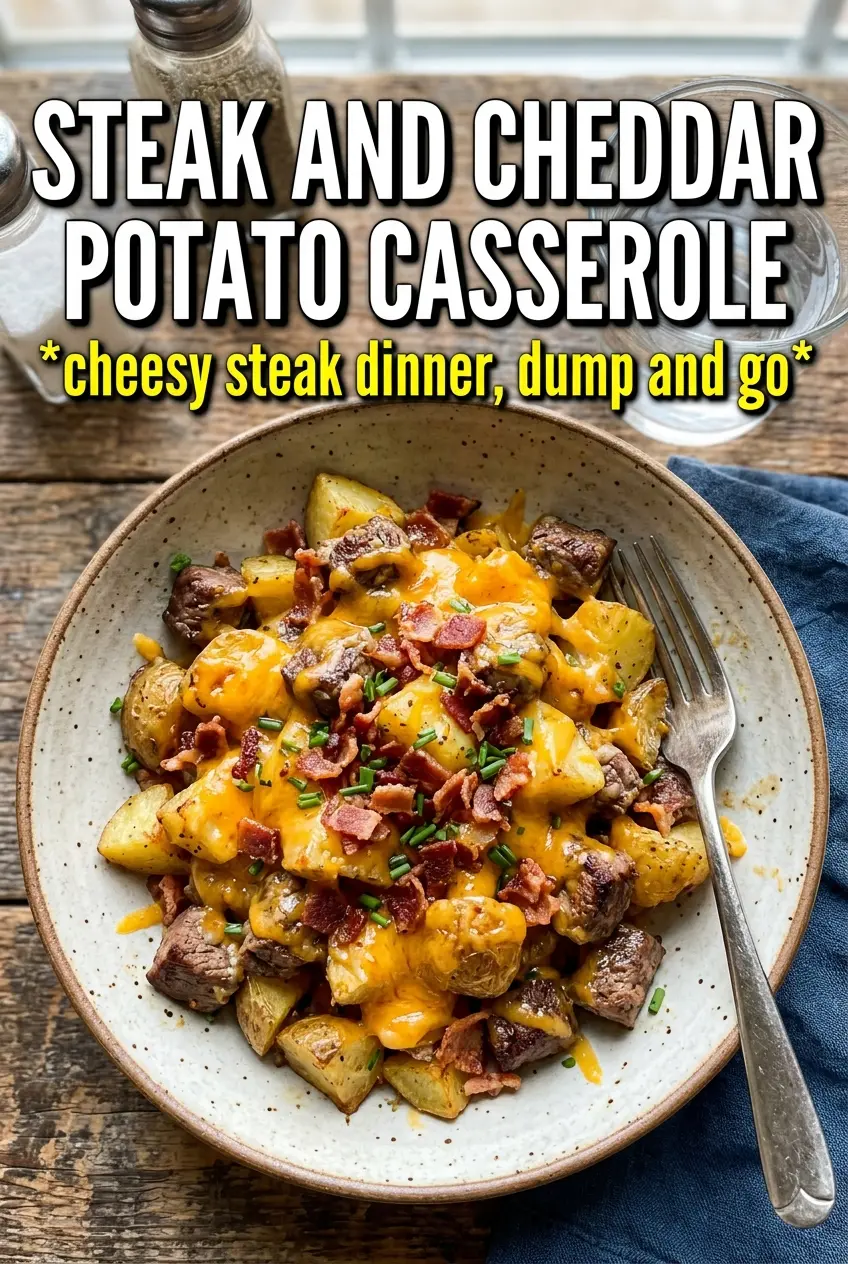
Slow Cooker Steak And Cheddar Potato Casserole
Ingredients
Equipment
Method
- Season the steak slices with salt, pepper, garlic powder, and onion powder until evenly coated. Set aside while you prep the potatoes and onion.
- Layer potatoes, onion, and steak in the Crockpot in alternating layers, finishing with potatoes on top. Lightly press each layer down so it sits evenly.
- Whisk beef broth, cream of mushroom soup, Worcestershire sauce, garlic powder, and onion powder until smooth. Pour the mixture over the layered steak and potatoes so the top is partially covered.
- Cook on Low for 6-7 hours, or High for 3-4 hours, until the potatoes are tender and the steak flakes easily. Cover throughout to maintain heat and avoid drying out.
- Scatter shredded sharp cheddar over the top in an even layer. Cook on High for 15 minutes, until the cheddar is melted and bubbly with a creamy blanket.
- Serve hot with green onions and sour cream on top. Let stand 5 minutes so the casserole thickens slightly before serving.