Sheet pan chicken fajitas hit the table with the kind of sizzle and char that makes dinner feel bigger than the effort behind it. The chicken stays juicy, the peppers soften just enough to turn sweet, and the onions pick up those browned edges that make the whole pan taste finished. Everything roasts together, so you get the smoky, seasoned flavor of fajitas without standing over a skillet in batches.
The trick is spreading the chicken and vegetables in a true single layer. When they overlap, they steam, and steamed fajitas taste flat no matter how much seasoning you use. A hot oven and a light coating of oil do the heavy lifting here, helping the spices cling to the chicken while the vegetables caramelize instead of turning limp. I also like using both fajita seasoning and a little smoked paprika, because the blend gives you the familiar Tex-Mex backbone while the paprika pushes the browned bits toward a deeper, almost grilled flavor.
Below, you’ll find the easiest way to keep the chicken from drying out, plus a few smart swaps if you need to work with what’s already in the pantry.
The chicken stayed juicy and the peppers got those browned edges without turning mushy. I stirred it halfway through like you said and the whole pan came out perfectly seasoned.
Love the charred peppers and juicy chicken? Save these sheet pan chicken fajitas for a fast Tex-Mex dinner with almost no cleanup.
The One Thing That Keeps Sheet Pan Fajitas From Going Soft
The biggest mistake with sheet pan fajitas is crowding the pan. Chicken releases moisture as it cooks, and bell peppers do the same. If everything is piled up, that liquid pools underneath and you end up with soft vegetables and pale chicken instead of the caramelized edges you’re after. A large sheet pan matters here, and so does a little restraint when spreading everything out.
Roasting at 425°F gives the vegetables enough heat to blister at the edges before the chicken dries out. Stirring once halfway through helps expose new surfaces to the hot pan, but don’t keep tossing it around. You want some contact time with the metal so the seasoning can toast and darken instead of sliding off into the oil.
- Single layer: This is the difference between roasted fajitas and a wet pan of chicken and peppers.
- Hot oven: High heat encourages browning fast enough that the vegetables keep a little bite.
- Halfway stir: One turn is enough to keep the pieces cooking evenly without losing the char.
What Each Seasoning Is Doing in the Pan
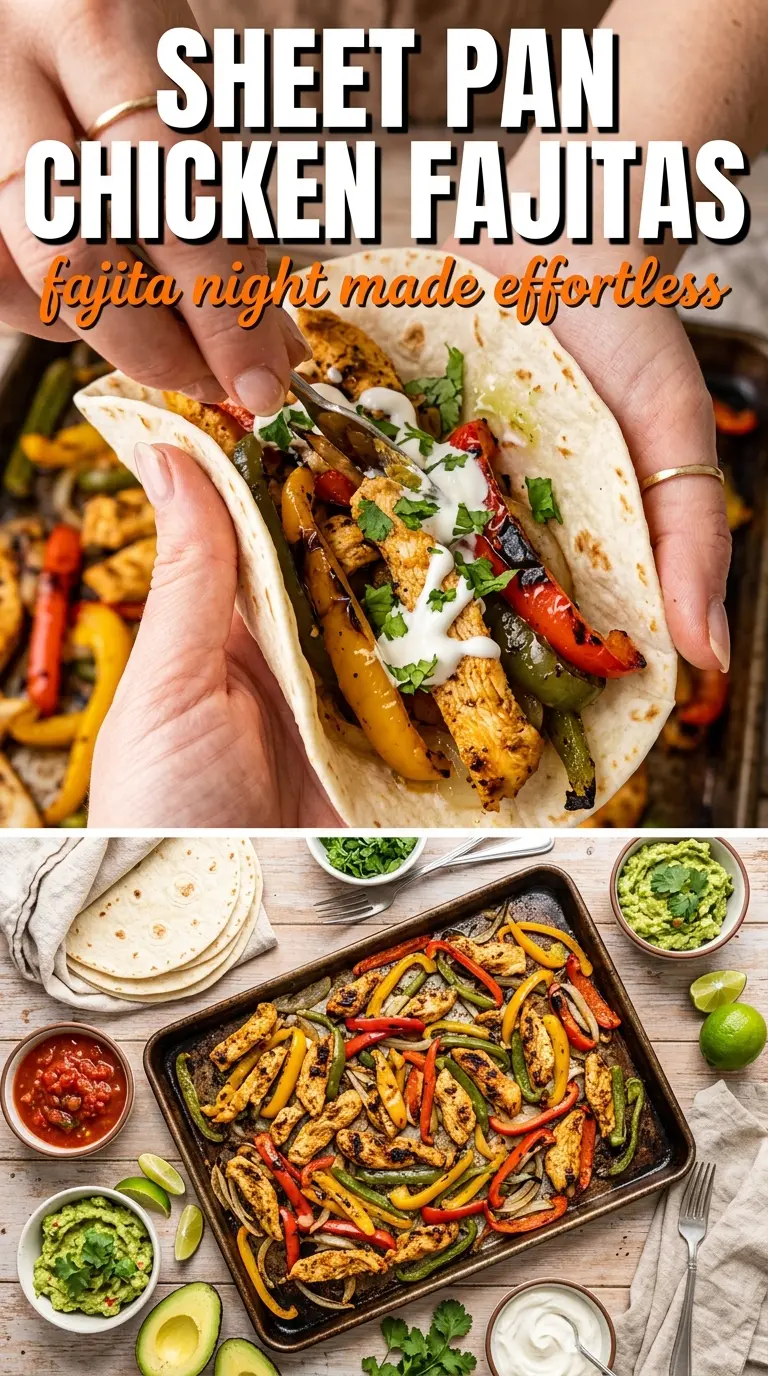
- Chicken breast: Lean chicken breast cooks quickly and slices cleanly into strips, which makes it the best choice when you want fajitas that finish in under 30 minutes. Slice it into even pieces so the thinner ones don’t dry out before the thicker ones catch up.
- Bell peppers: Red, yellow, and green peppers give you sweetness, color, and enough structure to hold up in the oven. Any mix works, but peppers that look firm and heavy for their size roast better than thin-skinned ones that collapse fast.
- Onion: Onion softens and caramelizes at the edges, and those browned pieces deepen the whole pan. Yellow or red onion both work; slice it into thicker strips so it doesn’t disappear before the chicken is done.
- Fajita seasoning, garlic powder, and smoked paprika: The seasoning blend brings the salty, chili-lime backbone, while garlic powder rounds it out and smoked paprika adds that roasted, almost grill-like note. If your taco seasoning is salty, go lighter on added salt until after roasting.
- Lime, sour cream, guacamole, and salsa: These aren’t just toppings. They finish the dish by adding acid, creaminess, and cool contrast against the hot pan.
How to Roast the Pan So the Chicken Stays Juicy
Coating Everything Evenly
Start by tossing the chicken, peppers, and onion with the oil and seasonings until every surface looks lightly glossed and speckled. Dry patches won’t brown the same way, and piles of seasoning in one spot can turn bitter in the oven. The oil should coat, not pool; if there’s a slick of liquid in the bowl, the vegetables will steam instead of roast.
Spreading the Pan for Browning
Dump everything onto the foil-lined sheet pan and spread it out with some space between the pieces. The chicken strips should lie flat where possible, and the peppers should not sit in a heap under the onions. If you can’t get a single layer, grab a second pan. That one decision fixes most soggy fajita problems before they start.
Roasting Until Charred at the Edges
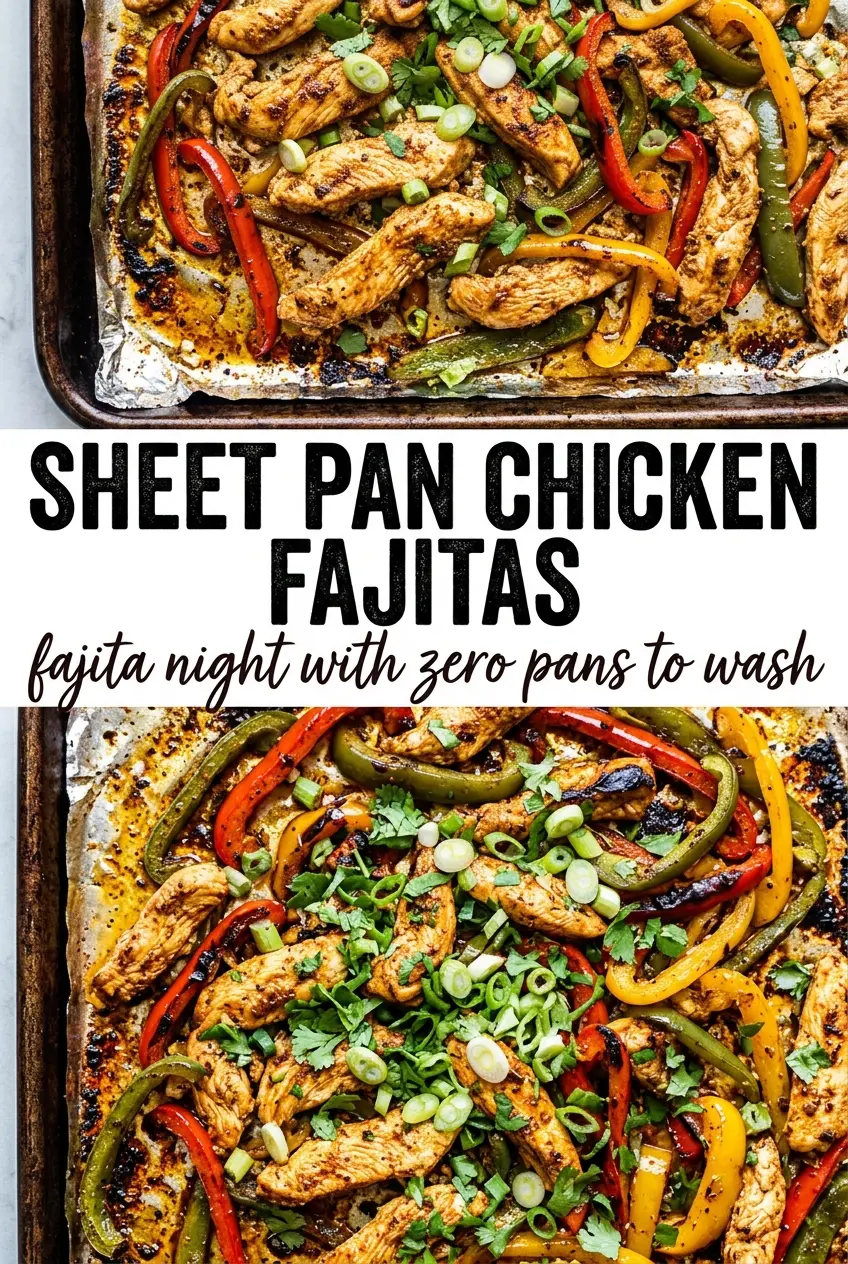
Roast for 22 to 25 minutes, stirring once halfway through. You’re looking for chicken that’s cooked through and peppers with softened centers and browned, even slightly blackened edges. If the chicken looks done before the vegetables have any color, leave it in a few extra minutes; the cut size matters here, so even strips help everything finish together. Pull it as soon as the chicken reaches doneness, because overcooked breast meat goes dry fast.
Serving While the Pan Is Hot
Warm tortillas before serving so they don’t crack when filled. Spoon the fajita mixture straight from the pan, then finish with lime juice, cilantro, and a little sour cream or guacamole. That hit of acid wakes up the seasoning immediately, and the fresh toppings keep the roasted vegetables from tasting heavy.
How to Adapt These Fajitas Without Losing the Good Parts
Use chicken thighs for richer, juicier fajitas
Boneless, skinless thighs stay a little more forgiving in the oven and bring a deeper chicken flavor. They may need a couple extra minutes, but they’re a smart swap if you’ve had breast meat dry out on you before.
Make it dairy-free and still finish with the right contrast
Skip the sour cream and use guacamole, salsa, and extra lime instead. You’ll lose the creamy tang, but the dish still feels complete because the lime and salsa add the same brightness that cuts through the roasted seasoning.
Low-carb fajita bowls instead of tortillas
Serve the roasted chicken and vegetables over cauliflower rice or shredded lettuce. You keep the same roasted Tex-Mex flavor, but the meal feels lighter and you won’t miss the tortilla if the toppings are generous.
Swap the seasoning if all you have is taco seasoning
Taco seasoning works fine here, especially if it already includes cumin and chili powder. Add the smoked paprika if you have it, because that extra layer makes the sheet pan taste closer to grilled fajitas instead of just seasoned chicken and vegetables.
Storage and Reheating
- Refrigerator: Store in an airtight container for up to 4 days. The peppers soften a little more as they sit, but the flavor stays strong.
- Freezer: Freeze the cooked chicken and vegetables for up to 2 months, though the peppers will come back softer after thawing. For the best texture, freeze the fajita filling by itself and add fresh tortillas and toppings later.
- Reheating: Reheat in a skillet over medium heat or in a 375°F oven until hot. Don’t use high heat in the microwave for too long, or the chicken will turn rubbery before the vegetables are warm.
Answers to the Questions Worth Asking
Sheet Pan Chicken Fajitas
Ingredients
Equipment
Method
- Preheat the oven to 425°F and line a large sheet pan with foil for easy cleanup.
- Add the chicken, bell peppers, and onion to a large bowl.
- Drizzle with olive oil, then sprinkle with fajita seasoning, garlic powder, smoked paprika, salt, and black pepper; toss until every piece looks evenly coated.
- Spread the mixture on the sheet pan in a single layer without overlapping so it can roast and caramelize.
- Roast for 22–25 minutes, stirring once halfway through, until the chicken is cooked and edges are slightly charred with visible caramelized bits.
- Serve immediately with warm tortillas and top with sour cream, guacamole, salsa, lime wedges, and cilantro.