Rotel Pasta Fiesta lands in that sweet spot between cozy and bold: creamy cheddar sauce, a little heat from the tomatoes and green chiles, and enough hearty beef and pasta to count as dinner without any side dishes arguing for attention. The sauce clings to every rotini spiral, and the black beans and corn keep each bite from feeling one-note. It’s the kind of skillet meal that disappears fast because it eats like comfort food but still has a Tex-Mex kick.
What makes this version work is the order. The beef and onion build a savory base first, then the Rotel, beans, corn, and broth simmer long enough to blend without losing their shape. The cream goes in before the cheese, not after a hard boil, so the sauce stays smooth instead of grainy. That little bit of reserved pasta water gives you a backup if the sauce tightens too much after the cheddar melts.
Below, you’ll find the small details that matter most: how to keep the cheese sauce silky, which swaps still give you that Rotel pasta flavor, and what to do if you want to stretch it for a bigger crew.
The sauce turned out creamy without getting greasy, and the Rotel gave it just enough heat. I liked that the corn and beans held their shape, and the pasta still tasted great the next day.
Save Rotel Pasta Fiesta for the nights when you want a creamy Tex-Mex skillet dinner with beef, beans, and pasta in one pan.
The Cheese Sauce Only Stays Silky If You Respect the Heat
Most broken cheese sauces happen for one reason: the pan is too hot when the cheese goes in. Rotel brings acidity, broth brings volume, and cheddar needs a gentle hand to melt smoothly into both. If the mixture is boiling hard when you add the cream or cheese, the fat can separate and the sauce turns grainy instead of glossy.
This recipe avoids that by simmering the tomatoes, beans, corn, and broth first, then dropping the heat before the dairy goes in. That gives the sauce a little body before the cheese arrives. The pasta water is there as insurance, not a requirement, and you only need a splash if the sauce tightens after the cheddar melts.
What Each Ingredient Is Actually Doing in Rotel Pasta Fiesta
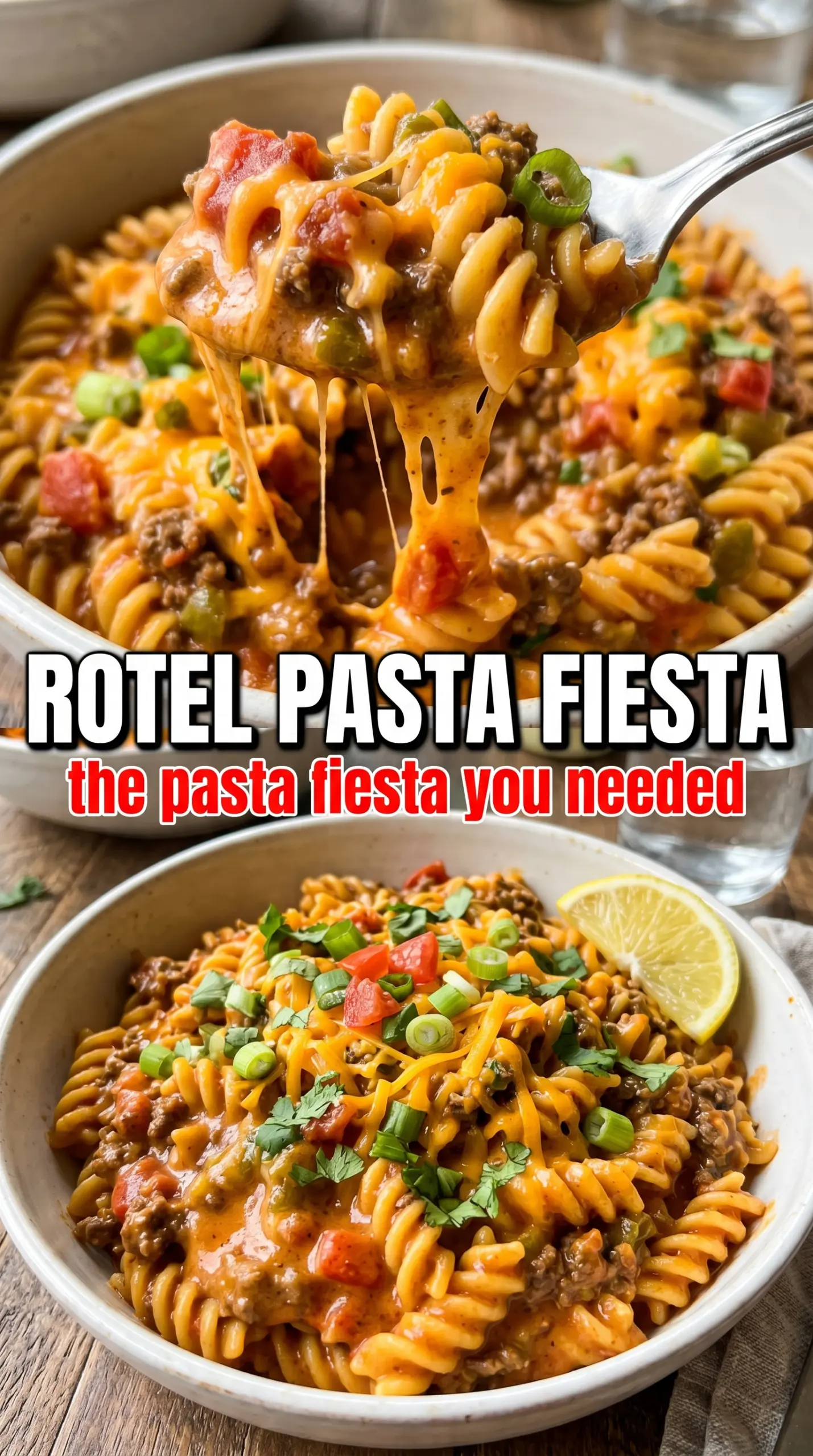
- Rotel tomatoes with green chiles — This is the signature flavor. You get acidity, heat, and tomato all at once, which is why plain diced tomatoes won’t taste the same. If you can only find a hotter version, use it, but cut back a little on the taco seasoning if you want the spice balanced.
- Heavy cream — This is what gives the sauce its plush texture. Half-and-half will work in a pinch, but it won’t coat the pasta as well and it’s more likely to thin out once the cheese melts. Keep the heat low when it goes in.
- Cheddar cheese — Shred it yourself if you can. Pre-shredded cheese is coated with anti-caking starch, and that can make the sauce less smooth. Sharp cheddar gives the best contrast against the beef and Rotel.
- Rotini pasta — The spirals trap the sauce better than straight noodles. Any short pasta with ridges or curves will work, but rotini gives you the most sauce in every bite.
- Black beans and corn — These make the dish feel fuller and give it that Tex-Mex pantry-dinner character. Drain the beans well so the sauce doesn’t get muddy, and thaw the corn first so it doesn’t cool the pan too much.
- Ground beef — Use an 85/15 or 90/10 blend for enough flavor without a greasy finish. If your beef is especially fatty, drain it after browning before you add the garlic and seasoning.
Building the Skillet So the Pasta Grabs Every Bit of Sauce
Brown the Beef and Onion First
Cook the onion with the ground beef over medium-high heat until the beef loses its pink color and the onion softens at the edges. You want browning in the pan, not steaming, because those browned bits are the backbone of the sauce. If there’s a lot of fat in the pan, drain it before moving on so the final dish doesn’t taste heavy.
Wake Up the Seasoning
Add the garlic and taco seasoning after the beef is cooked. Stir for about a minute, just until the garlic smells fragrant and the seasoning darkens slightly in the fat. If you add garlic too early, it can burn before the beef is finished, and burned garlic turns the whole skillet bitter.
Simmer the Rotel Base
Pour in the Rotel, black beans, corn, and beef broth, then let the mixture simmer for about five minutes. The goal is to let the flavors marry and the broth reduce a little, not to boil it down until it’s thick and dry. This is when the sauce gets its savory, spoon-coating body before the dairy goes in.
Finish With Cream and Cheese
Lower the heat before you add the heavy cream, then stir in the cheddar gradually. If the pan is still raging hot, pull it off the burner for a minute before adding the cheese. The sauce should look smooth and glossy, and if it seems too thick, loosen it with a splash of reserved pasta water until it clings instead of clumping.
Toss the Pasta at the End
Add the cooked rotini and stir until every spiral is coated. Let it sit for a minute so the pasta soaks up a little sauce instead of sliding around in the pan. Finish with cilantro and extra cheddar while the skillet is still hot enough to melt the top layer.
How to Adapt Rotel Pasta Fiesta Without Losing the Point
Make It Lighter With Ground Turkey
Ground turkey works well here, but it needs the onion and taco seasoning to carry more of the flavor. Use a little extra oil if your turkey is very lean, and don’t skip the broth reduction step or the sauce can taste flat. The final dish will be a bit cleaner and less rich, but still plenty satisfying.
Dairy-Free Version With a Different Finish
Use an unsweetened plain non-dairy cream and a meltable dairy-free cheddar-style shreds blend. The sauce won’t get quite as silky as the original, but you’ll still get a creamy skillet pasta if you keep the heat low and stir patiently while the cheese melts.
Stretch It for a Bigger Family Dinner
Add an extra cup of broth and another handful of cheddar if you want to feed more people without making it soupy. The sauce should still look thick before the pasta goes in, because the noodles will loosen it as they coat. This version holds well on the stove for a few minutes if you’re waiting on everyone to sit down.
Gluten-Free Swaps That Still Feel Like Dinner
Use your favorite gluten-free rotini and check the taco seasoning and broth labels for hidden gluten. Gluten-free pasta can soften fast once it sits in sauce, so pull it from the water when it still has a little bite and toss it in right away. The flavor stays the same; the main difference is timing.
Storage and Reheating
- Refrigerator: Store leftovers in an airtight container for up to 4 days. The pasta will absorb some sauce as it sits, so it gets thicker overnight.
- Freezer: It freezes, but the cream sauce loses some of its smoothness after thawing. Freeze in portions for up to 2 months if you don’t mind a slightly softer texture.
- Reheating: Warm it gently on the stove or in the microwave with a splash of broth or milk. High heat is the mistake here — it can tighten the cheese sauce and make the pasta dry.
Answers to the Questions Worth Asking
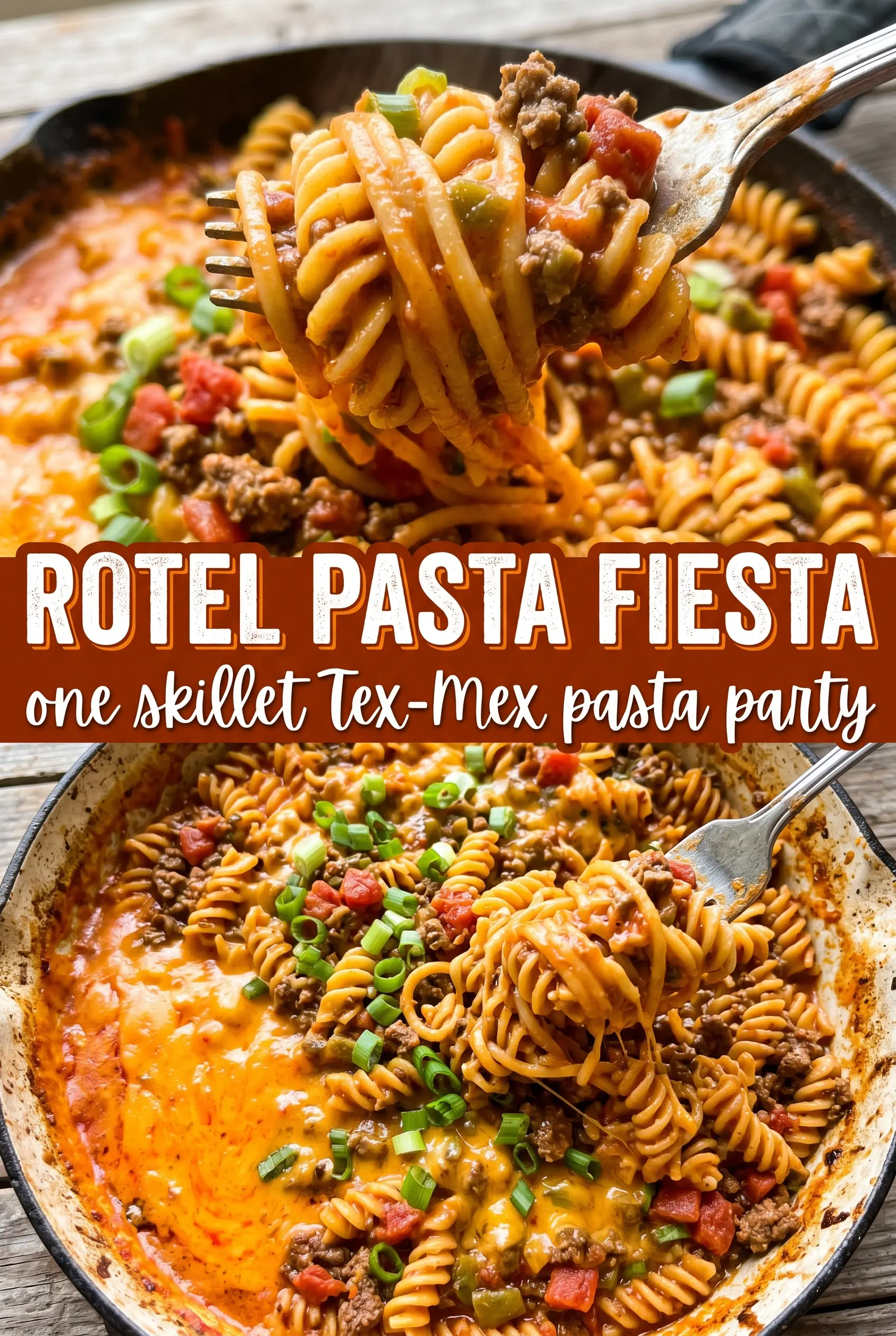
Rotel Pasta Fiesta
Ingredients
Equipment
Method
- Cook rotini in salted water until al dente, then reserve 1/2 cup pasta water and drain the pasta; set aside while you make the sauce. Keep the pasta springy so it can finish coating in the skillet later.
- In a wide skillet over medium-high heat, brown ground beef with diced onion until the beef is no longer pink, then drain excess fat. Stir in minced garlic and taco seasoning and cook for 1 minute to bloom the spices.
- Add Rotel tomatoes with green chiles, drained black beans, frozen corn, and beef broth, then simmer for 5 minutes. The mixture should thicken slightly and look saucy, with visible corn and beans.
- Stir in heavy cream and bring to a simmer, then stir in shredded cheddar until melted and smooth. Remove from heat once the cheese is fully incorporated and the sauce clings to a spoon.
- Toss the drained rotini with the sauce in the skillet and add reserved pasta water a splash at a time to thin to your preferred consistency. Top each serving with fresh cilantro and extra cheddar for an all-over melted finish.