Ruby-pink rhubarb jelly with vanilla bean specks has a clean, bright sweetness that sets up into a glossy spread with real presence. It tastes like rhubarb at its best: tart enough to wake up toast, scones, or biscuits, but softened by a round vanilla note that keeps it from reading sharp or one-dimensional.
This version works because the rhubarb is simmered gently before straining, which gives you a clear juice instead of a cloudy puree. The lemon juice helps the pectin do its job, and the sugar goes in all at once once the liquid is already at a hard boil. That timing matters. If you let the mixture linger too long after the sugar goes in, the set can weaken or the jelly can turn grainy around the edges.
Below, I’ll show you the small details that make the difference between a jelly that sets cleanly and one that stays loose. If you’ve ever had trouble getting fruit jelly to turn out clear, this one is worth a careful read.
The jelly set up beautifully and stayed crystal clear after I strained it through cheesecloth. The vanilla in the background made the rhubarb taste richer without covering up that tart edge.
Pin this rhubarb vanilla bean jelly for the jarred spread that turns tart rhubarb into a smooth, jewel-toned preserve.
The Part That Keeps Rhubarb Jelly Clear Instead of Cloudy
Rhubarb gives up a lot of flavor quickly, but it also sheds enough pulp to cloud the finished jelly if you rush the straining. The goal is not to squeeze every last drop of thick fruit mush out of the bag. Press firmly enough to collect the juice, then stop before the pulp starts forcing its way through the cloth.
The other place people get tripped up is the boil after the sugar goes in. A true rolling boil matters here because pectin needs that heat to activate cleanly and evenly. If the boil falls back to a simmer, the set can weaken and the finished jelly may stay softer than it should.
What the Vanilla Bean Is Doing Beyond Flavor
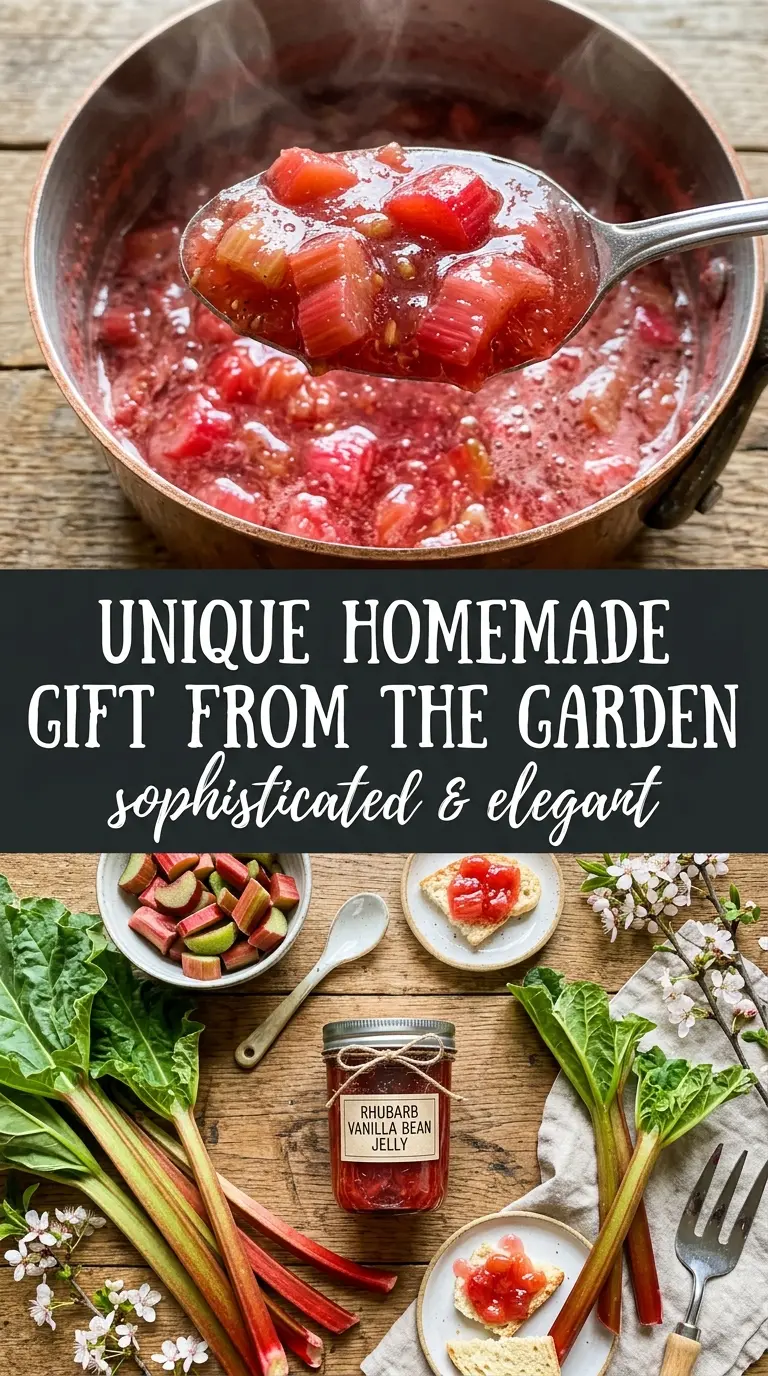
- Fresh rhubarb — Fresh stalks give the sharp, bright juice this jelly depends on. Older, stringy rhubarb can work, but the flavor is flatter and the color is less vivid.
- Vanilla bean — The pod and seeds add warmth and those tiny specks you can see suspended in the jars. Vanilla extract won’t give the same look or the same gentle infusion, so save it for another recipe.
- Powdered pectin — This is what turns the juice into a spreadable jelly instead of a syrup. Use the full box and add it before the sugar, not after, so it disperses evenly.
- Lemon juice — Don’t skip it. It sharpens the flavor and gives the pectin the acidity it needs to set properly, especially with rhubarb’s softer natural pectin content.
- Sugar — In a jelly like this, sugar isn’t just sweetness. It helps the set and gives the finished texture that clean, spoonable body.
From Rhubarb Juice to Jar Set
Simmering the Fruit and Vanilla
Combine the rhubarb, water, vanilla bean pod, and scraped seeds in a large pot and bring it to a gentle simmer. You want the rhubarb to break down and give off its juice without cooking hard enough to darken the color. After about 15 minutes, the fruit should look soft and collapsed, and the liquid should smell bright and floral.
Straining Without Muddying the Juice
Pour the mixture through cheesecloth or a fine mesh strainer into a bowl or pot. Press to extract the liquid, but don’t grind the fruit solids through the cloth or you’ll end up with a cloudy jelly. You’re aiming for about 3 1/2 cups of juice, and if you come up short, the set will be firmer; if you have much more, the jelly can be loose.
Cooking to the Hard-Boil Stage
Return the juice to the pot and stir in the pectin and lemon juice before you turn up the heat. Once it reaches a rolling boil, add the sugar all at once and stir constantly while it comes back to a hard boil. Let it boil for one full minute, no longer and no shorter, because this is the window that determines the set. If you boil it too long, the jelly can get stiff or syrupy; too short, and it may never fully set.
Jarring and Letting the Set Finish
Pull the pot off the heat, skim the foam, and remove the vanilla bean pod before ladling the jelly into sterilized jars with 1/4-inch headspace. Process the jars in a boiling water bath for 10 minutes. After that, leave them alone for 24 hours. If you shake the jars early to check them, the set can be disrupted before it has a chance to firm up.
How to Adapt the Jelly for Different Kitchens and Pantry Situations
Using Vanilla Extract Instead of a Bean
If you don’t have a vanilla bean, add 1 to 2 teaspoons of pure vanilla extract after the jelly comes off the heat. You’ll still get warmth and sweetness, but you’ll lose the visible specks and some of the slow, rounded depth that a bean gives during the simmer.
Making It Lower Sugar Isn’t a Straight Swap
This recipe depends on the sugar for proper set, so a simple reduction will leave you with thin jelly. If you want a lower-sugar version, use a pectin product labeled for reduced sugar and follow that package’s sugar ratio instead of changing this formula by guesswork.
A Cleaner, More Tart Finish
If you want the rhubarb to stay front and center, keep the vanilla bean but add the smallest possible amount of lemon juice the recipe allows. The jelly will taste brighter and less rounded, which works well if you’re serving it on buttered toast or tangy yogurt.
Storage and Reheating
- Refrigerator: Once opened, store the jars in the refrigerator for up to 3 weeks. The jelly may firm up a little more as it chills.
- Freezer: Properly canned jars are best stored in a cool pantry, not frozen. If you make a small batch for the fridge only, freeze it in freezer-safe containers with headspace, but expect a slightly softer set after thawing.
- Reheating: Jelly doesn’t need reheating, but if it’s too firm to spread, let the jar sit at room temperature for 10 to 15 minutes. Don’t microwave the whole jar; just warm a spoonful in a small dish if you need it loosened for serving.
Questions I Get Asked About This Recipe
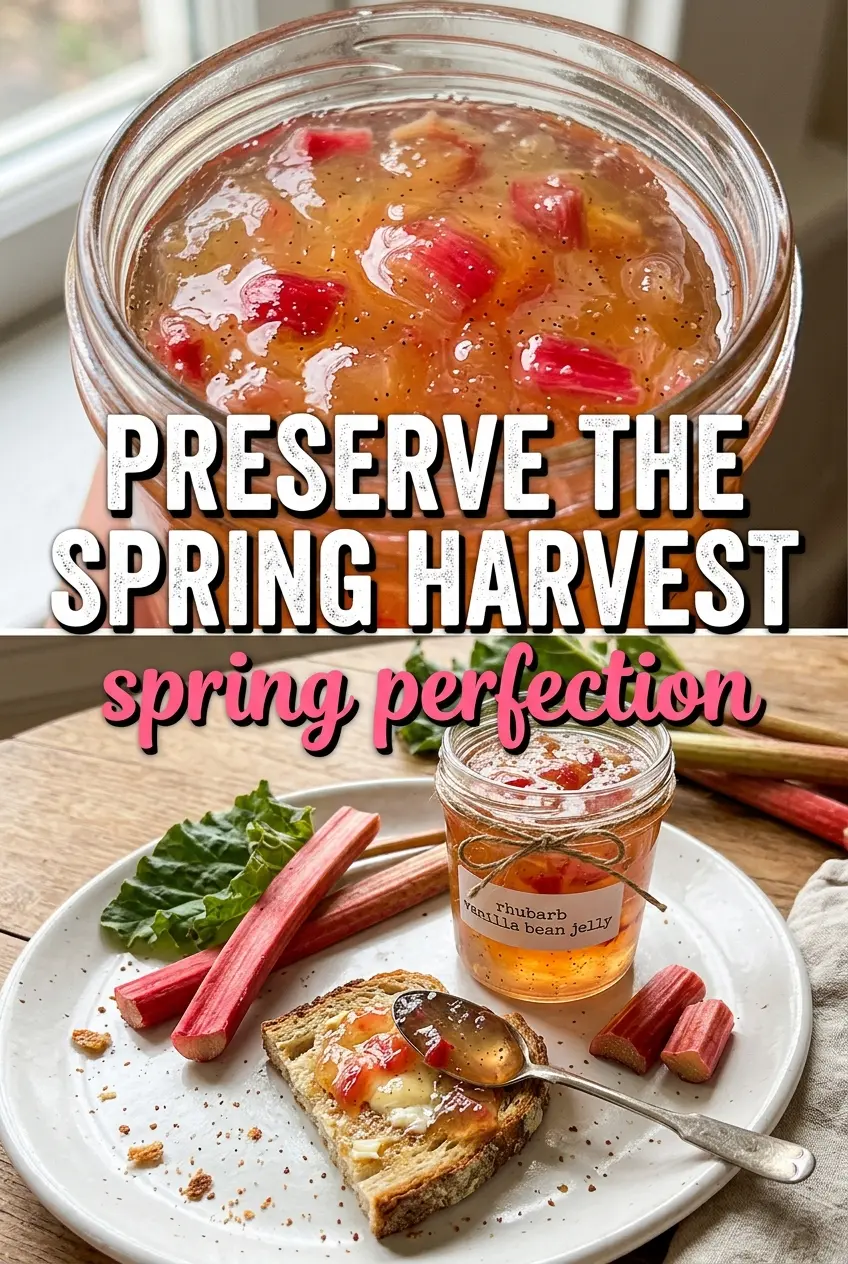
Rhubarb Vanilla Bean Jelly
Ingredients
Equipment
Method
- Combine chopped fresh rhubarb, water, and vanilla bean pod and seeds in a large pot. Simmer at 212°F to 1/2:00 for 15 minutes, then keep the surface gently bubbling as the rhubarb softens.
- Strain the mixture through cheesecloth or a fine mesh strainer, pressing to extract all the liquid. You should yield about 3 1/2 cups of rhubarb juice, and the strained liquid should look ruby-pink and translucent.
- Return the rhubarb juice to the pot and stir in powdered pectin and lemon juice. Stir until fully dissolved and no powdery streaks remain.
- Bring the mixture to a rolling boil, then add sugar all at once. Stir constantly so the boil stays vigorous.
- Return to a hard boil for 1 minute while stirring constantly. The jelly mixture should look shiny and actively boiling, not just simmering.
- Remove from heat and skim off any foam. Keep the mixture hot so it pours smoothly.
- Remove the vanilla bean pod from the hot jelly. Let the visible vanilla bean specks remain suspended in the liquid.
- Ladle the hot jelly into sterilized jars, leaving 1/4-inch headspace. Pour carefully to avoid trapping air, and keep the jelly level even in each jar.
- Process the jars in a boiling water bath for 10 minutes. After processing, lift the jars out and place them upright on a towel to prevent jolting.
- Let the jars sit undisturbed for 24 hours to set completely. Do not move or test the lids during this time so the jelly firms into a ruby-pink translucent gel.