Silky rhubarb curd turns sharp, bright rhubarb into something spoonable, spreadable, and hard to stop eating. It lands somewhere between jam and custard, with a smooth finish that clings to toast, scones, thumbprint cookies, or even a plain spoon straight from the jar. The color alone is enough to make it feel special, but it’s the tart-sweet balance that keeps it from being just another fruit spread.
The trick here is cooking the rhubarb down fully before it ever meets the egg yolks. That gives you a puree that blends smoothly and thickens evenly, instead of leaving little fibrous bits behind. The second key is keeping the heat gentle once the yolks go in. Curds can go grainy fast if they get too hot, and butter only makes sense at the end, when the custard base is already thick and ready to turn glossy.
Below you’ll find the small details that matter most: how to keep the curd smooth, what to do if you want an extra-clean finish, and the easiest way to tell when it’s done without overcooking it.
I strained it at the end and the curd came out incredibly smooth. The tart rhubarb flavor was still bright, but the butter made it taste rich and creamy on toast.
Save this silky rhubarb curd for the next time you want a bright, tart spread that sets up smooth and glossy.
The Part That Keeps Rhubarb Curd Smooth Instead of Grainy
Rhubarb breaks down fast, but curd still fails when the egg yolks go in before the puree is fully smooth or when the heat gets pushed too high. Those are the two spots where a nice tart fruit mixture turns lumpy or scrambled. Cooking the rhubarb first, then pureeing it, gives you a clean base that thickens evenly and feels polished on the tongue.
The other thing worth knowing is that curd thickens from gentle heat and constant stirring, not from a hard boil. If the mixture bubbles aggressively, the yolks start to seize at the edges before the whole pan has a chance to thicken. Medium-low heat keeps the texture silky and gives you a better read on when it’s ready: it should coat the back of a spoon and leave a clear line when you run your finger through it.
What Each Ingredient Is Actually Doing in This Curd
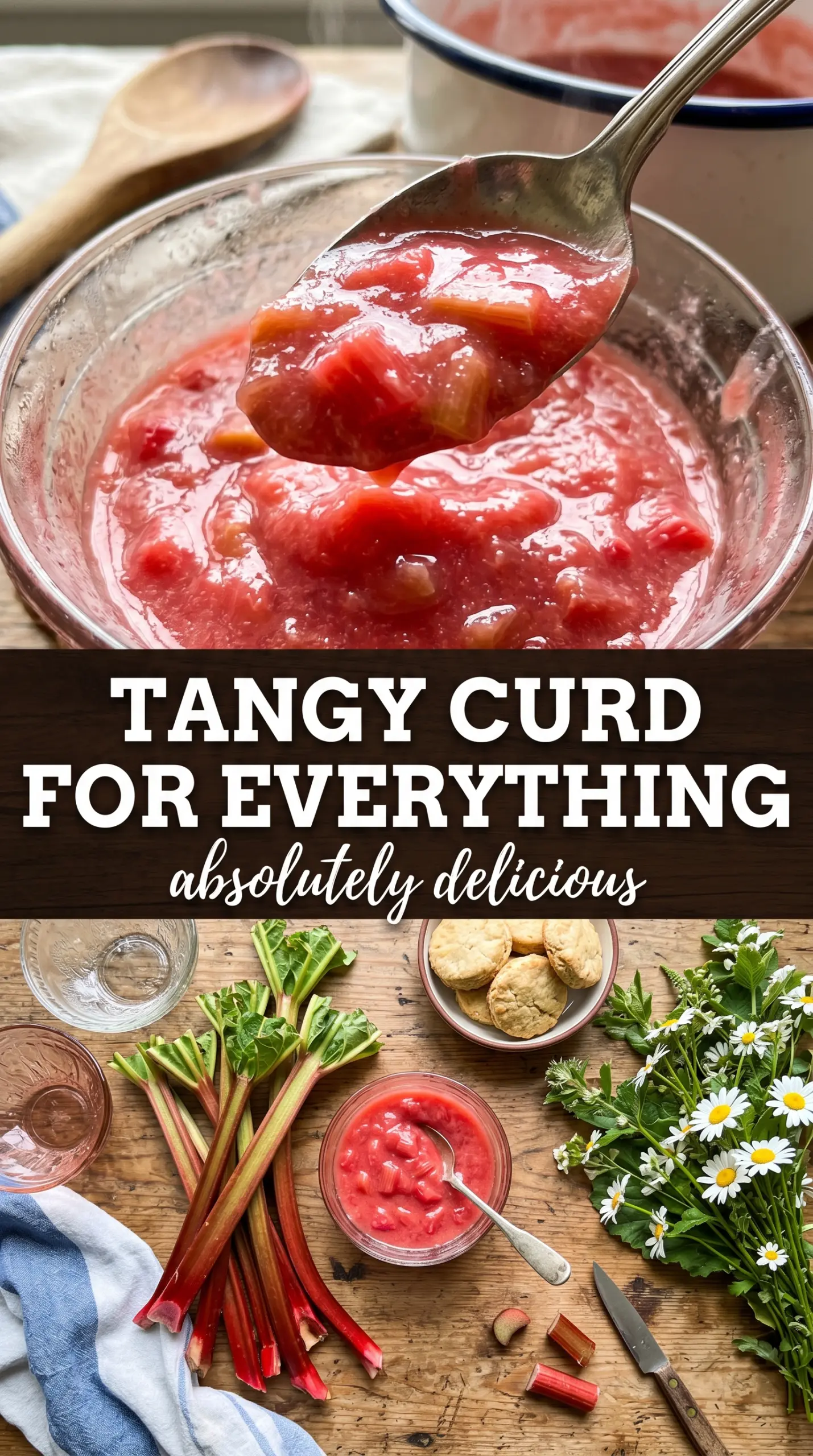
- Rhubarb — This is the whole point of the curd. Fresh rhubarb gives you that sharp, fruity tang and the pink color that makes the finished jar look like spring in a spoon. Frozen rhubarb works too; use it straight from frozen and cook off the extra liquid a little longer before pureeing.
- Sugar — It softens rhubarb’s tart edge and helps the curd thicken with a smoother texture. Don’t cut it too far or the finished curd can taste lean and overly sharp. The first half goes in while the rhubarb cooks, which helps the fruit break down faster.
- Egg yolks — These turn the fruit puree into a proper curd instead of a thin fruit sauce. Whole eggs won’t give the same rich, velvety body. If you want to avoid waste, plan another use for the whites; they don’t belong in this recipe.
- Butter — Butter gives the curd its gloss, roundness, and that soft set you want when it chills. Add it off the heat so it melts into the base instead of separating. Cubing it first helps it disappear evenly.
- Lemon juice — This sharpens the rhubarb and keeps the flavor vivid after chilling. It also helps the curd taste brighter, not just sweeter. Fresh lemon is best here because the recipe is simple enough that every note shows.
Cooking the Curd Until It Coats the Spoon
Softening the Rhubarb
Cook the chopped rhubarb with half the sugar until it falls apart completely, about 8 minutes. You want it soft enough to mash with a spoon, with no hard chunks left in the pan. If the pan looks dry before the rhubarb has broken down, lower the heat; rhubarb releases juice as it cooks, and rushing this stage can leave the puree uneven.
Blending for a Clean Base
Puree the cooked rhubarb until it’s smooth before returning it to the saucepan. This is the step that determines whether the curd feels silky or slightly rustic. If your blender struggles, let the rhubarb cool for a few minutes first and blend in batches rather than forcing a thick, hot puree through one go.
Thickening Without Scrambling
Whisk in the remaining sugar, egg yolks, and lemon juice, then cook over medium-low heat while stirring constantly. Watch for the first signs of body: the curd will change from loose and glossy to thicker and more custard-like, and it should coat the spoon instead of sliding right off. If you see steam but not gentle movement in the pan, the heat is in the right range. If it starts to bubble hard, pull it back immediately.
Finishing With Butter
Take the pan off the heat before adding the butter cubes. They should melt in one by one, turning the curd glossy and smooth without leaving greasy streaks. If the butter looks like it’s separating, whisk harder for a few seconds; that usually brings it back together as long as the heat is off.
Make It Extra-Smooth by Straining It
If you want the curd as polished as possible, press it through a fine-mesh sieve after the butter melts. This catches any tiny egg strands or fibrous bits from the rhubarb and gives you a jar that spreads like velvet. It’s worth the extra minute if you’re serving it with scones or layering it into desserts.
Use Frozen Rhubarb When Fresh Isn’t Around
Frozen rhubarb works well here and still gives you that bright tang, but it releases more liquid as it cooks. Give it a couple of extra minutes in the saucepan so the excess moisture cooks off before you puree it. The finished curd may be slightly softer set, but the flavor stays right where it should be.
Make It Dairy-Free With Plant Butter
A good plant-based butter can work if you need a dairy-free version, though the curd won’t taste quite as rich and the finish may be a little softer. Choose a block-style substitute rather than a tub spread so it melts and emulsifies more like butter. The flavor stays bright and tart, which is the main reason this recipe works in the first place.
How to Store Rhubarb Curd
- Refrigerator: Store in clean jars in the fridge for up to 2 weeks. It will firm up a little more as it chills.
- Freezer: It freezes well for up to 3 months. Leave a little headspace in the jar because the curd expands as it freezes.
- Reheating: This curd is best served cold or at room temperature. If you want it slightly softer, set the jar in warm water for a few minutes instead of microwaving it, which can break the texture.
Answers to the Questions Worth Asking

Easy Rhubarb Curd
Ingredients
Equipment
Method
- Combine rhubarb and 1/2 cup sugar in a saucepan and cook until very soft, about 8 minutes.
- Puree the softened rhubarb in a blender until smooth, then return it to the saucepan.
- Whisk in the remaining sugar, egg yolks, and lemon juice until fully combined.
- Cook over medium-low heat, stirring constantly, until the mixture thickens and coats the back of a spoon, about 6-8 minutes, and appears glossy and smooth.
- Remove from the heat and whisk in the butter cubes until completely melted and smooth.
- Strain through a fine mesh sieve if desired for extra smoothness, using a gentle push to keep it silky.
- Pour the curd into clean jars, cover, and refrigerate for at least 2 hours until set and spoonable.