Rhubarb cheesecake squares bring together the best parts of a spring dessert: a buttery graham crust, a smooth layer of vanilla cheesecake, and a bright rhubarb topping that sets into a glossy pink finish. The contrast is what makes them worth baking. You get creaminess, tang, and a clean slice that looks as good on a plate as it tastes.
The trick is treating each layer on its own terms. The crust needs a quick bake so it stays firm under the filling. The cheesecake layer should be beaten only until smooth, not whipped full of air, or it can puff and crack. And the rhubarb topping needs a short simmer before the cornstarch goes in so the fruit softens without turning muddy.
Below, I’ve included the one chilling step you don’t want to rush and the small detail that keeps the bars neat when you cut them. If you’ve ever had layered bars slide apart, this version fixes that.
The rhubarb layer set up beautifully and didn’t bleed into the cheesecake at all. I chilled mine overnight, and the squares cut into clean, bakery-style slices.
Save these rhubarb cheesecake squares for the kind of dessert that slices cleanly, chills into neat layers, and looks elegant without extra fuss.
The Trick to Keeping the Layers Clean and Distinct
Layered bars fail when the bottom is too soft, the filling is too airy, or the topping is added before the cheesecake has set enough to hold it. This recipe avoids all three. The crust gets a brief bake, which firms the butter and sugar into a stable base. The cheesecake bakes just until the center is set with a slight wobble, then it chills long enough to slice cleanly under the rhubarb.
The other important piece is the topping texture. Rhubarb releases a lot of liquid as it cooks, and if you don’t give the cornstarch time to thicken in the pan, the fruit mixture will run right off the bars instead of sitting neatly on top. A thicker compote makes the whole dessert feel polished.
What Each Layer Is Doing in These Rhubarb Cheesecake Squares

- Graham cracker crumbs — These give you the classic buttery crunch that holds up under the cheesecake. Fresh crumbs from a food processor make a tighter crust, but the store-bought kind work fine as long as they’re finely ground.
- Butter — Melted butter is what turns dry crumbs into a crust that packs and slices cleanly. If you use less, the base crumbles; if you use more, it turns greasy. Measure it carefully.
- Cream cheese — This is the flavor and texture backbone of the middle layer, so it needs to be softened all the way through before you beat it. Cold cream cheese leaves lumps that won’t disappear once the eggs go in.
- Fresh rhubarb — Fresh is worth using here because frozen rhubarb throws off more water and makes the topping looser. If frozen is all you have, thaw it first and drain it well before cooking.
- Cornstarch — This thickens the rhubarb into a topping that sits on the cheesecake instead of soaking into it. Stir it into a little water first so it disperses evenly and doesn’t turn grainy in the pan.
Building the Base, Baking the Center, and Setting the Top
Pressing and Prebaking the Crust
Mix the graham cracker crumbs with the melted butter and sugar until every crumb looks evenly damp, then press it firmly into a parchment-lined 9×13-inch pan. Use the bottom of a measuring cup to compact it into a flat, even layer. Bake it for 10 minutes so it sets before the filling goes on. If you skip that bake, the crust can soften under the cheesecake and lose its structure.
Making the Cheesecake Layer Smooth
Beat the cream cheese and sugar until the mixture looks creamy and no lumps remain, then add the eggs and vanilla just until combined. Don’t keep beating once the eggs go in, or you’ll trap air and the cheesecake can puff and crack. Pour it over the warm crust and spread it gently to the corners. The surface should look glossy and level, not whipped or frothy.
Cooking the Rhubarb Until It Holds Its Shape
Cook the rhubarb, sugar, and water over medium heat until the pieces turn tender and start to collapse. Stir in the cornstarch slurry and keep cooking until the mixture turns thick and shiny, with no cloudy starch streaks left. You’re looking for a spoon-coating consistency, not a loose syrup. If it still looks thin in the pan, it will be too runny on the bars.
Chilling Before You Cut
Spread the slightly cooled topping over the cheesecake layer, then refrigerate the pan for at least 4 hours. Overnight is even better if you want the cleanest slices. Cut with a sharp knife wiped clean between cuts so the layers stay defined. If the bars smear, they need more chilling time, not a bigger knife.
Three Ways to Make These Bars Work for Different Kitchens
Use frozen rhubarb when fresh isn’t available
Thaw the rhubarb first and drain off any excess liquid before it goes into the pan. Frozen rhubarb usually needs a few extra minutes on the stove to cook down, and the topping may set a little softer, but the flavor still comes through.
Gluten-free crust with the same layered look
Swap in gluten-free graham-style crumbs or another crisp gluten-free cookie crumb in the same quantity. The result stays buttery and sliceable, though some gluten-free crumbs need an extra spoonful of melted butter to pack as firmly.
Reduce the richness without losing the structure
You can use Neufchâtel for a slightly lighter cheesecake layer, but the filling will taste a touch softer and less dense. Keep the bake time the same and rely on the chill time to firm it up fully before slicing.
Storage and Reheating
- Refrigerator: Store covered for up to 5 days. The crust stays firm and the topping may soften slightly as it sits.
- Freezer: Freeze the bars without the best top garnish, wrapped tightly and layered with parchment, for up to 2 months. Thaw overnight in the fridge; the texture will be a little softer but still good.
- Reheating: These are meant to be served chilled, not reheated. If they’ve been frozen, let them thaw completely in the refrigerator before cutting so the cheesecake layer doesn’t crumble.
Questions I Get Asked About This Recipe
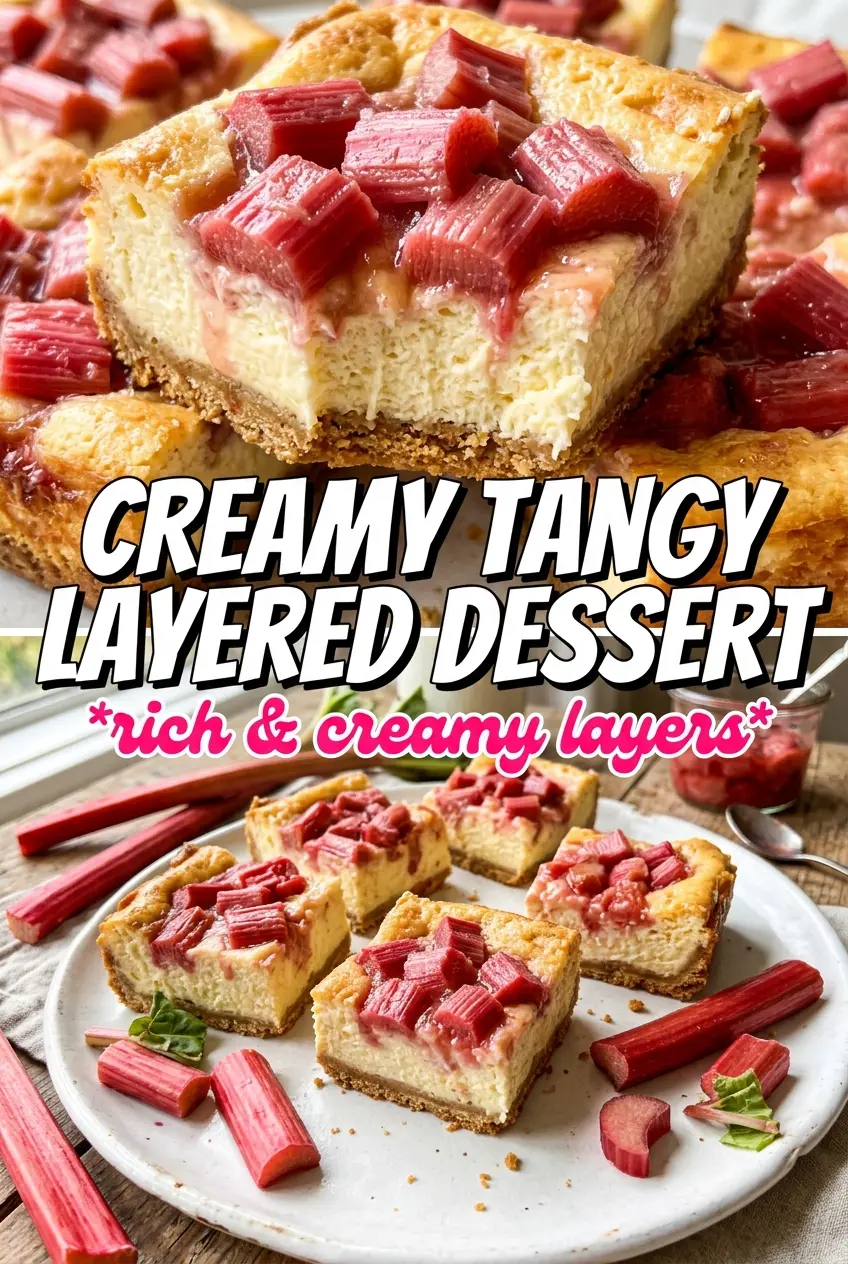
Rhubarb Cheesecake Squares
Ingredients
Equipment
Method
- Preheat the oven to 350°F and line a 9x13-inch pan with parchment paper.
- Mix graham cracker crumbs, melted butter, and sugar, then press the mixture into the bottom of the pan.
- Bake the crust for 10 minutes, then remove it to a rack.
- Beat cream cheese and sugar until smooth.
- Add eggs and vanilla extract, then mix just until combined.
- Pour the cheesecake batter over the hot crust.
- Bake for 25-30 minutes, until the center is set.
- Cool the cheesecake completely before adding the topping.
- Simmer diced rhubarb, sugar, and water until the rhubarb is tender.
- Stir cornstarch mixed with a little water into the simmering rhubarb, then cook until thickened (the compote should look glossy and cling to a spoon).
- Cool the rhubarb mixture slightly, then spread it over the cheesecake layer.
- Refrigerate for at least 4 hours before cutting (chilling helps the squares slice clean).