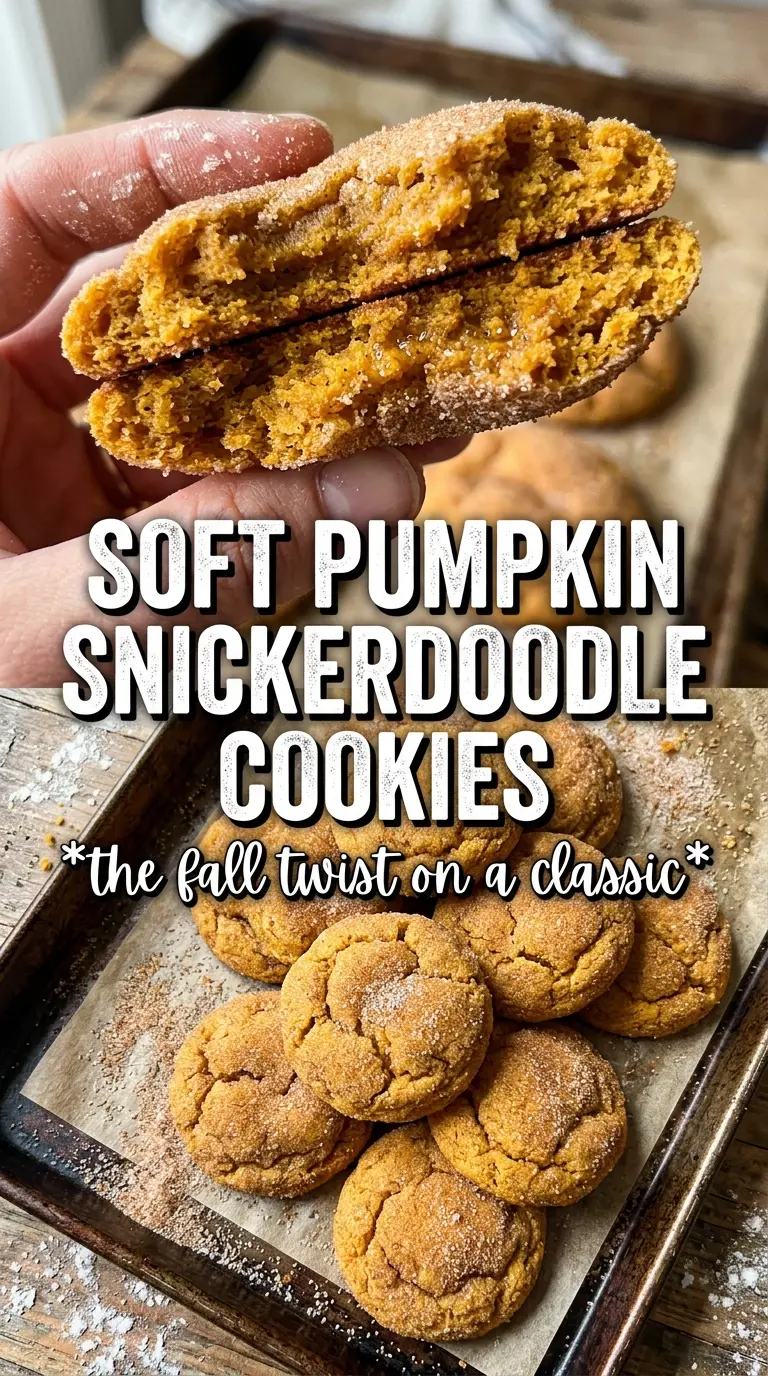
Pumpkin snickerdoodle cookies bake up soft and pillowy in the center with those crackly cinnamon-sugar tops that make snickerdoodles so satisfying in the first place. The pumpkin adds a warm color and a little extra tenderness, but it doesn’t turn these into cakey pumpkin cookies because the moisture is controlled from the start. What you get is a cookie that still spreads just enough, with golden edges, a chewy middle, and that classic tang from cream of tartar.
The detail that matters most here is blotting the pumpkin puree until it loses some of its wetness. That step keeps the dough from turning slack and helps the cookies hold their shape in the oven. The dough will still be soft, and that’s exactly what you want; a short chill firms it up just enough to make rolling easier without drying out the texture.
Below you’ll find the small moves that make these cookies bake up with crinkled tops instead of flat puddles, plus a few smart swaps if you need to work with what’s already in the pantry.
Blotting the pumpkin was the difference for me — the cookies stayed soft but still had those crisp cinnamon-sugar edges instead of baking up fluffy like little muffin tops.
Save these pumpkin snickerdoodle cookies for the soft, crinkled version with crisp cinnamon-sugar edges.
The Pumpkin Moisture Problem That Makes or Breaks These Cookies
Pumpkin puree brings great flavor and color, but it also brings water, and water is what turns snickerdoodles from chewy cookies into puffy little cakes. That’s why this recipe starts with blotted pumpkin. Removing just enough moisture keeps the dough manageable and lets the butter and sugar do the spreading work in the oven instead of the pumpkin steam doing it for you.
The other thing that keeps these cookies in the snickerdoodle lane is cream of tartar. It gives the dough that familiar tang and helps create the soft crackle on top as the cookies bake. Skip it and you’ll still have a spiced pumpkin cookie, but you’ll lose the sharp, classic snickerdoodle flavor that makes these stand out.
What Each Ingredient Is Actually Doing in the Dough
- All-purpose flour — This gives the cookies enough structure to hold their shape after the pumpkin goes in. A cup-for-cup gluten-free blend can work here if it includes xanthan gum, but the texture will be a touch more delicate.
- Cream of tartar — This is the flavor and texture marker for snickerdoodles. It adds that slight tang and helps the tops crackle instead of baking smooth.
- Blotted pumpkin puree — Don’t skip the blotting. Canned pumpkin is fine, but it needs to lose moisture before it goes into the dough or the cookies will spread less and bake up too soft.
- Butter and sugar — Cream them until pale and fluffy. That air trapped in the mixture helps the cookies bake up light instead of dense.
- Spice blend — Cinnamon, nutmeg, ginger, and allspice make the pumpkin taste round and warm without overpowering it. The pumpkin pie spice in the coating ties the outside to the inside.
How to Keep the Centers Soft Without Losing the Crinkled Tops
Blotting the Pumpkin First
Press the pumpkin puree between paper towels a few times until it looks thick and almost paste-like. It doesn’t need to be dry, just drier than it came from the can. If you add wet pumpkin straight into the dough, the cookies stay sticky and thick instead of setting up with that soft chew.
Creaming for Lift
Beat the butter and sugar until the mixture looks lighter in color and a little fluffy. That step builds the structure that lets the cookies rise and crack on top. If the butter is too cold, the mixture stays grainy; if it’s melted, the cookies spread too fast and lose their shape.
Mixing Just Until the Flour Disappears
Fold the dry ingredients in until no streaks of flour remain, then stop. Overmixing after the flour goes in tightens the dough and makes the cookies tougher. The dough should feel soft and slightly sticky, but still scoopable.
Baking Until the Edges Set
Pull the cookies when the edges look set and the tops are crinkled but the centers still look a little soft. They finish on the hot pan, which is where they gain that tender middle. If you wait until the centers look fully done in the oven, they’ll be overbaked by the time they cool.
Three Ways to Adjust the Batch Without Losing the Cookie
Dairy-Free Version
Use a plant-based butter stick with a firm texture, not a soft tub spread. The cookies will still bake with good edges, though the flavor will be a little less rich and the dough may need a few extra minutes in the fridge before scooping.
Extra-Spiced Cookies
Add another 1/2 teaspoon cinnamon or a pinch more ginger if you want the spice to read a little louder. That shift makes the pumpkin taste warmer and more bakery-style, but too much spice can crowd out the buttery snickerdoodle flavor.
Make-Ahead Dough
Scoop the dough, roll it in the cinnamon-sugar mixture, and chill the balls on a tray before baking. This keeps the coating crisp and saves time later, and the cookies usually hold their shape even better after a longer chill.
Storage and Reheating
- Refrigerator: Store in an airtight container for up to 5 days. The cinnamon sugar softens a bit, but the cookies stay tender.
- Freezer: Freeze baked cookies for up to 2 months or freeze the scooped dough balls before baking. If freezing dough, roll in sugar after thawing so the coating doesn’t dissolve.
- Reheating: Warm baked cookies in a 300°F oven for 4 to 5 minutes. The common mistake is microwaving too long, which makes the centers gummy and melts the sugar coating.
Answers to the Questions Worth Asking
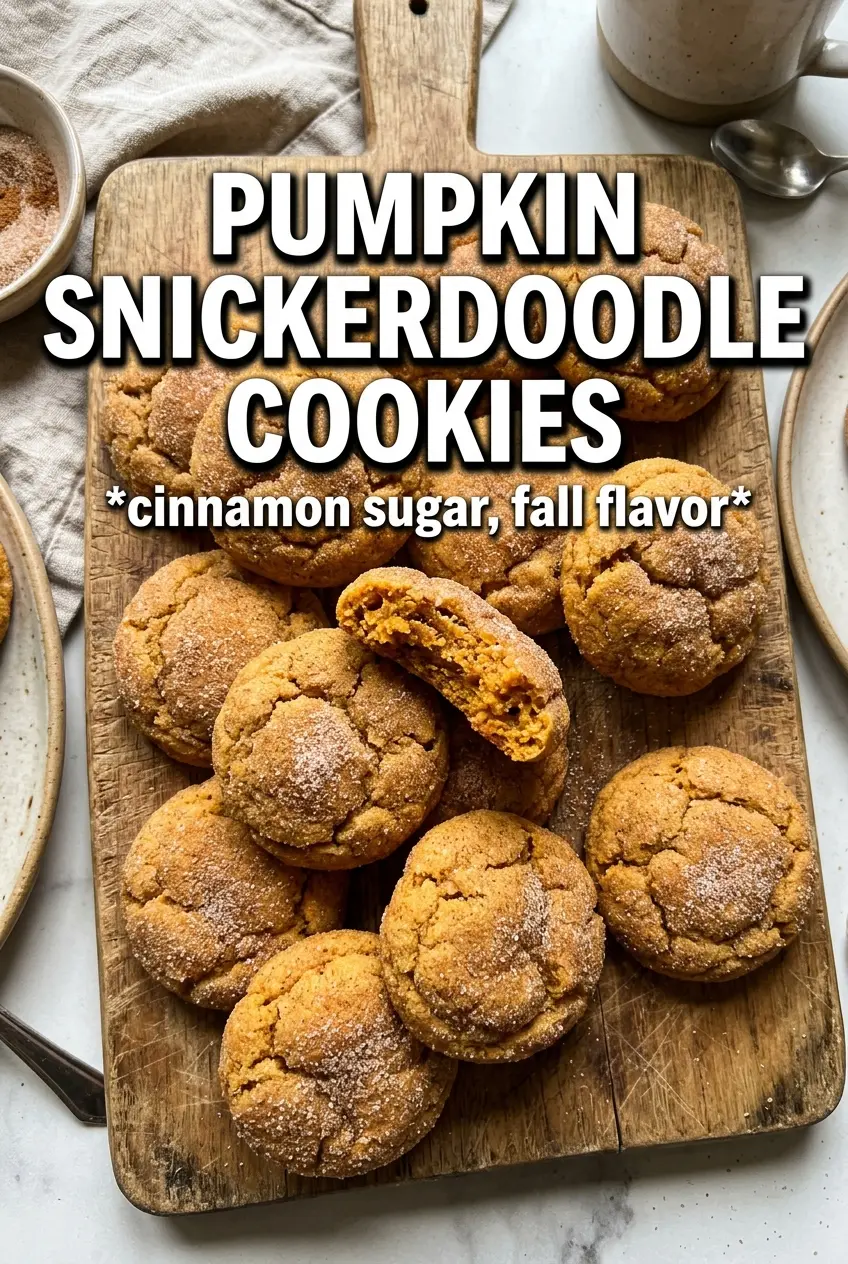
Pumpkin Snickerdoodle Cookies
Ingredients
Equipment
Method
- Preheat the oven to 375°F and line baking sheets with parchment for nonstick release.
- Blot the pumpkin puree between paper towels several times to remove as much moisture as possible; this is key for crisp edges.
- Whisk together all-purpose flour, cream of tartar, baking soda, cinnamon, nutmeg, ginger, allspice, and salt until evenly combined.
- Beat the softened butter and granulated sugar until very light and fluffy to incorporate air.
- Beat in the egg, then mix in the vanilla extract and the blotted pumpkin puree.
- Fold in the flour mixture until just combined; the dough will be slightly sticky.
- Refrigerate the dough for 30 minutes if it feels very soft so the cookies hold their shape.
- Mix the rolling sugar with cinnamon and pumpkin pie spice in a shallow bowl.
- Scoop the dough into about 1-1/2 tablespoon balls, then roll generously in the cinnamon spice sugar so each cookie is coated.
- Bake for 10-12 minutes at 375°F until the edges are set and the tops are crinkled.
- Cool on the pan for 5 minutes; the cookies will firm as they cool.