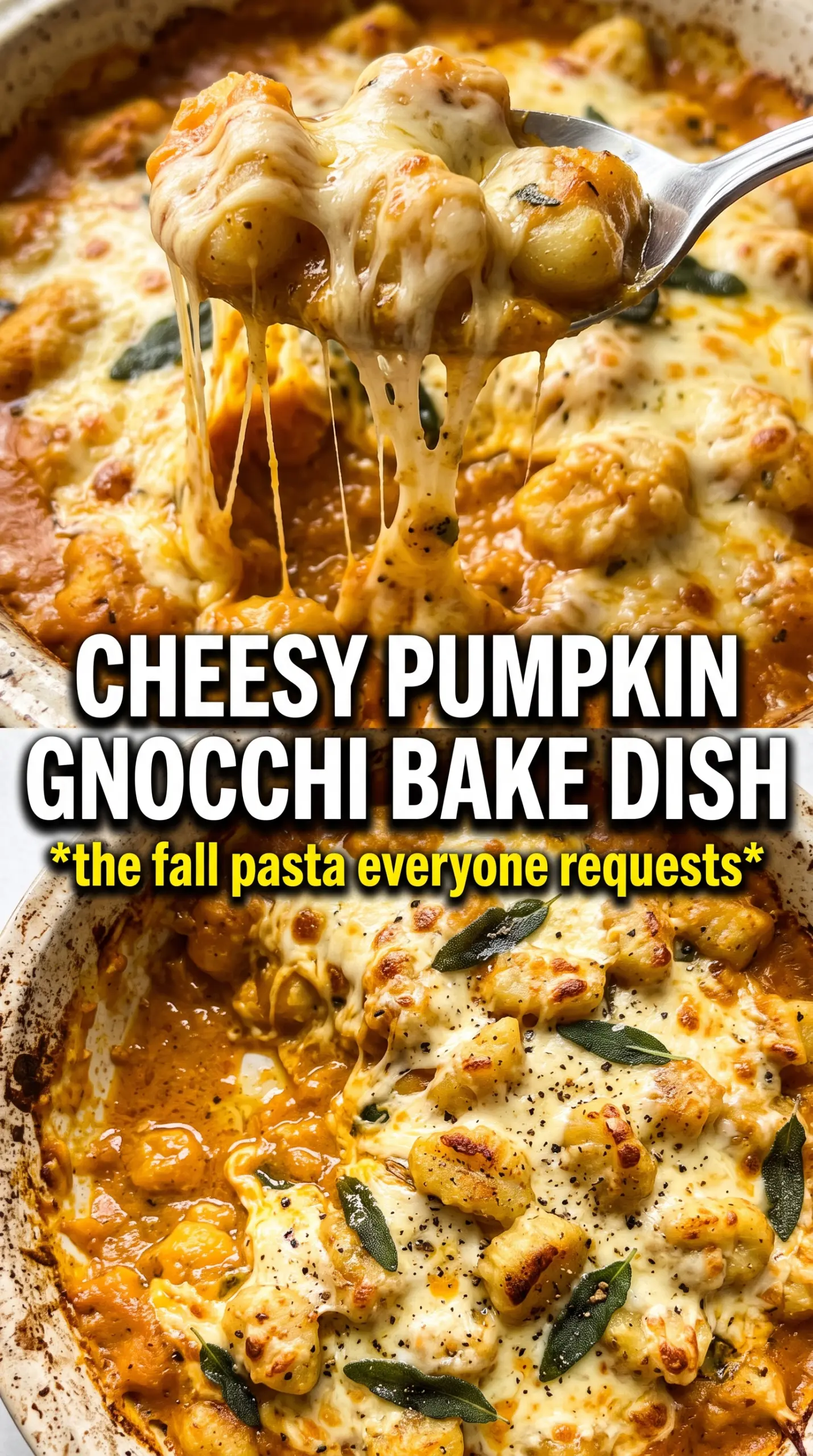
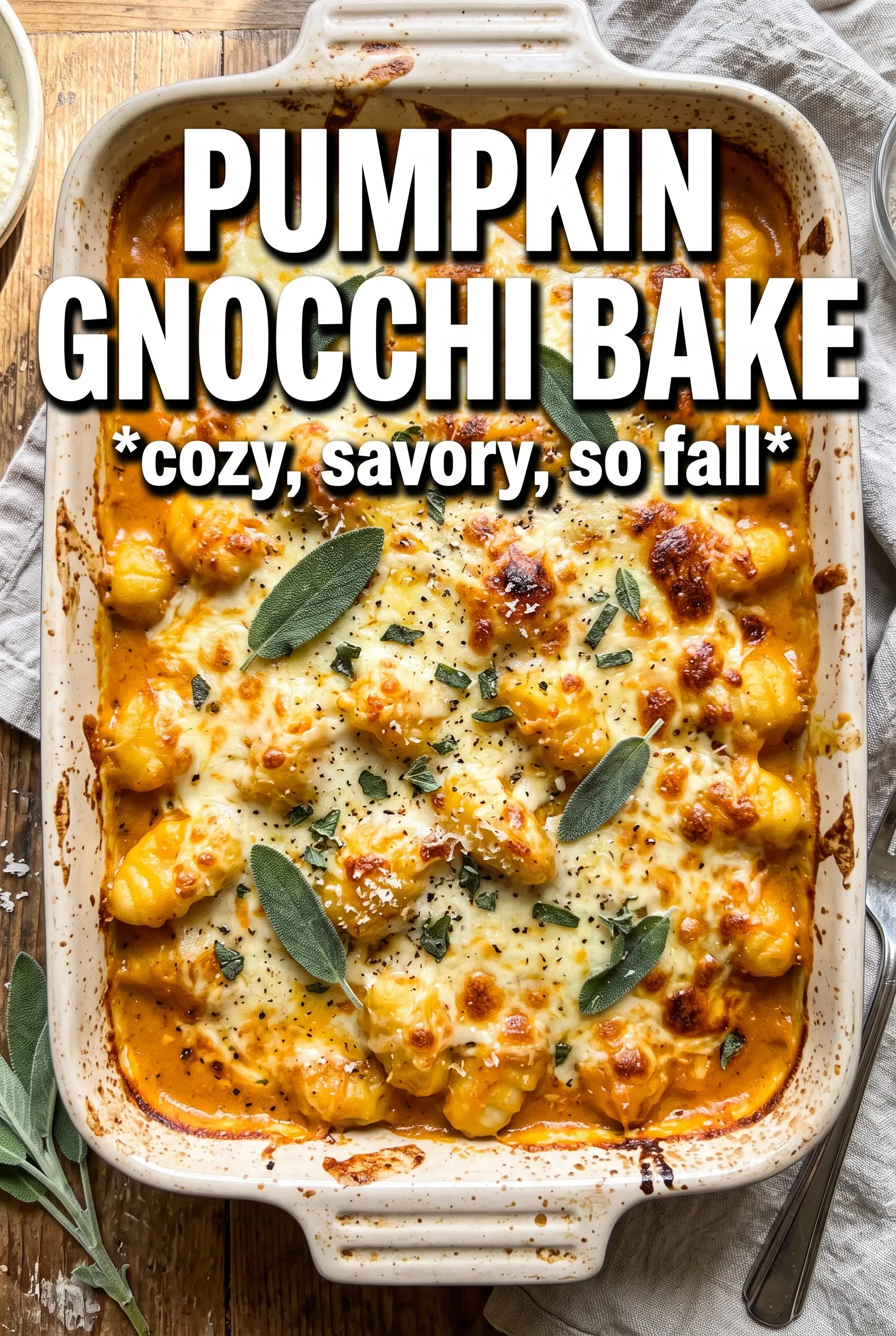
Pillowy gnocchi tucked into a creamy pumpkin sage sauce, scattered with crumbled sausage, and finished under a blanket of molten mozzarella is the kind of dinner that disappears fast. The top turns deeply golden while the sauce underneath stays rich and spoonable, which gives you the best part of both worlds: a cozy baked pasta vibe without the heaviness of a full casserole. Every bite gets a little sweetness from the pumpkin, a little edge from the sausage, and enough cheese pull to make the pan look as good as it tastes.
What makes this version work is that the sauce gets built before the gnocchi go in. Pumpkin puree needs a little fat, garlic, and time in the pan to taste rounded instead of flat, and the splash of broth keeps the cream from feeling too thick once it bakes. I also like using uncooked gnocchi straight in the baking dish because they soak up the sauce as they cook, which keeps the center tender instead of mushy.
Below you’ll find the exact timing that keeps the sauce from tightening up too early, plus a few smart swaps if you need this to work with what you already have in the fridge.
The gnocchi stayed pillowy and the pumpkin sauce baked up creamy without getting watery. I was worried about the uncooked gnocchi, but they came out tender all the way through and the mozzarella browned beautifully.
Save this Pumpkin Gnocchi Bake for the nights when you want creamy pumpkin sauce, crispy cheese, and a one-pan dinner that feels special without extra work.
The Part Most Baked Gnocchi Recipes Get Wrong
The mistake that ruins a gnocchi bake is treating the sauce like it will stay the same after it goes into the oven. It won’t. A sauce that already feels thick in the skillet can turn pasty once the gnocchi release starch and the cheese starts melting on top. This recipe stays balanced because the sauce is a little looser going in, and the gnocchi cook in that moisture instead of absorbing every last drop before the bake is done.
The other trap is overcooking the sausage before it goes into the dish. You want it browned and cooked through, but not dried out, because it finishes in the oven with the gnocchi. That gives you juicy bites in the final dish instead of little hard crumbles scattered through a thick sauce.
- Pumpkin puree — Use plain pumpkin puree, not pumpkin pie filling. Pie filling is sweetened and spiced, which throws the whole dish off. The puree gives the sauce body and that earthy sweetness that works with sage and sausage.
- Heavy cream — This is what keeps the pumpkin from eating like a thick puree. Half-and-half can work in a pinch, but the sauce will be thinner and less stable in the oven. If you use it, pull the dish when the center is bubbling, not after it sits too long.
- Fresh sage — Fresh sage tastes warm and woodsy in a way dried sage can’t quite match here. If you need to use dried, use about 2 teaspoons and add it with the pumpkin so it has time to soften. Fresh leaves on top are more than garnish; they tell your nose what the dish tastes like before the first bite.
- Italian sausage — Mild or hot both work. Hot sausage gives the bake more backbone, while mild keeps the pumpkin front and center. If you’re skipping pork, chicken sausage works well, but choose one with enough seasoning so the dish doesn’t taste flat.
What Each Ingredient Is Actually Doing in This Recipe
- Primary ingredient (the star) — Quality matters most. Choose the best you can find.
- Cooking medium (oil, butter, or broth) — This carries flavors and prevents dryness.
- Seasonings (salt, pepper, spices, herbs) — Layer flavors so nothing overpowers. Build depth gradually.
- Aromatics (garlic, onion, herbs) — Cook with fat to bloom flavors. Become the foundation.
- Supporting ingredients — Complement the main ingredient without overpowering it.
- Sauce or liquid (if applicable) — Brings flavors together. Balance richness with acid.
- Acid (lemon, vinegar, wine, or other) — Brightens and prevents flat-tasting results.
- Final finish (garnish, glaze, or sauce) — Prevents one-dimensional taste and adds visual appeal.
Building the Sauce So the Gnocchi Stay Tender
Brown the sausage first
Cook the sausage in a large skillet over medium heat until it’s no longer pink and you see browned bits on the pan. Those bits matter, because they add a deeper savory base to the sauce. Drain excess fat if the pan looks greasy, but don’t scrub it clean. A little of that flavor should stay behind.
Wake up the garlic and sage
Melt the butter in the same pan and add the garlic and chopped sage for just 1 to 2 minutes. You’re looking for fragrance, not color. If the garlic browns, it turns bitter and the whole sauce will taste harsh, so keep the heat moderate and move on as soon as the pan smells nutty and herbal.
Simmer the pumpkin mixture before it bakes
Stir in the pumpkin puree, cream, broth, nutmeg, and red pepper flakes, then let the sauce bubble gently for 3 to 4 minutes. It should look smooth and glossy, not stiff. Taste it now and season with salt and pepper until it tastes slightly more seasoned than you want straight from the spoon, because the gnocchi will dilute it a little in the oven.
Let the oven finish the texture
Toss the uncooked gnocchi with the sauce in the baking dish, add the sausage, and cover the top with mozzarella and parmesan. Bake until the cheese is bronzed in spots and the sauce is bubbling around the edges. If the top browns before the gnocchi are tender, tent the dish loosely with foil and give it another few minutes. The gnocchi should be soft when pierced, not chewy in the center.
How to Adjust This Bake Without Losing the Creamy Texture
Make it dairy-free
Use full-fat coconut cream instead of heavy cream and swap in a dairy-free mozzarella-style shreds. The sauce will still be creamy, but it will pick up a faint coconut note, so keep the sage and garlic strong. This version works best when you keep the seasoning bold and don’t skimp on salt.
Make it gluten-free
Use certified gluten-free gnocchi and check that your sausage and broth are gluten-free as well. The technique stays the same. Gluten-free gnocchi can soften a little faster, so start checking a few minutes early if your bake dish runs hot.
Swap the sausage for a vegetarian version
Use plant-based Italian sausage or browned mushrooms with extra sage and parmesan. Mushrooms won’t taste like sausage, but they give you that savory, meaty texture and a little more earthiness against the pumpkin. If you go this route, add an extra pinch of red pepper flakes so the dish doesn’t lean too soft.
Storage and Reheating
- Refrigerator: Keep leftovers in an airtight container for up to 4 days. The sauce thickens as it chills, so it will look firmer the next day.
- Freezer: This freezes, but the gnocchi softens after thawing. Freeze in portions for up to 2 months and expect a softer texture when reheated.
- Reheating: Reheat covered in a 325F oven with a splash of broth or cream until hot in the center. The biggest mistake is blasting it in the microwave until the sauce breaks and the gnocchi turns rubbery.
Questions I Get Asked About This Recipe
Pumpkin Gnocchi Bake
Ingredients
Equipment
Method
- Preheat the oven to 400F and grease a 9x13 baking dish for an easy release and even baking.
- Brown the Italian sausage in a large skillet, then drain the fat and set the sausage aside so the bake isn’t greasy.
- Melt the butter and sauté the garlic and sage for 1-2 minutes until fragrant.
- Add the pumpkin puree, heavy cream, chicken broth, nutmeg, and red pepper flakes, then stir to combine.
- Simmer the sauce for 3-4 minutes, then season with salt and pepper to taste.
- Toss the uncooked potato gnocchi in the sauce directly in the greased baking dish, then add the sausage and mix so everything is coated.
- Scatter the shredded mozzarella and grated parmesan over the top for a browned, bubbly layer.
- Bake for 30-35 minutes at 400F until the gnocchi are cooked through, the sauce is bubbling, and the cheese is golden.