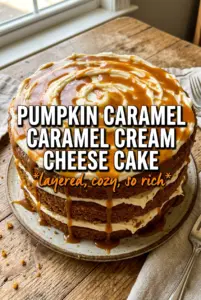
Soft, spiced pumpkin cake with a tangy caramel cream cheese frosting is the kind of layer cake that disappears fast once it hits the table. The crumb stays tender and moist without turning dense, and the caramel in the frosting gives every bite a deep, buttery sweetness that plays beautifully with the warm spice in the cake. It looks bakery-fancy, but the method is straightforward and dependable.
What makes this version work is the balance. Pumpkin puree brings moisture, sour cream keeps the crumb plush, and butter adds the kind of richness that boxed-mix cakes never quite manage. On the frosting side, the caramel sauce needs to be thick enough to flavor the cream cheese without making it runny, and the cake has to cool all the way before you start frosting or the layers will slide.
Below, I’ve included the small details that matter most: how to keep the cake light instead of heavy, how to get the frosting smooth, and a few smart swaps if you need them.
The cake came out incredibly moist and the caramel cream cheese frosting set up perfectly after a short chill. I loved that the pumpkin spice came through without overpowering the caramel.
Save this pumpkin cake with caramel cream cheese frosting for a layered dessert with moist spice cake and a silky caramel finish.
The Part Most Pumpkin Layer Cakes Get Wrong
The biggest mistake with pumpkin cake is treating it like a quick bread. Cake batter needs structure, but it also needs enough air to rise into layers that slice cleanly. If you overmix after adding the flour, the cake turns tight and a little rubbery. If you underbake it, the center sinks as it cools and the frosting starts sliding before you get a clean finish.
The other thing that matters here is moisture balance. Pumpkin puree adds a lot of water, so the sour cream and butter have a job to do: keep the crumb rich without making it gummy. Baking just until a toothpick comes out with a few moist crumbs keeps the cake tender. A completely dry toothpick usually means you’ve gone a little too far for this style of cake.
What Each Ingredient Is Actually Doing in the Cake and Frosting
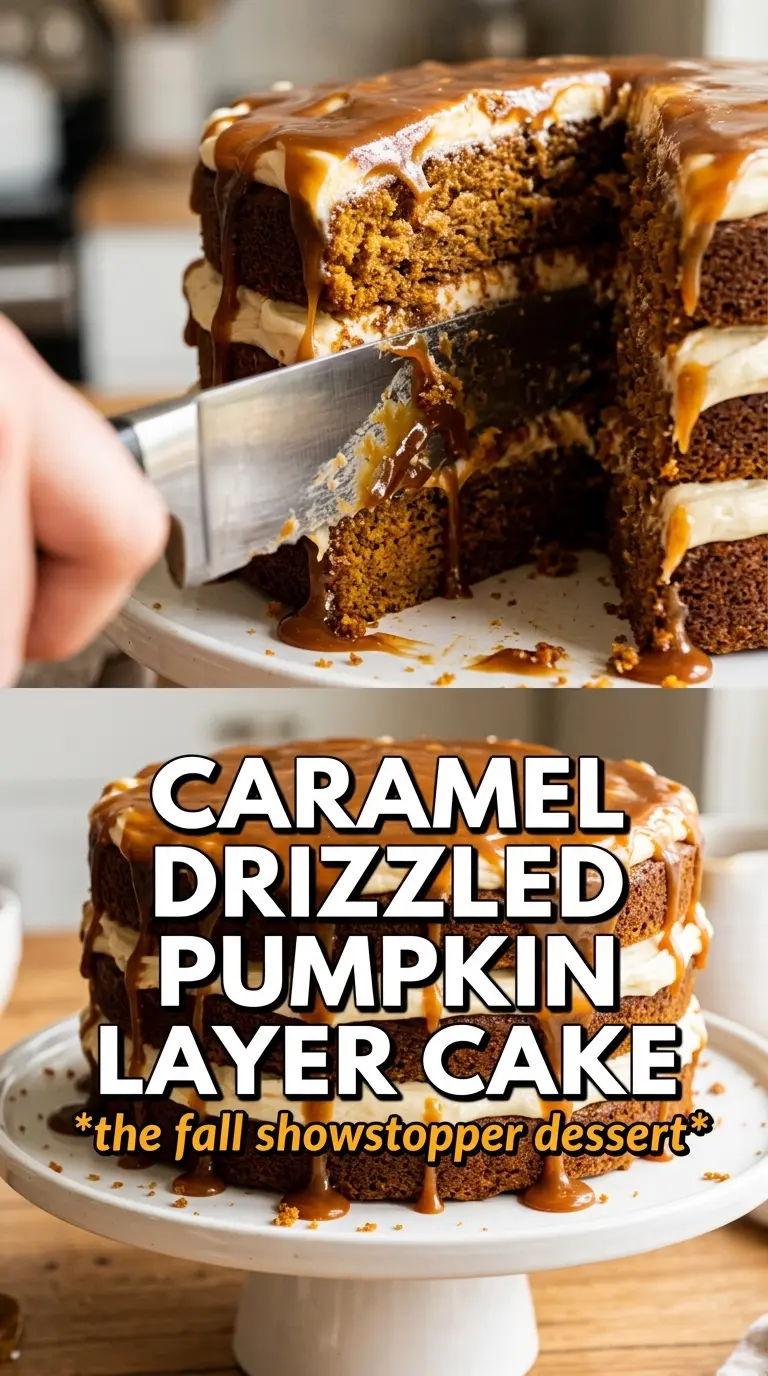
- Pumpkin puree — Use plain canned pumpkin, not pumpkin pie filling. Pie filling has added sugar and spices, which throws off both the texture and the balance of the cake.
- Sour cream — This is what keeps the crumb soft for days. Plain full-fat Greek yogurt works in a pinch, but the cake will be a touch less plush and a little tangier.
- Brown sugar — It gives the cake a deeper caramel note that works with the frosting. White sugar will bake fine, but the flavor comes out flatter.
- Cream cheese — Full-fat blocks give the frosting the best structure. Tub cream cheese is too soft and can make the frosting loose.
- Caramel sauce — Use a thick sauce, not a thin ice cream topping. Thin caramel can make the frosting slack before you’re done assembling.
- Powdered sugar — This firms the frosting and gives it enough body to stack between layers and over the sides.
Building the Layers Without a Heavy Crumb
Mix the Wet Ingredients Until Just Smooth
Beat the butter and brown sugar until the mixture looks lighter and a little fluffy, then add the eggs one at a time. That early aeration gives the cake its lift. Once the pumpkin, sour cream, and vanilla go in, the batter may look slightly curdled, and that’s fine. It comes together once the dry ingredients are folded in. Don’t keep beating after the flour is added or the cake will bake up dense instead of tender.
Fold in the Dry Mix and Stop Early
Whisk the flour, baking powder, baking soda, spices, and salt separately so everything is evenly distributed, then add it to the wet mixture in one go. Stir just until you don’t see dry pockets of flour. A few small streaks disappearing at the end is better than overworking the batter. Divide it evenly between the pans so both layers bake at the same pace; if one pan is noticeably fuller, the layers will dome unevenly.
Watch for the Doneness Cue, Not the Clock Alone
Bake until the cakes spring back lightly in the center and a toothpick comes out with moist crumbs, not raw batter. The tops should look set and the edges will pull just slightly from the pan. If the surface is browning too quickly before the middle is done, the oven is running hot. Start checking a few minutes early rather than waiting for the full time and risking a dry layer.
Finish the Frosting on Low Speed
Beat the cream cheese and butter until smooth before adding the caramel sauce, powdered sugar, and vanilla. If the mixture looks loose at first, keep going in short bursts; the powdered sugar needs a minute to absorb the moisture. Warm kitchen? Chill the bowl for 10 minutes if the frosting feels soft. That short rest makes it much easier to spread cleanly between the layers and over the outside.
How to Adapt This Cake for Different Kitchens and Different Plans
Dairy-Free Version
Use plant-based butter, dairy-free cream cheese, and a thick dairy-free caramel sauce. The cake itself adapts well, but the frosting will be a little softer and less tangy, so chill the finished cake before serving.
Gluten-Free Swap
Use a 1:1 gluten-free baking flour that includes xanthan gum. The cake will still be tender, but it may need an extra minute or two in the oven and should cool completely before frosting so the layers hold together.
Cupcakes Instead of a Layer Cake
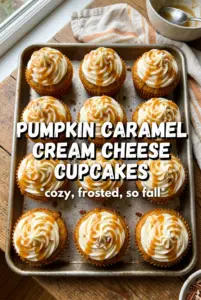
Divide the batter into lined muffin cups and bake until the centers spring back. This gives you a faster, more portable dessert with a higher frosting-to-cake ratio, which is never a bad thing here.
Storage and Reheating
- Refrigerator: Store covered for up to 4 days. The frosting stays stable, and the cake often tastes even better the next day.
- Freezer: Freeze unfrosted layers tightly wrapped for up to 2 months. Frosting freezes too, but it needs a full re-whip after thawing to regain its smooth texture.
- Reheating: Let slices sit at room temperature for 20 to 30 minutes before serving. Microwaving can melt the frosting and make the crumb feel greasy, so use it only in very short bursts if you must.
Answers to the Questions Worth Asking
Pumpkin Cake With Caramel Cream Cheese Frosting
Ingredients
Equipment
Method
- Preheat oven to 350F and grease two 9-inch round pans.
- Beat butter and brown sugar until creamy, then add eggs, pumpkin puree, sour cream, and vanilla and beat until smooth.
- Whisk together flour, baking powder, baking soda, pumpkin pie spice, cinnamon, and salt, then fold the dry ingredients into the wet batter just until combined.
- Divide batter between the two prepared pans.
- Bake 35-40 minutes, until a toothpick inserted in the center comes out clean and the tops spring back lightly.
- Cool the cakes completely before frosting.
- Beat cream cheese and butter until smooth, then beat in caramel sauce.
- Add powdered sugar and vanilla and beat until the frosting is thick, smooth, and spreadable.
- Frost between layers and spread frosting over the outside of the cake.
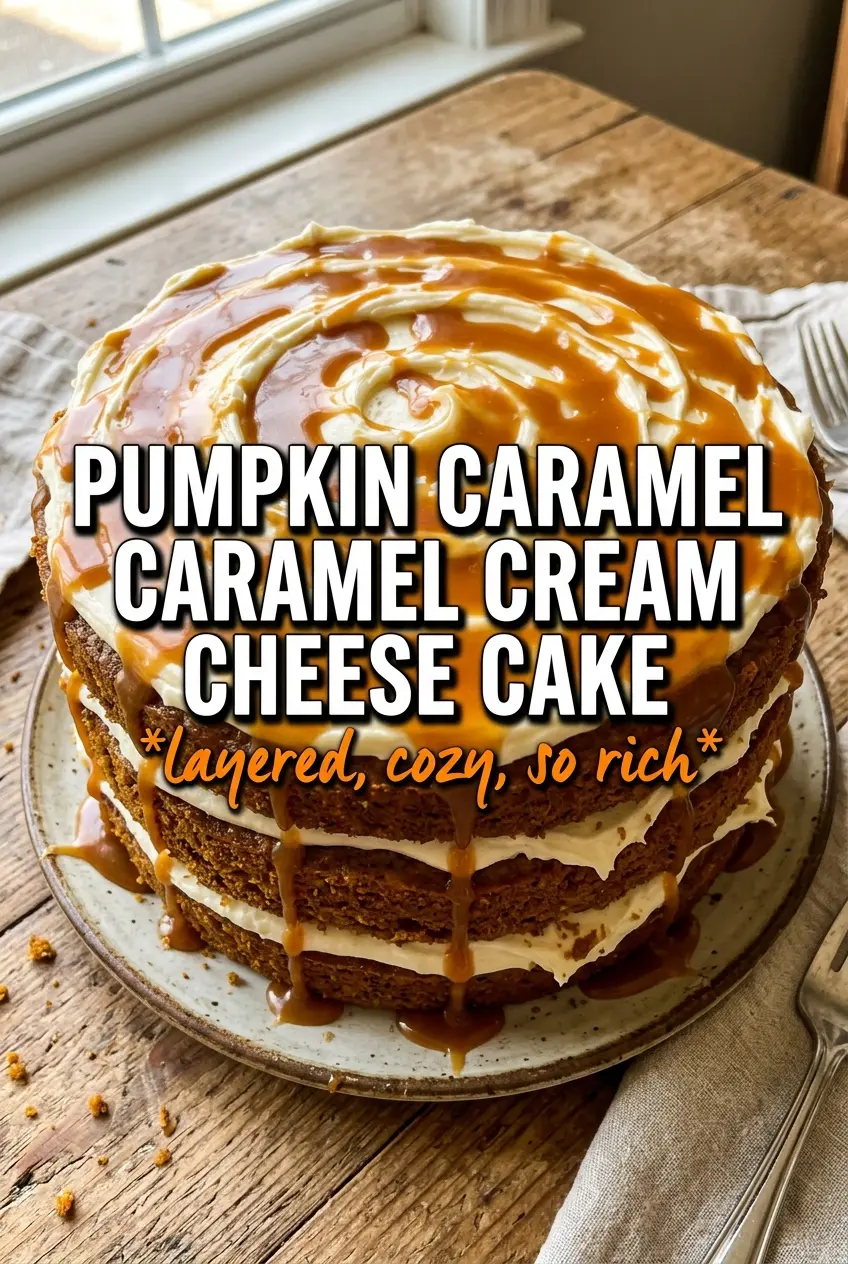
- Drizzle salted caramel over the top and sides so it cascades down.