Pizza on a Blackstone griddle gives you the best parts of pizzeria pizza without firing up an oven. The crust picks up a smoky char, the bottom turns crisp fast, and the cheese melts right on top while the toppings stay bold and fresh. It’s the kind of dinner that disappears the second it hits the cutting board.
The trick is cooking the dough first on one side, then flipping it and building the pizza on the cooked surface. That keeps the crust sturdy enough to hold sauce and cheese without turning gummy, and it lets the griddle do what it does best: high heat, fast browning, and a little bit of edge blistering you just can’t fake indoors. A light coat of oil on the griddle and a well-dusted dough round help the crust release cleanly instead of tearing.
Below, I’ll walk through the timing that keeps the crust crisp, the cheese fully melted, and the toppings from overcooking. I’ve also included a few smart variations and the one storage note that matters if you end up with leftovers.
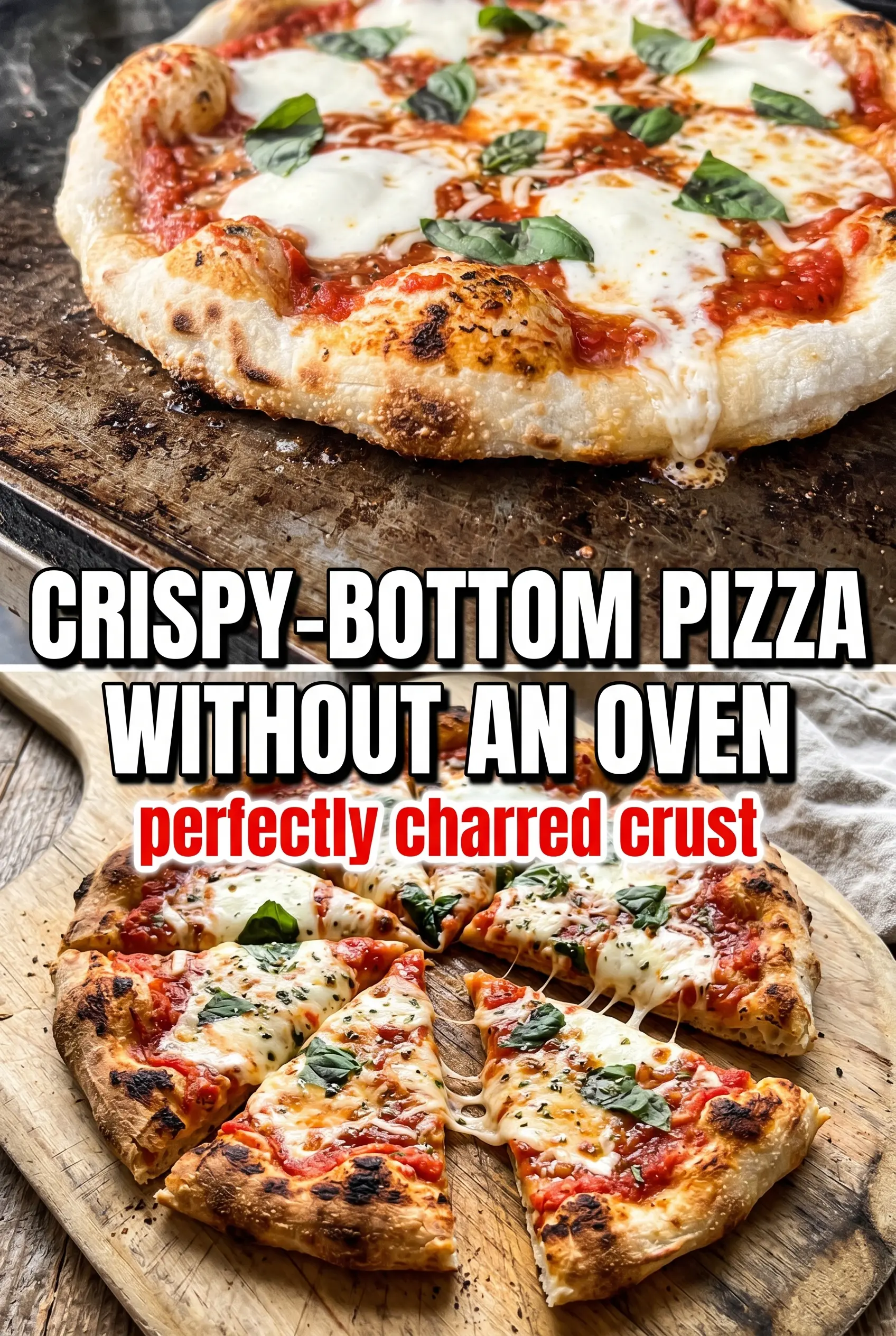
The crust had those crisp, charred spots underneath and the cheese melted in just a few minutes. I loved that the bottom stayed sturdy even with a lot of sauce.
Save this Blackstone pizza for the nights when you want a crisp crust, bubbling cheese, and dinner done in under 30 minutes.
The Flip That Keeps the Crust Crisp Instead of Soggy
The mistake people make with griddle pizza is trying to top the dough before the first side has set. Raw dough plus sauce equals a soft middle that never really recovers. Cooking the first side by itself gives the crust structure, and the flip turns that sturdy surface into the pizza base.
Heat matters here. If the griddle is too cool, the dough dries out before it browns. Too hot, and the bottom burns before the cheese has a chance to melt. Medium heat gives you that sweet spot where the underside turns golden in 2 to 3 minutes and the topped side finishes under a dome without overcooking the toppings.
What the Dough, Cheese, and Oil Are Each Doing Here

- Pizza dough — This needs enough stretch to go thin without tearing. A room-temperature dough is easier to shape and less likely to spring back, so give it time out of the fridge if it’s cold. Store-bought dough works fine if it’s been rested and relaxed.
- Olive oil — Oil on the griddle helps the crust release and encourages browning on the first side. You don’t need a heavy slick; too much oil can fry the dough instead of crisping it. Brush or spread it thinly across the surface.
- Mozzarella — Low-moisture shredded mozzarella melts cleanly and gives you those classic pizza strings. Fresh mozzarella can work, but it releases more water, so the crust softens faster unless you pat it dry first. Shred your own if you want the smoothest melt.
- Flour for dusting — This keeps the dough from sticking while you stretch and move it. Use enough to prevent drag, but shake off the excess before the dough hits the griddle, or you’ll get a dusty raw spot on the bottom.
- Toppings — Keep them light and mostly pre-cooked if they need long cooking. Raw vegetables can steam and make the center wet, so thin-sliced peppers, onions, mushrooms, or cooked sausage work better than thick, watery toppings.
Building the Pizza on the Griddle Without Losing the Heat
Stretching the Dough Thin Enough
Divide the dough into four pieces and stretch each one into a thin round. The dough should look a little uneven at the edges, and that’s fine. What matters is an even thickness in the center so it cooks at the same rate. If the dough keeps snapping back, let it rest for 5 minutes and try again instead of forcing it.
Cooking the First Side
Lay the dough directly on the oiled griddle and let it cook until the bottom turns golden and releases cleanly, about 2 to 3 minutes. Don’t move it too soon. If it sticks, it’s not ready yet, and pulling at it tears the surface before it can build structure.
Flipping and Topping Fast
Flip the crust and work quickly on the cooked side. Spread on sauce, add cheese, then top lightly so the pizza doesn’t get weighed down. The griddle should still be hot enough to keep everything moving, but if the surface starts smoking hard, pull the pan back a bit or lower the heat before the cheese goes in.
Melting Under a Dome
Cover the pizza with a dome or large pan so the cheese melts evenly. You’re looking for glossy, bubbling cheese and toppings that look warmed through, not dried out. This usually takes 3 to 5 minutes. If the bottom gets too dark before the cheese melts, the heat was too high from the start.
How to Change This for Different Toppings, Diets, and Leftovers
Gluten-Free Crust Swap
Use a gluten-free pizza dough that’s made for stretching or pressing, not a stiff bread-like dough. It won’t brown quite the same way, and it can be more fragile on the flip, so keep the rounds a little thicker and lift gently with a wide spatula.
Dairy-Free Pizza
Use a dairy-free mozzarella-style shred that melts well, not one that only softens. Those vary a lot, so look for one meant for pizza. Add a little extra seasoning on top because dairy-free cheese can taste flatter than the real thing.
Meat Lover’s Version
Add cooked sausage, pepperoni, or bacon after the flip so the toppings only need to warm through. Raw meat needs more time than the pizza has, and piling on too much can make the center heavy. Keep the layer modest so the crust stays crisp.
Storage and Reheating
- Refrigerator: Store leftovers in an airtight container for up to 3 days. The crust softens a bit, especially under sauce.
- Freezer: Freeze slices wrapped individually for up to 2 months. Freeze on a tray first if you want the slices to keep their shape.
- Reheating: Warm slices in a dry skillet over medium-low heat or back on the griddle for the best crust. The microwave makes the crust chewy, which is the main reason leftover pizza disappoints.
Questions I Get Asked About This Recipe
Pizza on a Blackstone Griddle
Ingredients
Equipment
Method
- Heat the Blackstone griddle to medium heat and brush the surface with olive oil until lightly glossy.
- Divide the pizza dough into 4 portions and stretch each into a thin round, dusting with flour as needed to prevent sticking.
- Place each dough round directly on the griddle and cook 2-3 minutes until the bottom is golden and the surface looks set.
- Flip the crust and quickly add pizza sauce, mozzarella cheese, and your choice of toppings to the cooked side.
- Cover with a dome or large pan and cook 3-5 minutes until the cheese melts and looks bubbling at the edges.
- Remove the pizza from the griddle and top immediately with fresh basil leaves while the cheese is hot.
- Sprinkle grated Parmesan cheese over the top, slice, and serve.