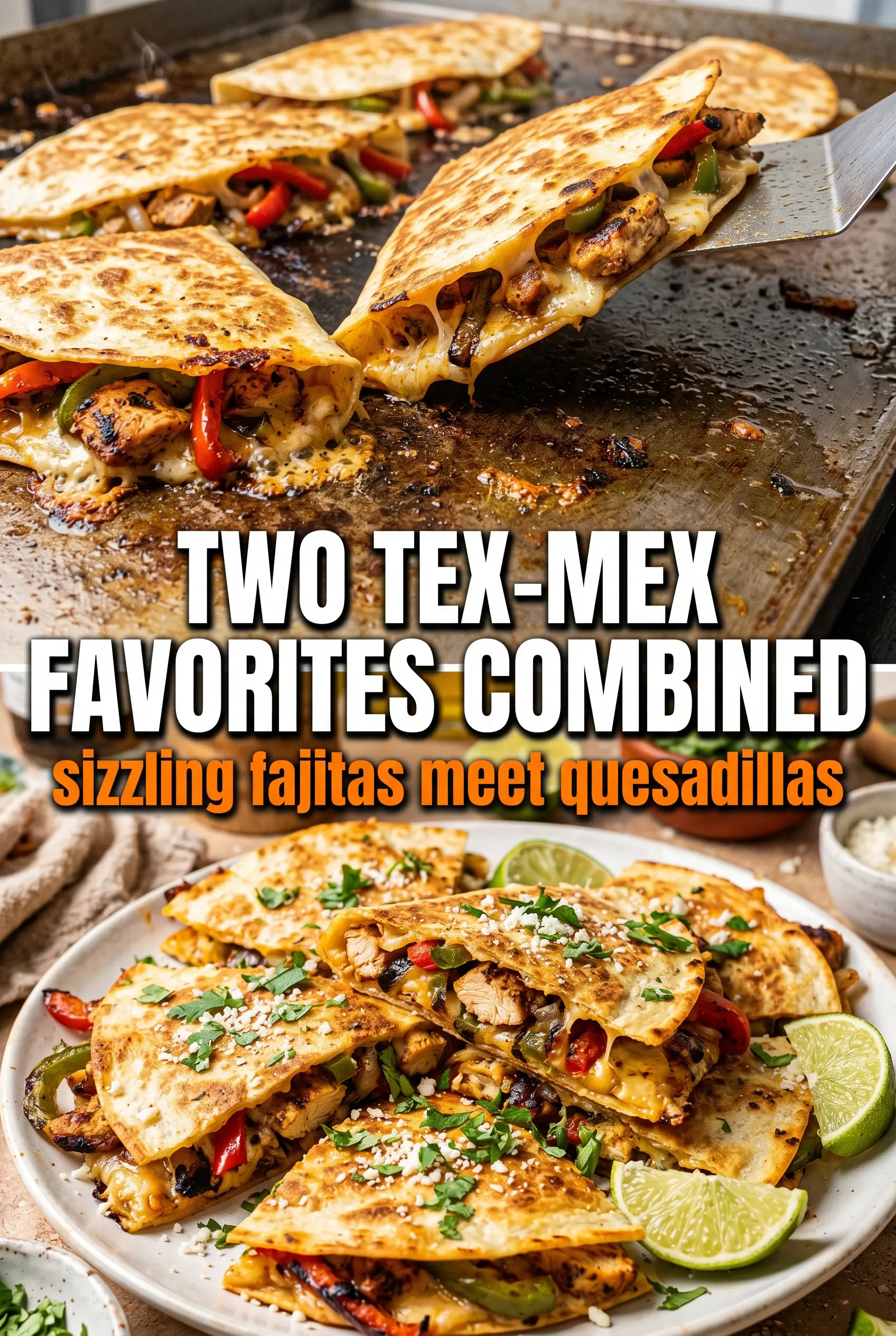
Golden tortillas, melty cheese, and that sizzling fajita filling make these Blackstone chicken fajita quesadillas the kind of meal that disappears fast off the griddle. You get crisp edges, juicy chicken, sweet peppers, and onions with just enough char to taste like you cooked outside for a reason. The best part is that everything comes together in one pass on the flat top, so dinner feels big without turning into a pile of dishes.
This version works because the chicken and vegetables are cooked separately but seasoned in layers, which keeps the filling from going bland or watery. The tortillas go down only after the chicken is done and the vegetables have softened, so the cheese can melt before the tortillas overcook. A little extra cheese under and over the filling acts like glue and helps the quesadilla seal cleanly when you flip it.
Below, I’ll walk through the small griddle habits that matter most, plus the best way to keep the tortillas crisp instead of soggy. I’ve also included a few smart swaps for different diets and a couple of fixes for the issues that come up most often.
The tortillas got perfectly crisp on the outside, and the cheese melted all the way through without the filling spilling everywhere when I cut them. My kids ate two wedges each before I even sat down.
These Blackstone chicken fajita quesadillas are extra crisp at the edges with a cheesy middle that holds together when sliced.
The Reason These Quesadillas Stay Crisp Instead of Going Limp
The usual problem with griddle quesadillas is moisture. Chicken releases juices, peppers sweat, onions soften, and before long the tortilla starts steaming from the inside. The fix here is simple: cook the filling until the vegetables lose their raw edge and any excess liquid has mostly cooked off before it ever hits the tortilla. That keeps the cheese from slipping around and the shell from turning soft in the middle.
The other thing that matters is heat. Medium-high is right for the filling, but once the quesadillas are assembled, the griddle should stay hot enough to brown the tortilla without rushing the cheese. If the tortillas are getting dark before the cheese melts, the heat is too high and the outside is outrunning the inside.
What Each Ingredient Is Actually Doing in the Filling
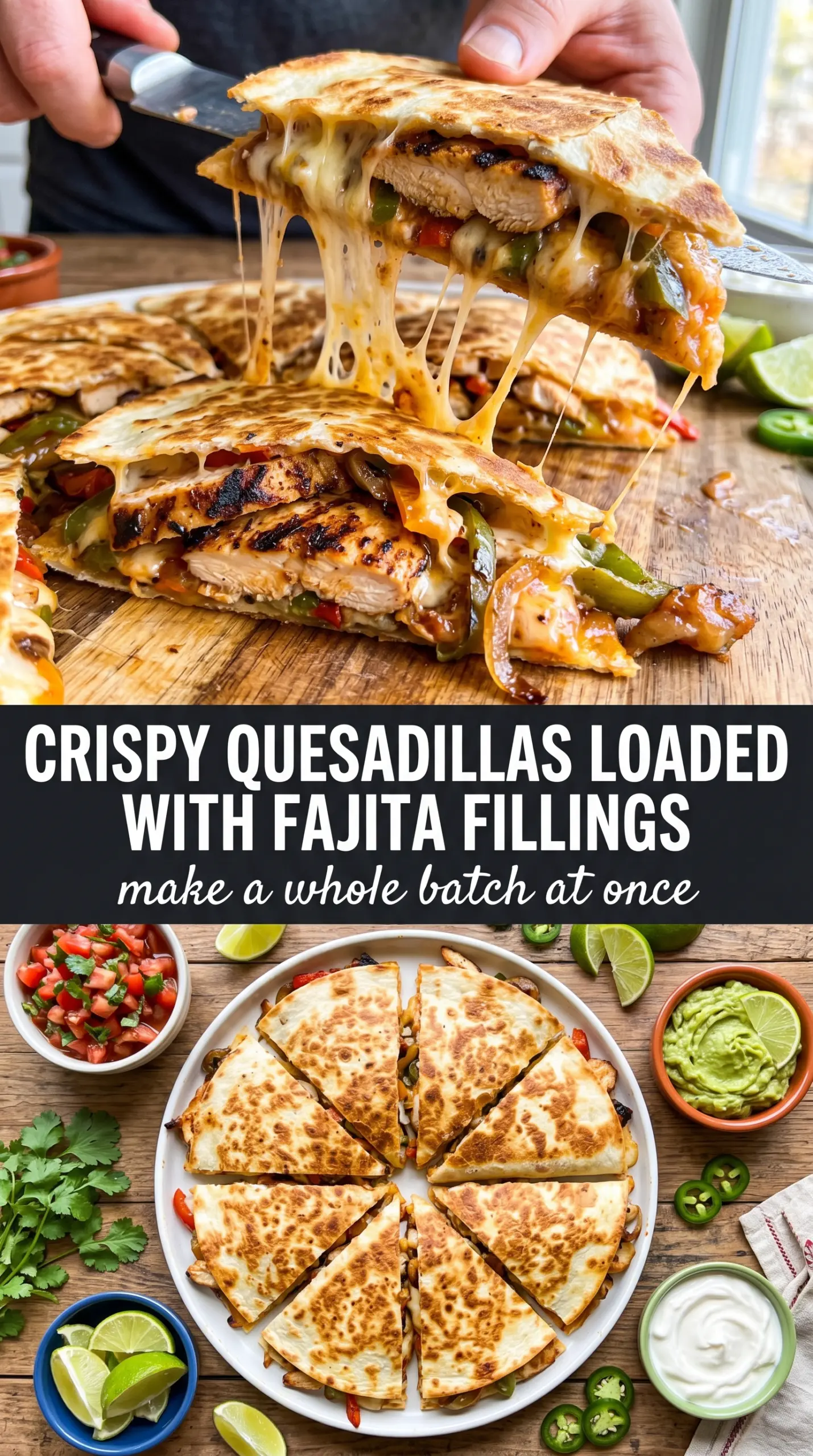
- Chicken breast — Thin slices cook quickly and stay tender on the griddle. If the pieces are thick, the outside dries out before the center is done, so slice them against the grain into even strips.
- Bell peppers and onion — These bring the fajita flavor and a little sweetness once they soften. Fresh is worth it here because frozen vegetables release too much water and make the filling harder to seal.
- Fajita seasoning — This does the heavy lifting for both the chicken and vegetables. If you’re using a store-bought blend, pick one with salt built in; if yours is salt-free, season the chicken a touch more aggressively.
- Flour tortillas — Large flour tortillas hold up best on the griddle and crisp without cracking. Corn tortillas won’t fold the same way and will split before the cheese can act as glue.
- Cheddar and Monterey Jack — Cheddar brings sharper flavor, while Monterey Jack melts smoothly and helps the quesadilla hold together. Pre-shredded cheese works, but freshly shredded cheese melts faster and more evenly.
Building the Quesadilla on the Griddle So It Seals Cleanly
Cooking the Fajita Filling First
Start with the chicken on the hot, oiled griddle and give it room to brown instead of crowding it into a pale pile. Once it loses its raw pink color and picks up some color on the edges, move it aside and cook the peppers and onions until they’re softened but still have a little bite. If the pan looks wet at this stage, keep cooking for another minute or two; extra liquid now means a soggy quesadilla later.
Layering for Melt and Structure
Lay four tortillas on the griddle and build each one with cheese first, then the chicken and pepper mixture, then another layer of cheese before the top tortilla goes on. That bottom layer of cheese melts into the tortilla and helps anchor the filling, while the top layer keeps the quesadilla from falling apart when you flip it. Don’t pile the filling too high or the center will slide out before the cheese sets.
Flipping and Browning
Cook until the bottom tortilla is golden and the edges feel firm when you lift them with a spatula, then flip carefully in one motion. If the quesadilla resists, give it another 30 seconds; forcing it early tears the tortilla and dumps the filling. After the flip, press lightly so the cheese makes contact with the griddle and the second side browns evenly.
Cutting and Serving
Let the quesadillas sit for a minute before slicing so the cheese settles instead of running out onto the cutting board. A sharp knife or pizza cutter gives cleaner wedges than a dull knife, which drags the filling. Serve them with sour cream, salsa, guacamole, and lime wedges so each bite gets a little acid and cream to balance the seasoning.
How to Adapt These Quesadillas for Different Pans, Diets, and Leftovers
Gluten-Free Version
Use gluten-free flour-style tortillas that are large enough to fold without cracking. They usually brown a little faster than standard tortillas, so lower the heat slightly and watch the first side closely to keep them from drying out.
Spicy Fajita Quesadillas
Add sliced jalapeños or a pinch of cayenne to the chicken while it cooks. That gives the filling more heat without changing the texture, and the cheese still mellows it out enough that it stays balanced.
Dairy-Free Swap
Use a good melting dairy-free shredded cheese and cook a little more slowly so it has time to soften. You won’t get quite the same stretch, but the quesadillas still crisp well if the filling is dry and the pan isn’t overcrowded.
Storage and Reheating
- Refrigerator: Store leftovers in an airtight container for up to 3 days. The tortillas soften a bit, but the flavor holds up well.
- Freezer: Freeze cooked wedges in a single layer, then transfer to a bag for up to 2 months. Wrap them well so the tortillas don’t pick up freezer burn.
- Reheating: Reheat on a dry skillet or griddle over medium heat until the tortilla crisps again and the center is hot. The biggest mistake is microwaving too long, which turns the tortilla rubbery before the cheese can fully warm through.
Answers to the Questions Worth Asking
Blackstone Chicken Fajita Quesadillas
Ingredients
Equipment
Method
- Heat the Blackstone griddle to medium-high and add the oil. Look for quick shimmering in the oil before adding chicken.
- Season the chicken with half the fajita seasoning and cook for 6-7 minutes until done. The chicken should be browned and no longer pink.
- Add the peppers and onions along with the remaining fajita seasoning and cook for 5-6 minutes until softened. Stir occasionally until peppers are tender-crisp.
- Place 4 tortillas on the griddle and layer each with cheese, the chicken mixture, and more cheese. You should see the filling centered and the cheese covering the edges.
- Top with the remaining tortillas and cook for 3-4 minutes per side until golden and the cheese is melted. Flip when the underside is browned; press lightly so the layers fuse.
- Cut the quesadillas into wedges and serve immediately. Serve with sour cream, salsa, guacamole, and lime wedges on the side.