Pineapple BBQ pork skewers hit that sweet spot between weeknight easy and cookout worth showing off. The pork stays tender, the pineapple turns sticky and caramelized, and the grill gives everything those dark little edges that taste like you spent more time on dinner than you did. When the glaze clings to the meat instead of dripping off, these skewers disappear fast.
This version works because the marinade pulls double duty. BBQ sauce brings body, soy sauce adds salt and depth, pineapple juice softens the pork a little, and honey helps the edges lacquer on the grill. Pork tenderloin is lean, so the short marinating time matters more than a long soak; give it enough time to pick up flavor, but not so long that the pineapple starts turning the surface mushy.
Below you’ll find the small details that matter: how to keep the pork from drying out, how to get the pineapple charred without collapsing it, and what to do if you’re cooking these under a broiler instead of on the grill.
The pork stayed juicy and the pineapple got that sticky caramelized edge without falling apart. I brushed on extra sauce at the end and it tasted like a takeout favorite, but fresher.
Save these pineapple BBQ pork skewers for the next grill night when you want sticky glaze, charred edges, and dinner on the table in minutes.
The Marinade Is Doing More Than Adding Flavor
Pork tenderloin cooks fast, which is exactly why it can go from juicy to dry in a narrow window. The marinade here isn’t just for taste. The soy sauce seasons the meat all the way through, the pineapple juice brings a little acidity and natural sweetness, and the honey helps the glaze darken on the grill instead of sliding off. The trick is keeping that balance short and focused.
Let the pork marinate for at least 30 minutes so the surface picks up flavor, but don’t leave it sitting for hours in a strong pineapple marinade. Fresh pineapple contains enzymes that can soften the outside of the meat more than you want, especially with tenderloin, which is already a delicate cut. A short marinade gives you the flavor boost without turning the texture loose.
- Pork tenderloin — This cut stays tender on a hot grill as long as you cut it into even cubes and don’t overcook it. Pork loin can work in a pinch, but it needs a little more attention because it dries out faster.
- Fresh pineapple — Fresh pineapple caramelizes beautifully and holds its shape on the skewer. Canned pineapple is sweeter and softer, so it can work, but the grill marks won’t be as sharp.
- BBQ sauce — Use a sauce you already like on its own. A thinner sauce will brush on more cleanly, while a very thick one can scorch before the pork finishes cooking.
- Soy sauce — This gives the marinade salt and depth. If you need a gluten-free version, use tamari in the same amount.
- Smoked paprika — This brings a grill-like smokiness even before the skewers hit the fire. It matters more than it looks like it should.
What Each Ingredient Is Actually Doing in This Dish

- Meat (cut or sized properly) — Even pieces cook uniformly. Trim excess fat but leave some for moisture and flavor.
- Oil or butter (the cooking medium) — High-quality fat helps meat brown and develops pan flavor. Don’t skip it.
- Aromatics (garlic, onion, ginger) — Cook with oil first to bloom flavors. They become part of the sauce rather than separate elements.
- Sauce or liquid (the moisture and flavor) — This brings everything together and keeps the meat tender. Balance richness with acid.
- Vegetables (if using) — Layer by cooking time so everything finishes together. Add harder vegetables first.
- Seasonings (salt, spices, herbs) — Build flavor as you cook. Taste and adjust before serving.
- Acid (vinegar, wine, citrus) — This brightens and prevents the dish from tasting heavy. Add near the end.
- Final finish (rest, fresh herbs, garnish) — These final touches prevent the dish from tasting one-dimensional. Take time for this step.
How to Get Char Without Drying Out the Pork
Build the Skewers With Even Gaps
Thread the pork, pineapple, onion, and bell pepper in a steady pattern so the heat reaches everything evenly. Cut the pork into true 1.5-inch pieces; if some pieces are much smaller, they’ll be done before the rest and turn dry. Pack the ingredients close enough to stay on the skewer, but don’t jam them together so tightly that the centers steam.
Preheat the Grill All the Way
A medium-high grill needs time to get there. If the grates aren’t hot, the skewers stick and the vegetables soften before they get color. You want a sizzle as soon as the skewers land on the grates, along with those browned spots that turn into flavor. If the grill is too hot, the honey in the glaze can burn before the pork cooks through, so aim for hot enough to sear, not so hot that the outside blackens immediately.
Brush During the Last Few Minutes
Use the extra BBQ marinade while the skewers cook, but don’t start lacquer-loading them right away. Early brushing can cause flare-ups and darken the sauce before the pork is done. Once the meat has picked up a little color, brush on the glaze and turn the skewers so the sauce sets into a sticky coating. The pork is ready when it feels firm but still has a little give, and the juices run clear rather than pink.
Rest Before Serving
Let the skewers rest for 3 minutes before you eat. That short pause keeps the juices inside the pork instead of spilling onto the plate the moment you bite in. If you cut or pull the meat too soon, it will look dry even when you cooked it correctly. A quick rest also lets the glaze settle into that tacky finish everyone wants from grilled skewers.
How to Adapt These Skewers Without Losing the Good Part
Use Chicken Instead of Pork
Boneless chicken thighs work best here because they stay juicy over direct heat and take on the marinade well. Chicken breast can work, but it needs to be watched closely and pulled the moment it hits 165°F, or it dries out faster than the pork.
Make It Gluten-Free
Swap the soy sauce for tamari or coconut aminos. Tamari gives the closest flavor to the original, while coconut aminos are a little sweeter and less salty, so you may want to taste the marinade before adding anything extra.
Use Canned Pineapple in a Pinch
Drain it well and pat it dry before skewering. Canned pineapple is softer and sweeter, so it browns faster and gives you a stickier finish, but it won’t have the same bright bite as fresh fruit.
Cook Them Under the Broiler
Set the skewers on a foil-lined sheet pan and broil them close to the heat, turning once. The edges will char faster than on a grill, so watch them closely and brush the glaze on near the end instead of from the start.
Storage and Reheating
- Refrigerator: Store leftovers in an airtight container for up to 3 days. The pineapple softens a bit, but the flavor holds up well.
- Freezer: Freeze the cooked pork and vegetables off the skewers for up to 2 months. The pineapple gets softer after thawing, so the texture is best if you freeze the pork separately and add fresh pineapple later.
- Reheating: Warm gently in a 300°F oven or in a skillet over low heat until just hot. High heat dries out the pork fast, so don’t blast it in the microwave unless you want chewy edges.
Answers to the Questions Worth Asking
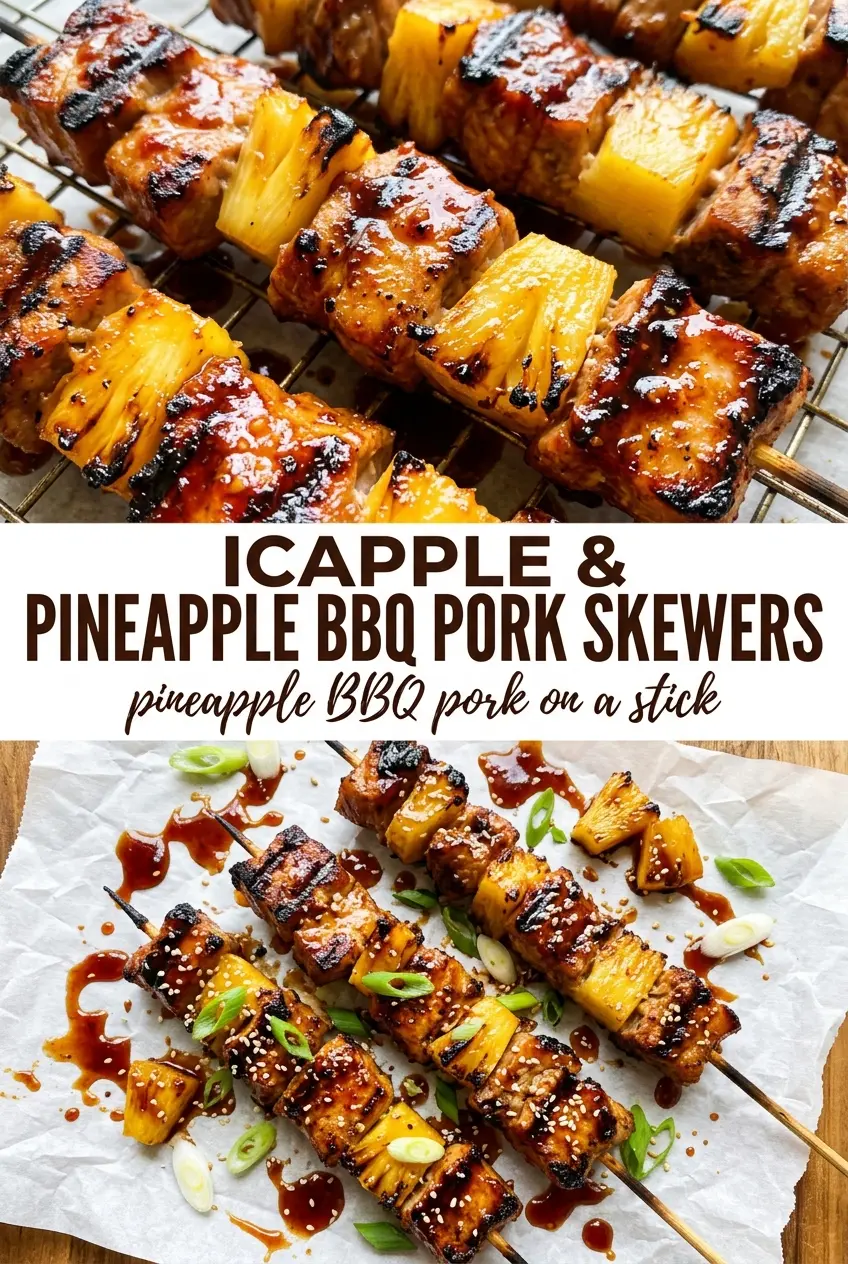
Pineapple BBQ Pork Skewers
Ingredients
Equipment
Method
- Whisk BBQ sauce, soy sauce, pineapple juice, honey, minced garlic, and smoked paprika together until smooth. Keep whisking until the honey fully dissolves and the marinade looks evenly combined (no honey streaks).
- Toss the pork cubes with the marinade, then coat all sides evenly. Cover and marinate for at least 30 minutes so the pork absorbs the sweet smoky flavor.
- Soak wooden skewers in water for 30 minutes to help prevent burning. Keep them submerged while the pork marinates.
- Thread pork cubes, pineapple chunks, red onion chunks, and bell pepper chunks alternately onto skewers. Pack them snugly so the charred edges show where the pieces meet the grill grate.
- Preheat the grill to medium-high, then place skewers on the grate. Grill for 4–5 minutes per side, brushing with extra BBQ marinade as you cook, until pork is cooked and edges are charred with dark sticky spots.
- Let the skewers rest for 3 minutes before serving. Serve with extra BBQ sauce on the side for dipping and additional glaze.