Caramelized peaches, a brown sugar glaze, and a soft vanilla cake underneath make this peach upside-down cake land right in the sweet spot between rustic and impressive. The fruit turns jammy as it bakes, the sugar melts into a glossy topping, and the whole thing flips out in one dramatic reveal that looks like more work than it is.
The key is building the topping before the batter goes in. Butter melts in the pan first, then brown sugar and cinnamon sit underneath the peaches and turn into a sticky glaze as the cake bakes. The cake itself stays tender because the batter is simple and balanced: enough butter for richness, enough milk or sour cream for moisture, and just enough baking powder to lift it without turning it dry or domed.
Below, you’ll find the part that matters most: how to keep the topping from sticking, how to arrange the peaches so the flip looks clean, and what to do if your fruit is extra juicy. There are also a few smart swaps for when you want a slightly different finish.
The peaches caramelized beautifully and the cake came out in one clean flip after exactly 10 minutes. The brown sugar layer stayed glossy instead of sticky, and my family kept going back for thin slices.
Love the caramelized peach topping? Save this peach upside-down cake for the day you want a dramatic flip and a buttery brown sugar glaze.
The Flip Fails If You Rush the Rest
The most common mistake with upside-down cake is turning it out the second it leaves the oven. The topping is still molten at that point, so the peaches slide, the sugar runs, and the cake can tear as it releases. Ten minutes is the sweet spot: long enough for the glaze to set slightly, short enough that the caramel doesn’t glue itself to the pan.
That rest matters even more if you’re using ripe peaches. Juicy fruit gives you a better topping, but it also creates more steam, so the cake needs that brief pause to settle. If the pan still feels too hot to hold comfortably, give it another minute or two before inverting.
What the Butter, Brown Sugar, and Peaches Are Each Doing Here
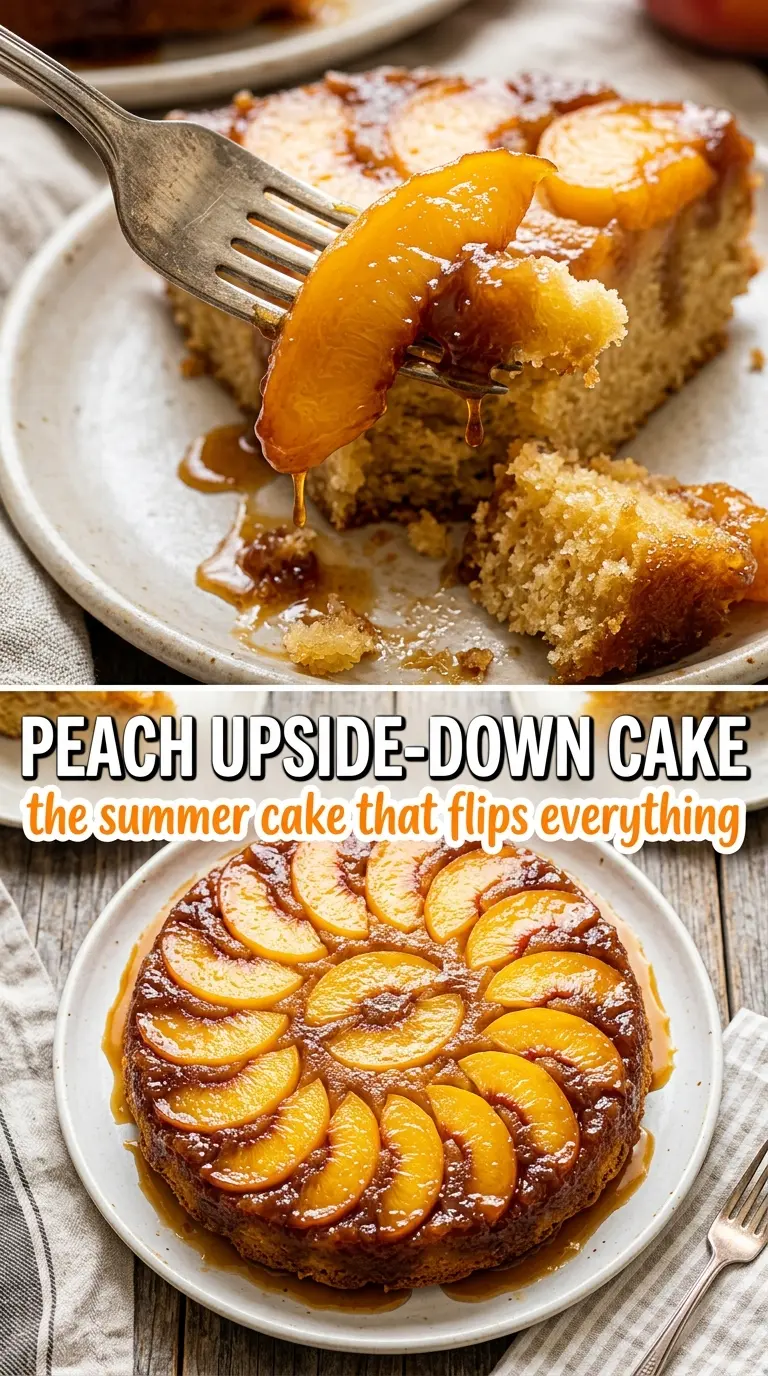
- Peaches — Use ripe but still firm peaches. Overripe fruit turns mushy in the oven and can leave you with a slumped topping instead of neat slices. If your peaches are a little firm, that’s fine; they soften as they bake and hold their shape better when you flip the cake.
- Brown sugar — This is the caramel base. Packed brown sugar melts into the butter and forms the glossy glaze, so don’t swap in white sugar and expect the same result. Dark brown sugar gives a deeper molasses note; light brown sugar keeps the flavor softer and more peach-forward.
- Whole milk or sour cream — Both work, but they do different jobs. Milk gives you a lighter crumb, while sour cream adds more tang and a slightly tighter, richer texture. If you use sour cream, thin it with a spoonful or two of milk if it looks too thick to spread.
- Cinnamon — It quietly bridges the fruit and the caramel. The amount here is restrained on purpose; too much cinnamon starts to cover the peach flavor instead of supporting it.
Building the Topping Before the Batter Goes In
Melting the butter in the pan
Put the butter straight into the cake pan or cast iron skillet and warm it in the oven until it melts completely. Swirl it up the sides so the whole base is coated. That coating keeps the sugar from welding itself to one spot and gives the cake a cleaner release.
Laying out the peaches
Sprinkle the brown sugar and cinnamon over the butter, then arrange the peach slices in overlapping circles. The overlap matters because gaps in the pattern can leave bald spots in the finished cake. Press the fruit down gently so it sits in the sugar instead of floating on top of it.
Mixing the batter without overworking it
Cream the butter and sugar until pale and fluffy, then add the eggs and vanilla. Once the flour goes in, alternate the dry ingredients with the milk or sour cream and stop mixing as soon as the batter looks smooth. If you keep beating after the flour disappears, the cake gets tight instead of tender.
Flipping at the right moment
Bake until the top is golden and a toothpick comes out clean, then let the cake rest for exactly 10 minutes. Run a thin knife around the edge if you see any stuck spots, place a plate over the pan, and flip with one decisive motion. If a peach slice sticks to the pan, just lift it off and place it back on the cake before serving.
How to Adapt This for Different Kitchens and Different Needs
Dairy-Free Version
Use a good plant-based butter for both the topping and the cake. The texture stays close, though the caramel flavor will be a little less rich and the crumb a touch lighter. Stick with peaches that are ripe but not collapsing, because dairy-free butter substitutes can soften the topping a bit more.
Sour Cream for a Denser Crumb
Swap the milk for sour cream if you want a tighter, richer crumb that stands up well under the fruit. The cake will bake up slightly denser and less airy, which works well here because it supports the sticky topping without feeling heavy.
A Cast Iron Skillet Finish
A 9-inch cast iron skillet gives you the best caramelization and the most dramatic presentation. It holds heat well, so the butter and brown sugar form a deeper glaze, but the edges can brown faster. Check the cake a few minutes early if your skillet runs hot.
Using Nectarines Instead of Peaches
Nectarines work with no other changes. They give you a cleaner peel-and-slice process and a slightly firmer bite, but the topping will taste just as caramelized and bright. Keep the slices about the same thickness so they bake on the same schedule.
Storage and Reheating
- Refrigerator: Store covered for up to 4 days. The topping will soften as it sits, but the cake stays moist.
- Freezer: Freeze slices tightly wrapped for up to 2 months. The peach layer won’t look as sharp after thawing, but the flavor holds up well.
- Reheating: Warm slices in a 300°F oven for about 10 minutes or microwave briefly in short bursts. High heat dries out the cake and makes the peach topping turn sticky instead of glossy.
Answers to the Questions Worth Asking
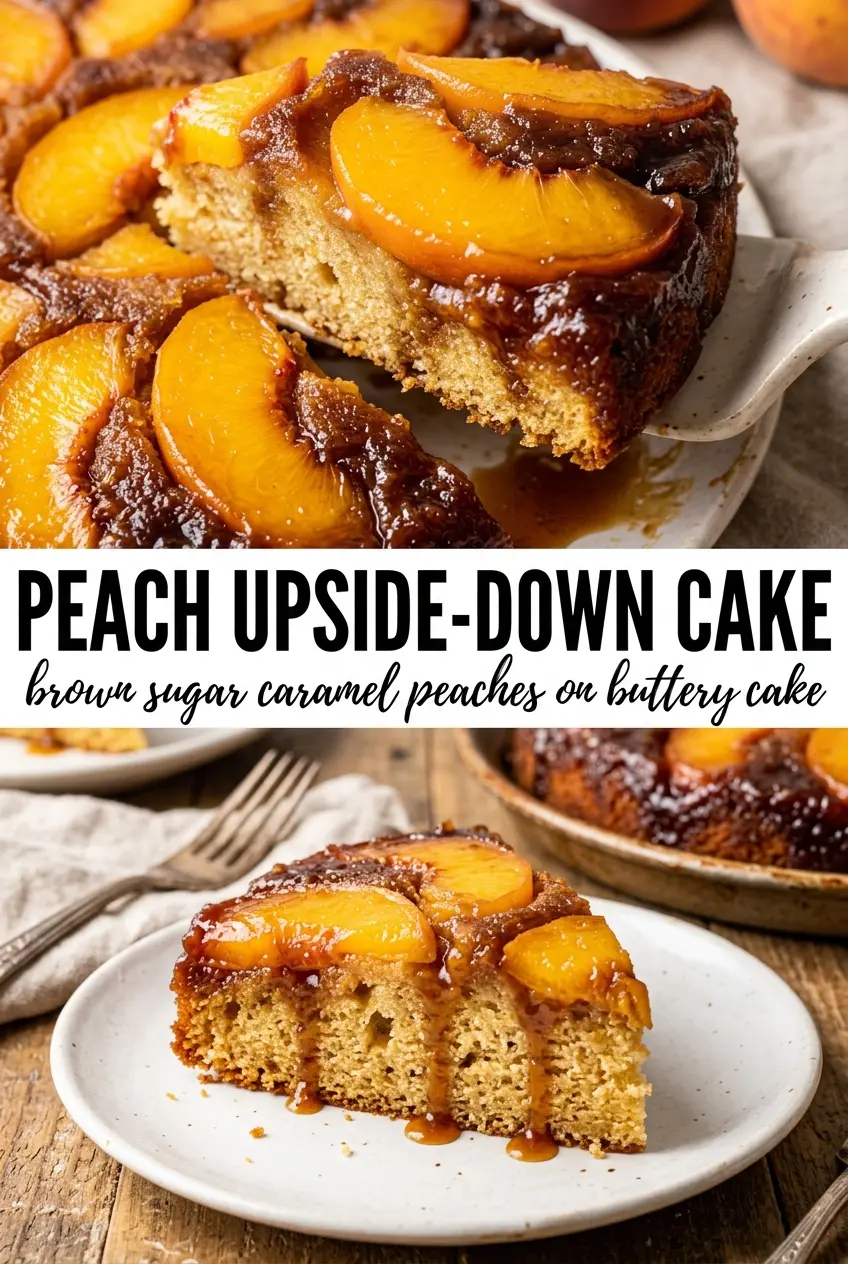
Peach Upside-Down Cake
Ingredients
Equipment
Method
- Preheat the oven to 350°F. Melt the butter in a 9-inch round cake pan or cast iron skillet in the oven, then swirl to coat evenly.
- Sprinkle the brown sugar and cinnamon evenly over the melted butter. Arrange the peach slices in overlapping concentric circles over the brown sugar layer, then set aside.
- Beat the softened butter and granulated sugar until fluffy. Add the eggs and vanilla extract, then beat until smooth.
- Alternately mix in the flour mixture (all-purpose flour, baking powder, salt, and cinnamon) and the whole milk or sour cream. Mix just until the batter is combined.
- Pour the batter gently over the arranged peaches and smooth the top. Bake for 38-42 minutes at 350°F until a toothpick comes out clean and the cake pulls away from the sides.
- Cool the cake in the pan for exactly 10 minutes. Invert onto a plate so the peaches and caramel topping release in place.
- Serve warm. Add vanilla ice cream if desired.