Creamy potatoes, savory sausage, and wilted kale turn into a casserole that lands somewhere between a soup and a gratin, with the kind of browned parmesan top that makes people go back for a second scoop before the dish has even cooled. The potatoes soften in the cream and broth, the sausage seasons every layer, and the kale keeps the whole thing from feeling heavy. It eats like comfort food, but it still has enough structure to slice and serve cleanly.
What makes this version work is the layering. The potatoes need time under the liquid to turn tender all the way through, and the sausage gets browned first so you build flavor before anything hits the baking dish. I also keep the kale in two layers instead of stirring it through the cream; that way it stays present instead of disappearing into the sauce. The parmesan goes on top for more than just flavor — it helps form that salty, crisp lid that makes the casserole feel finished.
Below, I’ll walk through the one point where most potato casseroles go wrong, the ingredient choices that matter most, and a few ways to adjust this for your table without losing what makes it work.
The potatoes came out tender all the way through and the parmesan on top got that crisp, golden edge I was hoping for. I used mild sausage and it still had plenty of flavor.
Love the creamy potatoes, sausage, and parmesan crust? Save this Zuppa Toscana casserole for a cozy dinner that bakes up rich, hearty, and spoonable.
Why the Potatoes Need a Head Start in the Cream
The biggest mistake with a casserole like this is treating the potatoes like they’ll behave the same way they do in a soup or skillet. They won’t. In a baked dish, sliced potatoes need enough liquid coverage and enough time under foil to soften before the top dries out. That’s why the cream and broth go in before baking, and why the dish is covered for the first part of the bake.
Thin, even slices matter more than almost anything else here. If some pieces are thick and others are paper-thin, you’ll end up with a mix of hard and mushy layers. A sharp knife works, but a mandoline gives you the most even result. The casserole is done when a knife slides through the potatoes without resistance and the top has gone from pale parmesan to a deep golden crust.
What Each Layer Is Doing in This Casserole
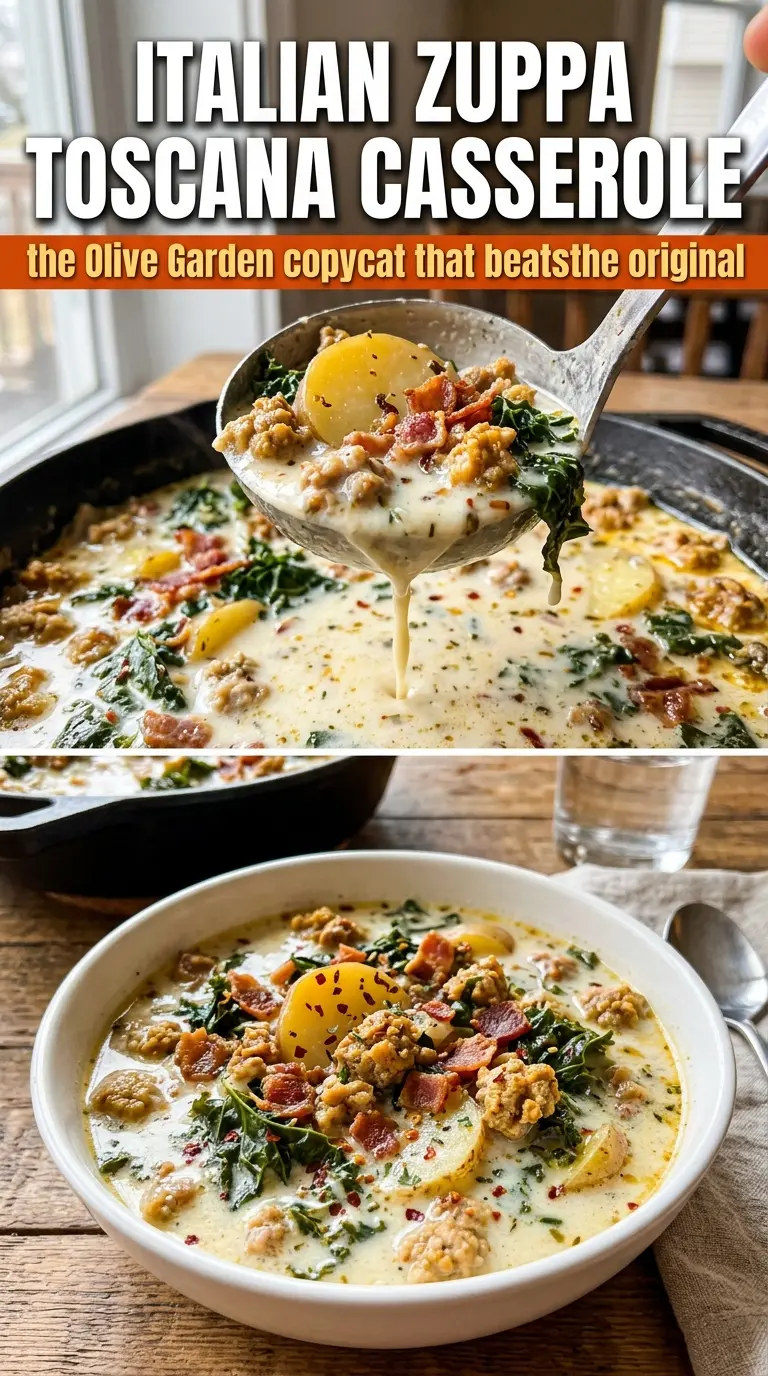
- Italian sausage — This is the backbone of the dish. Browning it first creates savory bits in the pan that flavor the onion, garlic, and cream. Mild or hot sausage both work; hot sausage gives the casserole more heat, but mild still tastes complete because the parmesan and red pepper flakes carry plenty of seasoning.
- Russet potatoes — Russets soften into a creamy, almost fluffy texture that makes the casserole feel rich without extra thickeners. Yukon Golds also work if that’s what you have, but they hold their shape a little more and the finished dish will be denser.
- Heavy cream and chicken broth — This combo turns into the sauce as the potatoes bake. Don’t swap in milk unless you’re prepared for a thinner, less stable result; the sauce needs the fat in cream to stay silky in the oven. The broth keeps the dish from tasting flat and gives the potatoes a chance to season from the inside.
- Kale — Kale keeps its texture better than spinach, which tends to melt into the sauce. Chop it small so it threads through the layers and softens evenly. If you use curly kale, strip out the tough stems first or you’ll get chewy bites in the finished casserole.
- Parmesan — Grated parmesan on top is what gives you that salty, browned lid. Finely grated cheese melts and browns more evenly than big shreds. If you use pre-grated parmesan from a shaker, it won’t melt as smoothly, but it will still give you a decent crust.
Building the Bake So the Sauce Stays Creamy
Brown the Sausage First
Cook the sausage over medium-high heat until it’s fully browned and the edges have some color. That browning is where the flavor starts, and if the pan is crowded the sausage will steam instead of sear. Drain off the excess fat so the casserole doesn’t turn greasy, but leave the browned bits in the pan — they’re part of the sauce.
Cook the Onion and Garlic in the Same Pan
Sauté the onion in the same skillet for a few minutes until it turns soft and translucent, then add the garlic for just a minute. If the garlic goes in too early, it burns and tastes bitter once the cream is added. This quick step pulls the sausage flavor back into the base and gives the liquid a head start before it ever reaches the oven.
Layer, Don’t Stir
Build the casserole in layers instead of mixing everything together in the dish. The potato slices need to lie flat so the hot liquid can move through them evenly, and the sausage and kale can nest between the layers without clumping. Press the top gently after adding the cream mixture so the liquid settles into the spaces between the potatoes.
Bake Covered, Then Uncover for the Top
The foil is there to trap steam so the potatoes soften. Remove it for the last stretch of baking so the parmesan can brown and the top can dry just enough to form a crust. If the cheese starts to darken too fast before the potatoes are tender, leave the foil slightly tented over the top and give it a few more minutes.
How to Adapt This Zuppa Toscana Casserole Without Losing the Point
Make It Dairy-Free
Use full-fat canned coconut milk or an unsweetened dairy-free cooking cream in place of heavy cream, and swap the parmesan for a dairy-free parmesan-style topping. The sauce won’t taste exactly the same, but you’ll still get a creamy bake with enough richness to coat the potatoes.
Use Hot Sausage for More Heat
Hot Italian sausage gives the casserole a sharper finish and makes the red pepper flakes feel more present. If you go this route, keep the flakes at the lower end or skip them entirely so the heat doesn’t overwhelm the cream.
Swap the Kale for Spinach
Spinach works if that’s what’s in the fridge, but it will wilt down almost completely and give you a softer, less textured casserole. Add it in the last layer so it doesn’t disappear into the sauce while baking.
Storage and Reheating
- Refrigerator: Store covered for up to 4 days. The sauce thickens as it chills, and the potatoes will be a little softer on day two.
- Freezer: It freezes, but the cream sauce can separate a bit after thawing. If you want the best texture, freeze individual portions and reheat gently.
- Reheating: Reheat covered in a 325°F oven until hot in the center, or use the microwave in short bursts. Add a splash of cream or broth if it looks tight, and don’t blast it on high heat or the sauce can break.
Questions I Get Asked About This Recipe
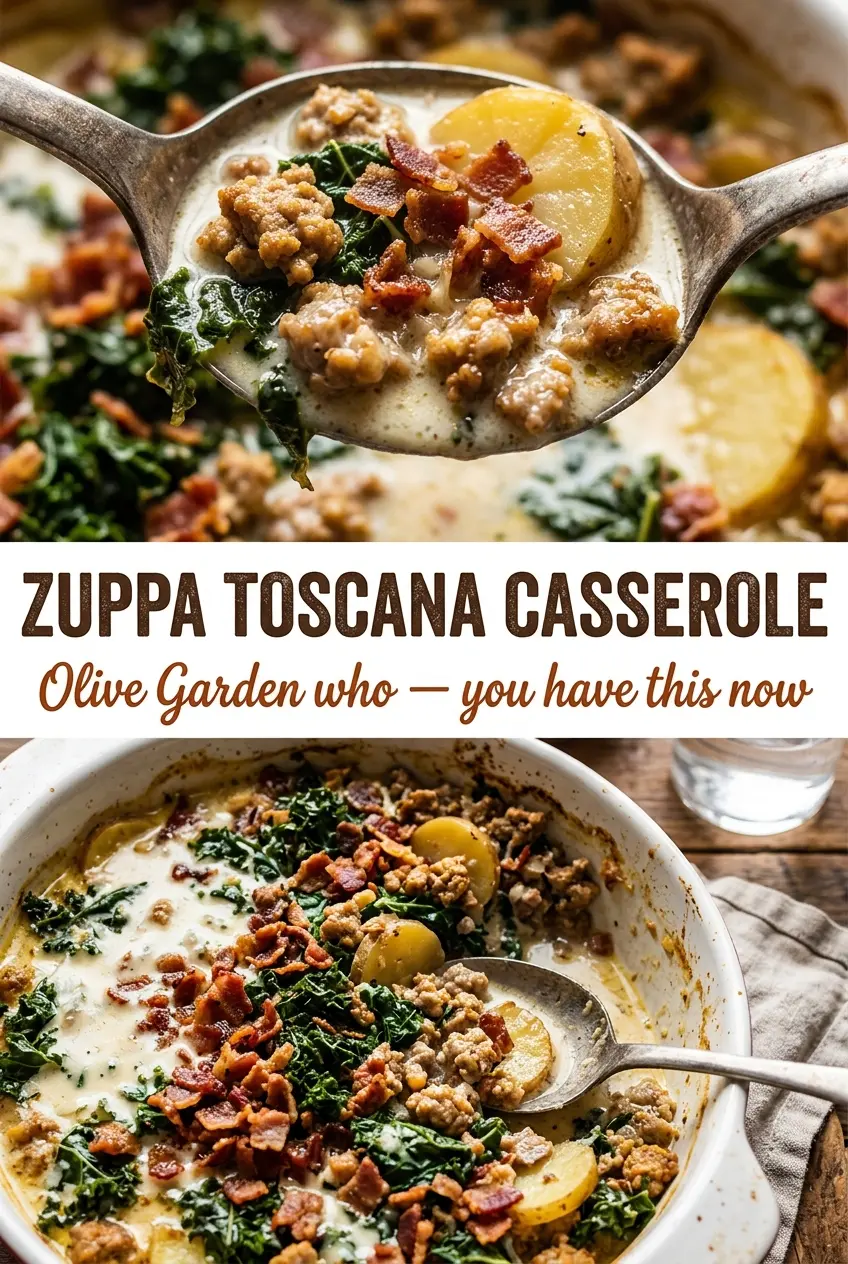
Italian Zuppa Toscana Casserole
Ingredients
Equipment
Method
- Preheat the oven to 375°F and grease a 9x13 dish.
- Slice the russet potatoes thin and chop the kale; dice the onion and mince the garlic.
- Brown the Italian sausage in a skillet over medium-high heat, breaking apart as it cooks, then drain the fat and remove.
- Sauté the onion in the same pan for 3 minutes, then add the garlic and cook for 1 minute.
- Pour in the heavy cream and chicken broth, then stir in red pepper flakes and heat until the mixture is combined and hot.
- Layer half the potato slices in the greased dish.
- Scatter half the sausage and half the kale over the potatoes.
- Repeat with the remaining potato slices, the remaining sausage, and the remaining kale.
- Pour the cream mixture evenly over everything, then press down gently so the potatoes settle.
- Top with the grated parmesan, cover tightly with foil, and bake for 25 minutes until bubbling.
- Remove the foil and bake for 15 more minutes at 375°F until the potatoes are tender and the top is golden.