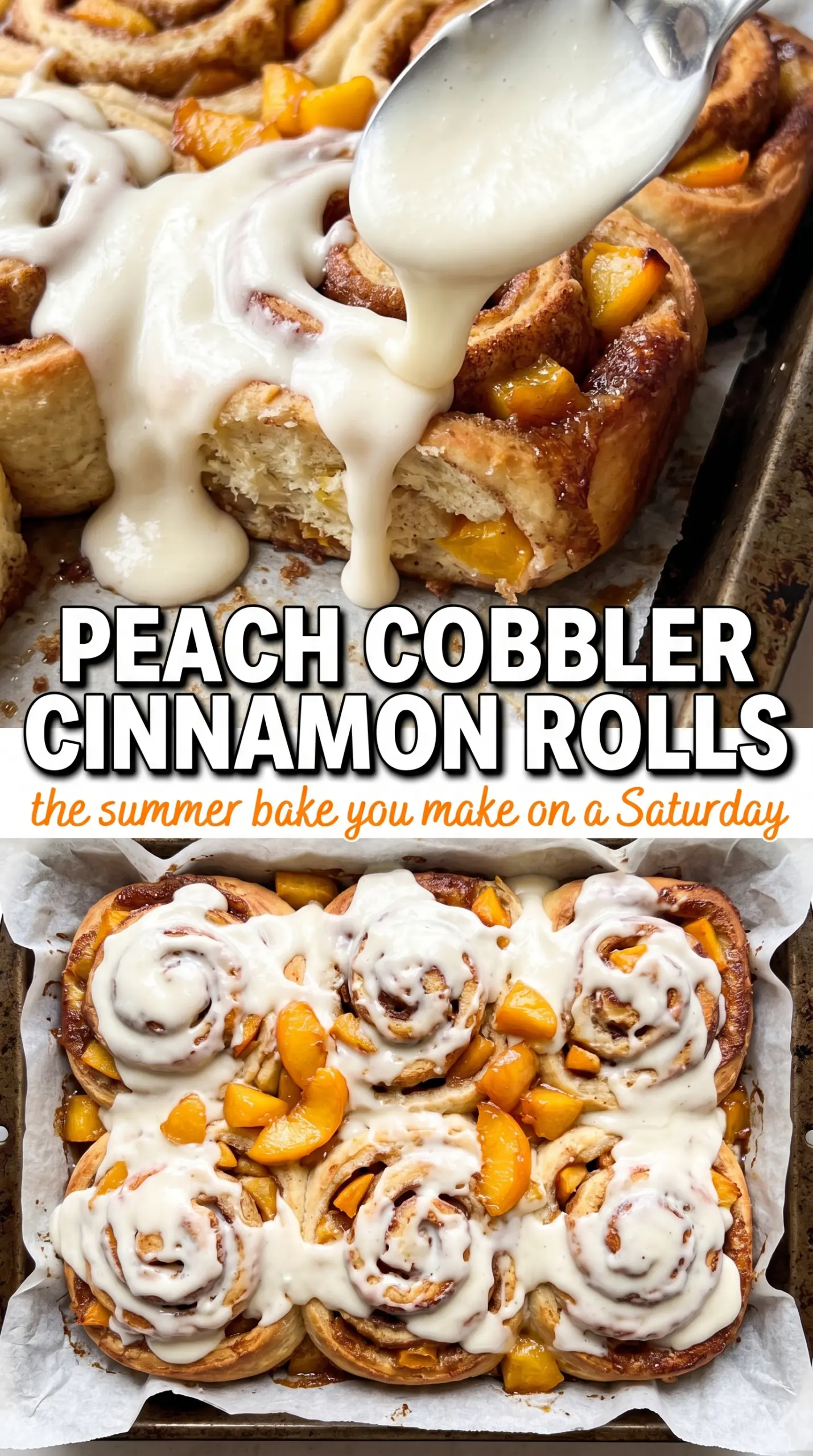
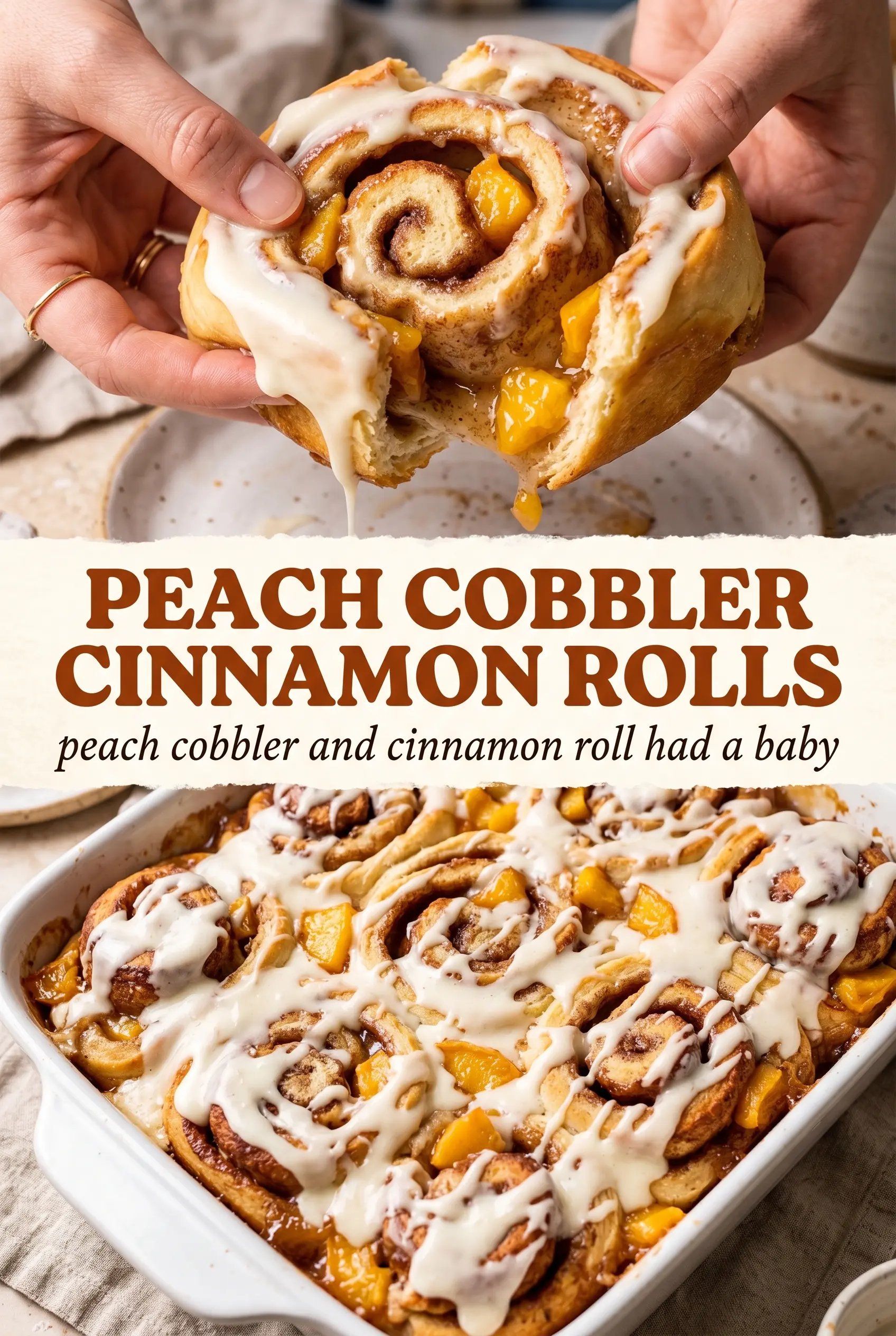
Peach Cobbler Cinnamon Rolls come out soft, pillowy, and full of that jammy peach-and-cinnamon filling that runs into the spirals as they bake. The edges turn golden and just a little sticky under the glaze, while the centers stay tender enough to pull apart with almost no effort. When they’re done right, they taste like a bakery roll and a peach cobbler met in the middle and decided to stay there.
What makes this version work is the balance of moisture. The peaches are diced small so they soften fast without tearing through the dough, and the filling stays thick enough to cling instead of leaking into the pan. The dough itself is rich but not heavy, which gives you those soft layers without making the rolls cakey. A warm, not hot, rise helps the yeast move without stressing it, and that matters more than people think.
Below, I’ll walk through the part that keeps the filling from slipping out, plus a few swaps that still give you a good roll even if your peaches are extra juicy or you need to work ahead.
The peach filling stayed right in the swirls instead of pooling in the pan, and the glaze melted into the rolls while they were still warm. I’d make these again just for the smell alone.
Love the jammy peach filling and creamy glaze? Save these Peach Cobbler Cinnamon Rolls for a slow morning when you want something warm, gooey, and worth the extra rise time.
The Part Where Peach Rolls Usually Get Soggy
The problem with peach sweet rolls is usually too much fruit moisture in too little space. Once the peaches heat up, they release juice, and if the filling is loose, that juice runs straight into the dough before the rolls have a chance to set. The fix here is simple: dice the peaches small and keep the butter-brown sugar mixture thick enough to coat them rather than drown them.
Another thing that helps is rolling the dough tightly from the long side. A loose roll gives the filling room to escape, while a firm roll keeps those pockets sealed so the peaches stay in the spirals where they belong. Bake until the tops are deeply golden and the center rolls are no longer doughy in the middle; pale tops usually mean the inside still needs time.
What Each Ingredient Is Actually Doing In These Rolls
- Warm milk — This gives the yeast a friendly starting point and helps the dough stay soft. It should feel warm to the touch, not hot; too much heat will slow or kill the yeast.
- Active dry yeast — This is what gives the rolls their lift and that airy, pull-apart texture. If the yeast doesn’t foam after a few minutes in the milk, stop and start over before you waste the rest of the dough.
- Butter in both the dough and filling — The dough butter keeps the rolls tender, while the softened filling butter helps the brown sugar and cinnamon spread in an even layer. Cold butter won’t spread cleanly, and melted butter makes the filling slide.
- Ripe peaches — You want fruit that’s fragrant and soft enough to bake down quickly. If your peaches are extra juicy, pat the diced pieces dry before layering them in.
- Cream cheese glaze — The cream cheese adds tang and body, which keeps the glaze from tasting flat. Heavy cream loosens it just enough to drizzle without disappearing into the rolls.
Building The Rolls So The Filling Stays Put
Activating The Yeast
Stir the yeast into warm milk with a pinch of sugar and leave it alone for about 5 minutes. You’re looking for a foamy top and a smell that turns lightly bready, which tells you the yeast is awake and ready. If the mixture stays flat, the milk was too hot, too cold, or the yeast is no longer active. Don’t move ahead with dead yeast; the dough won’t rise later.
Mixing And Kneading The Dough
Add the remaining dough ingredients and stir until a shaggy mass forms, then knead until the dough turns smooth and elastic, about 6 to 8 minutes. It should feel soft and slightly tacky, but it shouldn’t stick hard to your hands. If it’s too wet, add flour a tablespoon at a time; too much flour will make the rolls dense instead of fluffy. After kneading, the dough should stretch without tearing right away.
Filling, Rolling, And Cutting
Roll the dough into a tidy rectangle so the filling spreads evenly from edge to edge. Smear on the softened butter first, then sprinkle the brown sugar and cinnamon before scattering the diced peaches over the surface. Roll from the long side to build more spirals, then cut with a sharp knife or unflavored dental floss for cleaner edges. If the roll squashes while cutting, your dough is either too soft or your blade is dragging instead of slicing.
Baking Until The Centers Are Set
Let the rolls rise in the pan until they look puffy and touch each other slightly, then bake until the tops are golden and the middle rolls spring back when lightly pressed. The color matters here; pale rolls often mean underbaked dough in the center. If the tops are browning too quickly before the middle is done, tent the pan loosely with foil for the last few minutes.
Glazing While They’re Warm
Beat the glaze until it’s smooth and thick enough to ribbon off a spoon, then drizzle it over the rolls while they’re still warm. Warm rolls help the glaze melt into the swirls, which is what gives you those creamy pockets between layers. If the glaze feels too thick, add a small splash more cream; if it’s too loose, a little more powdered sugar tightens it right up.
How To Make These Rolls Work For Different Kitchens
Use Nectarines Instead Of Peaches
Nectarines work almost exactly the same way and give you a slightly firmer bite. If the skins are thin and smooth, you can leave them on for more color and a little extra texture. The flavor stays bright, and the filling still bakes into those jammy pockets.
Make Them Dairy-Free
Use plant-based butter, unsweetened non-dairy milk, and a dairy-free cream cheese for the glaze. The dough will still rise and bake up soft, though the glaze won’t have quite the same tang. Keep the milk warm, not hot, since most non-dairy milks scorch faster than regular milk.
Work Ahead And Bake In The Morning
Shape the rolls, cover the pan tightly, and refrigerate overnight after the rolls are assembled but before the final rise is complete. In the morning, let them sit at room temperature until puffy before baking. That slow chill deepens the flavor and gives you fresh-baked rolls without rushing the morning.
Use Frozen Peaches When Fresh Aren’t In Season
Thaw the peaches first, then drain off the excess liquid before dicing or layering them in. Frozen fruit releases more water in the oven, so skipping the drain step usually gives you a looser filling. The flavor still works, but the texture is better when you start with less moisture.
Storage and Reheating
- Refrigerator: Store covered for up to 4 days. The rolls will firm up a little in the fridge, especially around the edges.
- Freezer: Freeze baked rolls without glaze for up to 2 months. Wrap them well so the dough doesn’t dry out, then thaw before reheating and glazing.
- Reheating: Warm individual rolls in the microwave in short bursts or cover a pan and heat in a low oven. Don’t blast them on high heat, or the filling dries out before the center softens again.
Questions I Get Asked About This Recipe
Peach Cobbler Cinnamon Rolls
Ingredients
Equipment
Method
- In a bowl, mix warm milk with active dry yeast and a pinch of granulated sugar, then let stand 5 minutes until foamy.
- Add the remaining granulated sugar, melted butter, eggs, and vanilla extract, then stir until smooth.
- Add all-purpose flour and salt, then stir until a shaggy dough forms.
- Knead for 6-8 minutes until smooth and elastic.
- Cover and let rise 1 hour until doubled in size.
- Roll the dough into a 12x18-inch rectangle.
- Spread the softened butter over the dough surface in an even layer.
- Sprinkle brown sugar and cinnamon evenly over the butter.
- Scatter diced peaches evenly over the surface.
- Roll tightly from the long side into a log, then cut into 12 rolls.
- Place the rolls into a greased 9x13 pan, cut sides up, and space them apart.
- Cover and let rise 30 minutes until puffy.
- Bake at 375°F for 25-30 minutes until the tops are golden.
- Cool in the pan for 10 minutes so the centers set slightly.
- Beat cream cheese, powdered sugar, heavy cream, and vanilla extract until smooth, then drizzle over warm rolls so glaze pools between every swirl.
- Serve warm.