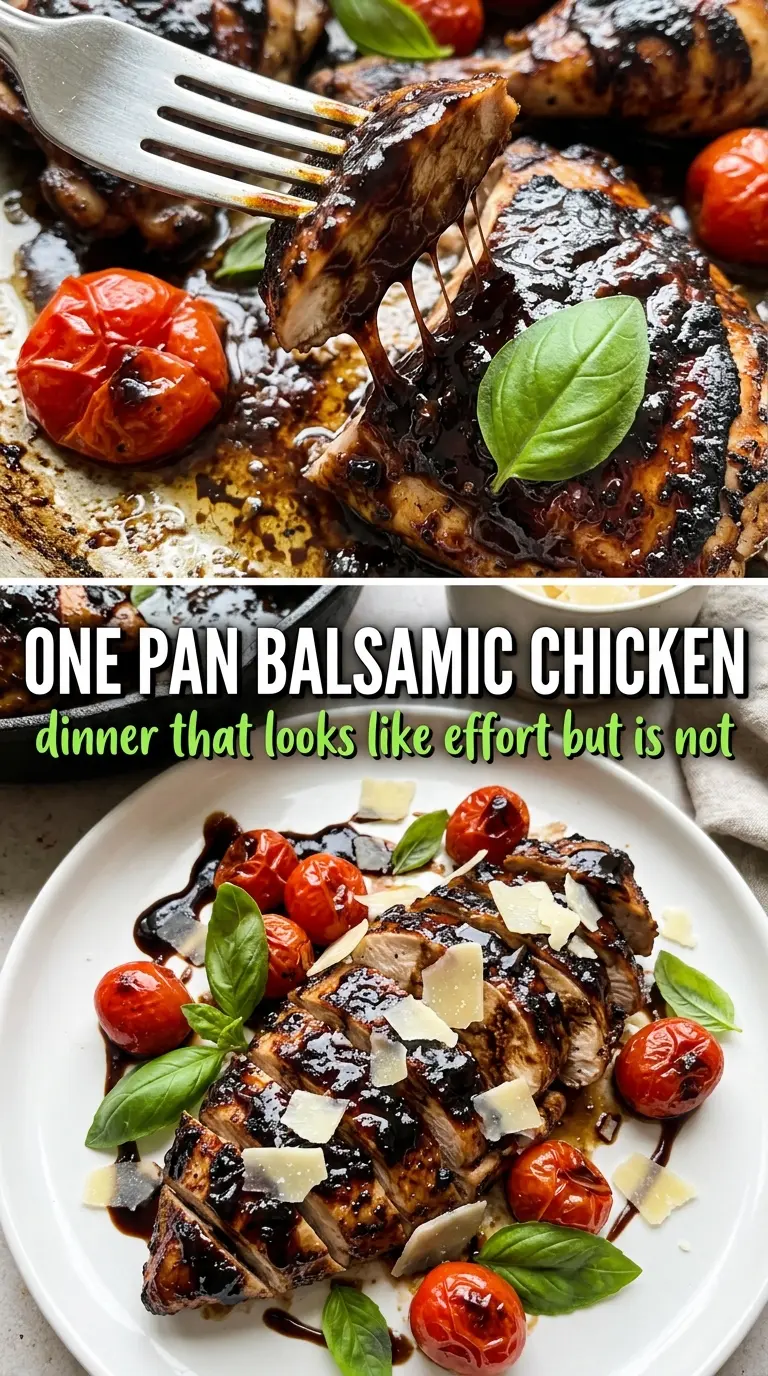
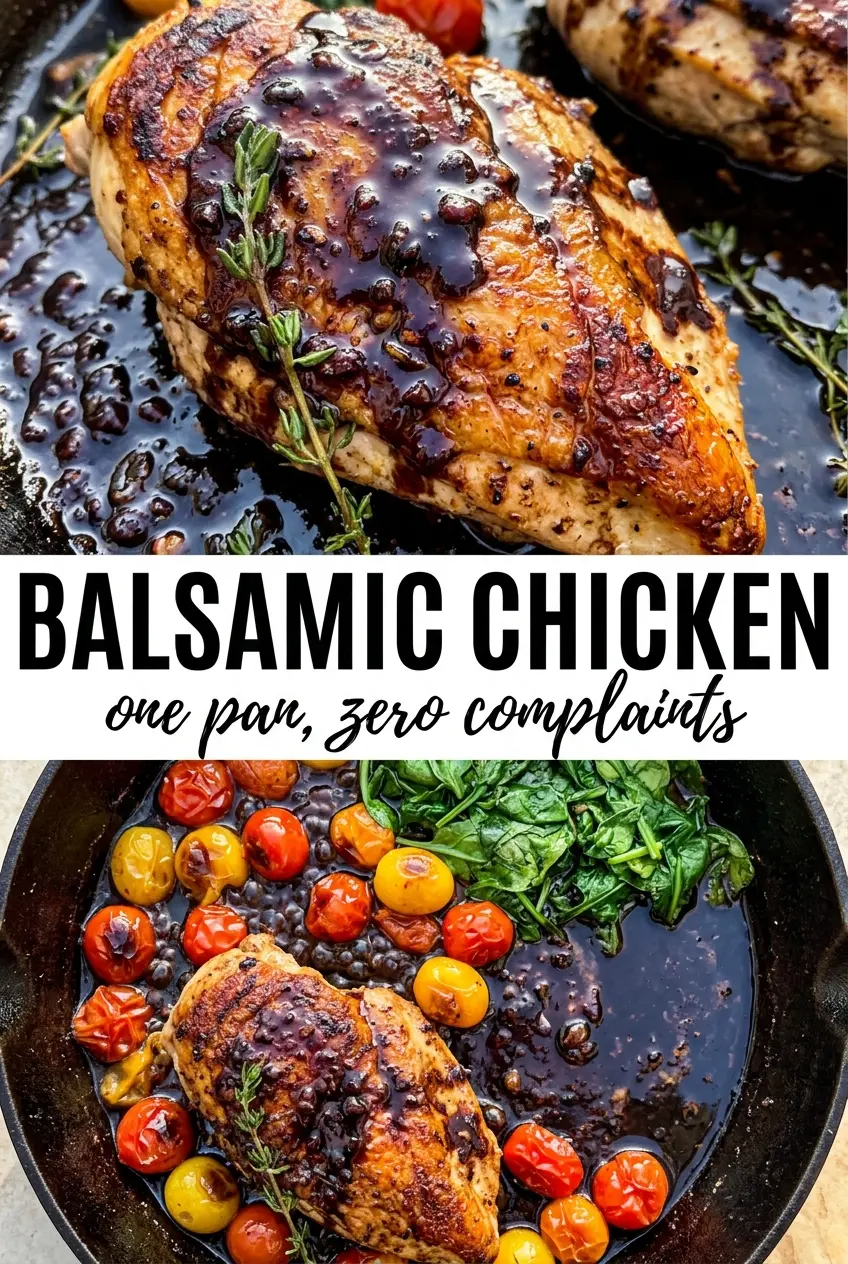
Deeply browned chicken thighs, blistered cherry tomatoes, and a glossy balsamic glaze make this skillet dinner feel a lot bigger than the effort it takes. The skin stays crisp where it meets the pan, the sauce turns sticky and savory-sweet, and the whole dish comes together in one skillet without losing any of the good browned flavor along the way.
What makes this version work is the order. The chicken gets a hard sear first, which builds the base for the sauce instead of steaming the thighs in their own juices. Then the balsamic, honey, and broth reduce together until they cling to the chicken instead of pooling underneath it. The butter goes in at the end, off the hard boil, so the glaze turns silky instead of breaking.
Below you’ll find the little details that matter here: how to get the skin crisp, why whole garlic cloves work better than minced garlic in this skillet, and what to do if your glaze thickens faster than you expected.
The sauce reduced into a sticky glaze right in the skillet, and the chicken skin stayed crisp even after I spooned the tomatoes over the top. My husband kept picking at the garlic cloves before dinner was even on the table.
Save this one pan balsamic chicken for a skillet dinner with crisp skin, burst tomatoes, and a glossy balsamic glaze.
The Part Most People Miss: Letting the Skin Do the Work
If the chicken goes into the pan before the skillet is hot enough, the skin releases moisture and turns pale instead of crisp. That first sear is doing two jobs at once: rendering the fat and building the browned bits that give the sauce its depth later. Don’t move the thighs around while they’re searing. Leave them alone until they release cleanly from the pan and the skin looks deeply golden, not just lightly colored.
The sauce also needs that leftover fond from the pan. If you wipe the skillet clean, the balsamic tastes flatter and the final glaze loses some of its savory backbone. The tomatoes and garlic cook in those drippings before the liquid goes in, which gives the sauce a softer, rounder flavor than tossing everything into the pan at once.
- Bone-in, skin-on chicken thighs — These hold up to the sear and stay juicy while the sauce reduces. Boneless thighs can work, but they cook faster and won’t give you the same crisp skin or rich pan drippings.
- Cherry tomatoes — They burst just enough to sweeten the sauce without turning it watery. Grape tomatoes work too, but use the smaller ones so they blister instead of collapsing too early.
- Balsamic vinegar — This is the backbone of the glaze, so use one you’d actually taste on its own. A cheaper bottle still works here because it reduces with honey and broth, but a very thin, harsh vinegar will stay sharp.
- Butter at the end — It smooths the glaze and gives it a lacquered finish. Add it off the boil so the sauce turns glossy instead of greasy.
What Each Ingredient Is Actually Doing in This Recipe
- Primary ingredient (the star) — This carries the main flavor and defines the dish. Quality matters here.
- Base sauce or cooking medium (the carrier) — This brings all flavors together and keeps the dish from being dry.
- Aromatics (onion, garlic, ginger) — These add depth and complexity. They mellow and become sweet when cooked.
- Seasonings (salt, spices, herbs) — These define the personality and prevent the dish from tasting one-dimensional.
- Vegetables (nutrition and texture) — These add freshness and color. Cut to size so they cook evenly.
- Acid (lemon, vinegar, tomato, wine) — This brightens the dish and prevents it from tasting heavy or flat.
- Fat (oil, butter, cream) — This carries flavors and creates a satisfying mouthfeel. Don’t skip it.
- Proper technique (heat, time, temperature) — The right method turns good ingredients into great food. Follow the instructions carefully.
Getting the Glaze Thick Enough Without Overcooking the Chicken
Seasoning and Searing the Thighs
Pat the chicken dry before seasoning it. Wet skin steams, and steaming is the enemy of a crisp crust. Heat the oil until it shimmers, then set the thighs skin-side down and let them sear without touching them for 7 to 8 minutes. If the skin sticks, it usually needs another minute; once it’s ready, it releases on its own.
Blistering the Tomatoes and Warming the Garlic
After the chicken comes out, add the garlic cloves and cherry tomatoes to the same skillet. The garlic should soften and pick up some color, not turn dark brown and bitter. The tomatoes need just a couple of minutes until the skins split and the juices start to run into the pan. That quick burst of heat gives the final sauce sweetness and body.
Reducing the Balsamic Sauce
Pour in the balsamic vinegar, honey, and broth, then scrape the bottom of the skillet as the liquid comes up to a boil. That scraping matters because the dark browned bits dissolve into the sauce instead of staying stuck to the pan. Return the chicken skin-side up and keep the heat at medium so the sauce reduces while the thighs finish cooking. If the sauce starts getting thick before the chicken reaches temperature, lower the heat and add a splash of broth.
Finishing With Butter and Basil
Once the chicken hits 165°F and the sauce looks syrupy, stir in the butter. It should melt in smoothly and make the glaze shine. If you add it while the sauce is still boiling hard, it can separate and lose that velvety finish. Scatter basil over the top right before serving so the herb stays bright instead of wilting into the sauce.
How to Change the Dish Without Losing the Balance
Make it dairy-free
Skip the butter and finish with a teaspoon of olive oil instead. You won’t get quite the same silky gloss, but the glaze will still cling nicely and taste clean and sharp.
Use boneless chicken thighs
Boneless thighs cook faster and are easier to serve, but you lose some of the deep pan flavor that comes from skin-on meat. Cut the simmering time by a few minutes and check early so they stay tender.
Make it lower in sugar
Reduce the honey to 1 tablespoon for a sharper, less sticky glaze. The sauce will be a little looser and more tang-forward, which works well if you want the balsamic to lead instead of the sweetness.
Storage and Reheating
- Refrigerator: Store leftovers in an airtight container for up to 4 days. The skin won’t stay crisp, but the flavor gets even deeper after a night in the fridge.
- Freezer: Freeze the chicken and sauce for up to 2 months. Thaw overnight in the refrigerator; the tomatoes will soften more after freezing, but the dish still reheats well.
- Reheating: Warm covered in a skillet over low heat with a splash of broth to loosen the glaze. Microwaving works in a pinch, but it softens the skin and can make the sauce separate.
Answers to the Questions Worth Asking
One Pan Balsamic Chicken
Ingredients
Equipment
Method
- Season chicken thighs generously on both sides with salt, pepper, garlic powder, and Italian seasoning.
- Heat olive oil in a large cast iron skillet over medium-high heat and sear chicken skin-side down for 7-8 minutes until the skin is deeply golden and crispy.
- Flip the chicken and sear for 3 more minutes.
- Remove the chicken from the skillet.
- Add whole garlic cloves and cherry tomatoes to the skillet and cook for 2 minutes until tomatoes begin to blister.
- Pour in balsamic vinegar, honey, and chicken broth and stir, bringing to a boil while scraping up any browned bits.
- Return chicken skin-side up to the skillet and cook over medium heat for 12-15 minutes until chicken reaches 165°F and the balsamic sauce reduces to a thick glaze.
- Stir in butter until melted to make the glaze glossy.
- Scatter fresh basil over the top and serve straight from the skillet.